Americans Shrugged Off Surveillance. Then Came Flock and Data Centers.
Evan Selinger, Divya Ramjee / Sep 17, 2026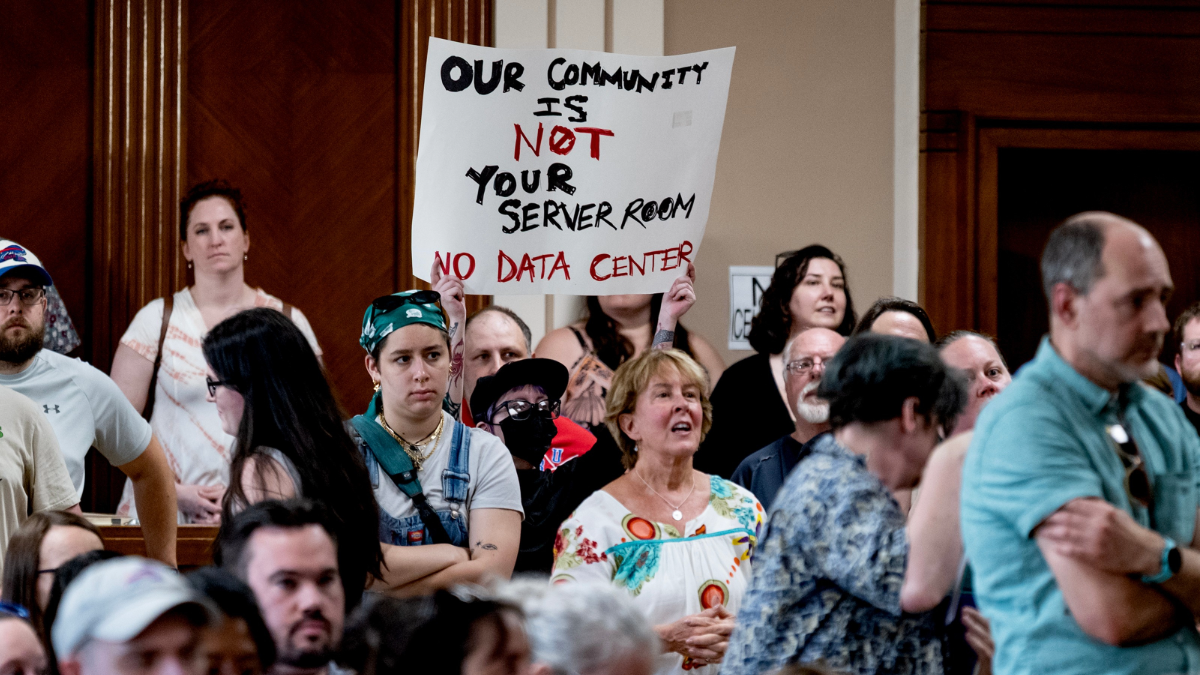
Hundreds attend a Town of Tonawanda Planning Board meeting in Kenmore, New York on Wednesday, June 3, 2026, as they expressed vocal and at times boisterous opposition about a proposed data center on the site of the now closed Tonawanda Coke facility. (Photo by Craig Ruttle/Sipa via AP Images)
Why are so many people across the political spectrum resisting AI-powering data centers and Flock’s network of AI-infused surveillance cameras? The national movement—lawsuits, legislative lobbying, protests, and sabotage—is striking because Americans have already ceded so much privacy and autonomy to tech companies. We largely complain and shrug from one techlash to the next, while increasingly invasive technologies are normalized.
The answer is salience. Data centers have been around for decades, and privacy scholars and activists have long warned about the dangers of automated license plate readers (ALPRs) and community surveillance cameras. But until now, neither had the heightened level of visibility that makes people less willing to tolerate their harms. Salience is the driving force behind data center construction projects getting delayed, paused, and banned; Flock cameras being vandalized; and municipal and agency contracts with Flock being canceled or not renewed.
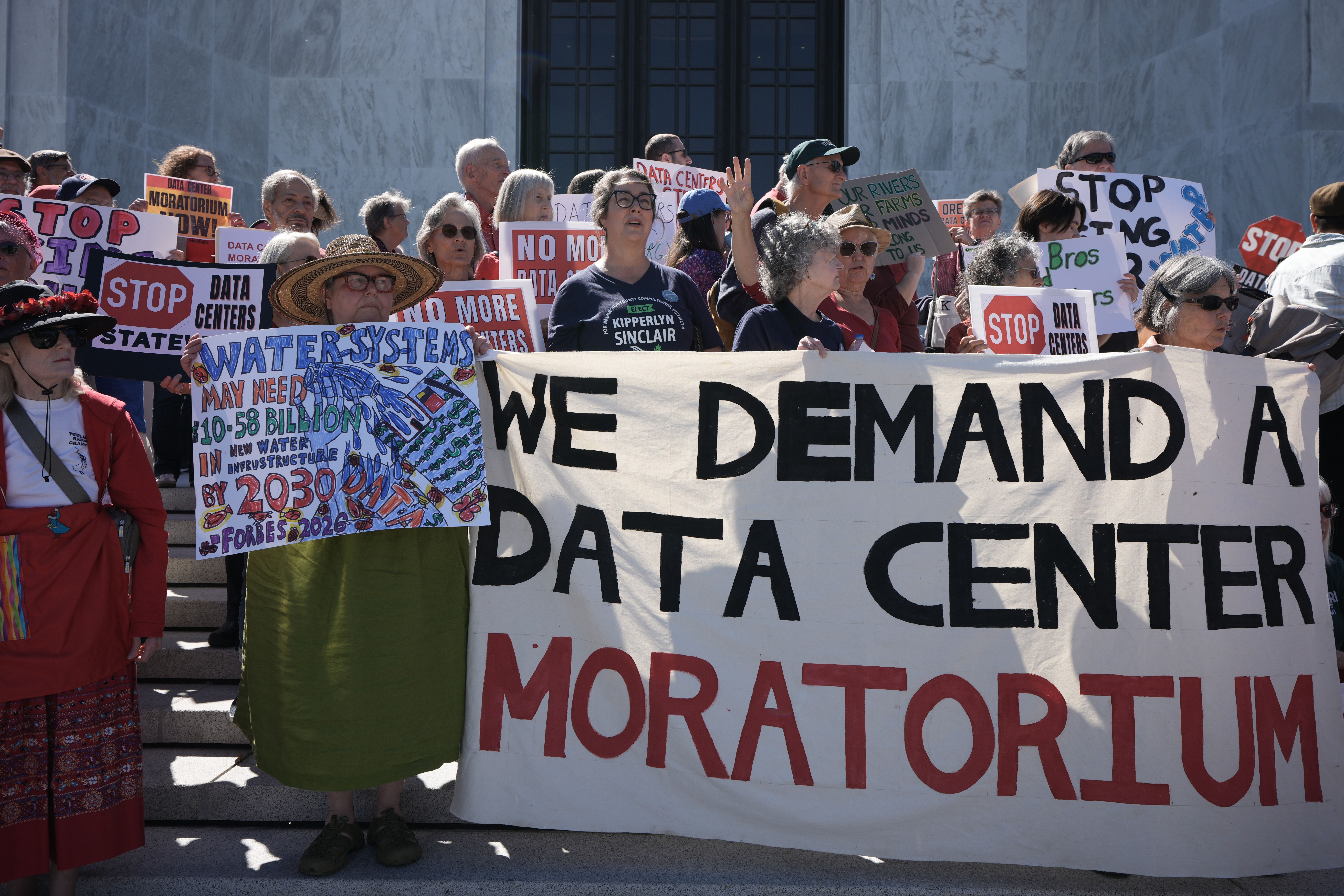
Protesters rally on the steps of State Capitol in Salem, Ore., on September 8, 2026, calling for a moratorium on new data center development in the state for three years. (Photo by Alex Milan Tracy/Sipa via AP Images)
Salience and aggrieved populism
The most common explanation for why the harms associated with Flock cameras and data centers have become so salient is aggrieved populism. Much of the writing about Flock and data center activism portrays them as parallel protests motivated by festering resentment against the perceived injustices of an increasingly powerful, consolidated tech industry that receives too much support from an overreaching government. In this spirit, The Verge editor Nilay Patel claims, “data center construction has become a proxy for the public’s feelings about AI,” and former Federal Communications Commission chair Tom Wheeler calls data centers “the symbol of citizen frustration about AI.” Relatedly, journalist Amanda Marcotte declares, “Flock cameras have become a symbol of growing anger over the efforts by technology oligarchs to impose their dystopian fantasies on the country.” Likewise, writer Jacob Richards insists “the resistance against Flock cameras is just part of a larger anti-tech populism.”
The populist angle makes sense. Across the country, people are worried that the White House and Silicon Valley are moving too quickly to develop and deploy artificial intelligence. A recent Gallup and Bentley University survey found that in 2026, 39% of Americans “believe AI does more harm than good,” up from 31% in 2025. Even Anthropic CEO Dario Amodei admits, “Ordinary people don’t trust companies, governments, or the tech industry and always suspect that we are cooking up some new way to screw them over.”
The populist framing also helps explain what resisters have in common. They might be worried about the surveillance state or their family’s utility bills. They might want modest policy changes or a sweeping ban. Whatever their motivation or goal, they share a sense that AI is being imposed on them—something they didn’t ask for, weren’t consulted about, and associate with people who have far too much sway over their lives. As psychologists have pointed out, direct threats to freedom or autonomy make people more likely to react and take action. And with each new public act of resistance, people who once assumed that others accepted the status quo become more emboldened to make their voices heard.
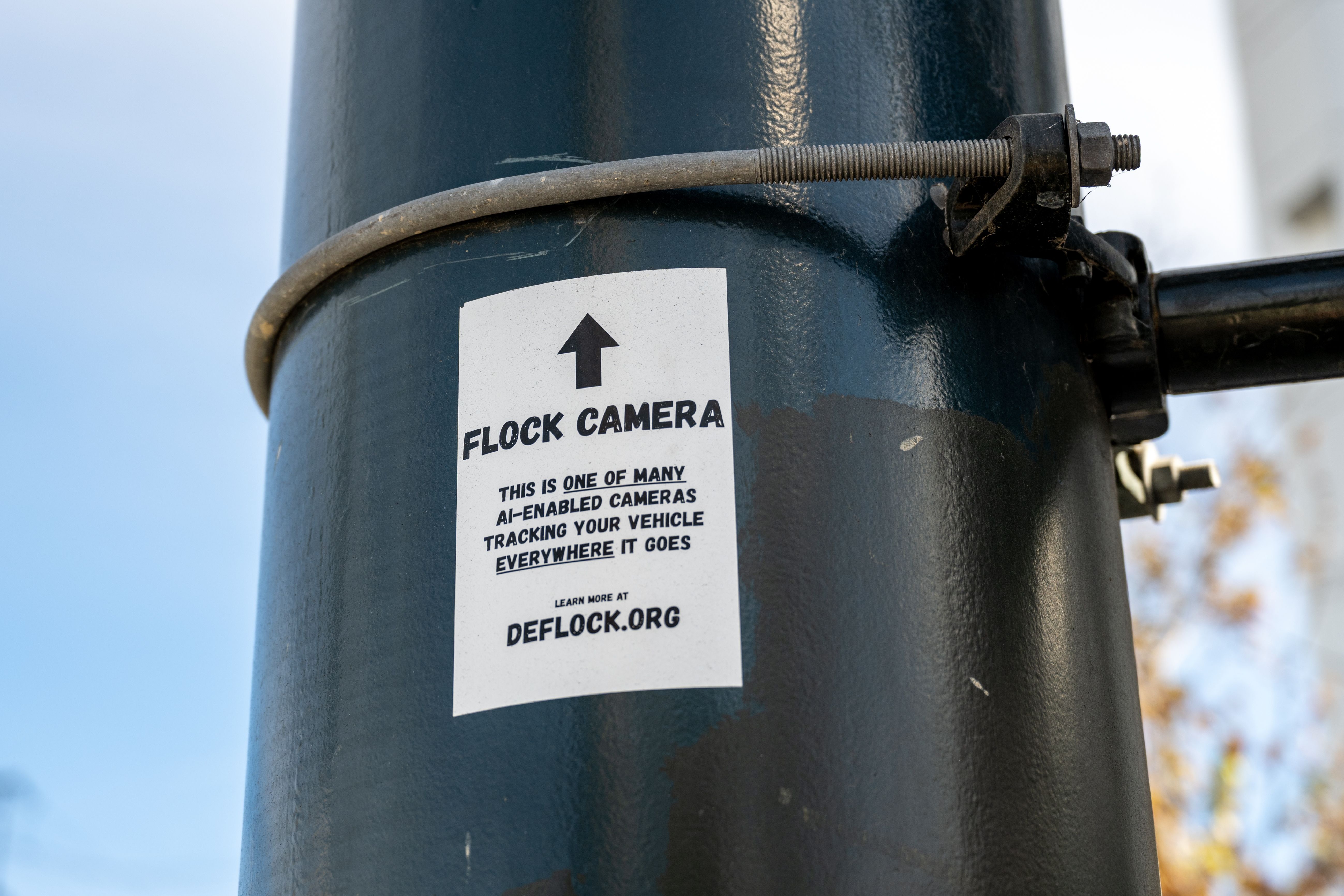
DeFlock privacy advocacy sticker warns of a nearby Flock Safety AI-enabled automated license plate reader tracking vehicles, San Francisco, California, September 9, 2026. (Photo by Smith Collection/Sipa via AP Images)
Salience and normalization
The populist framing does a good job of capturing the pervasive frustration with a lack of democratic consultation and accountability, but it doesn’t fully explain why the harms associated with Flock cameras and data centers have become so salient. To understand this better, we need to consider three aspects of normalization. First, people acclimate to a technology by determining that immediate or personal benefits are a fair tradeoff for abstract or distributed harms. Second, once acclimated, people have a new baseline for assessing tradeoffs, and are more likely to weigh new immediate, concrete costs more heavily than any distant, abstract benefits they may be presented with. And third, each new tradeoff where people are willing to give up a “small” loss of privacy or autonomy for some benefit—something scholars Woodrow Hartzog, Johanna Gunawan, and Evan Selinger call “nicks”—desensitizes them to salience of cumulative negative effects.
ALPRs and surveillance cameras have existed for years, but recently, Flock’s presence has grown rapidly across local communities. That expansion can be viscerally jarring. There are new cameras along roads, near frequented businesses, and sometimes in public spaces close to private residential property. The increased presence of the hardware makes visible the larger network of ongoing, concentrated surveillance, largely for law enforcement. Furthermore, the promised benefit of improved public safety pales in comparison to the numerous documented instances of law enforcement abusing the technology or acting on unverified or incorrect information with serious consequences for innocent people. People, therefore, are not only feeling a loss of control over their autonomy but also over their ability to understand how and when they are being watched, by whom, and for what purposes. As law professor Andrew Ferguson stresses in Your Data Will Be Used Against You, today’s mass surveillance systems are flipping the default from law enforcement only investigating you if you do something suspicious or illegal to everyone is under suspicion and worth tracking.
Let’s compare this situation to doorbell cameras. People are so acclimated that most ignore them or barely register their presence as background noise. A doorbell camera promises a simple bargain: give up some of your privacy, but in return you’ll receive more security. The Nancy Guthrie kidnapping case perfectly illustrates the acceptance of this tradeoff. Guthrie, mother of NBC News journalist and Today co-anchor Savannah Guthrie, did not pay for her Google Nest doorbell to be linked to the company’s cloud service, which allows video footage to be retained for 10 days beyond local storage. Nevertheless, footage from over a week earlier was recovered from Google’s backend system, and there was little public concern that its retrieval violated the terms of the product’s policy. This lack of concern may reflect how normalized people are to pervasive data collection, where the ongoing retention of information is accepted, even when it goes beyond the expected scope and scale. And of course, the fact that this extended data retention provided footage of the attackers makes the tradeoff for this additional “nick” easier to accept.
Amazon Ring is another important example. Here, too, people accept the tradeoff as they primarily see the cameras as tools for protecting private property and family, as well as their immediate neighborhood. The full power of surveillance network effects wasn’t staring them in the face until they saw Amazon’s Super Bowl commercial, “Search Party.” The Search Party feature prompts nearby Ring cameras to scan their respective areas for AI-powered matches of lost pets, and it was released in September 2025 with little to no public pushback. Fast forward five months to a commercial that made it easy to see what a coordinated network of AI-infused Ring cameras looks like, and there was massive outcry. As Senator Ed Markey (D-Mass.) noted, “Amazon inadvertently revealed the serious privacy and civil liberties risks attendant to these types of Artificial Intelligence-enabled image recognition technologies.” In other words, the commercial helped people visualize what privacy scholars and advocates have long pointed out and which Jamie Siminoff, Ring’s founder, denies: Ring is a surveillance technology.
Now, did the backlash have any impact? In the immediate fallout, Amazon announced it would not continue with its proposed partnership with Flock Safety to share data with law enforcement, which was unrelated to the Search Party feature. The larger connected network of Ring cameras still exists, and the Search Party feature remains active for customers. One might wonder why the outcry didn’t spark a mass movement to cancel Ring subscriptions in protest. The answer could be as simple as people did not want to spend time researching whether there are more privacy-friendly alternatives on the market. But normalization probably also played a role. People were already willing to give up some privacy for more security, and perhaps the canceled partnership with Flock convinced them that features like Search Party only slightly diminish privacy in comparison. With that reassurance, they didn’t feel compelled to give up a technology they were already acclimated to and reliant on.
As with Flock cameras, data centers create a similar visibility problem that affects how people perceive this tradeoff. Until recently, many people have relied on cloud storage, streaming services, social media, and AI chatbots while remaining largely unaware of the material infrastructure that supports them and the harms that come with it. But that salience is rapidly changing, and the once invisible, weightless digital economy has finally come back to earth. That’s because the push to build sprawling data centers across the country has imposed many locally experienced burdens, from high electricity and water demands to significant increases in light and noise pollution. And for those worried about surveillance technologies like Flock cameras, data centers have taken on new meaning and urgency because they are now easier to see as surveillance-enhancing infrastructure.
The opposition to new data centers and Flock cameras tells us something important about why normalization isn’t inevitable. Normalization seems more likely to occur when the costs and power relationships associated with a technology are abstract, easy to ignore, and dispersed. But once the harms become concrete, locally observable, and a shared loss of control feels too strong to ignore, the spark for change gets lit. Given these dynamics, whether resistance spreads to other things will depend on whether people recognize that with each new “nick” that is normalized, surveillance will continue its structural shift from being the exception to becoming the default condition of everyday life.
Authors