Taking Stock of the UK Tech Policy 'Muddle'
Justin Hendrix / Aug 2, 2026Audio of this conversation is available via your favorite podcast service.
The United Kingdom has a new prime minister, and as Tech Policy Press fellow James Ball reported last week, he has already moved to put his mark on tech policy—scrapping a scheme for digital ID, shuttering the Department of Science, Innovation, and Technology (DSIT), shifting the Government Digital Service (GDS) to the Department of Culture, Media, and Sports, and reshuffling responsibility for AI policy.
To learn more about how the table is being set under Prime Minister Andy Burnham, I spoke to three individuals who are following these matters closely:
- James Ball, a journalist and fellow at Tech Policy Press;
- Gavin Freeguard, the founder director of a new think tank called State of the Future; and
- Rachel Coldicutt, the founder and executive director of Careful Industries.
What follows is a lightly edited transcript of the discussion.
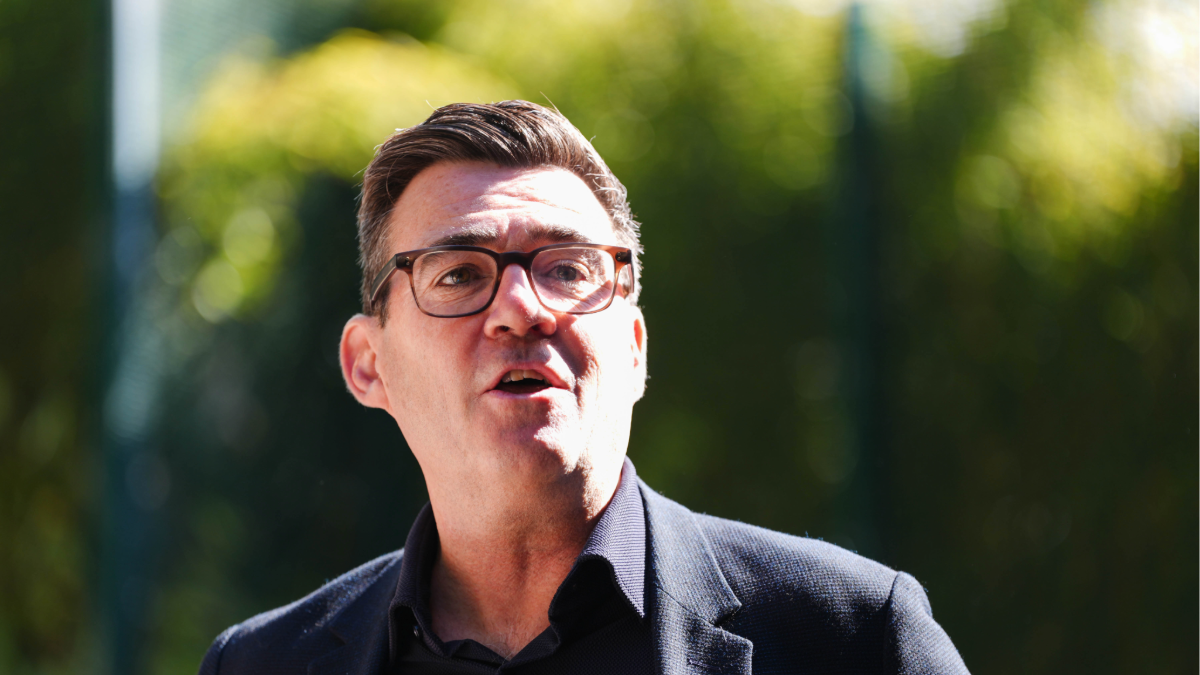
UK Prime Minister Andy Burnham speaking during a visit to a family center in Sheffield, South Yorkshire, on Friday, July 31, 2026. (Annabel Lee-Ellis/PA Wire POLITICS)
Andy Burnham (archival):
I have just come from Buckingham Palace where I have accepted His Majesty the King's invitation to form a government.
Justin Hendrix:
The United Kingdom has a new prime minister, and as Tech Policy Press fellow James Ball reported last week, he's already moved to put his mark on tech policy, scrapping a scheme for digital ID, shuttering the Department of Science, Innovation and Technology, shifting the Government Digital Service to the Department of Culture, Media and Sport, and reshuffling responsibility for AI policy. To learn more about how the table is being set under Prime Minister Andy Burnham, I spoke to three individuals who are following these matters closely.
James Ball:
I'm James Ball. I'm a fellow at Tech Policy Press.
Gavin Freeguard:
I'm Gavin Freeguard. I'm the founder-director of a new think tank called State of the Future.
Rachel Coldicutt:
I'm Rachel Coldicutt and I'm from Careful Industries.
Justin Hendrix:
I'm pleased that all of you could join me today. We're going to talk a little bit about what is changing in the UK tech policy scene now that you have a new prime minister, the seventh in just a decade, as I understand. But I want to start, maybe, with a question for each of you. As we think about the kind of general area of technology policy, tech governance in the United Kingdom, and we think about this moment of change, often we focus very much on this. There's a new leader, there's new priorities, there's new agendas, there's reshuffling of deck chairs and the like. I want to ask you first. What won't change about the general structural features of the debate in UK tech policy? And I don't mean the obvious things. Of course, your political systems, your political system, your existing statutes, regulations, et cetera, your existing statutes, and regulations.
But what are some of the other features of what goes on there that you think are just going to be part of the environment that you'll be dealing with? And maybe Rachel, I will start with you on that.
Rachel Coldicutt:
The thing is that we've been sort of muddling along, I would say, for quite a few years now, and muddling in different ways. I think, let's say this thing that will continue is the muddle. And so we've had a lot of noise around AI, as I think we will probably talk about later. I think that noise will move to a different place, but there will be essentially a lot of business that is not resolved, a lot of things that regulators who should be proud to do things are not doing, which means that it's really difficult to explain it coherently because it's a mess. And I think probably it will just continue to be a mess.
Gavin Freeguard:
I would violently agree with that. And I think building on that as well, some of the other things that will stay the same that put that in context, I think we know what some of the issues are going to continue to be. It will be a lot of AI. There'll be a lot of hype about AI. We know that online safety, more generally across tech policy, is something that politicians and the public are still extremely interested in. We know there's still a lot to fix in the public sector when it comes to more effectively using data when it's about delivering digital public services. There's a lot of good stuff to build on there as well, but there's still a lot that needs to change, a lot of legacy technology problems, big contractors, all of those sorts of things. I think some of the other things that remain the same are, we've still got a civil service which has some real expertise in some of these areas now, but there's still a lot of work to do in skilling others up, especially at some of the most senior levels.
We've still got big tech companies who've got lobbying budgets and ability way beyond UK SMEs, let alone civil society organizations. We've got civil society organizations and people in the third sector who I think are pretty exhausted by this point. They're spending quite a lot of time trying to fight government doing city things and trying to stop them doing that rather than being able to develop a more coherent vision, and supporting governments to deliver a more coherent vision to what they want to do with tech, which I think builds on Rachel's point about the mess. And I think we've still got quite a lot of work to do to get our politicians up to speed with all of the tech policy areas, what that means inside government, what that means outside of government as well, because as I'm sure we get onto, I think one of the characteristics of what happened last week in terms of changing the department's responsible, it doesn't feel like there's been a huge amount of thought there, and it's certainly not something that has centered the importance of getting this agenda right.
James Ball:
I will just add to that, that on the vibes front, essentially, I think for the last few years you've had governments who have tried to be very positive and very excited and very welcoming to AI and then treat almost every other digital technology as very negative and very suspicious and something that must be very heavily regulated as if the two of them aren't related. And I think Gavin will probably want to say more later on the idea that data is treated with great suspicion. Anyone who wants any access to any data anytime, no, absolutely not. But also we must train and build AI very rapidly and that will be wonderful. I think a lot of the early burn and moves signal that that direction of travel other than on the one specific policy of digital ID is still in place. And I think that does signal that Rachel is very much onto something when she talks about muddle and mess and confusion.
I'm not sure how well-informed this is. The one little thing would be Andy Burnham likes a populous touch. He can't really move the internet to Manchester. He might try. But whether some things that we're not really thinking of might end up as tech policy, might end up drawn in a bit. He's a bit skeptical of things like, Amazon and delivery type services. This is cheating. It's not quite your question, but might there be some impacts on them as he tries to revive High Street or revive business rates? Because that's something we're not really looking at to change, but I could see him doing it.
Justin Hendrix:
I want to talk about some of the things that have come apart and some of the things that have come together. But let's talk first about DSIT. And this is one of the things that you discussed in your piece, James, the scrapping of this organization that some feel may have long-term consequences. I mean, first, for anybody who's not following UK tech policy closely, what is this organization? What did it do?
James Ball:
Yeah, I'm glad I get to go first here, because Gavin and Rachel both know a lot more about this than me. DSIT was set up by the last PM but one, by Rishi Sunak. And the idea was it would be a center to put technology, science, innovation across government instead of it sitting in a business department, and thus being through a business lens, or sitting in a culture department, or sitting in the Cabinet Office where it would be about what do government departments do? What does government do? The idea was it would actually cross government. It would actually have deep expertise, and it would be focused on these issues for their own sake. I quite liked DSIT. I sort of dealt with it a little bit with a think tank head on. It had got some good expertise in, it seems to have some very good civil servants, and that's not always the case on tech issues.
They actually were very motivated, they were connected, they were into things, and it felt like it was starting working. What sort of happened is it's got divided up again. There's sort of an intention to keep AI very near the top table. The junior AI minister Kanishka Narayan is actually now attending cabinet. So it's not an attempt to demote technology. I think they're quite clear in their messaging. They're not trying to demote it. The messaging is we want to embed it across government and make it central, which, nice aspiration. I'm not convinced that they've not said one thing and done the opposite. And speaking with people, looking at the comments that Gavin and Rachel made publicly, et cetera, I think there's quite a lot of skepticism about how this has actually been done. It doesn't look like a plan that was drawn up with a great deal of care, attention, and time. I would go that far.
Justin Hendrix:
Gavin, you were a little more skeptical about DSIT and maybe wondering whether this is a fair diagnosis or fair result.
Gavin Freeguard:
I think it's a very fair diagnosis from James. And actually for all that DSIT had some real struggles, especially when it was being set up, there were some morale problems. There were some problems with leadership. I think the first government chief data officer lasted a matter of months. They tried appointing a chief digital officer for government when the Permanent Secretary of DSIT, that's the most senior civil servant, decided that they could do both jobs, Perm Sec and Chief Digital Officer for an entire government. So various things like that. There was delayed progress on some big manifesto commitments, such as the National Data Library, which Labour promised in 2024 before the general election. So there were challenges, but it was starting to cohere. It was trying to bring that tech expertise together across different sectors. It was trying to do something coherent. There was some really innovative work going on.
They were starting to bring some experts in the Government Digital Service, which was moved from the Cabinet Office over 2024 to 2025 was starting to bed in. You were starting to see those links emerging across the department. And in the UK, we're much more scattergun and happy to make and break government departments than most other nations. It's something, there's not much constraint on the prime minister to do that. So you get a new PM, you get a new government, and all of a sudden there are a new set of initials on the doors of various departments. But even if there is a case to do that, sometimes it can be hugely disruptive. It costs money to do that. You've got to try to bring incompatible systems together, different contractual terms together. Stakeholders on the outside have to start engaging with all sorts of different departments.
So even if DSIT weren't perfect, the machinery of government change, as we call it, seems like utter madness. And that was before we saw the detail. What we've ended up with now is the Government Digital Service being thrown further out from the center of power to a department which is not really used to doing that, and reminister where it's not clear that they have a particular passion for the agenda of sorting digital and data out across government. AI responsibility for that is now split across four different parts of government. If you wanted to create something fragmented, messy, unable to bring things together in a coherent way, you would probably do something like this, which I think absolutely supports James's point that this does not seem to be very well thought through.
Although, if you were being very simple, you might say that the only consistent threads seem to be bringing public sector AI under bits of the Cabinet Office and the Cabinet Secretary who's the most senior civil servant. And I'm actually quite concerned about that because there's a lot of talk about civil service reform, and I worry that might just translate into using AI to cut headcount.
Rachel Coldicutt:
I suppose I've got a slightly different view, which is, I think that for the last 10 years, a lot of hope has been freighted onto digital government to do extraordinary things really fast, to turn things around, to make amazing change. And we're sort of not in a place where that is likely to happen. It's really now all about maintenance. It's about looking after things well. But there's been a lot of political energy around announcing things. So I have worked with a couple of projects over the last year or two where something has been announced, nobody knows what it is. They then have to run around and make it, then they realize they can't. And that's been happening a lot. And that is partly because it's been perceived to be prestigious. So I think if we were going to look for something a little bit hopeful here, there's an extent to which good people getting on with things without having to manage up, might be good.
There is an issue that you are not possibly getting the advocacy support for budget, that kind of thing. But that, actually, we've seen really cringey moments in the last year and a half, particularly. Carl, particularly, he wanted to be Steve Jobs and did a lot of charismatic announcing of things, but I don't think he knew what they were. And so I think there's an extent to which I'm not as worried about that. I think the things I'm worried about are, I think to Gavin's point, probably the first year of these was really difficult. You had lots of junior people. People didn't really know how government worked. Making a new department is really, really hard. And that essentially, I think they were just getting going. And so what's likely to happen is we're going to have another year of everybody working out how it works and which department does.
It will take months for people to have the right cast, the right top, to be able to log into the right thing. And so there's an extent to which it's not a sort of visionary move. It's a little bit of reflex. It feels to me like Burnham's position here is, "I'm not very interested in technology, but I need a bargaining chip to give to ministers who want a little bit of something flashy. And so what I'm going to do is I'm going to divide up the portfolio so that everyone who might feel slightly hard done by gets a little bit of glamour." And if we look at what government was like in 2009 when Burnham was last there, the beginning, the digital policy sat in the DCMS then, where it has moved now. The person who is Secretary of State is now Andy Burnham's Chief Strategy Officer. He is comfortable with it looking like this.
And so I think there's an extent to which they don't know what they don't know. When I was working in digital cultural policy in the 2000s, everybody wanted everything to be on the television, and that was the high-water mark. James Purnell left government, went to the BBC. It feels to me like he's a media guy. He knows how the media works. And so I think there's an extent to which there's a lot of things they've thought through. And just lastly, the rumor mill is that the reason that the AI minister role has been appointed to governor, and it moved around a little bit at the last moment, is because business was really unhappy.
And so I don't think it's a strategy. It's a, "What do we do overnight when lots of people we need to be keeping entertained are annoyed?" And so I think there's an extent to which, just to go back to the idea that it's a muddle, the biggest hanging issue is probably online harms and what happens there. Because in moving everything around, there's an extent to which it's really difficult to put online harms in the place where business is. Because what that means is you've got a minister who is both speaking to it and against it all at once. There's an extent to which it slightly works better to separate those things, which we've never had previously. However, the problem here is that that has become quite a junior role. The minister looking after it I think is not known for being massively charismatic, particularly interested in digital.
He's not been the person who's been taking meetings with the parents of kids who've experienced online harms. He isn't there at all. And to really pursue this, you need to be all in and you need to be prepared to take on both regulators and business. And I think the risk is that there's not really the seniority there to do that. And so if there's something I'm worried about, it's probably that.
James Ball:
Can I just quickly cut in with a detail, just for people who don't know, which is James Purnell is a former cabinet minister, a very old ally of Andy Burnham. He left government and joined the BBC, as Rachel said. He has now come back as the Number 10 Chief of Staff, so the equivalent of White House Chief of Staff. So that's why he's quite a key figure in doing this and perhaps in it going through that media lens. So just that bit of background.
Gavin Freeguard:
Can I just pick up on a point that Rachel made as well, which is that sort of announcement-itis versus letting people get on with the solid work, which I think is a really interesting point. And I've definitely spoken to a few people from the Government Digital Service in the last few days who whatever madness is swirling around them are very much just planning to get on with what they were doing. And hopefully those streams of work will continue. They'll continue to work with the people that they were working with across other departments and outside as well. I do think one of the risks of splitting AI off into Cabinet Office, the new office for prime minister and cabinet, and to a certain extent to the new business department and away from the digital and data foundations in the Government Digital Service, which have moved to the Department of Digital Culture Media and Sport, is that there might be a risk that we get a little bit more of that "AI is a shiny thing and we can announce stuff about it."
Divorced from the responsible approaches, the digital inclusion, the service design expertise, the user research expertise that you would have if it was still connected up with the Government Digital Service. So I think that I have an anxiety that we might get a little bit of shiny AI tech utopianism because it's not in the same place as some of those other disciplines which make it work.
Rachel Coldicutt:
Just on that, so I sit on a government digital inclusion committee, and it's a great committee, does excellent work, but it doesn't benefit from where it's placed in government particularly. If anything, it is always the poor cousin. And so thinking about how digital inclusion has worked over the last 10 years, when it used to sit in DCMS, which is Culture, Media and Sport, it was much closer to bits of policy and where the Office of Civil Society lives. And that actually it was much more high priority. And I think in DSIT, it is a little bit of an afterthought. There was a period where that area was very quiet for about five years. They came back about a year and a half ago. But I would say minister who really cares about this, and who might have an opportunity with the new prime minister's focus on regionalism, to really pick it up and do something interesting that I think would maybe not be there if it was technology aligned.
Justin Hendrix:
I want to stick with online safety for just a moment and how things may or may not change with Ofcom, the administration, the Online Safety Act, the rest of that. Do you see any change there? In addition to what you've already said around these things, the DCMS picking up the full portfolio, what can we expect with regard to this new law that really does feel like it's just getting underway? What will it mean for anyone sitting at Ofcom?
Rachel Coldicutt:
So there's two issues. It's a law that we have, and there's a number of measures that have just been announced, and they have not been announced with a policy schedule attached to them. They're very much a gift that were left for the new government. And I have worked in this area for a long time. I was an Ofcom non-exec. And if I had to predict what will happen, I will say that nothing will happen until there is an incident. And then when there is an incident that is newsworthy, suddenly lots will happen again. And that Ofcom, particularly, I think, as I understand it, certainly at the end of last week, it was still a bit sketchy where everyone was going to be reporting into. That may have slammed up, but that comment is likely to carry on doing what they're doing at the moment. They have still got a lot to bed in with the act, which is a year and a half old.
And I think what the issue will be is if there is a major media moment, and how Burnham chooses to respond to that. And I think potentially I've noticed that he's a lot better at deflecting things that are maybe a bit. So I watched a clip of him the other day where someone on a morning TV program was asking him about how much his jacket cost, and did he mind having to talk about that? And he's the first politician I've seen for ages who was able to say, "Yeah, I mean, who cares?" And he brushed it off and moved on. And so I wonder if as these things that have been slightly magical as policy areas, because nobody's able to say the controversial thing, I wonder if he may be able to do that more.
James Ball:
I'll sort of jump in and go. The oversight of Ofcom was a mess before really. Ofcom is an incredibly broad regulator. It does everything from telecoms and internet access to, in theory, through the Online Safety Act, social media, digital services, to literally TV regulation, which is tighter here than certainly in America. There are requirements on channels to generally be neutral, to be fair, to represent a diverse point of views, especially news coverage. And the old system had the Culture, Media and Sport, department overseeing the TV functions, which tends to get the most media coverage or the most attention and perhaps be the least important and the smallest bit of the organization. And then DSIT oversee the rest of the organization. Now, my understanding is that it's mostly getting unified within DCMS because that's where online safety is going and the rest of the policy. That's coherent.
That's where it was before, but no one really liked telecoms and internet access oversight, not being in business, but we seem to be back to that world. There is a personality issue here though. And Lisa Nandy is the minister for DCMS, and she has not been well received in the cultural industries. The cultural industries had been very much looking forward to a Labour government. There'd actually been quite a lot of interest in Nandy for the role. She'd once been a leadership contender. She ran against Burnham for leader in 2015, 2010, one of the two. And she is from Wigan, which is the constituency next to Makerfield, which is the prime minister's. And the thing is, she'd been a bit woeful. There were some quite obvious gaffes. She'd say things like, "It's a shame that no one from the north is winning a BAFTA," when someone from the Northern England had won a BAFTA the night before. She seemed quite uninterested in her brief.
A very senior culture figure once had coffee with me having met Nandy earlier that day. And they'd told me, they went, "She was professional, she was polite. She very obviously read her two-page brief while I was sat in front of her. She ended the meeting 10 minutes early after asking two polite questions off the sheet. And I could tell before I left the room that she would never think about that meeting ever again." She was regarded as very uninterested in the brief. And that was while it was relatively small and easy. What will you do with the BBC? Very big cultural question here, but not complicated. What will you do with Ofcom about TV? She now has, how will you reckon with Elon Musk using X to at times incite violent action against the UK with potentially huge diplomatic implications against the US if you do anything?
I think, on a political level, there is some anxiety about the fact she's been handed a very, very sensitive brief. And that's before you get to, would she be the minister bringing in a teen social media ban? And a slightly sticky wicket left by Jess Phillips around the UK government has suggested it would like to introduce a technology that will stop devices taking pictures of nude children or teens, which Jess Phillips, the former minister, insists that exists, is available and works. And Andy Burnham doesn't know tech very well and knows that he does not want to be the prime minister who U-turns and goes, "I am the prime minister who says it's okay to nudify teens." So he's got a really tricky beat on that, and that, I think will also end up landing on Nandy's desk. And yes, it's a very tricky issue.
Gavin Freeguard:
Certainly, one of the rumors that's been floating around is actually the online safety bit of the brief was something that Lisa Nandy really wanted. And that's the sort of bit that's massively interested her, which might mean that she brings a different energy to that than perhaps has been the case over the last couple of years. I suppose that the risk there is obviously that other parts of the brief maybe don't get the political support and cover that they need. And it becomes, as it has been to an extent already, it's obviously an incredibly important, very sensitive, very complex issue, but it might take all of the oxygen out of the other tech discussions that we need to have as well.
Justin Hendrix:
Well, Gavin, let's stick with you. You've kept coming back to AI and AI governance in particular. I just want to dive in a little more closely into that, into where some of these functions have been scattered. And to the extent that certain things have been brought closer to Number 10, security, I understand is one of them, which fits a pattern across the world where AI is seen as potential economic boon, but also a fundamental security issue and one that needs to be very tightly held by the folks running governments. I don't know, what do you make of where Burnham will take AI governance?
Gavin Freeguard:
I think the first thing to say is actually we're still not entirely sure what's ended up where. We're relying on a lot of newspaper reporting. Politico, behind paywall, have done some really good work trying to work out where different things have gone to, but it's still not absolutely certain that things have gone where we think they might've done. So the way that we think it's split is that, I suppose, AI policy for the wider economy has gone to BIST, which is the new beefed-up Department for Business, Innovation, Science and Technology. Public sector AI adoption has gone both to the Cabinet Office and to the Office for Prime Minister and Cabinet, which is a new thing that was also set up last week to basically become a prime minister's department, which is both part of the Cabinet Office, but also could be yet another reporting line.
Part of that will involve an AI task force, which is being chaired by Lord Vallance, who is one of the previous ministers in the old DSIT, and that will report to the minister and the Cabinet Secretary. There will also be a Prime Minister's advisor on AI who we don't think has been appointed yet. So you can start to see that some of these lines might get quite confusing. The AI Security Institute, which does have a very good reputation internationally, has brought a lot of skills into government thinking about AI safety originally was its original name and was then renamed to AI Security. That seems to be reporting into Cabinet Office. And then the incubator for AI, which is probably the bit of government which has done more to support civil service adoption and experimentation with AI, we think is currently still with the Chief Government AI officer in the Government Digital Service, which is in DCMS. And that's how we think it's split at the moment. It's something that has been quite striking, sort of asking about the approach to AI governance generally.
When the Labour government came in 2024, there was something in the manifesto about a bill around AI regulation that has gone much quieter over the last couple of years. I'm not sure I've heard anything really in the last few weeks talking that much about what the new government means for regulating AI specifically. So I think others may have heard more than I have, but it's one of those things that even though it's obviously on people's minds in many respects, and it could be a doorstep issue if, as Rachel said, if things go wrong, that's when things will suddenly come to prominence. It's not something I've seen much discussed in the last few weeks about what a Burnham government might do.
Rachel Coldicutt:
I think there's a really interesting thing buried in there too, which is that we know quite a few people have recently left the AI Security Institute. They're advertising to new leadership there. So as an organization, they play, I think, quite an important international role, and they are the UK's foothold there in governance. And that actually if there are internal changes there, it's likely that that expertise might dissipate, move around. So I think that's interesting. But I wonder as well, if what Burnham is interested in, for the next little while, is talking about the things that have short-term relevance to people, that will be seen in their pockets, feel like things are happening. I think it makes sense that you are not going to prioritize something that looks a little bit like smoke and mirrors. So I can understand why he's not running towards that. I think, as well, politically, we're in a weird place. So the thing that UK is good at is standards. Nobody wants our standards because of colonialism.
We had a good go at getting everyone to do things how we wanted them, and it didn't work amazingly, let's say. So there's an extent to which the thing we're good at is problematic. We are never going to be the home to loads of massively scalable R&D-based businesses. And there's a lot of tinkering around in that area. You've got the Oxford-Cambridge corridor, and I think the person who is the head of the AI toss though, the head of the Oxford-Cambridge Corridor Project, whatever that is. And so it feels like what needs to happen is we need to choose who we are backing internationally, which in Starmer's government, that was very much aligning with Trump. There's the option of moving nearer to Europe. I think there's a much more interesting one of what does a middle powers code like, that is like UK, India, Canada, Germany. But to get to that, you need fairly sophisticated authority that is flowing through to trade and research.
And I don't think we've got the setup internally to have knowledge move around in a way that would enable that. And so I imagine that what will happen is nothing, and that it will be nothing interspersed with consultation documents that go out, that everyone then runs around and fills in, that we may never handle. And so I think that there's a lot of murkiness, and maybe we're not taking advantage of the things we could be good at, but maybe that's okay, I think.
Justin Hendrix:
Your comments are great because they kind of lead me directly to my last question with just the couple of minutes we have left. I'll also put it to Gavin and James. But Rachel, you make me think maybe Mark Carney should get Andy Burnham's ear at some point and see if he can enlist him in a middle powers approach that you describe. But Gavin, James, to you, just thinking about zooming out the UK's role in the world, the extent to which its tech policy will define that role on some dimension. I don't know, what do you think? Where will Andy Burnham take things?
James Ball:
Britain always liked to flatter itself that our role was as an Atlantic bridge. We had a foot in Europe, we were in the EU, but we spoke American better than most of Europe. And so we could translate between the two, we could mediate between the two. We could try and get the best of both worlds. And since then, we've left Europe and it's very, very hard to maintain a sensible diplomatic relationship with Donald Trump. Keir Starmer very much tried. We threw everything in the arsenal. We certainly were trying for things like AI cooperation and access, but the Trump administration is too volatile. It doesn't work. And so we're outside of the big EU discussions on regulation. We're not really in the tent in terms of we've got no privileged access to US frontier models. We're not really in those discussions or groups. We're just another third country.
And so I really like Rachel's quite optimistic situation of what could be done with that. And let's not do this down. We are still regarded as a good tech hub in Europe. We're a good place for an American tech company to have their European sales office. And that's what we have a lot of in Europe. We've still got a good chunk of deep mind. But unfortunately, I think we're probably on the sidelines. I think Starmer probably tried without too much success to get us in the game a bit more. I don't think it's going to be a Burnham focus. He wants to spend more time at home and more time thinking about domestic issues. And so I would be very surprised if he makes any particularly big plays on foreign policy other than trying to damp fires and do good deals. And if he were to do that, based on who is our foreign secretary, which is Ed Miliband, I think you'd be more likely to see efforts on climate or development than you would on AI or tech.
Gavin Freeguard:
I agree with Rachel and James. I don't think it's going to be a priority having a sort of international tech or AI policy. But to quote Gandhi, "Some sort of British international tech policy would be a good idea." I think we at least need to know what it is we think and what we're trying to achieve. As Rachel says, there are real choices to be made there. There's a 2020, this is a very sad thing to remember. There is a 2020 government document that was published alongside our national data strategy, which actually laid out the different approaches to citizens data across the world. And it very much divided the world into the US, which is very market-driven. Europe, which was much more public interest-driven, and China, which was much more state-driven in quite a surveillance-heavy sort of way. And in a sense, we've never really grappled with those blocks and the trade-offs that we've wanted to make.
I think the middle power idea is a really interesting one, not because Mark Carney, and Andy Burnham support the same football team, Everton. So I though I'd squeeze that one in. The other answer that I would give to this question is, yeah, there are definitely some things that we've been good at. Our academic record is quite strong. And AC and some of the work around that has also been seen as world-leading. So there are definitely opportunities there. But traditionally when it's come to tech, the UK's role has almost been to say, "This is actually how we've approached this inside government." The Government Digital Service set up back in 2011, that was on the tour itinerary of anyone wanting to look at how you do government differently. And a lot of the lessons from that have spread. A lot of the people from that have spread globally.
And I wonder if there is a 2026 version of that. I don't entirely know what it looks like, but if you look at the thing that we know is a massive priority for the PM, and that's devolution down to local government, regional government, and obviously he was himself the metro mayor of Manchester, one of our biggest cities. I wonder if there's something in how you get those different levels of government to work together, interoperate when it comes to providing the public with better policy based on data, ensuring that the right data goes to the right level of government to make the right decisions in the right way, and actually providing digital public services in a way that delivers a much better experience for the population. But that's probably quite a big wide-eyed, ambitious hope that you never know.
Justin Hendrix:
Well, we will have to wait and see how all this plays out. We have certainly benefited from your close coverage of this, all three of you, and also your memory of what's gone on in UK tech policy over the last few years. And hopefully my listeners have a little bit more familiarity. And so when they see some of those headlines coming across, whether on Tech Policy Press or elsewhere, they'll be able to situate some of those developments against the context that you've given. I'm grateful to all three of you. James, Gavin, Rachel, thanks so much.
Rachel Coldicutt:
Thanks a lot.
Gavin Freeguard:
Thank you very much.
James Ball:
Thank you.
Authors