How Will Andy Burnham Handle Tech Policy as UK Prime Minister?
James Ball / Jun 25, 2026James Ball is a fellow at Tech Policy Press.
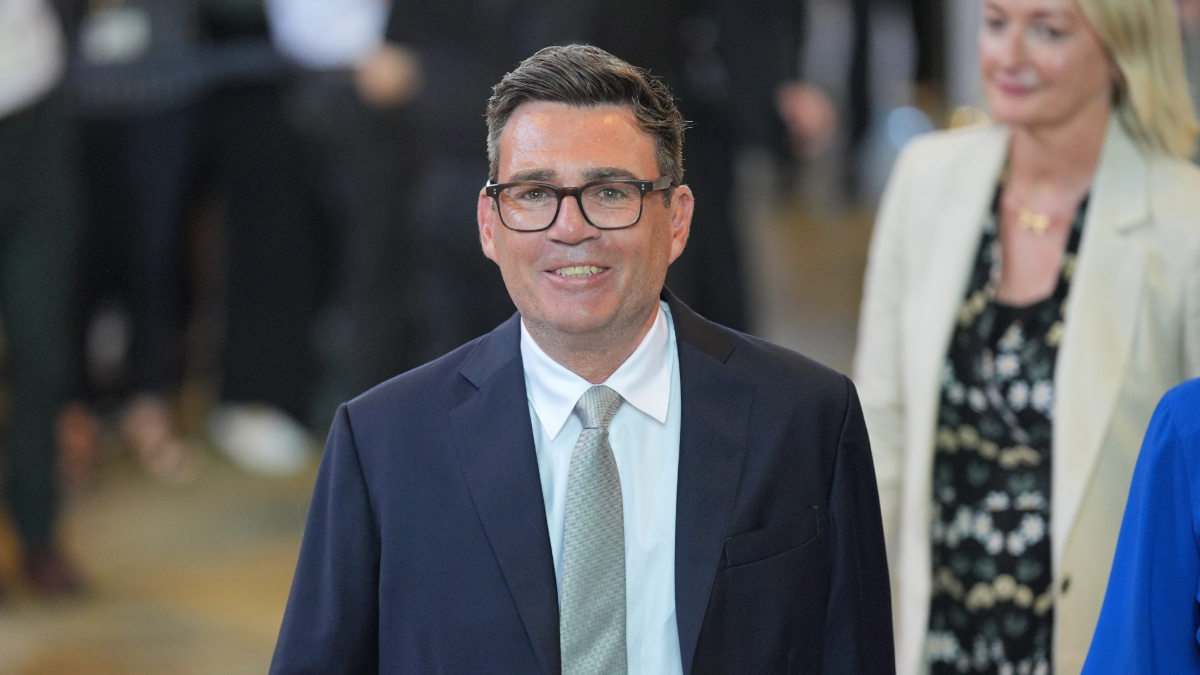
June 22, 2026—Andy Burnham with colleagues from the Parliamentary Labour Party in Westminster Hall at the Houses of Parliament in central London, as he returns to the House of Commons to take up his seat after winning the Makerfield by-election. (Yui Mok/Press Association via AP Images)
Andy Burnham only secured his return to Westminster in the early hours of the morning last Friday, when he was elected as the member of parliament for the constituency of Makerfield. By Monday lunchtime, he was the prohibitive favorite to be the UK’s next prime minister.
Burnham has spent the last decade in local government as the mayor of the Greater Manchester region, largely excluding him from the cut and thrust of national politics and policymaking for much of that time.
Beyond that, Burnham will arrive in Number 10 next month as something of a blank slate, including on matters of tech policy.
Despite this, there are some clues in his public remarks over the last decade, especially when it relates to the contentious under-16s social media ban announced by Keir Starmer last week, the implementation of which will now inevitably fall to Burnham’s administration.
During his previous tenure as an MP, Burnham served as culture secretary, before becoming health secretary and then, when Labour entered opposition, served as shadow education, health and home secretary respectively.
As shadow home secretary under the left-wing leader Jeremy Corbyn, Burnham expressed skepticism about government efforts to expand its surveillance powers, arguing that should the Investigatory Powers Bill become law – which eventually it did – “the UK will be the only country in the world to have a policy of capturing and recording every citizen’s internet use,” adding that “we will be the envy of states such as North Korea, China and Iran.”
More recently, while attending the 2025 Labour Party Conference, Burnham was asked about Keir Starmer’s proposals to introduce mandatory digital IDs in the UK. A petition opposing the plans had accumulated more than two million signatures within a matter of days, raising the profile of the issue. Asked whether he supported the ID proposals, Burnham simply said “not now”.
As mayor, Burnham’s main areas of focus were improving Manchester’s transport network and building more housing, but he supported an effort to encourage responsible AI use across the region, and his office launched an initiative to address its “digital divide”, with Burnham arguing that “digital access is considered a basic human right”.
The most pressing – and highest-profile – technology issues facing Burnham as prime minister, though, will involve social media, especially given Keir Starmer’s decision to announce plans for a full social media ban for under-16s and a possible social media curfew for 16-to-18-year-olds just days before his resignation.
It seems likely that Burnham, as prime minister, will keep these plans. In an interview with The Times in April 2025 (during which he claimed he no longer wished to be prime minister), Burnham spoke favorably of the need to regulate social media for teenagers.
“It’s clear that from a mental health point of view this is harmful. Why are we equivocating? If it’s not a ban it needs to be something. We’ve got to start to think differently about tech,” he told the newspaper.
Burnham went further in January 2026, when the Conservative Party leader Kemi Badenoch endorsed a social media ban. “I find myself agreeing with a lot of what Kemi Badenoch is saying about children and social media,” he said. “It seems to me parents would welcome a cross-party consensus around much bolder action.”
Given he ran ahead of Keir Starmer on an under-16 social media ban, Burnham is unlikely to change course on the policy – but it will be down to his administration to navigate the necessary legislation through parliament, and for his ministers to manage its implementation.
Some parliamentarians have already called for restrictions on VPNs – virtual private networks, which can be used to bypass age restrictions – to be introduced as part of the bill, to ensure greater compliance than in Australia, where around 60% of young people claim they are bypassing the ban. There are also live debates about the scope of a ban, in terms of what qualifies as social media.
Passing and implementing this legislation will be a complex task for Burnham’s ministerial team, but it will not be the only one they face regarding social media. The previous UK government, with support from Labour, passed the extensive Online Safety Act in 2023, and its provisions relating to child safety only came fully into force in summer 2025.
To date, there have been no major enforcement actions against the largest platforms under the Act, while the government has also faced criticism for its unwillingness to tackle online radicalization on social media, particularly Elon Musk’s X – which has been connected to multiple outbreaks of rioting and unrest across the country.
The White House has complicated social media regulation for the UK and EU by repeatedly stating it would act against countries trying to enforce their own laws against US tech companies, leaving the government in a dilemma, balancing diplomatic relations against domestic unrest.
Internet regulation in the UK falls to Ofcom, an agency overseen by two government departments – the Department for Science, Innovation and Technology, and the Department for Culture, Media and Sport. The ministers in both of these roles are likely to change under Burnham, for different reasons, giving the new prime minister an opportunity to raise the profile of technology issues, and a battle with social media giants, should he so wish.
Culture secretary Lisa Nandy has been widely criticized as an ineffective minister, but is a longstanding friend and ally of Andy Burnham, and is expected to be promoted as a result.
Technology secretary Liz Kendall, by contrast, is generally held to be a competent minister, but is from the right-wing flank of the Labour Party, while Burnham has challenged Starmer from the left – and so she is likely to be moved or fired when Burnham appoints his first Cabinet.
Some voices within the Labour movement have suggested to Burnham’s team that he could appoint Wes Streeting, a strong media performer, former health secretary and a one-time rival for the party leadership, to the Cabinet in a role to take on big tech and shepherd through social media regulation, though it is not known how seriously the team are considering those proposals.
Absent further surprises, Andy Burnham is expected to become prime minister by July 17, having never been required to set out his policy platform to a selectorate of Labour Party members, let alone to the national electorate.
That means there is plenty of scope for surprises – but on tech policy, at least, the signs suggest continuity more than change. Burnham is likely to adopt Starmer’s flagship social media policy, but refresh the team in charge of delivering it. Whether or not he answers calls among his supporters for a more aggressive posture towards big tech, though, is very much an open question.
Authors