Could a UK Teen Social Media Ban Work Without Expanding Surveillance?
Jade-Ruyu Yan / Jun 11, 2026Jade-Ruyu Yan is a UK Reporting Fellow at Tech Policy Press and openDemocracy.
Update, June 15, 2026: Since this piece was published, the UK government has confirmed a ban on social media for under-16s. Prime Minister Keir Starmer announced today that legislation is expected to go before Parliament before the end of the year, with the ban potentially coming into force in spring 2027.
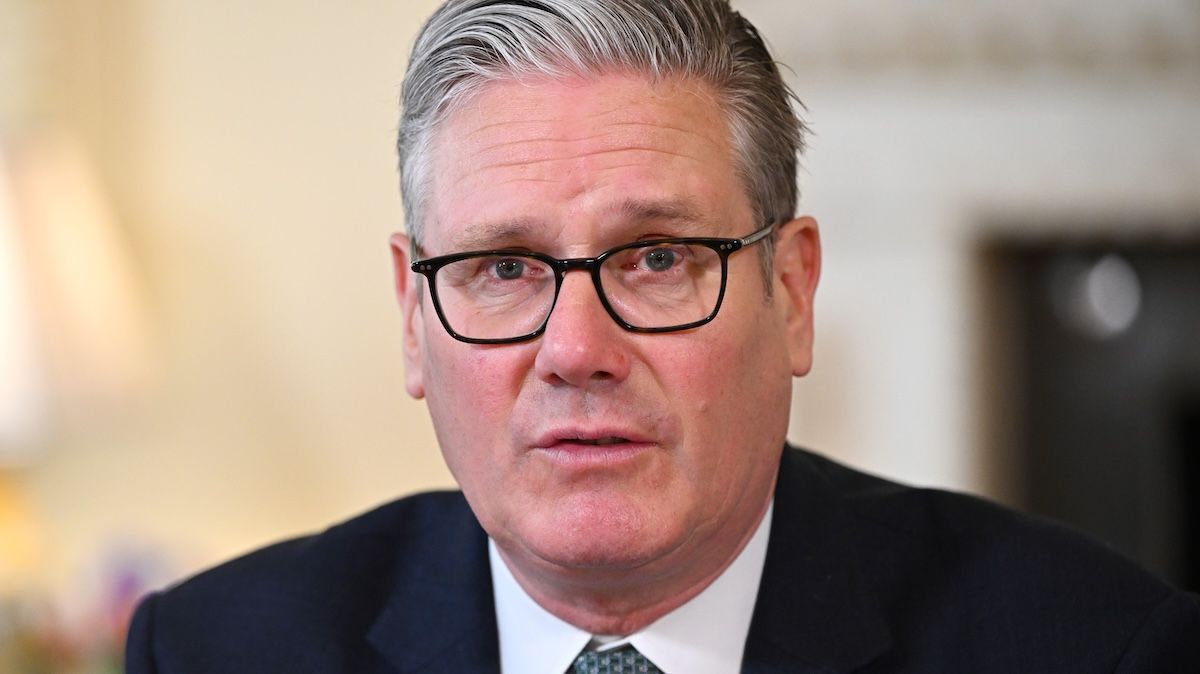
Prime Minister Sir Keir Starmer delivers opening remarks ahead of a meeting with senior figures from TikTok, X, Meta and other social media giants at 10 Downing Street, Westminster. Picture date: Thursday April 16, 2026. 84281335 (Press Association via AP Images)
There is a social media ban for children looming on the horizon in the United Kingdom. Many are concerned that the government is not focusing on the unintended consequences.
The idea of a ban has been brewing in the UK for some time, in response to high-profile cases involving social media harms to children. Although the UK has largely finished rolling out its wide-ranging Online Safety Act from 2023, there are “ongoing concerns about children’s online safety,” according to the government.
“It’s very difficult to know what the actual ban would look like,” said Alan Woodward, professor of computer science and cybersecurity at the University of Surrey. The details have not been announced yet, although specific restrictions have been discussed.
The government launched a national consultation in March of this year that dealt with how to improve children’s relationships with phones and social media, and asked whether the UK should implement the same social media ban as Australia.
The consultation, which closed last month and received over 116,000 responses, asked for responses to various types of restrictions, such as whether the UK should restrict livestreaming and location-sharing, or require tech companies to disable features including infinite scrolling and autoplay. Other measures include how to tighten age verification rules, such as face age estimation technology or digital IDs, as well as guidance around mobile phones in schools and simpler parental controls.
This past week, UK Prime Minister Keir Starmer also announced that the government will require hardware manufacturers including Apple and Google to activate or install software on personal devices to detect and block explicit images, which could only be bypassed by verifying that you’re an adult.
If tech companies do not comply with this within three months, the government has said, they will face a legal requirement to add these locks to any technology sold in the UK and could face fines and criminal liability — the specifics of which are unclear, although legislation “could cover operating system providers and others in the supply chain, such as retailers” if they don’t comply.
The United States has issued a warning to the UK that it should not implement a ban, arguing that it would “impose disproportionate compliance burdens on American companies” and affect freedom of speech.
In response, UK Technology Secretary Liz Kendall said she isn’t concerned “in the slightest” by the US’ warning. “I think companies will continue investing in Britain,” she said. “My focus is on what is right for British parents and British families.”
How would any restrictions on teen access work in practice?
Neither firm currently offers this type of nudity-blocking software, although Apple is beginning to implement age verification for people using iPhones and iPads in the UK for specific apps and services.
Google began detecting and blurring nudity on its messages app last year.
The ban is also expected to deal with limits on AI chatbots, which were not initially covered by the UK’s Online Safety Act and became a focus after Elon Musk’s AI chatbot Grok was used to create millions of sexually explicit images, mostly of women.
“I don’t think the government really knows where they’re going with a lot of this stuff,” said Jasleen Chaggar, senior legal officer for British civil liberties and privacy campaigning organization Big Brother Watch, speaking about the prospect of a social media ban on the Media Storm podcast. “They want an outcome, but they haven’t actually figured out the technical solution to get there. So it’s like, ‘tech companies, you need to figure this out or we’re just going to outsource this to ID companies and get them to figure out the details.’”
When asked about the status of the ban, a spokesperson for the Department for Science, Innovation and Technology said in an emailed response, “We don't comment on speculation about future announcements.”
"We've been clear we are determined to act quickly, but we will do so in a way that is effective, enforceable and genuinely keeps children safe. As we've previously said, we will set out the Government's response by the summer, and important[ly] we already have the powers to act within months rather than years."
How did the UK get here?
Conversation around a ban has been gaining traction, with more than 60 MPs backing a ban at the start of the year. There has been growing concern around online safety, with the government proposing earlier this year to give ministers unfettered power to amend the Online Safety Act, a wide-ranging hodgepodge of legislation rolled out almost three years ago.
In March, the UK government launched a six-week trial with groups of children that tested their responses to four different types of ban of apps including Snapchat, Instagram and TikTok, with the results to be used as the “evidence we need to take the next steps,” said UK Technology Secretary Liz Kendall at the time. These included a blanket ban, daily time limits of one hour, a curfew blocking access from night to morning, and unrestricted use of social media.
Starmer has referenced Australia’s social media ban, rolled out in December last year, as inspiration for the UK’s plan. Australia’s ban defines social media as a platform that enables engagement between two or more users, and allows users to post content.
"It is right that the government should tackle Big Tech's failure to prioritize child safety over profit, but we are concerned that the complex task of safely changing the digital landscape is being done on the hoof,” said Big Brother Watch’s Coulson.
The government has been criticized for rushing into a ban for political reasons. Critics have speculated that an embattled Starmer, who initially opposed the idea of a social media ban, is trying to build a legacy for himself.
Four of Starmer’s ministers resigned last month, including his safeguarding minister Jess Phillips, who cited slow progress on online safety. They joined more than 80 MPs calling for Starmer’s resignation.
What could this mean?
A large coalition of critics has warned against the unintended consequences of this type of ban, in Australia and now in the UK.
Concerns focus in part on surveillance: organizations have warned that requiring platforms to verify the age of children requires them to verify everyone’s age, leading to a lack of online anonymity and the threat of data breaches.
Age verification, which entails submitting some form of ID online such as an ID or credit card check, or a facial scan, “sounds simple” and “has got widespread appeal,” said cybersecurity specialist Woodward. “You get a lot of political points for it.”
But in reality, “it means age-verifying all of us,” he said, as everyone will be required to submit identification online to show that they’re over 16. Alternatives include using AI to verify age, he said, but this can be bypassed with makeup. He added that the discussions to put age verification on VPNs, which many have used to bypass age verification, are creating a “whack-a-mole situation.”
The UK’s Online Safety Act already requires people to verify their ages on websites that contain pornographic content.
"These policies create new risks, for adults and children alike,” said Big Brother Watch’s Coulson. He added that age verification introduces new data risks, as it’s not certain that platforms will delete peoples’ sensitive data.
Over the past year, for example, the platform Discord announced that over 70,000 user photos were potentially leaked, while users of the dating safety app Tea had their personal data and photos leaked online.
“The price of admission to the internet will now be ID checks,” he said. “Ending anonymity online is a step that authoritarian regimes can only dream of. We all deserve privacy but political dissidents, journalists, and victims of coercive control will find the need to out themselves especially terrifying."
When it comes to age verification, “people will say, ‘well I’ve done nothing wrong so I’ve got nothing to hide.’ And that is such a naive argument,” said Woodward. “Once you put the technology in place, time and again we have seen it being abused by govts–you get this scope creep.”
There are concerns, including from Scotland’s children’s commissioner in response to the UK’s consultation, that a ban could send children to more unregulated parts of the internet. Others are worried about cutting off the benefits social media provides young people, such as giving LGBTQIA+ youth a chance to access communities online.
The ban comes as countries including France, Greece, and Indonesia are considering and preparing for social media bans.
What are the alternatives?
Critics have argued that this type of ban is hard to enforce: according to research, 61% of children and teenagers in Australia still have access to social media. There are also concerns that it makes children ill-equipped to handle social media and the internet when they get older and do have access.
“We’re not honest enough about what these platforms are,” said Velisalava Hillman, a lecturer at Goldsmiths and founder of EDDS Institute, which researches and audits educational technology and AI systems used in schools. “They’re not about socializing or creating friendships–they’re moneymaking machines.”
If we “compare the opportunities and the current risks,” the risks far outweigh the positives and “are increasing in breadth and depth,” she said.
The idea of a ban is “a very narrow way of looking at this problem,” said Hillman. “The debate is always around the idea that children necessarily have to be on these platforms. They don’t have to, the world existed well before these social media platforms.”
“We await the government's wider proposals, but this plan is a retrograde step for everyone's privacy,” said Coulson. “What we need is a wholesale culture change around the age at which children are given devices, what kinds of devices, and how parents engage with existing tools."
Authors