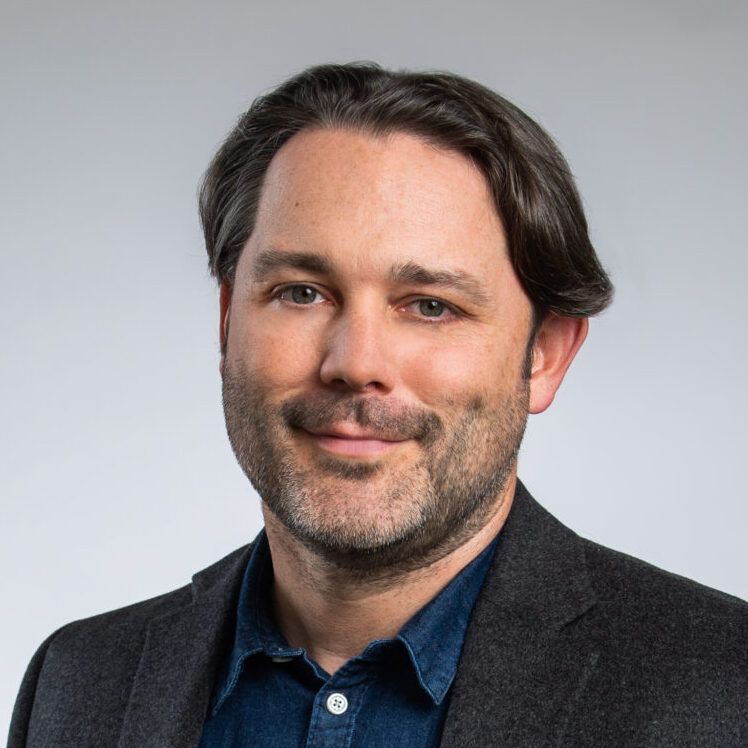
Katie Harbath on the 'Collision' of Tech and Democracy
Justin Hendrix / Nov 29, 2026Audio of this conversation is available via your favorite podcast service.
Katie Harbath is an influential individual in the trust and safety industry. Now a consultant running her own firm, she spent years at Facebook during a tumultuous period. She recently published a book — Disrupting Politics: A Front Row Seat to the Collision of Technology & Democracy — that is both an account of her personal experience and a window into the competing forces that shape how the tech industry makes decisions that impact politics. I caught up with her about the book soon after the US midterm elections.
What follows is a lightly edited transcript of the discussion.

Justin Hendrix:
Good morning. I'm Justin Hendrix, editor of Tech Policy Press. We publish news analysis and perspectives on issues at the intersection of tech and democracy. Katie Harbath is an influential individual in the trust and safety industry, now a consultant. She spent years at Facebook during a tumultuous period, and she's recently published a book that is both an account of her personal experience and a window into the competing forces that shape how the tech industry makes decisions that impact politics. I caught up with her soon after the US midterm elections. Let's jump right in.
Katie Harbath:
So my name's Katie Harbath. I'm the CEO of Anchor Change. I work at the intersection of tech and politics, and I have a new book called Disrupting Politics: A Front Row Seat to the Collision of Technology and Democracy that came out on Oct. 6.
Justin Hendrix:
Katie, I first met you in the aftermath of the 2016 election. I remember meeting you at a round table that was being hosted in New York City where various folks from civil society were talking about possible recommendations that folks could make to social media companies and to Meta, then Facebook in particular, around its role in politics and transparency measures, questions around political advertising, et cetera. And I feel like I come across you all the time in the field since then at various events, at conferences, at all of the things. So I just want to inform the listener that you and I have known each other for a while, going on a decade, I suppose. And I would say that in most of those meetings and most of the contexts where I have come across you, we've sort of been on opposite sides of the table, that my diagnosis often of the problems of social media and the concerns around concentrations of power in this industry and the types of decisions that have been taken by executives in these companies on occasion did not quite sit right with you based on your experience in the industry and your defense of the industry based on the complications and things that you understand from having been inside it didn't quite sit right with me.
Is that a kind of fair characterization you think of our positionality when it comes to the tables we've sat around?
Katie Harbath:
I do. I mean, I think that these are not easy questions in which to grapple with. And I think that there's a lot of differing viewpoints that people have. And so yes, I would very much agree with that, that we've been in many a situation where we've been grappling with that. And when I was at Facebook having to explain how we were approaching things and also trying to take the things that yourself and others in civil society and academia, et cetera, would be sharing with us. And then I would have to take those back internally and be sharing that with the various teams about here's what experts that we're talking to think that we should be doing and their perspective.
Justin Hendrix:
So I just kind of get that out of the way upfront that we will not agree, I will not agree necessarily with every action you've taken in the past or necessarily the conclusion that you've come to in this book. But one thing I will say is that I do always get the sense that you are someone grappling with the decisions that you've taken and trying to interrogate your own motivations. And that's what this book seems to be about.
Katie Harbath:
Yeah, very much so. And I think that there's making the decision in the moment with the information you have at that moment in time, what is happening, what the political environment looks like, et cetera. And then there's looking at those decisions five, 10, 20 years after you make them and you see the repercussions from them. And so that's one of the things I very much try to grapple with in the book and wanted to be intellectually honest with myself and others around all of that because I think many times we can make these decisions with all of the good intentions in the world, but that doesn't mean that the outcome is necessarily what you expected it to be. And I think there's a lot of lessons to be learned from that, especially as we're going into this AI age where again, a lot of people are making decisions with the best information they have at hand at this moment, but they don't know necessarily what those are going to look like many years from now.
Justin Hendrix:
I want to start by maybe just casting folks back to where we were less than a decade ago, but it still seems like forever ago. You're inside Facebook at the time, and I'm drawing here from a Bloomberg report from December 2017. This article is reporting on the unit that you led inside of Facebook and it says, "A little known Facebook global government and politics team that's neutral in that it works with nearly anyone seeking or securing power." It writes, "In the US, the unit embedded employees in Trump's campaign. Hillary Clinton's camp declined a similar offer. In India, the company helped develop the online presence of Prime Minister Narendra Modi, who now has more Facebook followers than any other world leader. In the Philippines, it trained the campaign of Rodrigo Duterte, known for encouraging extrajudicial killings in how to most effectively use the platform. And in Germany, it helped the anti-immigrant Alternative for Germany party, the AfD, win its first Bundestag seats according to campaign staff."
And the article includes a quote from you. “‘We're proud to work with the thousands of elected officials around the world who use Facebook as a way to communicate directly with their constituents, interact with voters, and hear about the issues important in their community," Harbath said in an emailed statement.”
I bring this one up because in my mind, I kind of remember reading these articles at the time and these felt like major revelations, 2016, 2017, this time period where we're seeing investigative journalists, we're seeing governments post the 2016 election cycle in the US post-Brexit really start to examine the role of social media and politics. And reading this book, I kind of get the sense that you might would've written that statement differently now than you wrote it then. But I'm interested, take me back there, take me back to the moment you're getting that request from Bloomberg, you're getting those requests from media across the country.
What did it feel like when you were in that moment of scrutiny?
Katie Harbath:
Oh my gosh. Well, and there were a lot of different moments. I'm trying to think. 2017 was quite a weird year for the work that I was doing because in the 15 years leading up to it, social media was seen as a very positive thing in political campaigning. Barack Obama had successfully used it in 2008, in 2012. I was brought on to Facebook in 2011 in which to help Republicans get on the platform. And then after Obama's win in 2012 and how much he was heralded for using data and digital, we saw a lot more world leaders and other campaigns and parties want to do similar things that President Obama had done. And so our philosophy as a team was that we were so nervous about being seen as putting our thumb on the scale either way, but at the same time knew that we needed to provide...
Well, I guess we felt we needed to provide support to politicians. I guess one could argue that maybe there should be no team and nobody helping to provide the support, but because they were prominent individuals that were regulating us and they were just supportive constituents, we wanted to be able to provide support. And so because we wanted to not be seen as putting our thumb on the scale, our philosophy was as long as you were allowed to be on the platform, we were going to provide you the same training that we would provide anybody else. And then it was obviously up to them about how much they took us up on that versus not. And so like you said with the quote there about the Trump team in 2016, that got us into a lot of hot water about how Trump took us up on having people down in Texas, et cetera, helping them particular with their ads, whereas the Clinton team did not.
I still think it's right that companies provide support to politicians, et cetera, but I do think there were a lot of changes we made post 2017, particularly on the sales team to make sure that they were not working on commission, they were just salaried. We had a lot more transparency in terms of the trainings and stuff that we were providing. Also, the political ad transparency and stuff like that I think was really crucial. And if I could wave my magic wand, I'd want to have a lot more of that transparency about what my team and the sales team were doing at Facebook in terms of just what we were telling campaigns in terms of the best practices of using these tools.
Justin Hendrix:
I guess just sticking with this 2017 moment, how you might look at that differently, and it strikes me that if you cast your mind back to that, it's like this sort of thought that this is just democracy, right? We can embed with both campaigns on either side and in a particular election, provide them support to reach their constituents and that is an unalloyed good. But I suppose looking back, that seems too simple in a way, especially when we think about people like Duterte. Was there something wrong about your perception of democracy abroad at that time or democracy either?
Katie Harbath:
Oh, that's a good question. I mean, I do think we thought too simplistically about it. I do think too, we brought a very American view to it, which was that here in America, we have a much more First Amendment, free speech, and it is a democracy versus other places that to use Freedom House terms might be partly free or not free at all where it gets a lot more complicated. I think too, there are challenges of what we did, the training we provided, thinking about Duterte, there were things that unfolded not only during the campaign, but then also post-campaign of what his and his team were doing. So there's a little bit of ‘in hindsight’ type of stuff also that we didn't know at the time. Even Maria Ressa, that I talk about a lot in the book and some of the warnings and stuff that she gave us, she was using Facebook a lot, I was doing a lot of interviews with her, et cetera, in the lead up to that election.
But then it was sort of post-election that they started bringing to us a lot of the things that they were seeing about what the Duterte camp were doing on Facebook. And I 100% agree with Maria that the Philippines is very much kind of ground zero in 2016 for alerting us to this. And I also think too, we were not thinking about foreign interference in the way that we saw unfolded in 2016. We were not thinking about world leaders like Duterte or Trump pushing our community standards in the way that they ended up doing. We were not necessarily fully prepared for how much governments in various places around the world might try to pressure us to take down their opponent's content and stuff like that. That, again, the way that we approached it initially was a little pollyannish, I guess would be the right way in which to say that of being like, "Oh, this is just good for democracy, people being able to connect with their constituents, and so we're going to try to spread it far and wide and not think about those ways that it could be abused."
Justin Hendrix:
Does that same insight now kind of retroactively color the way you think about other things, other kind of policy crises that you responded to? I'm interested in, for instance, political ads.You talk a lot about that in the book, the question over transparency on political ads, the questions over whether political ads should be fact checked, whether those things should be handled carefully before being accepted for publication. Does that same kind of retroactive critique of the decision making at the time hold for things like that where looking back, it might seem more obvious that just valuing free expression or free speech as it were might not have been the right move?
Katie Harbath:
I don't know that I would say that in retrospect any decision seems obvious because I still think there's really hard trade-offs when thinking about this type of stuff. I still think that allowing political ads is the right move versus banning them. And I totally understand why others might disagree with that, but I think allowing them and then having transparency is really important. And I continue to be very proud of the fact that what we built at Facebook, not only in the US but around the world with that political ad transparency, it's probably the only example of a company self-regulating in that way without having to... Granted, there's laws with DSA and stuff like that, but at least here in America of the things that don't need to be done. But I do think a lot about the fact-checking politicians part. So to give people context, it was decided in 2018 and 2019, it came up a couple of times, that the company was not going to fact check ad from politicians.
So it wasn't all political ads. So despite what Aaron Sorkin claimed on The Social Reckoning, it was not all political ads, it was just those from politicians themselves. And the backstory in it, and I talk a little bit in the book, was we were trying to look at how it works for broadcast stations. So your ABCs, your NBCs, your CBSs, because of the FCC rules, they have to run an ad by a candidate and the candidate could claim the sky is orange and the station still has to run it, and they can't even fact check it till the news show that they're going to have around all of that. And so a lot of people now, we were not covered by those same rules. We didn't have to necessarily go that route. I do kind of wish we would've tried to think more creatively about how do you think about that balance of things that are newsworthy that are being talked about across cable news, other news stations, et cetera, making sure people have the right to hear from those that want to represent them versus also providing context around what that looks like.
And one of the things I talk about a lot in the book and I continue to struggle with is this sort of catch-22 about people being concerned about the level of power that a company like Facebook has and the ability that they have to shut down somebody's speech and take it off the platform versus also, again, their right in which to be sharing that political speech versus not or having checks and balances. And so yeah, if Mark hadn't been, it was very much Mark being like, "No, we are done having this conversation. We are not fact checking politician ads." It would've been very interesting to continue to have more of a conversation with civil society, with academia, with others about what does that look like to try to have... Is there a way to have both of those things? Maybe not, but it is one area that I would've liked to see if we could have gotten more creative on.
Justin Hendrix:
Okay. So I think both these kind of instances that I've asked you about so far, they kind of point to this tension that just runs through the book. When I was inside, this is how I looked at it. This was the complication. This is why we couldn't necessarily see things in the way that maybe outside critics in civil society saw them. There were complications, there were complexities, there were often, it sounds like, engineering challenges to delivering -
Katie Harbath:
Very much so, yeah.
Justin Hendrix:
Some of the things that you were trying to deliver. And yet, I don't know, I get the sense that when you step back out of it towards the end of the book, you're still looking back and you're seeing potentially, I don't know, can you step away from all that complication and see something fundamentally flawed about the institution, about the way the company was run at this point?
Katie Harbath:
Oh, that's a really good question. I mean, if I take a step back, one of the biggest flaws that I continue to also talk about if I could wave my magic wand is the fact that Mark has these super voting shares and is not held accountable by anybody, not even the board, you could argue he's held accountable by shareholders, et cetera, but Mark gets to do whatever Mark wants to do. And then when he makes a decision, that is the end of the conversation. And so it was very hard sometimes. I think there could be a lot of debate, but then there was a lot of times too where Mark was just like, "This is how it's going to be." And sometimes we would spend, I think, I don't know if I have the story in the book, but it's a story that I've heard publicly shared before, where the team would spend months and months and months doing research around a particular policy and then Mark overnight over the weekend rewrote it.
And I can't remember if it was around hate speech or something. I'd have to look up what exactly that was, but that was really frustrating and that was a challenge. Whereas I wish from a corporate governance standpoint, if you would've had a bit more checks and balances, I don't know where different decisions might've been made versus not, but it does ensure that it's not just one person being able to make the final call and nobody really being able to push back on it.
Justin Hendrix:
So I guess the reason I'm asking, I'm kind of wondering when you look back now on, I was in this company, I was making decisions, you were obviously doing your job occasionally, I'm sure you were doing what your boss told you to do or doing what you felt executives believe was the right path, even if you disagreed with it. And it just seems like looking back now, you have a mountain of evidence that lots of decisions were being taken inside the company I'm sure that you didn't know about. Things around the way research was being handled or things around exactly how policy was being set at the top or what were the kind of calculations that this sort of unaccountable CEO was making in his own personal interests, which is very difficult to separate from the company's interests at this point. I mean, the book, you literally seem to be grappling with every aspect of this, but I don't know, I'm kind of trying to press you on this a little bit.
Does this question make sense? It was a company itself that effectively had a bunch of internal inconsistencies and you could argue they came from the top, but when you were there, you had to operate as if effectively those inconsistencies weren't there, the inconsistencies had to be papered over in a way.
Katie Harbath:
Well, I think there were... So one of the things I grapple with in the book is this concept. Sometimes it's like I grappled with do I feel guilty? And guilty doesn't feel like the right word around thinking back of my time at Facebook and even before that when I was on campaigns because I think that, and I don't have a good word for it if anybody has a recommendation for what word to use for this. And it's about you're making these decisions and they're going to have an impact in history and you don't realize until many years later necessarily what that impact is, but you don't necessarily... Sometimes I'm like, I don't know if I would've made a different decision or not. It's hard to know the path not taken and what that would've looked like and what the impacts of all of it would've been.
I think too, when it comes to the complexities, it wasn't, and I don't want to just put this at people at the top, there were also varied teams that had competing priorities. So a lot of talk about the growth team that existed at Facebook, which was their job was to get more users on the platform and getting them to stay there longer so that you could run more ads, et cetera, make more money, all of that kind of stuff. And then you would have the Civic Integrity team that Samidh Chakrabarti ran and other integrity teams that would be pushing for different measures that sometimes would hurt growth. And so then you would have those teams in competition around what is it that we should do? And then you would have senior execs that were making that call about which, and sometimes it was Mark, about which decision they were making, how things were decided to be shown to you in the algorithm or what was recommended.
I was not a part of those conversations unless we were talking about political content. And then they were looking to me to be like, how do we define what is political content or issue content, which was very difficult. But I wasn't a part of deciding people if they went and saw The Social Reckoning might remember meaningful social interactions, MSI, that was implemented in 2017. That was one where I very much felt like I was like, I am on a runaway train and I have no control over where this is going. And I remember Samidh calling me up at one point in time because of the impact this was going to have on some of the civic integrity work, and we were doing all that we could to try to ring the bell and get different VPs on board, but Mark was so adamant that this is what was happening and it's like, okay, this is what's happening.
Now we got to figure out how do we grapple with that, et cetera. And there were also, like you said, teams that we might write a policy, but then do you have the resources in which to implement it? This came up with, people might familiar in your podcast with the crosscheck list, which was a list of not just politicians, but other prominent figures on the platform. And it was started very innocently, which was we accidentally took down Barack Obama's page in 2012 because he said his favorite book was Moby Dick and an engineer had implemented a swear word list and Dick was one of the words and it got taken down and we didn't want the President of the United States page to just be able to taken down automatically, so we wanted to have an extra check on it. Well, fast-forward 10 plus, not 10 years, but eight years or so, and you have a lot of content that's going into the queue to double check, and there aren't enough people that are staffing that queue.
And so that wasn't in my control. I'd have to go to the operations team and try to convince them, "Hey, you need to staff this up. How do we do that?" And then they'd be like, "Well, we don't have budget." So I don't mean to make this more super complicated, but it's just sort of an example of you're constantly kind of fighting internally for different, because everybody's got different priorities. They have limited budget, they have limited headcount, and trying to figure out how do you figure out those balances and those trade-offs between all of them, and then how do you escalate that to the appropriate senior level to ultimately make the call?
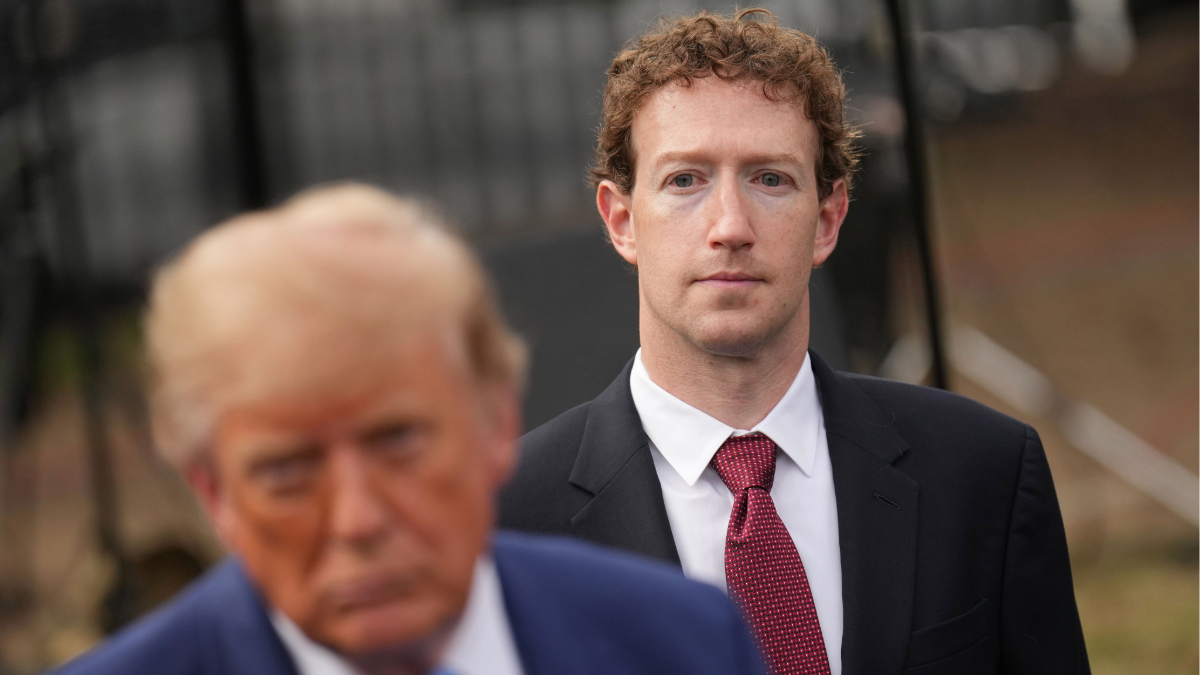
Meta CEO Mark Zuckerberg listens as President Donald Trump speaks to reporters at the White House in Washington, Tuesday Sept. 29, 2026, after meeting with top executives of AI firms. (AP Photo/Jacquelyn Martin)
Justin Hendrix:
I guess looking back now though, does it feel like there was always one overriding prerogative, that you kind of see that now?
Katie Harbath:
Not necessarily. You mean a prerogative like making money or growth or things of that nature? Absolutely.
Justin Hendrix:
I feel like what we've learned about Meta, about Facebook, I mean, you in the book detail a lot of the various revelations that have come even in some cases after your time there. We look at the changes in 2025, for instance, it's Zuckerberg's rule and Zuckerberg's prerogative and Zuckerberg's bid for domination.
Katie Harbath:
And it was always what was best for the company, which is not necessarily what is best for society. I think when you're in there, it is, okay, looking at it from whether it's from a business perspective, a politics perspective, a reputational perspective, there's probably a few others too, but wherever you are in that moment and where are you getting the pressure from and what are you trying to alleviate, et cetera, was always you were trying to figure out, okay, what do we need to do to do the best thing for the company, I think would be the overarching thing, which wasn't always necessarily thinking about what is our role, and I'm going to use our as being Facebook as a company, Facebook's role, what is our role in society and what does that look like? And what is best for society versus what is best for the company was definitely, I would say, the overarching thing and what that looked like depended upon the day, the hour, the year that we were in.
Justin Hendrix:
You pointed to January 6th as the breaking point. That was a breaking point for you. I have to say it motivated me as well as an outside observer of these things. I spent a lot of time on the question of the role of social media in the kind of events that precipitated the insurrection at the Capitol and in the aftermath. At that moment, you point out that this was the moment you decided effectively that you needed to leave the company, that you couldn't help to think about these questions and be part of some sort of change from inside it. Just take me back to that moment. I understand from reporting that things were fairly intense inside of the company. A lot of people internally believed that the company had played a role in precipitating the insurrection, even though senior executives would go on to downplay that role, including in congressional testimony and in the media for weeks and months, years after the fact.
Why was that the breaking point for you? What was that moment like?
Katie Harbath:
So I want to set a little bit of context because in late 2019, I got pulled off the election work. So my team was responsible for coordinating across the company all around global elections. So we're pulling together the Civic Integrity team, partnerships team, legal. There were 40 different teams that we were pulling together, and then you had Samidh's team as well. So there was very much a core group of us that were trying to work on a lot of this stuff. And in late 2019, I got pulled off of that work. At the time, they just told me that they were going in a different direction. I find out later through depositions and books and all that kind of stuff that folks like Guy Rosen, who was the head of Integrity and Samidh's boss, they viewed me a lot as the person that caused a lot of these problems, brought politics to Facebook, et cetera, and did not see me as part of the solution, saw me as part of the problem, and I was being removed from all of that.
So I then went back to public policy and I was trying to figure out a role for myself. And in January 2020, that's when I realized all the elections happening in 2024, et cetera. But then COVID hits, and I'm spending a lot of that year figuring out what's next for me because I had been at the company for 10 years. I was turning 40 in November and we had the election. So I say all that context in that by the time I got to January 6th, I very much felt like an outsider even inside of the company. The way I describe it is if people know the glass domes that you put on a cake or a pie or something like that, I felt like a glass dome had been put over me where I couldn't do anything internally, but I couldn't do anything externally either.
And that's a really tough spot for me to be in because I'm just a person that likes to work. I don't like to just be sitting there not doing anything. And then when January 6th happened, I live in Rosslyn, Virginia, which for the folks that aren't familiar with DC is just across the river, and I'm watching the events unfold at the Capitol, and I'm realizing that the two entities I had spent my career working for, the Republican Party and Facebook look very different than when I had first started working for them. At this point in time, the Civic Integrity team had been dissolved. My team had basically was no longer had any power. It was like everything that we had tried to do was neutered inside the company, just did not exist anymore. And that was really frustrating when our job was to try to figure out how do we protect the integrity of elections on the platform, and then you're watching this insurrection happening at the Capitol, and it's like, what did we miss?
What were we not a part of? It was very difficult for me because I was no longer in a lot of those meetings, so I don't even know what we did or did not know in the lead up to January 6th and who was even making the decisions around things like Stop the Steal, et cetera. And as I was watching all that happen, I was like, I know I was a part of getting us to this point, but I wanted to be a part of thinking about how do we go from here? What lessons can we take of what we did and did not do in that social media era and going forward? And so that was the impetus. And I could tell that the company was pulling back on politics. They weren't going to let me do the types of things that I wanted to do.
And so it was very much the extra last set of motivation that I needed to go out on my own and start Anchor Change and be working with civil society think tanks and also other companies on how to think about these issues.
Justin Hendrix:
You think you stayed there too long?
Katie Harbath:
Yes, I do. If I could go back and time travel to myself, I should have left in late 2018, early 2019. In hindsight, the writing was on the wall in multiple ways. One, the direction the company was going in was not matching what I wanted to bring to the table. A lot of people in the company no longer wanted my counsel, my expertise, et cetera. And so that also wasn't a fit in a lot of it. But yes, I should have. And I was also very burnt out. I was very, very burnt out from being there that long. And I think that did not make me a very good employee or person, particularly in 2019.
Justin Hendrix:
Let me ask you about this transition. You left Facebook and as you point out in the book, you kind of cast about for a bit trying to figure out how to stay involved in these issues. You point out that there were times where you felt like you had to push your way back into certain rooms and I think try to remind yourself that you had expertise and remind others that you had expertise that could potentially be valuable. What do you make of the industry now that you've been out of it? I mean, you're a consultant to it, you're still essentially selling your services to corporations who are working on these things. But I don't know, how does that experience change the way you go about that?
Katie Harbath:
I think there's a couple of things. One is I very much try to... So to give an example here ahead of the midterms in the US, I pulled together two round tables around the election and AI and how particularly AI models were responding to political questions. And part of the reason I wanted to be the one to convene that was I wanted to be able to pull together all the different voices, election officials, civil society, academia, and the companies in which to have those conversations and to just be able to meet one another and understand how each other was approaching these types of these problems. And that is something that being able to have all of those different perspectives is really important to me. And I'm really grateful that I've been able to work with all those different communities in different ways so that way I can try to...
It's like, how do I better help make sure that people who have this certain expertise can be heard inside of these companies? How do we provide more recommendations that might actually be taken up by product leaders or engineers and stuff like that? And so it's a little bit of like, okay, how do we from the outside, what is the best way to have impact and influence in the types of decisions that are having? And also how do we have the debates about these policies? So again, we'll just use how these AI models respond to political questions. These are really thorny problems right now. If somebody asks about what does candidate X think about issue Y and should I vote for them? Given that a lot of traditional news organization and mainstream ones, understandably so, are blocking access to their content, while they continue to negotiate for payment, stuff like that.
Why that is blocked, what should those models do? Because it's not a great user experience to just say, "Sorry, I can't answer that question." It's not a great voter experience. It's not good for them from a civic standpoint. So what information should those AI models be pulling in? And that is something that I think we can all agree should not just be decided inside the companies. That is something that we did not want during social media with the algorithms and stuff. So I try to, in my role as an outside consultant and in person of this community is like, okay, what can I do to help folks on the outside understand here's what's going to be debated inside these companies around those decisions? And then where do you want to make sure that your viewpoint is understood by them about how these things should be answered?
How do you help make sure policymakers know, et cetera? Because I think having more people a part of that conversation will make for better answers and policies and then also how they implement those policies, if that makes sense.
Justin Hendrix:
In a way, I'm kind of thinking that about you in that meeting where we first met where you must know, it felt to me at the time that you were the company apologist. You were there to tell us why certain things just couldn't be done or why our recommendations were naive. It sounds like, I don't know what I'm quite trying to answer here, but you've evolved.
Katie Harbath:
Yes. Well, I had multiple roles in that. So externally, sometimes I was having to be the person that was like, "This is what the company decided, here's why. I understand you all feel differently," but that was my role in which that I had to play. Sometimes it was also, "Hey, we're thinking about, we want to do political ad transparency. I need to figure out how we define what a political ad is." And I go to all sorts of different orgs, and the only common thing that I got from everybody was, "Ooh, that's really hard. I don't want to be in your shoes." And I'm like, "That's not helpful. Thank you." But then in a role that I think a lot of people externally did not see me play was the one internally where then I am taking all the things that I heard from folks like yourself and others, and I'm sharing that with the product teams, the policy teams, et cetera, about like, "Hey, listen, I really got raked over the coals for this decision that the company made.
Here were the reasons that we were given or they feel like we should go this route or this route." And either advocating for that, demonstrating that, et cetera. And oftentimes, and I think we really failed on this, is closing the loop sometimes with folks like yourself around where we actually took in your recommendations versus not, and better even describing, again, here were the trade-offs and here's why we made those and didn't necessarily do what you all did. And again, if I could wave my regulatory magic wand, one of the things I would love with transparency is transparency around that sort of decision making of here were the criteria that we were basing this decision off of, here were the options and here's why we landed in this spot and then allow people in which to debate that because then that helps and makes it stronger not only for us for Facebook going forward, but other companies as well, because we've seen a lot of other companies pick up and do similar things that their other fellow companies are doing when it comes to these policies.
And so I totally get it. And I knew that was my role. My role was to get yelled at and absorb some of that around that. But then also my role was then to also represent you all in your all's position sometimes internally as well.
Justin Hendrix:
Let me ask you a question about your personal politics, your worldview, how those have evolved. I mean, you came out of the Republican Party, worked with Rudy Giuliani, a different Rudy Giuliani, I think.
Katie Harbath:
Very different. He was America's mayor in 2007.
Justin Hendrix:
I think that's fair to say than the one we've known perhaps for the last decade. But we talked early at the outset that in some ways, one of the things that your mind has changed on is recognizing that this sort of US worldview or maybe even slightly center right worldview of speech and the role of social media, that has changed. Is that part of your evolution here? I mean, I don't know. I get the sense throughout the book you, I think rightly are still trying to argue in a way that we have to take certainly perspectives from the right seriously and that there are legitimate perspectives from the right and from Republicans. And yet somehow that critique feels, or that kind of point of view feels a little, I don't know, not enough for me in the face of the retrospect of what we know now about where Trump has taken the Republican Party, where MAGA has taken it.
We've just seen this massive repudiation. We've just seen a year of violent ICE raids and we've just seen probably the most kind of corrupt presidential administration the last two years and possibly American history. I don't know what I'm trying to ask here again, other than that I don't think your politics are those politics clearly.
Katie Harbath:
No, and that's one of my challenges I think with... It is very hard to separate out, and I totally get it, around where I'm like some Republicans I think have very good points, but it's also hard to separate out, okay, my more old school Republicans, the Bush era type people versus the MAGA Donald Trump people. And I talk about when you're asking about my own personal politics, I joke that I'm a Republican with a pharmaceutical level disclaimer underneath it of what kind of Republican I am. And I am basically a swing voter now. I have not voted Republican in the presidential election since 2016, but I refuse to give up the Republican label because I don't want to cede it to the MAGA movement. But I'm definitely not a Trumper. I'm a woman without a political home. I don't feel like I belong in any of those.
And that makes it very hard. I adamantly, and I talk about this in the book, the way that Jim Jordan [R-Ohio] and Republicans went after people like Yoel Roth and others coming out of them taking over the House majority in 2022, I absolutely abhor and disagree with and feel like there are much better ways that Republicans could make some of their arguments about company policies and what that should look like, et cetera. But they chose a path that I definitely disagree with in terms of having those sorts of debates. And so that's one of the things I think I try to talk about in the book. And also I think one of the things it's very just hard to have those sorts of debates with people given where the Republican Party is today and what that should look like. So that's the best way that I can describe where I am myself.
I will say that also I am very glad and take very seriously the fact that I'm invited into rooms in both the Democrat and Republican parties from sometimes I'm in the room with Trump people, sometimes I'm in the room with never Trump people, sometimes I'm in the room with Democrats. And I take that very seriously that people have trusted me to bring me into those rooms. And it also gives me, again, a very good cross section of how people are thinking about this and being able to play that bridging role of trying to explain. I share in the book one of the craziest days at Facebook was I went from one meeting with very progressive groups where they were basically like, ‘you are killing people’ around… This was needing to provide addresses for political ad transparency and concerns around Planned Parenthood locations being targeted. And then immediately into a meeting with the Trump people where they were like, why are you not touting more about how we use Facebook?
Why are you not more happy about this? Why are you not doing this, et cetera? And so that was a lot of my world of going in between those. And I think that's made me... I can't find the right word for it of what that's made me, but it's allowed me to understand where a lot of different perspectives are coming from and then trying to, okay, how do we take all those different perspectives and how do we think about a good path forward from that?
Justin Hendrix:
I guess I'm just wondering, even in that example, some people are feeling sort of existentially targeted, right?
Katie Harbath:
Yes.
Justin Hendrix:
And then effectively others are, I don't know, not recognizing or not willing to admit or maybe even in the case of the Trump administration gleeful about it. I don't know. It's a tough one. I wonder if you look back on Facebook and its role in politics, and certainly you think about Zuckerberg's tilt back in 2025 towards Trump, is there some part of you that can see maybe the company made the wrong calculation about Trump and MAGA longer than it should have?
Katie Harbath:
You mean in terms of capitulating to them, you mean with those?
Justin Hendrix:
Or I suppose in some cases enabling, being part of building the political consequences that became those masked ICE agents in the street.
Katie Harbath:
So this is a question I grapple with in the book and I continue to grapple with as well because there's a world where all of these companies in order for business survival, and we talked about earlier the overarching thing when decisions were being made was what was best for the company in that moment in time where the politics were. And so you very much see Mark in particular, and I've documented this many, many times about depending upon whether it was Democrats in power, Republicans in power, where America itself was, he will kind of chameleon into whatever is the thing of the moment versus necessarily being like, here's a good understanding. I actually have no idea where he stands politically and what world he is hoping to shape. And I think that is one thing that, and I think I talk about in the book too about, I don't think any company can actually be neutral.
I think it is very, whether you make a decision on something or not, that in and of itself is political. And so the best you can do is be like, "This is the type of society I am hoping to cultivate. I have this massive platform in which a lot of people can share content and information, including those in politics. This is my POV on what we're going to allow, not allow, et cetera." Because Facebook and every private company has that right in which to do that. Now we can have a debate over the power that they have and whether or not they should be able to. I think even when Donald Trump was kicked off the platform, Angela Merkel, who at the time was chancellor of Germany, did not feel comfortable about the fact that Zuck could just take down Donald Trump and take down any world leader's megaphone, which I think is a very fair debate and conversation that we need to have around all of that.
And so I've been rambling a little bit, so I kind of lost the initial question, but I think you are right. They're just not easy questions. And this is why too, it is very understandable. I'm like, I do not ask people to have a different opinion about the decisions that we made. I'm asking them that when they read the book, at least it's like, "Oh, I hadn't thought about that perspective before around it or didn't necessarily realize that these were some of the other things that they were grappling with internally when they were debating this." And I'm hoping it continues to spur a discussion around in hindsight, what should we have done and what sort of power do we want these companies to have? Because that question is still not settled and we're going into another era where now we have these AI companies that are also very much influence our information environment that we need to be thinking about as well.
Justin Hendrix:
You write in the book at the end, and you make so many concessions, I will say, in this book. I think that's one of the interesting things about it, that you do effectively kind of concede looking back so many things that you perhaps would do differently now. “I'm responsible for what I helped build, for what I missed, and for what I defended longer than I should have. I've learned that shame and guilt can freeze you and place responsibility if you let it, can move you.”
I don't know. I mean, I think at the end of the day, I sense in you someone truly trying to grapple with these things. And I'm wondering if you can imagine the trajectory from here. I mean, you are still a young person, at least in my view. What do you imagine 10 years, 20 years from now, Katie Harbath is working on, assuming it's not just spending more time duck hunting?
Katie Harbath:
And fishing and all of that because the robots have taken over. I've been thinking about that this week is my 46th birthday, and so I have very much been cognizant of the fact that I'm very much solidly a middle age. And writing this book, it was very much a retrospective of the first half of my career. And on one hand, I don't know what the world's going to look like in two weeks, let alone two months to know what I might be consulting on or where the needs might be or what might be interesting to me. I know I want to continue to, I've got a couple more books in me that I want to be thinking about. I just want to be a part of the conversation and contributing to this work and society in whatever way makes the most sense with that and continue to be open and transparent around grappling.
It was very important to me in this book that I was trying to be very intellectually honest with myself about grappling with a lot of those decisions. And I'm glad you recognize that, and I don't know the answers in some of them, but I continue to hope that in the work that I'm able to do, that I'm able to help bring more voices to the table around how do we think about these really tough questions and how do we actually try to implement them?
Justin Hendrix:
We could talk about these things for quite some time longer. I've got many other questions that I didn't get a chance to ask you, but I do suspect that I will continue to see you and engage with you in those various rooms where we gather to talk about these things. And I suspect this won't be the last time we'll have this conversation. So I think I'll leave it there and just recommend that my listeners go check out Disrupting Politics: A Front Row Seat to the Collision of Technology and Democracy by Katie Harbath. Katie, thank you.
Katie Harbath:
Thank you for having me.
Authors