Two Reasons Meta’s Settlement with State Attorneys General is a Win for Mark Zuckerberg
Sumit Sharma / Sep 16, 2026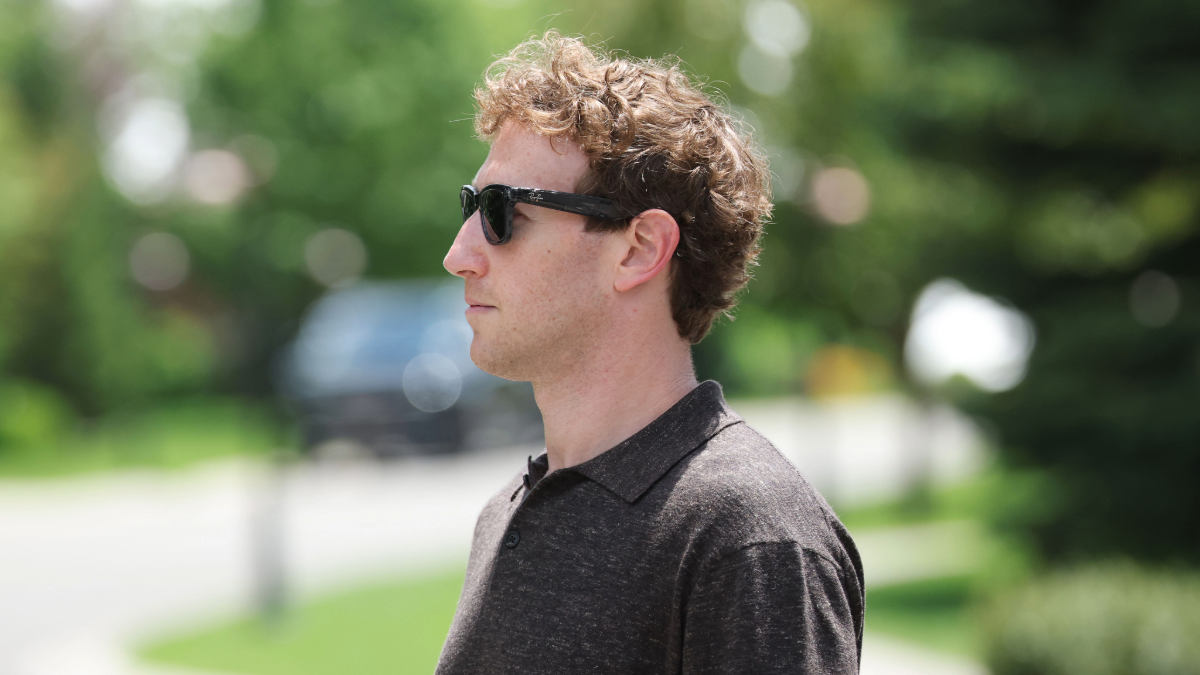
Meta founder and CEO Mark Zuckerberg attends the Allen & Company Sun Valley Conference at the Sun Valley Lodge on July 9, 2026 in Sun Valley, Idaho. (Photo by Kevin Dietsch/Getty Images)
Meta’s stock rose by as much as 4% following the announcement of its recent settlement with state attorneys general. This is not surprising given the product design changes required by the settlement will not meaningfully restrict Meta’s ability to target or monetize teens on Facebook and Instagram, nor is the monetary settlement amount all that substantial. Meta might even gain competitively from the settlement, as I explain below.
The product design changes required under the settlement make for good talking points, but will likely do little to change the well documented harms of Meta’s products. For example, the two-hour time limit for teen users is unlikely to meaningfully constrain aggregate teen engagement with Instagram and Facebook except for the heaviest users. This is for two reasons.
First, data suggests that most teens, on average, spend less than two hours daily on Facebook and Instagram cumulatively. For example, a 2023 Gallup survey found that teenagers spent a total of 1.2 hours on Instagram and Facebook (0.9h on Instagram and 0.3h on Facebook). This implies that social media usage will not decline for the majority of teen users. What time limit could make a difference? The available science offers no clear answer, but one 2018 study cited in the Master Complaint suggests that limiting college student use to 10 minutes per social media platform resulted in reduction in loneliness and depression over three weeks—a far cry from two hours.
Second, the two-hour time limit does not include messaging, long-form video or interactions with AI companions and chatbots. The exclusion of AI products from the settlement is short-sighted and is one reason why New Mexico Attorney General Raúl Torrez explained his state is not part of this settlement.
The lower one-hour time limit that Meta has potentially agreed to if its purported competitors (Snap, TikTok, and YouTube) agree to equivalent constraints still allows for two hours of use across Facebook and Instagram. The one-hour time limit applies to Instagram and Facebook separately. Imposing time limits on TikTok, Snap, and YouTube is also competitively advantageous for Meta given teens on average spend more time on these services than Meta’s products (2023 Gallup survey).
Given the preponderance of evidence of teen harm from excessive social media, policies like time limits for teens and bell-to-bell smartphone restrictions in schools are good policies (Note that the wide-spread adoption of bell-to-bell policies means it is relatively costless for Meta to offer ‘School Mode’ restrictions).
But let’s be clear, this Meta settlement is self-serving and unlikely to meet the objective of protecting teens from social media harms. As discussed above, the time limits are unlikely to be effective, and for the time that teens do spend on Meta’s products, Meta is required to make minimal if any changes to its content policies.
The settlement incredulously starts from the premise that Meta “has already taken measures to promote age-appropriate content for Teen Users” and that “it has already taken measures to reduce and avoid Teen Users’ exposure to Harmful Experiences”. If this were the case, then we would not need these lawsuits in the first instance. There is also no explicit requirement for additional resources and personnel to improve the implementation of Meta’s existing content and community standards.
Other changes surely do not go far enough. For example, Meta can still let teenagers use cosmetic procedure filters that idealize a user’s face in a way that can be achieved with cosmetic surgery or extreme makeup techniques. And the default option (which we know is seldom changed) for teens remains the infinite algorithmic feeds that are at the core of the addictive power of Meta’s products.
The most glaring omission, though, is the lack of any requirement for public disclosure of the metrics used to measure online harm and public reporting of these metrics. I have little faith that confidential reports by an independent auditor on Meta’s payroll will lead to meaningful change.
Meta founder and CEO Mark Zuckerberg and his senior leadership have repeatedly ignored private warnings, as detailed in Arturo Béjar’s Senate testimony, and have always put profits and growth first, as detailed in Sarah Wynn-Williams’ Senate testimony under oath. Meta has also routinely violated legally binding agreements and provided misleading information. Examples of this intransigence include cases at the Federal Trade Commission, the European Commission, and the Irish Data Protection Agency.
Crucially, the leadership of Meta is unchanged. Mark Zuckerberg gets to spin the settlement as Meta being the leader in teen safety and voluntarily taking the first step to move the industry. Of course, he fails to mention the ‘Meta Injunctive MFN’ clause, which explicitly allows Meta to adopt weaker, less protective product designs if that is what YouTube, TikTok or Snap agree to. Nonetheless, the Settlement does make for great PR for Meta, and the risk is that the public and parents are lulled into believing that Meta’s products are now relatively more safe for teens to use than the competition, they are not.
Finally, the $12.19 billion that Meta must pay is equivalent to less than 20 days of Meta’s revenues and substantially less than the $200 billion that State AGs previously told the Judge Yvonne Gonzalez Rogers was a reasonable figure. The low payout is one reason Florida did not settle. The remaining approximately $5 billion contingent payment is a great investment by Meta to build a compliance moat around its business. Every entrant that wants to compete with Meta will have to follow compliance procedures largely set by Meta! And what a coup to incentivize state attorneys general to go after TikTok and Snap, companies that pose a competitive threat to Meta.
This settlement is clearly deficient and a win for Meta. We will probably have to wait for the next in a long line of Meta whistleblowers to tell us about the champagne bottles opened at 1 Hacker Way, Menlo Park following the Settlement. I do hope any celebrations are short-lived as private litigants are encouraged by the counter-example set by New Mexico which took Meta to court and won.
Authors