The Google Whistleblower Taking on Big Tech Over Its Role in Gaza
Evie Breese / Nov 6, 2026Evie Breese is a UK Reporting Fellow at Tech Policy Press and openDemocracy.
(AP Photo/Alastair Grant)
The day Google DeepMind research engineer Sofia Liguori returned to work following the birth of her first child was the day her activism began.
The 32-year-old was part of the London-based frontier AI lab’s sustainability-focused Impact Accelerator team, tasked with identifying new ways the technology can be used for good. These range “from pathogen detection and crop resilience to medical countermeasure acceleration”, according to a LinkedIn post advertising new roles in the team.
Liguori’s own project focused on how AI could optimize electricity power flow to allow the national grid to use less energy and reduce overall carbon emissions. She told openDemocracy she now refers to her work as “building the nice face of the devil”.
“I felt so hypocritical that we were just talking about all these good things and not even mentioning Project Nimbus”, she said, speaking to openDemocracy from her home in south London, a Palestinian Keffiyeh scarf draped on the wall behind her.
Project Nimbus is a $1.2bn deal that Google and Amazon Web Services signed with Israel to build data centres in the country and provide public entities with cloud-based data storage in 2021. The contract stipulated that neither company could shut down their services in Israel or deny them to particular government entities.
Google has said its work with Israel is “not directed at highly sensitive or classified military workloads relevant to weapons or intelligence services”, as a spokesperson told Time magazine this year. Yet training materials leaked to The Intercept in 2022 revealed the full suite of Google Cloud AI tools are available to Israeli state departments, including the Ministry of Defense, for face detection, object tracking and “sentiment analysis.”
The ministry has used these tools to identify and surveil Palestinians across the West Bank, East Jerusalem, and Gaza, including since 7 October 2023, according to reporting in the New York Times and the Center for Constitutional Rights. Israeli military officials have said they have killed 70,000 people in Gaza since the Hamas attack on October 7 2023 that killed approximately 1,200 Israelis.
As she sat at home with her new baby, Liguori said she “watched a live-streamed genocide for a year, knowing that my company was complicit”. She added: “If we accepted this modus operandi, we were basically legitimizing what has been tested in Gaza to become the standard.”
Returning to work in August last year, she said she implored her colleagues: “If our aim is AI for good, trying to stop genocide is one of the ultimate goods we can do, right?”
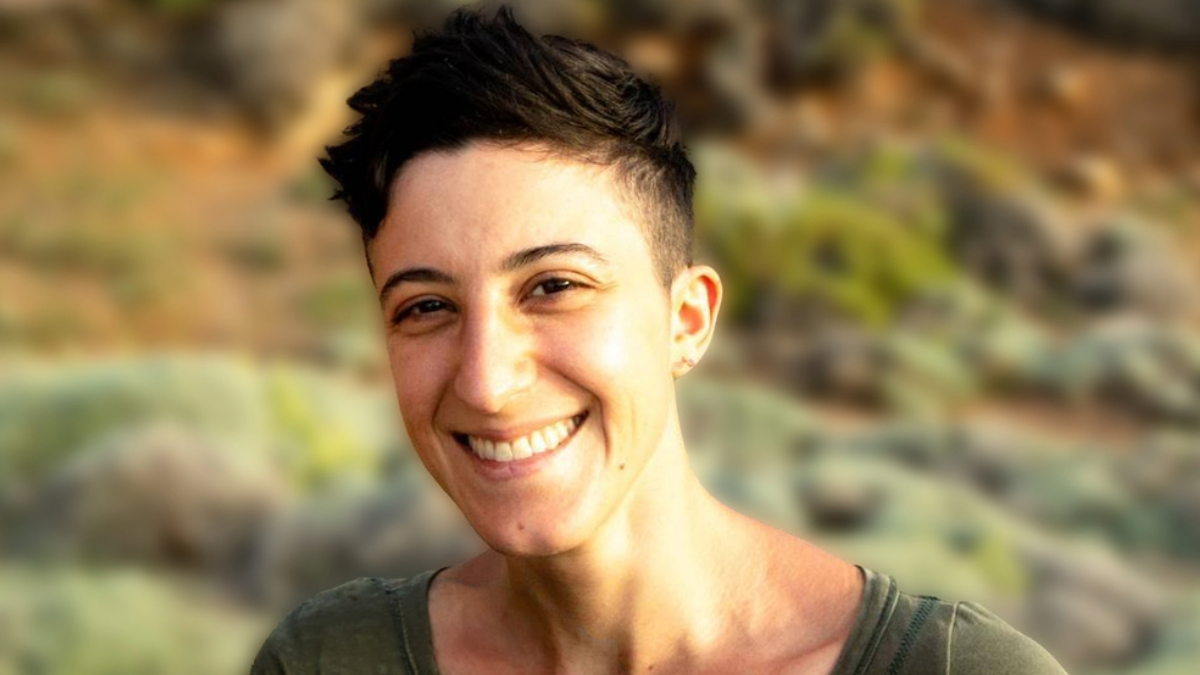
32-year-old new mother Sophia Liguori left her AI research engineer role at Google DeepMind in protest of the firm's products being used for AI warfare and surveillance. Image: Supplied
Ultimately, having been unable to convince executives to end Google’s role in Israeli military actions, Liguori left the company this year. In recent weeks, she has acted as a whistleblower, speaking out despite being subject to the strict lifetime non-disparagement agreement signed by Google employees.
Liguroi had always been prepared to be fired for her activism, but, she said, the real risk of “being sued by Google is different”. The tech giant’s parent company, Alphabet, is consistently ranked as the third or fourth most valuable globally, with a reported market worth of around $3.5trn.
This week, she was delivered some good news: a Google executive told the company’s UK staff that it will not enforce the NDA’s clause against workers who criticize the company after leaving. Speaking to openDemocracy after the news was announced, Liguori details what it took to get Google to back down.
The final straw
Liguori, whose background is in theoretical physics and reinforcement learning for video games, told openDemocracy she never set out to work with frontier AI models and knew “nothing” about Project Nimbus when she joined Google DeepMind in May 2023.
After becoming increasingly aware of the project’s impact in Gaza while on maternity leave, Liguori sent her immediate colleagues a letter urging them to take action shortly after she returned to work in August last year.
“This team is full of mothers,” she wrote. “I am not going to describe how it feels to become a mother for the first time while watching snipers targeting children, children dying of starvation, and all the rest of the horrors. What’s happening is lacerating my heart, really.”
The letter, which openDemocracy has seen, continues: “How can we do AI for good, and not even talk about Project Nimbus? How can we do AI for good in a company that is officially recognized and listed [as] complicit in the ongoing genocide in Palestine?”
Liguori also asked to discuss Nimbus in a team meeting. When her request was denied by a senior manager, she began sharing links to news articles about the project in internal channels. If they contained the word “genocide”, she said, they were deleted for “violating internal policies” prohibiting “aggressive language.”
Two months after her return to work, documents were leaked to Israeli-Palestinian publication +972 Magazine and Hebrew-language outlet Local Call revealing that Google and Amazon had agreed to use a secret code to “effectively sidestep legal obligations” and tip off the Israeli government if they were ever ordered to share Israeli data shared on their cloud services with law enforcement authorities anywhere in the world.
Then, in late April 2026, it was announced that Google had signed a contract with the US Department of War that would allow the Pentagon to use Google’s AI for “any lawful government purpose”, including mission planning and weapons targeting.
That was the day Liguori decided enough was enough. The petition she and over 600 colleagues had sent to CEO Sundar Pichai opposing the partnership had fallen on deaf ears.
“I really believe there is a value of infighting from the inside,” she said, “I tried to stay and do activism and raise awareness”, but the mental toll was becoming too great. “I reached a level of disgust with my company that was just incompatible with me continuing to stay there.”
Liguori used a combination of sick and holiday leave to cease undertaking work for Google, officially resigning on 20 October.
“I no longer believe that our technology will have a net positive impact on society. I think there’s a fantasy world where AI can help decarbonize grids, cut waste, protect ecosystems, and benefit humanity,” she wrote in her publicly posted resignation letter.
“But it’s not this world, and it’s not this type of general-purpose AI we are racing to develop.”
The growing revolt inside Google DeepMind
Google hasn’t always been so resistant to employee dissent.
Back in 2018, after 3,000 employees signed a petition seeking a policy that would stop Google and its contractors from “ever building warfare technology”, the tech firm announced that it would no longer be renewing its contract with the Pentagon on controversial military drone Project Maven.
Shortly after, the company published its AI Principles, a set of internal guidelines that prohibited the use of its technology for AI weapons or for human rights abuses.
But weeks after Donald Trump’s second term began in January last year, the Silicon Valley-based company appeared to have a change of heart, with the AI principles updated to remove references to weapons or surveillance.
“We believe democracies should lead in AI development, guided by core values like freedom, equality, and respect for human rights,” Google DeepMind chief Demis Hassabis and research labs senior vice president James Manyika wrote in a blog post announcing the updated policy.
Soon after, Google announced that Gemini would be used for both classified and unclassified purposes at the AI factory of Lockheed Martin, a US weapons company that primarily builds military aircraft, missiles, satellites, and defense technology for the US armed forces.
Then, in June of this year, a partnership between Google and US military contractor Palantir was expanded to integrate Palantir platforms across Google Cloud and Google Cloud Marketplace.
“You never know then how your technology will be used in Palantir’s systems,” Liguori told openDemocracy. “Workers need to know what the technology they are building on will contribute, and we want the right to abstain on ethical grounds”.
Since then, a number of UK Googlers have left the company on ethical grounds, but were gagged from speaking about the firm by strict NDAs. Feeling strongly that the public needed to know about Google’s dealings with Israel, Liguori said she decided to breach her own NDA to publish her resignation letter, knowing that Google could retaliate.
But this week Google told its staff in the UK that it will not take legal action against those who criticize the company or its AI products after leaving. “We’ve always encouraged an open dialogue about safety and responsibility,” a Google spokesperson told The Washington Post. “Recently, we’ve updated our terms for new hires, which included removing the post-termination aspect of non-disparagement clauses.”
Liguori sees the move as a win that “happened because of collective action”. After an employee’s attempts to raise concerns about the clause through internal channels did not lead to any change, DeepMind members of the United Tech and Allied Workers (UTAW) coordinated with the No Tech for Apartheid campaign group and whistleblowing non-profit Psst to pressure Google from multiple directions, Liguori told openDemocracy.
It’s only because of this support network that Liguori says she was able to “find the courage to take the risk” of a public resignation.
The concession comes as the Employment Rights Act 2025 comes into effect in the UK, allowing unions to enter workplaces across the country to speak to workers in person about joining a union. At Google and Google DeepMind, the new law will likely support UTAW and Unite’s drive for formal recognition.
For Liguori, who joked that she had considered “disappearing in the Italian countryside”, the news that she won’t face legal action for her activism has come as a “big relief”. She added: “... it’s also a sign that our collective effort had an effect, and that it's worth challenging the rules.”
Google has not responded to openDemocracy’s request for comment at the time of publication.
Authors