Senate Committee Advances Four Bills Aimed at Protecting Children Online
Yuqing Liu / Aug 6, 2026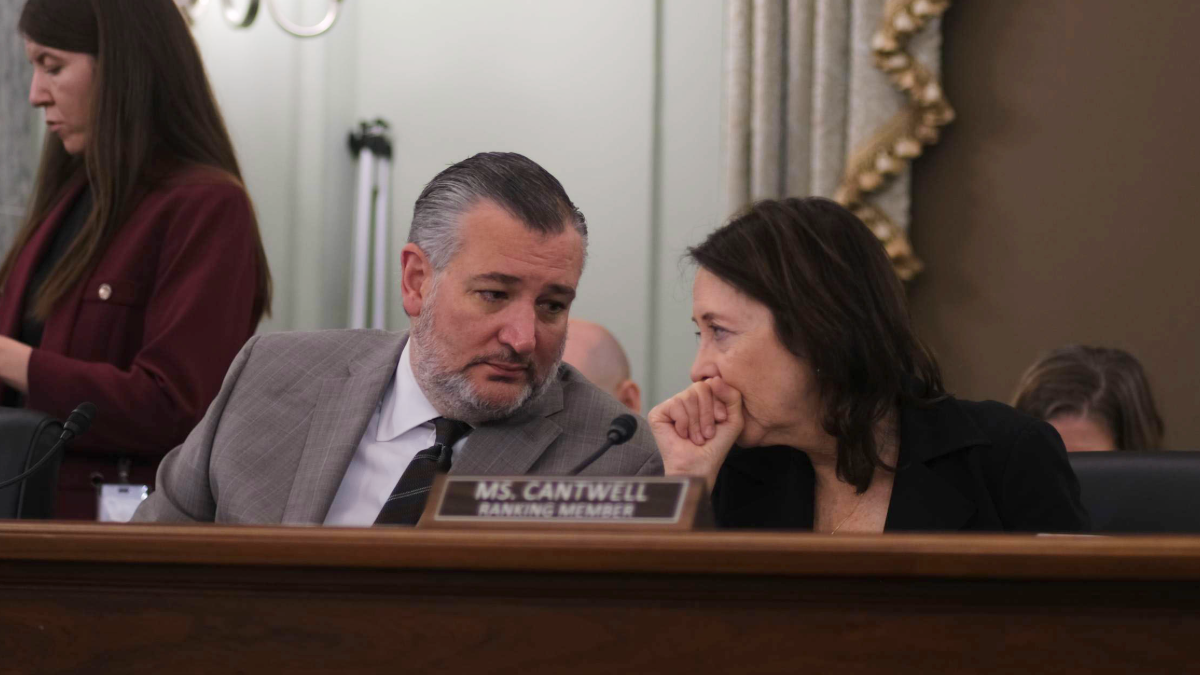
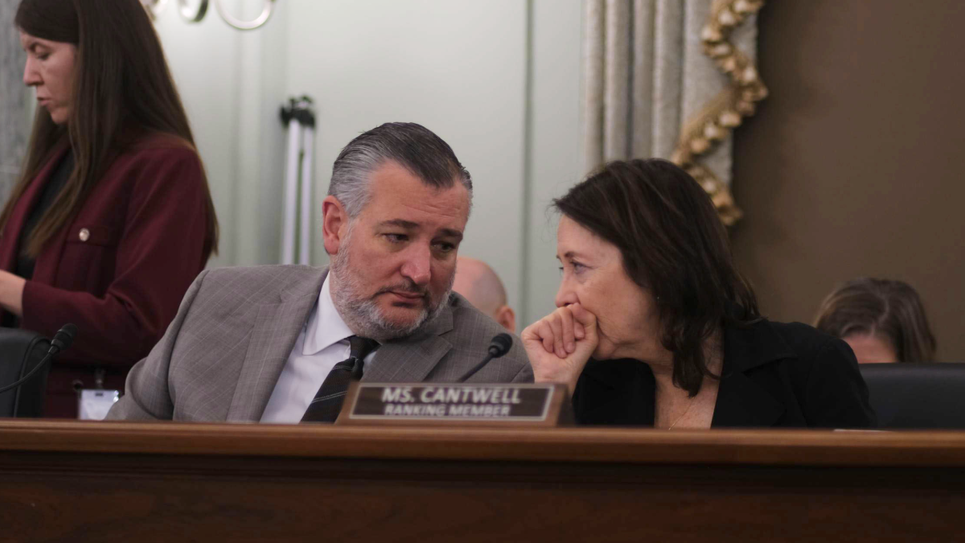
Senate Commerce Committee Chairman Ted Cruz (R-Texas) and Ranking Member Maria Cantwell (D-Wash.) confer during a markup hearing on August 5. Yuqing Liu/Tech Policy Press.
WASHINGTON — The Senate Commerce Committee advanced four bills Wednesday aimed at protecting children from harmful online content and giving parents more control over how minors use social media, artificial intelligence chatbots and AI-enabled toys. A fifth measure requiring age verification for pornography websites did not advance because the panel lacked a quorum after a 15-13 vote.
The measures include the Kids Online Safety Act, a bipartisan proposal that would impose a duty of care on online platforms and require safeguards for services commonly used by minors, including social media, online video games, messaging apps and video-streaming platforms.
During a markup hearing, the committee’s ranking member, Sen. Maria Cantwell (D-Wash.), said Congress needed to hold social media companies responsible for design choices that can expose children to harmful material.
“We need more responsibility from social media companies,” Cantwell said. She said the Kids Online Safety Act would require platforms to take reasonable steps to prevent foreseeable harm and provide parents with tools to hold companies accountable.
The bipartisan package reflects Congress’ widening effort to regulate how technology companies design products for children as lawmakers confront harms tied not only to social media, but also to rapidly evolving AI chatbots and connected toys. Although the committee’s approval moves the bills closer to a full Senate vote, their prospects remain uncertain in the House, where a prior version of the Kids Online Safety Act stalled after overwhelmingly passing the Senate in the previous Congress.
Cantwell pointed to young people in Washington state who died from fentanyl poisoning after obtaining pills through dealers on Snapchat.
She mentioned Washington residents under age 21 had died from fentanyl poisoning after obtaining pills through dealers on Snapchat, and that their parents had recently urged senators to pass stronger legislation protecting children online.
“And we have lost too many,” Cantwell said. “Congress needs to do more.”
Parents who lost their children due to the influence of social media and AI chatbots presented at the hearing. They have pressed lawmakers to pass stronger protections for children online, Cantwell said.
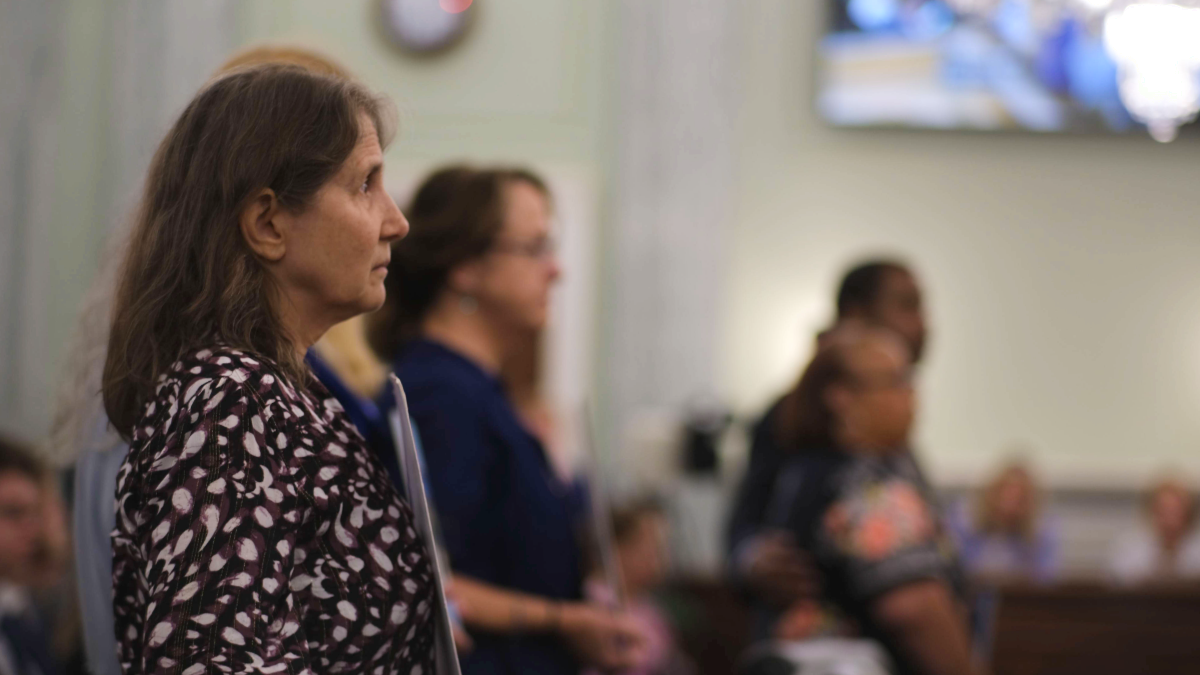
Parents hold placards depicting their deceased children during the hearing. Yuqing Liu/Tech Policy Press
The Kids Online Safety Act would also require protective default settings for minors and address design features that encourage children to spend extended periods scrolling through social media. Platforms would have to establish systems through which users could report harms and receive responses.
Sen. Marsha Blackburn (R-Tenn.), one of the bill’s lead sponsors, said the committee’s vote sent a message to technology companies that Congress intended to move forward despite industry opposition.
“We have arrived at the time where we are going to pass this,” Blackburn said. “We are going to get it signed into law, and we will do it in spite of all the money that they have.”
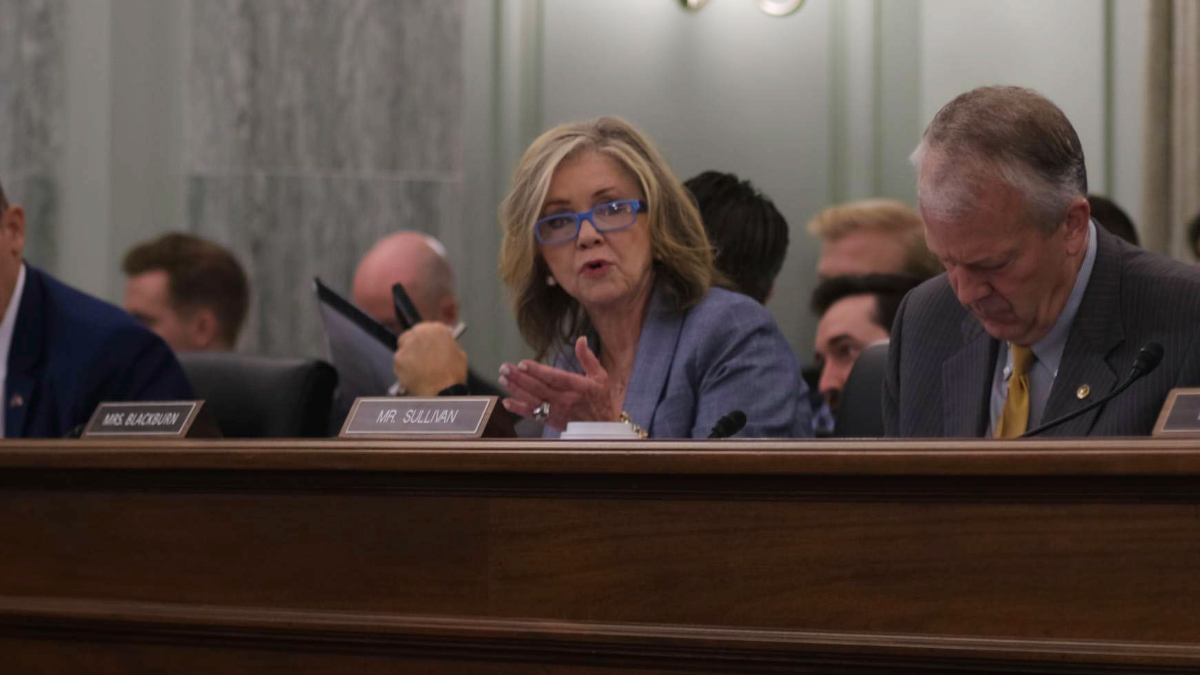
Sen. Marsha Blackburn (R-Tenn.) speaks during the hearing. Yuqing Liu/Tech Policy Press
Civil liberties groups offered differing assessments of the committee’s approach. David Inserra, a fellow for free expression and technology at the Cato Institute, said the bill would expand government influence over online content while creating new privacy risks for users.
“The Senate Kids Online Safety Act represents a dangerous assault on free speech,” Inserra said in a statement. “It empowers the government to define all sorts of First Amendment-protected content as dangerous to minors and creates a duty of care for platforms to prevent harms from such content.”
Sen. Dan Sullivan (R-Alaska.) proposed adding a measure requiring social media companies to report to the Federal Trade Commission how much public-service advertising they provide for mental health resources.
Sullivan said young people experiencing mental health crises should encounter messages directing them toward trusted resources and local support rather than content that could deepen the harm.
He withdrew the amendment after committee leaders said they wanted to advance a clean version of the Kids Online Safety Act. Sullivan said he hoped the proposal would be included later in a broader children’s online-safety package.
The committee also advanced the CHATBOT Act, which would require parental consent before minors create accounts and would provide family accounts allowing parents to oversee their children’s activity, according to Committee Chairman Ted Cruz (R-Texas). He said the bill would ask AI providers to place the strongest safety settings on minors’ accounts by default.
“AI companies would be required to refer suicidal children and teens to the appropriate crisis resources and if a child or teen is connected to a family account, to notify the parent,” Cruz said.
Cantwell said the legislation would also allow parents to limit how long children use AI chatbots and disable push notifications and reward features.
Cruz said the Youth AI Privacy Act sponsored by Sen. Edward Markey (D-Mass.) would prohibit advertising to minors through AI chatbots and restrict how long companies could retain and use memories from children’s conversations. During debate over an amendment, Cruz argued that parents should be able to choose a longer retention period because persistent memory could make chatbots more useful for activities such as language learning. Cantwell responded that allowing unlimited chatbot memory posed risks to children.
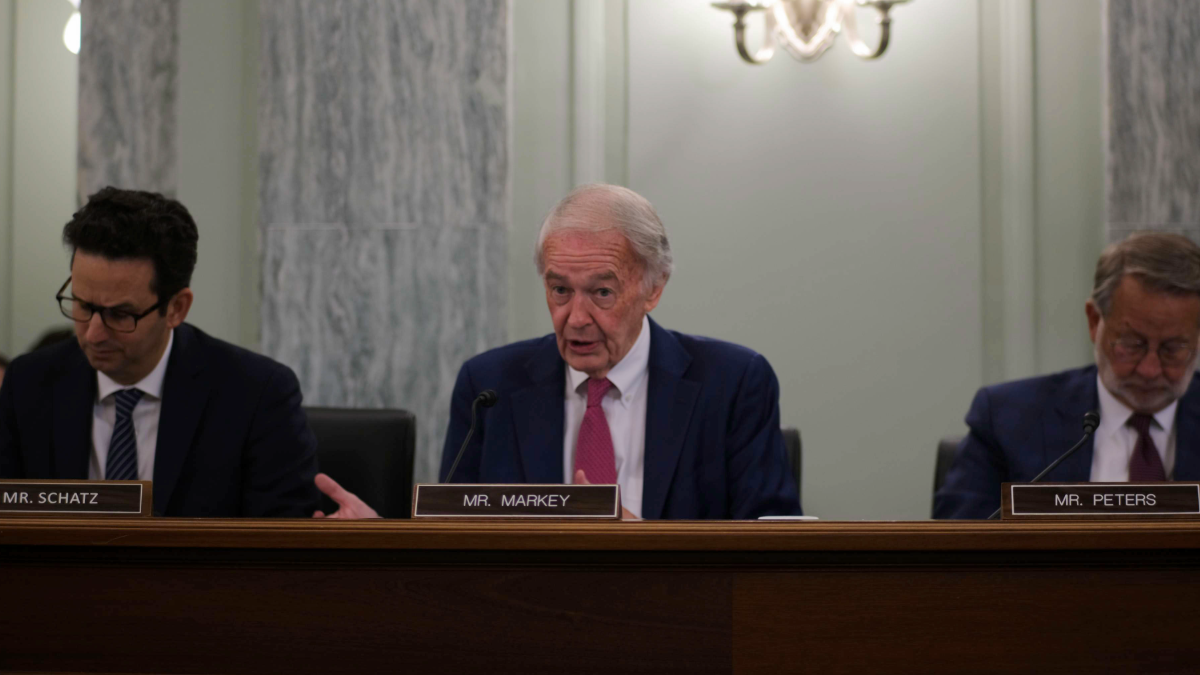
Sen. Edward Markey (D-Mass.) speaks during the hearing.
Sen. Tammy Duckworth (D-Ill.) said her Children’s Artificial Intelligence Toy Safety Act would direct the National Academies of Sciences, Engineering and Medicine to study the physical, mental, emotional and social risks posed by AI-enabled toys. She said the bill would also require the Federal Trade Commission and Consumer Product Safety Commission to prepare a joint action plan for Congress.
Duckworth said existing federal toy-safety rules primarily address physical hazards and do not adequately account for emotional, mental or social harms caused by AI systems embedded in toys.
Committee members said existing toy-safety regulations largely address physical dangers such as choking hazards and toxic materials, leaving federal regulators with limited authority to address emotional or psychological harms caused by AI systems embedded in dolls, robots and stuffed animals.
The Leadership Conference’s Center for Civil Rights and Technology and seven partner organizations criticized the broader package in a Wednesday press release. They said that while the bills would extend some privacy protections to users under 18, they did not establish enforceable federal AI rules addressing transparency, discrimination and the use of personal data across all age groups.
The committee did not advance the SCREEN Act, which would require pornography websites to verify users’ ages and block access by minors.
Cruz said the bills were intended to give parents greater control and assurance that children would not be exposed to harmful material. He said the committee would next seek passage on the Senate floor and continue negotiations with the House, which last month passed its own spate of child online safety bills in the Kids Internet and Digital Safety (KIDS) Act.
“There’s more work to be done,” Cruz said.
This piece was corrected on August 7 to clarify that the SCREEN Act did not advance due to a lack of quorum on the 15-13 vote.
Authors