Rep. Zoe Lofgren on FISA, Surveillance and the Fourth Amendment
Jake Laperruque / Sep 6, 2026Jake Laperruque is a fellow at Tech Policy Press. Audio of this conversation is available via your favorite podcast service.
Last week, I spoke to Rep. Zoe Lofgren, a Democrat from California, about the the Foreign Intelligence Surveillance Act and ongoing efforts to reform it. What follows is a lightly edited transcript of the discussion.
Jake Laperruque:
I'm really delighted to be joined here today by Representative Zoe Lofgren. She's a longtime champion on privacy, surveillance, and a whole host of technology issues. Congresswoman Lofgren, thank you so much for joining us today.
Rep. Zoe Lofgren (D-Calif.):
Thanks for having me.
Jake Laperruque:
Great. So we're going to talk today primarily about FISA, the Foreign Intelligence Surveillance Act, specifically the warrantless provision of FISA, FISA Section 702.
So for listeners who aren't too familiar with FISA in general or aren't too familiar with FISA 702, could you give them just a brief summary of what this surveillance authority is, and why Congress needs to take action on this issue?
Rep. Zoe Lofgren (D-Calif.):
702 of FISA allows the government to collect communications of non-Americans located overseas, and it's supposed to be for foreign intelligence purposes without an individualized warrant for each target. It can be an important national security tool, and I'm not suggesting that it be eliminated.
And the reason why you don't need a warrant is the Constitution protects everyone in the United States from unreasonable search and seizure. But if you're abroad and you're not an American, it doesn't protect you.
The problem is that you're catching Americans who might be on one end of the communication, and when they do, they become part of a database. And once that database is in place, it can be queried for information. And it's not just call data, it's the substance. It's emails, it's telephone calls, it's everything without a warrant.
And in fact, this has happened in the past where the FBI goes in and does a warrantless search of the database for Americans' communications without a warrant, and certainly without even the need for a foreign policy purpose. So it's a loophole and it needs to be closed.
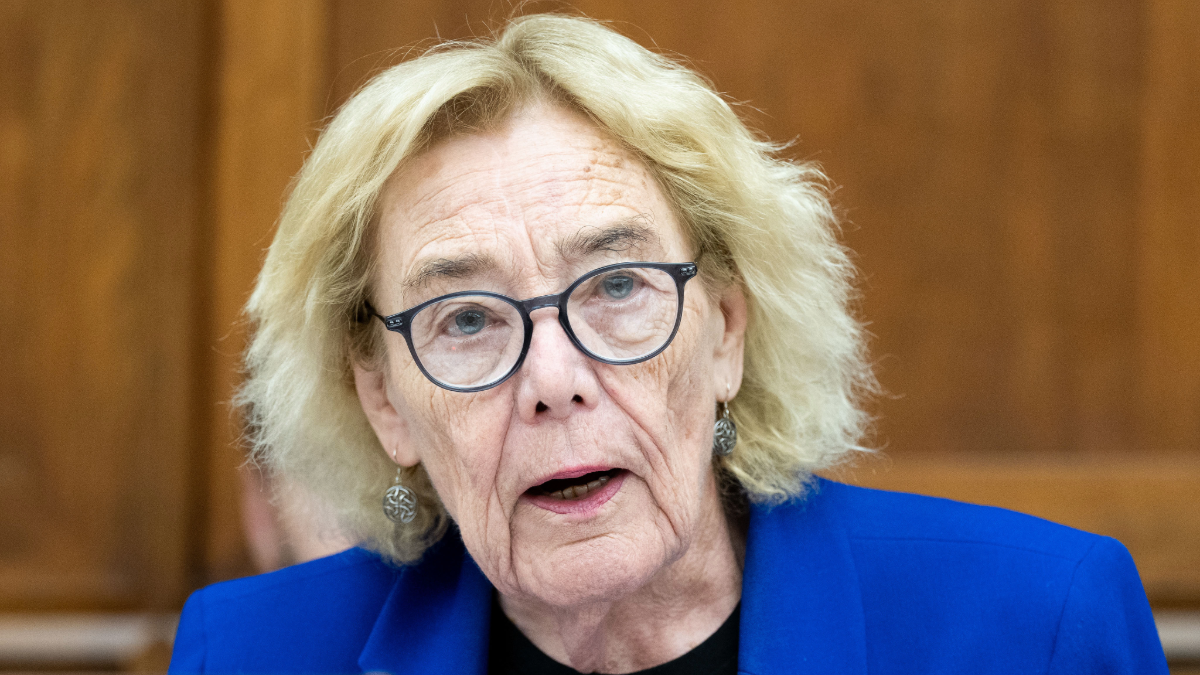
United States Representative Zoe Lofgren (D-Calif.) speaking at a hearing of the House Committee on Science, Space, and Technology Subcommittee on Energy at the US Capitol in Washington, DC, on September 2, 2026. (Photo by Michael Brochstein/Sipa via AP Images)
Jake Laperruque:
And so just to dig in a little on that querying process where the FBI and other agencies, as you're saying, they go and they say, "Well, the American wasn't a target, but hey, pull up all the American's emails from our databases. We want to read all of Jake's emails. We want to read all of Congresswoman Lofgren's emails."
I mean, is that a rare thing or are they doing this as standard practice once they've grabbed all these emails with the warrant, well, not all your emails, but grabbed all emails that could be collected from this Foreign Surveillance Authority?
Rep. Zoe Lofgren (D-Calif.):
It's not rare. It's not rare. We do have some data. The data is subject to some skepticism given what the FBI and others have done, but backdoor searches have been used improperly for protestors, 19,000 campaign donors, members of Congress, journalists, government officials, a state court judge who had complained to the FBI about police misconduct. It has been abused substantially in the past.
Now, the government argues that that's no problem now. All those problems have been resolved, but I can't discuss the classified FISA court ruling. Ron Wyden and I have tried to get it released, but I will just say this: the information that is being promulgated by the government is probably not accurate.
Jake Laperruque:
And just to follow up on that, because I obviously can't speak to anything that classified's saying, but can describe what's been in public reporting on this.
Rep. Zoe Lofgren (D-Calif.):
Correct. That's all I'm able to do as well.
Jake Laperruque:
Yeah, which there was a FISA court opinion from I believe last March that basically said through filtering processes and tools, there's what the FISA court seems to believe are queries happening but aren't being counted as queries.
Rep. Zoe Lofgren (D-Calif.):
Correct, correct. That's what the public reporting has been. I want to be very cautious not to discuss the classified document.
Jake Laperruque:
Yeah, of course. And that's the sort of thing I think all of us working on this space or interested in this space that can't see behind that classification wall would love to have access to that opinion and know the details of what's going on, but unfortunately we haven't been able to.
Rep. Zoe Lofgren (D-Calif.):
Well, and in my judgment, there's no reason in the world why that opinion should not be released, but it's not been released.
Jake Laperruque:
So FISA, it's been on and off on Congress's agenda throughout this year. It's been a big item in the news because there's a deadline for FISA 702, and that deadline actually has passed, although current surveillance is ongoing because of basically the orders that were already in effect, they go for the duration of those orders, which goes into early next year.
Rep. Zoe Lofgren (D-Calif.):
That's right.
Jake Laperruque:
Because of this deadline, it's been a big item on Congress's plate and probably will come back up again at some point in the next few months because of that looming expiration of the current surveillance.
These days it really feels like there's just so many major news events every day, things that would be a front page story for a week or the fifth-biggest story of the day when we're dealing with so many issues that aren't just important but seem really critical to our society and our democracy.
Why is FISA reform and this component of FISA that targets foreigners something that the American public should feel is a priority to talk about, and to spend our time in, and for Congress to spend its time on?
Rep. Zoe Lofgren (D-Calif.):
Well, for one thing, as I said initially, there is value in Section 702 when it comes to foreign intelligence. So I'm not proposing that this section be eliminated, but I am insistent that the privacy rights, constitutional rights of Americans be respected.
And there's an easy way to do that: before you query the database for an American, get a warrant. People get warrants in cities and counties and states all over the United States every day, and there's no reason why not to do it in this case.
Jake Laperruque:
And so as I mentioned, this is something that Congress has been voting on, but there hasn't been a vote on that concept yet this year, has there?
The idea of, "Well, maybe we extend this authority, but we say if you're doing these queries, you're looking for Americans, you have to get a warrant."
Rep. Zoe Lofgren (D-Calif.):
Well, they pulled the bill because I think Johnson realized that we had the votes, and so here we are in limbo.
I think the proponents of the status quo were believing that if they played chicken and said the FISA authority will expire, that the constitutional rights people would fade away. That did not happen. As you correctly point out, the programs that have been authorized continue, those don't stop, but ultimately this will come to a head.
We've had over the years successful votes in the House. I think the first one was the Tom Massie and I had an amendment more than a decade ago that passed. And I'm expecting that if we have that question put to the House that it will pass. I can't ever speak for the Senate.
Jake Laperruque:
So before diving in a little further on FISA, I want to step back and look at privacy and surveillance more generally because this is a topic that you've been a champion on for so long.
As a general matter, the frame we often hear from folks when discussing privacy is, "I've got nothing to hide, nothing to hide, nothing to fear." How would you respond when you hear that sort of mentality about surveillance issues and about whether we should have surveillance reform as a policy priority?
Rep. Zoe Lofgren (D-Calif.):
Well, there are exceptions to the warrant requirement in law. One is exigent circumstances and the other is consent.
And so if someone wants to consent to the government reading all their emails and listening to all their phone calls, fine, they're free to do that, but that should not void the Constitution when it comes to the rest of us.
Jake Laperruque:
So basically, this is something that you should care about as a right, even if you don't care about it for yourself, you should care about it-
Rep. Zoe Lofgren (D-Calif.):
Yeah. If the individuals want to give the government carte blanche to take all their private information, that's up to them. I don't plan on doing that myself.
Jake Laperruque:
So a flip side of that, that nothing to hide, nothing to fear mentality is you'll also hear individuals sometimes say, "Well, I think tech companies are always snooping on me. Social media is collecting my data. I have ads that are so tailored to my conversations around the dinner table that I think my phone is probably wiretapped and listening to me, and I'm always being watched and privacy's dead. There's so much surveillance. Why should I care about government surveillance?"
How do you convince people with that view of privacy that these debates are still worth having and fighting for?
Rep. Zoe Lofgren (D-Calif.):
Well, two things. First, people are right to be concerned about privacy. The tech world is collecting information about you, and there are bills that have been introduced.
My Online Privacy Act would give users meaningful rights over their personal information and require companies to minimize data they collect and retain and could only use it for the purposes that it was collected for. That bill has not been made into law, and hopefully it will.
But there's a difference between the government collecting information about you and Meta collecting information about you. The government can arrest you and put you in prison. Meta can't do that.
Jake Laperruque:
I'm curious, do you think in general that people are more apathetic about privacy now than they used to be with tech as just an….?
Rep. Zoe Lofgren (D-Calif.):
I have no idea what people generally think. All I can do is stand up for the Constitution.
Jake Laperruque:
So as far as standing up for it in terms of FISA in particular, this is an issue that FISA reform that's always gotten quite good bipartisan support.
Rep. Zoe Lofgren (D-Calif.):
Yep.
Jake Laperruque:
There's been Democrats and Republicans working together on past reforms that we've won on FISA surveillance reforms. And also it's something that for the current fight that's been going on this year on that, there's also been a lot of bipartisan supporting cooperation.
So I'm kind of curious to look at that as a model when our politics are so incredibly polarized, probably the most polarized they've been in my life and many people's lives.
How does surveillance reform manage to be so bipartisan? And are there lessons that policymakers and folks across DC should learn from this issue about how to function in a more bipartisan way?
Rep. Zoe Lofgren (D-Calif.):
Well, I think the first effort that was made on this in the House was by myself and Thomas Massie. And I didn't know Thomas at the time.
Actually, he came up to me on the floor and he said, "Is Tesla in your district?" And I said, "No, it's just outside my district." And he said, "Well, I have a Tesla." I said, "Well, good for you." And I went back, "Who is this guy?" So I looked him up and he's got two degrees from MIT. He's an engineer. Geeky as all get out. I don't agree with Thomas on a whole bunch of things, guns and other things. But one thing about Thomas is that he is not intimidated, and when he finds that there's something that he thinks is the right thing to do, he does it.
And so he was a perfect partner to work on this, and we treated it. We never had an opportunity actually to vote on it in the House. And I had the lawyers on my staff basically brief the parliamentarian, and we spent a month submitting briefs and cases and authority so that we knew that we had the ability to actually have our amendment heard, first time it was ever heard. And the proponents of FISA, I mean, it just went nuts, but when we were able to get it on the floor, it made sense to everybody.
I think it's a coalition of civil libertarians on the Democratic side and Tea Party constitutionalists on the Republican side. And one of the lessons I've learned is that you don't have to agree with somebody on other items. Focus on the things that you agree on and work on that and disagree on the other things, but don't let that prevent you from achieving something when you agree.
Jake Laperruque:
And it's really interesting because I feel like a lot of the time in these discussions about surveillance and why we worry about it, both Democrats and Republicans alike will refer to things, "Oh, I'm really worried about being tracked going to an abortion clinic," or "I'm really concerned about the government watching me and logging me going to a gun show."
Things that really are those hot-button partisan issues. But I think that there always seems to be this understanding of, "Well, we care about the broader principle for surveillance," which is just very interesting.
Rep. Zoe Lofgren (D-Calif.):
I think the way for some people to think about it is some of my friends on the Republican right are still enamored of Donald Trump. Maybe they don't care if Donald Trump knows everything personal about them, but pretend it's a liberal Democratic president. Do they feel the same way?
The rule of law protects everyone. It shouldn't change because of which party or which person is in office.
Jake Laperruque:
It's one of those you can always very easily imagine the shoe being on the other foot, even if you're not concerned about the current person in office.
Rep. Zoe Lofgren (D-Calif.):
Correct.
Jake Laperruque:
So kind of a wrinkle for that aspect of it, and just the bipartisan nature of this means we've always got some members of Congress who are supporting FISA reform or are considering supporting FISA reform who are in the party opposing the current president and are especially keyed in to worry about abuse.
But of course also we've got that will flip, and then suddenly the president will be someone from their own party, and a lot of members in that, when it changes in that scenario, has said, "Well, actually I'm not that worried about abuse anymore."
Or they'll say, "Look, I care about privacy. I care about these reforms, but I really trust the current president. He's the leader of my party. I trust what he says. And he says that the law is the right balance right now and I should listen to what the FBI and the NSA and the IC agencies that he's the head of are saying about what's the right balance on FISA."
And we've seen that flip alike from Democrats and-
Rep. Zoe Lofgren (D-Calif.):
Well, I mean, I disagree. I mean, the core group promoting FISA reform has been the same no matter whether the administration is Democratic or Republican.
The intelligence committee members on both sides of the aisle tend to oppose reform and the judiciary committee has tended, in large measure, not 100%, to favor reform. One example, though, of what you're saying is Jim Jordan was always firmly one who was for reform, and all of a sudden Donald Trump calls him up apparently and he does a 180 on it.
So what you're saying has some disturbing examples to support it, but I would say the core group that has been supporting reform remains the same.
Jake Laperruque:
Yeah, that's absolutely true. And much credit there to folks on both sides of the aisle, like yourself and Representative Jayapal and many others who have been strong critics of FISA when Barack Obama was president, when Joe Biden was president.
On the other side, folks like Thomas Massie, who when Donald Trump was president now and before, that didn't change that they wanted to be a leader on this.
Rep. Zoe Lofgren (D-Calif.):
Yeah, Mike Lee and Wyden in the Senate side, it's always been bipartisan.
Jake Laperruque:
I guess what I wonder is when you have those folks who are less the folks at the frontline most engaged on this issue and more members that are not as engaged but have supported these reforms in the past, but then might be a little less inclined because the current president, they're a little less worried or they're a little more prone to trust the president when they say, "Oh, listen to the FBI director and the NSA director about this."
How do you try to persuade your colleagues in that vein who have supported reform in the past, might support it again, but are less in the current moment concerned about abuse?
Rep. Zoe Lofgren (D-Calif.):
Well, I can't really tell my colleagues what to do, and it's especially problematic across the aisle, frankly, because of all the disagreements that exist between Democrats and Republicans.
But it is helpful to work with the Republicans who are on board on this so that they can have their talking points when they talk to their colleagues on their side of the aisle. And some of what I talk to on the Democratic side is really to truth squad the suggestions that the problems have been solved, because the information that's coming from the government is not reliable or accurate. And I think that does help.
I never criticize other members who reach a conclusion, and every one of us answers to our own voters, not to each other in the House. But I think we all take an oath at the beginning of each Congress to support and defend the Constitution. And I think the privacy issues, the Fourth Amendment, couldn't be more clear when it comes to this.
Jake Laperruque:
As far as the role of how the intelligence agencies and the executive may influence the way members of Congress think about this and how they go through these debates, I found it really interesting throughout my career of working on this stuff that since FISA 702 was created and we've had all these various debates on potentially changing it, and especially a lot of debates on, "Do we need a warrant rule in it for Americans?" we've never had a sitting president call for a major overhaul of FISA 702 or a warrant rule or anything like that.
And that's especially striking because during that time we've had three presidents in office: President Obama, who came into office wanting to reform a lot of war on terror policies, but even in the midst of the Snowden debate and a lot of reforms that the White House eventually agreed to, President Obama and the White House supported keeping FISA 702 as is.
We had President Biden, who as a Senator actually said that FISA 702 was unconstitutional and voted against it when it was first created, but that as president pushed very hard to extend the law without any reforms.
And of course we in between and now currently have President Trump, who was really vocal about FISA abuse, who in 2024 campaigned a lot about FISA weaponization and said he was going to change FISA, but during his first term and now in his second term has pushed for long-term extension of FISA 702.
I'm curious, why do we keep seeing these shifts in your mind?
Rep. Zoe Lofgren (D-Calif.):
Well, President Biden, when he was a senator, he said FISA 702 was unconstitutional, but then when he was president, he pushed hard to extend a law without reforms. President Trump campaigned about FISA abuse and FISA weaponization, but now he's pushing for a long-term extension without any changes.
I think the answer is that presidents tend to try and accumulate more power to the executive branch, and that is true across the aisle.
And unfortunately, under the Republicans in the House, there's been no pushback, not just on FISA reform, but a complete evisceration of Article I in some cases. The Republicans have turned the Congress into a dysfunctional entity.
So it's not just that the presidents engage in misconduct by trying to accumulate unconstitutional power. In some cases, the legislative branch lets them get away with it.
Jake Laperruque:
Do you think that for presidents, it's kind of cynical that they're just naturally trying to accumulate that power for themselves?
Is it because of the perspective that they'll see and be given when they're regularly talking to the IC heads, getting the presidential daily brief?
Rep. Zoe Lofgren (D-Calif.):
I assume so. I mean, I've never been president, so I can't really speak for them, but you get, I mean, without, again, going into classified briefings, but you'll get these examples that will be thrown at us. And if you examine them closely, not a one of them would've been impacted adversely with a warrant requirement. And there are, as I mentioned, exceptions to warrants, including exigent circumstances and consent, all of which would have adequately dealt with the various hair on fire examples that are provided to members of the House as a reason why reform should not be done.
I am sure, I don't know if the current president even gets these briefings, there are a lot of bad people in the world who want to do harm to the United States and to all of us Americans. That's why I've never suggested we should repeal Section 702. It is a useful tool for foreign intelligence. That's not inconsistent with having a warrant to search the database for Americans.
People say, "Well, it's too cumbersome to get a warrant." If they want to look, and the warrant procedures in the FISA court are very detailed. If you want to talk about doing reform of the warrant process, I think that's not unreasonable, but to say there should be no warrant, that is unreasonable.
Jake Laperruque:
I'm curious on this aspect of the debate and very much appreciating what you're saying about the genuine security importance of this tool so long as it's kept within its proper bounds and used reasonably.
How do you deal with, and how do you think other members deal with, that pressure that can come from looking at these hard national security questions? And also when you're getting that very slanted perspective in classified settings where you're getting briefed and talked about this from the intelligence agency leads and staff when you can't talk about what they're saying or how those briefings are going with your own full staff or with the public or with outside experts, that I think creates a really tough situation for trying to both evaluate these topics and give them the due they deserve, but also remaining skeptical as needed and critical as needed.
And we've even heard, I think I remember during the 2024 debate there being a mobile SCIF off the House floor for the agencies to try to persuade members right before they go in to vote.
Rep. Zoe Lofgren (D-Calif.):
I didn't hear about that, but we do have a SCIF in the basement of the visitor center, and you're right. I mean, you've got the House Intelligence Committee staff on both sides of the aisle, and then you've got the intelligence community staff. And then I can't bring my staff in, and they're not cleared anyhow.
And so you've got a handful of members who've spent a lot of time and done a lot of research, we're outnumbered. And I think it's not a fair fight, but we have won repeatedly.
And I think when all is said and done, members need to, especially I think what's helped this time on the Democratic side is the obvious abuse that has been engaged in by the Trump administration over and over again in terms of its misuse of the law, which has engendered skepticism that should have been present all along towards the administration.
Jake Laperruque:
Talking about that aspect you just mentioned of being outnumbered and having those limited resources, what are some ways we might be able to change that to allow members to have that more objective critical eye on these issues, even when you can't put everything that's being discussed in a public light?
Rep. Zoe Lofgren (D-Calif.):
Well, I do think a little more transparency in the process. As you know, the president basically fired the Civil Liberties Oversight Board, so they're not available to us to do truth telling.
We tried to put some mechanisms into place that would provide reliable information to the Congress, and that has been dismantled by Trump and also not always honored by the agencies either. So we have a problem here, and I think the more transparency we have, I mean, a lot of the so-called high security secret stuff really isn't.
You can find the same thing reading the New York Times as you get in these briefings, and over-classification is a huge problem.
Jake Laperruque:
So FISA has been voted on by Congress already three times this year with this looming deadline that got kicked and kicked and eventually just expired a couple months ago.
Each time the vote on the floor of the House and Senate were for a bill that only made really marginal changes basically, or a lot of groups, including the organization I worked for, described it as a clean extension in all but name.
Rep. Zoe Lofgren (D-Calif.):
Pretty much.
Jake Laperruque:
It got voted down.
Rep. Zoe Lofgren (D-Calif.):
Right.
Jake Laperruque:
So now the law's expired. The surveillance order that was previously issued is active, but expires in, I want to say, I believe, seven months or so.
Rep. Zoe Lofgren (D-Calif.):
Yeah, it extends into the next Congress.
Jake Laperruque:
Yeah. So we're really in uncharted territory right now. I'm curious, what do you see as the likely path forward in FISA? Are you optimistic we can get reforms passed?
Rep. Zoe Lofgren (D-Calif.):
It depends on what the voters decide this November.
Jake Laperruque:
Interesting. You think there might be a different outcome depending on the way the election goes?
Rep. Zoe Lofgren (D-Calif.):
Well, I'll just say this, and this isn't personal about the individuals involved, but the ranking member of the Intelligence Committee in the past has not been a proponent of reform. He has said to our caucus that he has to be for reform.
That is a change in the Intelligence Committee, and it's not personal about him, it's a changing view in terms of who's on the committee. As I say, the tension has always been between the Judiciary committee members and the Intelligence Committee members, and I think there are some shifts underway there.
And I would say a majority of the Democrats, and it's not that close, favor reform of FISA.
Jake Laperruque:
Yeah, I think it was during that last vote. It was basically it was near unanimous among the Democratic House caucus.
Rep. Zoe Lofgren (D-Calif.):
Correct.
Jake Laperruque:
And rejected that clean extension bill. And yeah, it's also interesting, you mentioned the ranking member on the Intelligence Committee, who I think is simultaneously probably a lot lighter on reforms than what most members of the caucus want.
But compared to past chairman and ranking members of the Intelligence Committee, I believe this called for not a warrant rule, but saying, "Oh, maybe we do a court approval for queries at a standard lower than a warrant rule," which is still much more aggressive as a reform than I think we've had from any chair ranking member of the Intelligence Committee since 702 was created.
So it's a very interesting dynamic.
Rep. Zoe Lofgren (D-Calif.):
We really haven't had a substantive discussion between the Judiciary Committee and the Intelligence Committee on this. I do think there are some opportunities for consensus.
The bottom line is the non-mandatory methods that we have used have not worked and they're never going to work. The Constitution was written in the way it was for a reason.
And whether you want to say it's a warrant or whether basically it's court permission, isn't that the same as a warrant? Maybe we're only talking about warrant reform.
So there's an opportunity to proceed, but I do think we have our best chance ever, depending on what happens in the election, to actually get some reform here.
Jake Laperruque:
And we've never had a situation where Congress is voting on 702 when the actual surveillance itself is on a ticking clock to expire.
We've had a lot of down to the wire before the law itself was going to expire, but we've always had that what's happening now, the, "Well, the law and the order in effect will stay in effect way beyond the time Congress was going to vote."
But we'll probably, whether it's late this year or at the beginning of next year with the new Congress, really be in a scenario for the first time where there is that ticking clock or we need to vote on something or 702 is going to stop, the collection's going to stop.
Do you think that that's going to create a different dynamic than we've seen in the past?
Rep. Zoe Lofgren (D-Calif.):
Maybe. There are some other alternatives that the, I mean, there's the executive order that the president has. I think it's a dubious, well, there's 12333 that can be used in some cases, but we'll see.
I do think the community and the intelligence community will push this to the brink, but in the end, I think they will have to accept a warrant or something like it if they want this to be reauthorized.
Jake Laperruque:
When you say push the brink, you mean you think they'll try to avoid any allowing a vote on a warrant rule up until-
Rep. Zoe Lofgren (D-Calif.):
Yes, but unfortunately they don't run the Congress.
As I say, we can talk about maybe we need to make the exigent circumstance and consent issues more transparent. Maybe there does need to be some reform of the warrant process, but to say that it's fair game to search all your emails without a warrant, it's just a non-starter.
Jake Laperruque:
One final question I wanted to ask, and this has been a really fantastic conversation about FISA and just surveillance in general.
FISA, it's a top of mind surveillance issue before Congress, but obviously it's not the only one. What are one or two other surveillance issues you think are most important right now and that Congress should act on?
Rep. Zoe Lofgren (D-Calif.):
Well, I think we've got the data broker loophole that has been discussed. I think there's bipartisan consensus on that. And I do think the broad privacy reform that's necessary.
I mentioned earlier the backdoor search loopholes, the data broker loophole, prohibiting reverse targeting. We need to take a look at privacy protections for AI as well as other technologies. We need to stop the warrantless collection of business records.
And I do think that we need to take a good hard look at privacy when it comes to the private sector collection of data, which has run wild, as you mentioned earlier.
Jake Laperruque:
Those are a lot of topics that I think are going to require a lot of hard work and hard looks, but really eager to be engaging on them and to have members of Congress like yourself taking the lead on them. Thank you so much for your time.
Rep. Zoe Lofgren (D-Calif.):
Thanks a lot, Jake. All I can do is take responsibility for my own actions, and I just would ask that other members of the House do the same, stand up for the Constitution.
Jake Laperruque:
Great. Well, thank you so much. I'm really looking forward to continuing to keep an eye on FISA 702 and other surveillance issues and see where we're headed, hopefully in a direction that can help protect privacy rights.
Rep. Zoe Lofgren (D-Calif.):
Okay, you take care.
Jake Laperruque:
Thank you so much.
Authors