India Cautiously Locks Horns with X Over Grok ‘Undressing’ Controversy
Amber Sinha / Jan 14, 2026Amber Sinha is a contributing editor at Tech Policy Press.
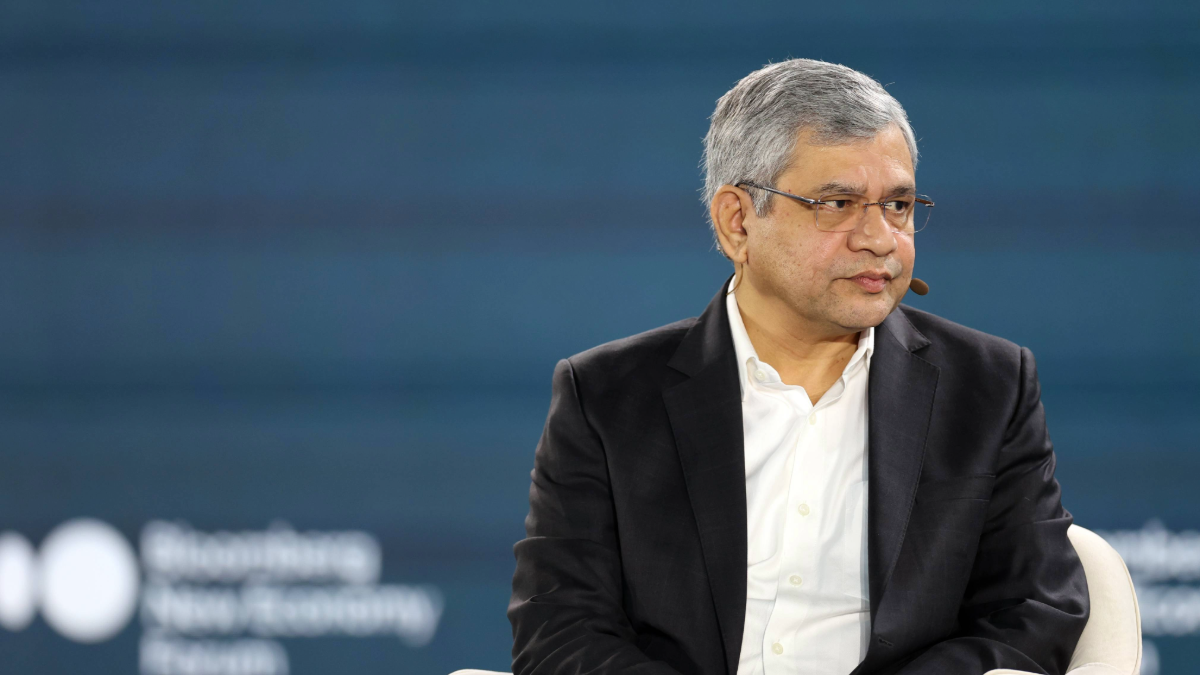
Ashwini Vaishnaw, India's minister for railways, information and broadcasting, electronics and information technology, during the Bloomberg New Economy Forum in Singapore, on Thursday, Nov. 20, 2025. Photographer: Lionel Ng/Bloomberg via Getty Images
Over the last week, digital regulators around the world have been grappling with how to respond to the proliferation of sexualized images of women and children created in response to user prompts to Elon Musk’s AI chatbot, Grok, and published to X. India’s Ministry of Electronics and IT (Meity), which oversees most digital laws and regulations in the country, wrote to X on January 2, asking the company to immediately address the issue. The notice asked X to instantly stop the creation and spread of any offensive, indecent, or illegal material. Additionally, it demanded that X conduct a deep-dive audit of Grok’s technical architecture to address how the AI processes prompts and generates images to ensure that safety guardrails effectively block prohibited outputs. Finally, it asked X to penalize users who violate these rules by suspending or deleting their accounts.
The notice gave X a 72-hour deadline to provide a detailed "Action Taken Report" (ATR) documenting their technical fixes and legal compliance. X sought a two day extension of this deadline, which was granted by Meity. On January 7, Meity received a response from X. It was reported that while the response was lengthy and listed content takedown policies X abides by, including those on non-consensual sexualized images,the government said it was missing in details regarding the removal of offensive media, including a summary of specific enforcement actions taken to resolve the Grok AI controversy and a roadmap for future technical safeguards.
India is among a handful of governments—including the UK, Brazil, Malaysia and the EU—that have swiftly responded to these controversy. However, that holding US technology giants accountable has entered a trickier geopolitical era is fairly clear in the measured and calibrated tone of regulators, including from India. In the past, Meity has responded to transgressions with a more aggressive posturing, and in one case, even sent law enforcement officials to deliver notices. While disputes over free speech between Indian governments and X have continued over the past year, the Union government has adopted a more measured tone.
Despite India’s hands-off regulatory approach to AI so far, the one issue that the government has been keen to regulate is the politically sensitive issue of deepfakes. In November 2025, the government notified amendments to the Information Technology (Intermediary Guidelines and Digital Media Ethics Code) Rules, 2021 (IT rules). The amendments add due diligence obligations of social media intermediaries (SMI) and significant social media intermediaries (SSMI). The rules require that all SMIs must implement visible labeling or permanent metadata for all generated content. Specifically, any visual output must feature a prominent disclosure that covers at least 10% of the display area to ensure it is easily identifiable as AI-generated. In a major policy shift, the deletion of AI-generated media is no longer contingent upon a court mandate or government directive. Instead, social media companies are now obligated to proactively identify and eliminate such content through diligent efforts. Non-compliance puts these platforms at risk of losing their 'safe harbor' immunity as defined under Section 79 of the IT Act, 2000.
In the recent past, the threat of losing safe harbor protection for non-compliance with takedown orders and other content regulations has been used generously by Meity. Since the new Trump administration has adopted an aggressive content and AI deregulation agenda, this may turn out to be the first significant issue where Meity is pushed to lock horns with one of the US Big Tech companies and its politically connected owner.
Meanwhile, the harms continue to mount, with Indian MP Priyanka Chaturvedi calling the Grok images “both a breach of women's right to privacy as well as unauthorized use of their pictures,” which she said “is not just unethical but also criminal.” On Saturday, reports emerged that X had taken action to delete accounts and offensive images from the platform in response to the government’s requests. Officials told the Deccan Herald that the platform had “accepted its mistake.” Whether contrition will satisfy the government remains to be seen.
Authors