Tracking Regulator Responses to the Grok 'Undressing' Controversy
Justin Hendrix, Ramsha Jahangir / Jan 6, 2026This piece was last updated on January 16.
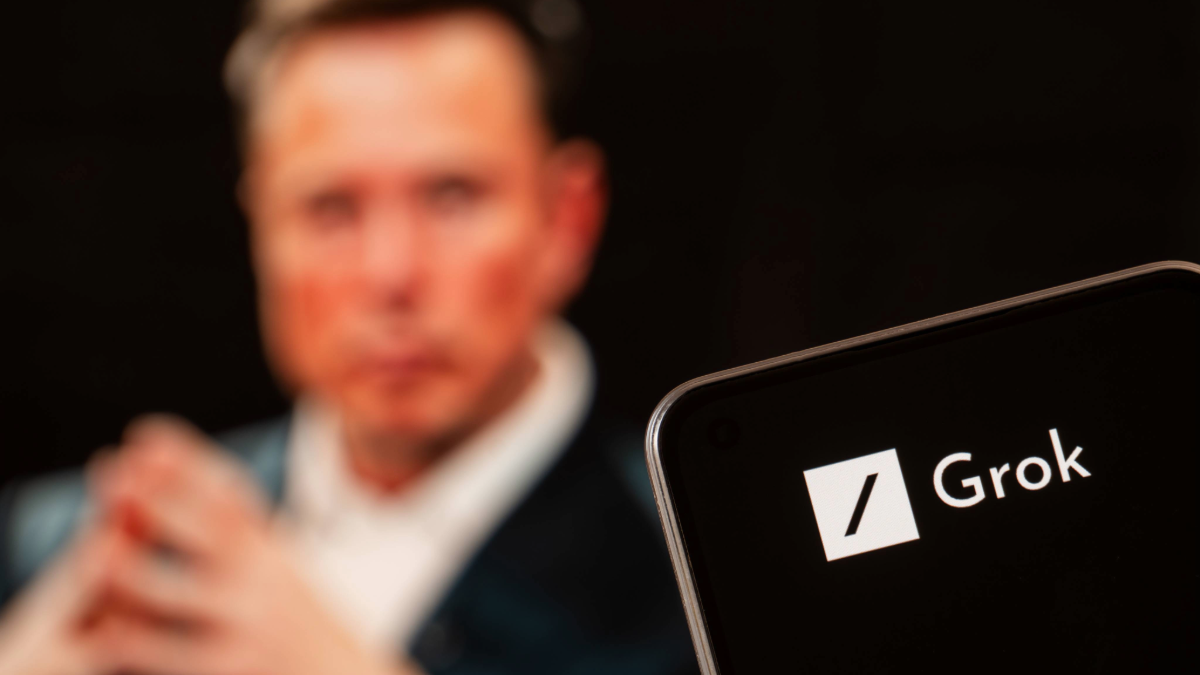
On January 3, Reuters reported Elon Musk’s AI chatbot was generating a “flood of nearly nude images of real people” in response to user prompts, including “sexualized images of women and minors,” and posting them to the social media platform X. “In addition to the sexual imagery of underage girls,” reported Futurism, “the women depicted in Grok-generated nonconsensual porn range from some who appear to be private citizens to a slew of celebrities, from famous actresses to the First Lady of the United States.”
Facing mounting backlash, on January 14 X announced that Grok will no longer be allowed to "edit images of real people in revealing clothing such as bikinis."
Regulators around the world are responding by opening inquiries, demanding takedowns, and threatening legal action. Tech Policy Press is tracking such responses, including from Australia, Brazil, Canada, European Commission, France, India, Indonesia, Ireland, Malaysia, United Kingdom, and the United States. If you see a relevant statement or action from a regulator, let us know.
Australia
- Australia’s online safety watchdog is investigating sexualized deepfake images generated by Grok. eSafety Australia told the Guardian it has received multiple reports since late 2025 about non-consensual sexualized images, mostly involving adults, with some cases reviewed for potential child exploitation but not meeting the legal threshold so far. The adult image reports are recent and still under assessment. eSafety Commissioner Julie Inman-Grant said the agency will use its regulatory powers to investigate and take action if needed.
Brazil
- According to Brazilian news site Nucleo, on January 12, the Brazilian Institute for Consumer Protection (IDEC) asked the federal government to suspend the operation of Grok.
- As reported by Mlex, Brazilian federal deputy Erika Hilton has pushed for the suspension of Grok in Brazil for generating and distributing erotic images, including child sexual abuse material, without consent.
- “I am reporting the artificial intelligence 'Grok' and the social network X to the Federal Public Prosecutor's Office and the National Data Protection Authority,” she wrote on X on Monday, adding that X must be disabled throughout the national territory until everything is properly investigated.
Canada
- Canada’s privacy commissioner, Philippe Dufresne, is expanding an investigation into X Corp, according to a January 15 press release. The investigation will also include xAI, the company behind Grok. Dufresne said non-consensual use of personal data to create intimate deepfakes is a growing threat that can cause serious harm and violates individuals’ privacy rights.
- The Toronto Star reported on January 11 that Canadian “Artificial Intelligence Minister Evan Solomon says Canada isn’t considering a ban of the social media platform X, though his office says discussions about X’s deepfake controversy are underway.'
- In a post on X, Canada's Artificial Intelligence Minister Evan Solomon on Thursday said deepfake sexual abuse is a form of violence and stressed the need to protect Canadians—especially women and young people—from exploitation. He said the government is advancing responsible AI by introducing Bill C-16, which would amend the Criminal Code to treat deepfake intimate images as a criminal offense when shared without consent.
European Commission
- The European Commission on January 8 ordered Elon Musk’s social media platform X to retain all internal documents and data related to its AI chatbot Grok until the end of 2026, Reuters reported.
- The order extends a retention requirement issued last year covering X’s algorithms and handling of illegal content. An EU spokesperson said the move does not signal a new formal investigation under the Digital Services Act, but is meant to preserve evidence amid concerns about compliance.
- Earlier on January 5, as reported by Euronews, the European Commission said it was “very seriously looking into” the situation. “This is not 'spicy'. This is illegal. This is appalling. This is disgusting. This has no place in Europe,” a Commission spokesperson said.
- "X is fully aware that we apply the Digital Services Act very rigorously and we encourage all companies to comply with it," the spokesperson said.
France
- According to Politico on January 2, a Paris prosecutors’ office confirmed that “French authorities will investigate the proliferation of sexually explicit deepfakes generated by artificial intelligence platform Grok on X” following complaints from French lawmakers.
India
- As the Times of India reported, on January 3, India’s Ministry of Electronics and IT (MeITY) issued a notice to the chief compliance officer of X Corp. regarding its “failure to observe statutory due diligence obligations under the Information Technology Act, 2000 and the Information Technology (Intermediary Guidelines and Digital Media Ethics Code) Rules, 2021.”
- MeITY is seeking “an Action Taken Report towards immediate compliance for prevention of hosting, generation, publication, transmission, sharing or uploading of obscene, nude, indecent and sexually explicit content through the misuse of Al-based services like 'Grok' and xAl's other services.”
- On Thursday (January 8), the Times of India reported that the government "is not fully satisfied with X's initial response to its notice on the alleged misues of AI chatbot Grok and is likely to seek clearer, step-by-step details on corrective measures the platform plans to implement."
Indonesia
- On Saturday (January 10), Reuters reported that Indonesia “temporarily blocked Elon Musk's Grok chatbot on Saturday due to the risk of AI-generated pornographic content, becoming the first country to deny access to the AI tool.” Officials summoned X executives for further discussion.
- "The government views the practice of non-consensual sexual deepfakes as a serious violation of human rights, dignity, and the security of citizens in the digital space," said Communications and Digital Minister Meutya Hafid in a statement referenced by Reuters.
Ireland
- According to Irish Legal News, the Irish media regulator Coimisiún na Meán and the law enforcement agency An Garda Síochána have been “urged to take action against Elon Musk’s AI chatbot Grok” over the matter. Coimisiún na Meán says it is working through the European Commission.
- On Thursday (January 8), the Irish Examiner reported that communications minister Patrick O’Donovan claimed “Responsibility for generating explicit images through Elon Musk's artificial intelligence chatbot Grok lies with users, rather than social media firm X,” in what the paper described as “a break with his Government counterparts."
Malaysia
- UPDATE (January 13): Malaysian authorities said Tuesday they will take legal action against Elon Musk’s social media platform X and its AI unit xAI, alleging they failed to protect users from misuse of the Grok chatbot. According to The Associated Press, regulators say Grok has been used to generate and spread harmful content, including sexually explicit and non-consensual manipulated images, and that X and xAI did not adequately address the issue despite receiving notices.
- On Sunday (January 11), Malaysia introduced a temporary restriction on access to Grok in the country. A statement from MCMC said “the restriction is imposed as a preventive and proportionate measure while legal and regulatory processes are ongoing. Access to Grok will remain restricted until effective safeguards are implemented, particularly to prevent content involving women and children. MCMC remains open to engagement with X Corp. and xAI LLC subject to demonstrable compliance with Malaysian law.”
- As reported by Rest of World, the Malaysian Communications and Multimedia Commission issued a statement indicating “serious concern of public complaints about the misuse of artificial intelligence (AI) tools on the X platform, specifically the digital manipulation of images of women and minors to produce indecent, grossly offensive, or otherwise harmful content.”
- The Commission statement “stresses that creating or transmitting such harmful content constitutes an offense under Section 233 of the Communications and Multimedia Act 1998 (CMA), which among others prohibits misuse of network or application services to transmit grossly offensive, obscene or indecent content. MCMC will initiate investigations on X users alleged to have violated CMA.”
United Kingdom
- According to the Financial Times on Monday (January 12), Ofcom has launched a formal investigation into X over claims that its AI chatbot Grok is being used to generate and share illegal sexualised deepfakes, including non-consensual intimate images and potential child sexual abuse material. The regulator warned X could face a ban or a multimillion-pound fine, stressing platforms must protect UK users, especially children, from illegal content.
- According to the BBC (January 9), Secretary Liz Kendall said she expected Ofcom to provide an update on its next steps in "days, not weeks." A spokesperson for the regulator said, “We urgently made contact on Monday and set a firm deadline of today to explain themselves, to which we have received a response. We're now undertaking an expedited assessment as a matter of urgency and will provide further updates shortly.”
- In a separate statement, the Information Commissioner’s Office (ICO) said it contacted X and xAI “to seek clarity on the measures they have in place to comply with UK data protection law and protect individuals’ rights.”
- On Thursday, Politico reported that UK Prime Minister Keir Starmer said the government should take action against X. “It’s disgraceful, it’s disgusting, and it’s not to be tolerated. X has got to get a grip of this, and Ofcom has our full support to take action in relation to this,” he said in a broadcast interview.
- Earlier, on January 5, Reuters reported that “Ofcom demanded on Monday that X explain how Grok was able to produce undressed images of people and sexualized images of children, and whether it was failing in its legal duty to protect users.” In a statement posted on X, Ofcom said “We have made urgent contact with X and xAI to understand what steps they have taken to comply with their legal duties to protect users in the UK. Based on their response we will undertake a swift assessment to determine whether there are potential compliance issues that warrant investigation.”
United States
- While there has as yet been no official response by any US regulatory agency, Axios reports that multiple lawmakers have raised concerns, and a Department of Justice official told reporters that it “takes AI-generated child sex abuse material extremely seriously and will aggressively prosecute any producer or possessor of CSAM." While apparently not mentioning Grok or xAI specifically, a DOJ spokesperson told Axios that "We continue to explore ways to optimize enforcement in this space to protect children and hold accountable individuals who exploit technology to harm our most vulnerable."
- Sen. Ted Cruz (R-TX), the chairman of the Senate Commerce Committee and a sponsor of the TAKE IT DOWN Act, which passed last May, posted on X that the Grok images “are unacceptable and a clear violation of my legislation” as well as X’s terms and conditions. “These unlawful images pose a serious threat to victims' privacy and dignity. They should be taken down and guardrails should be put in place. This incident is a good reminder that we will face privacy and safety challenges as AI develops, and we should be aggressive in addressing those threats. I’m encouraged that X has announced that they're taking these violations seriously and working to remove any unlawful images and offending users from their platform.”
- As first reported by NBC News, in a January 9 letter to Apple CEO Tim Cook and Google CEO Sundar Pichai, Sens. Ron Wyden (D-OR), Ed Markey (D-MA) and Ben Ray Luján (D-NM) asked the companies “to 'enforce' terms of service that appear to ban the activity that was surging on X and is still possible on Grok."
- On January 14, California Governor Gavin Newsom announced in a post on X that because “xAI’s decision to create and host a breeding ground for predators to spread nonconsensual sexually explicit AI deepfakes, including images that digitally undress children, is vile” he is “calling on the Attorney General to immediately investigate the company and hold xAI accountable.” The Attorney General, Rob Bonta, announced “We’ll use all tools at our disposal to keep Californians safe."
Authors