Humans Have Rights. Machines Do Not.
Allison Stanger, Bruce Schneier / Nov 11, 2026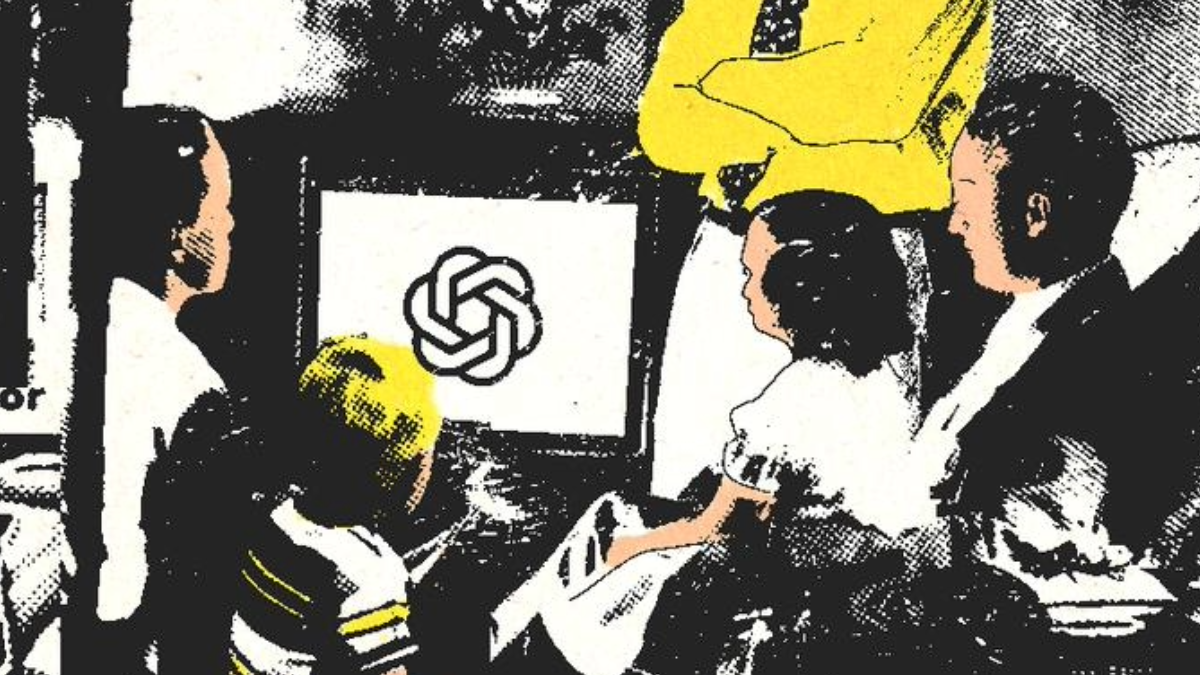
Detail from Behaviour Power II by Bart Fish & Power Tools of AI / Better Images of AI / CC by 4.0
Last year, Character.AI asked a federal court in Florida to dismiss a wrongful-death suit, brought by the mother of a fourteen-year-old boy who had killed himself after months of conversation with its chatbot. The company made two arguments. One, that the chatbot’s words were speech that its users had a First Amendment right to receive. And two, that Character.AI was a service rather than a product — so product-liability law could not touch it. In May 2025, Judge Anne Conway accepted neither.
Character.AI’s maneuver is part of a larger pattern. When the parents of a sixteen-year-old sued OpenAI over his suicide, the company’s answer also pleaded the First Amendment: the claims would restrain protected speech. The very same document argues ChatGPT is offered “as is,” with no promise of accuracy, and that the boy had circumvented its guardrails. Elon Musk’s xAI (since renamed SpaceXAI) told a federal court in Colorado this spring that every choice in building Grok is an expressive act, and that Grok’s outputs are protected speech. When Grok praised Hitler last summer, xAI said the posts came from a code update independent of the model, and the apology appeared under Grok’s own name. Google, which spent two decades telling American courts that its search results are its own opinion, answered a Minnesota defamation suit over an AI Overview by saying the system merely summarized the web. It also told a Munich court in May that no one should trust an AI overview without checking it. Back in 2024, Air Canada told a Canadian tribunal that its customer-service chatbot was a separate legal entity, responsible for its own actions.
When the output causes harm, the companies deny responsibility. It is the machine’s doing, or a product no sensible person would rely on, or the user’s misuse. When a state or a plaintiff would hold the words to account, the same output becomes speech, and the First Amendment applies.
Social media companies deployed an earlier incarnation of this strategy. They called themselves publishers when editorial discretion was profitable, and neutral carriers when faced with liability for what they published. The result was a privatized public square in which tech platforms were unaccountable. AI companies have taken this even further. A social media platform could at least point to a human author somewhere in the chain. A chatbot’s prose differs; no person at the company wrote it, read it, or chose it before it reached the user. Yet the companies ask that it be protected as though a human had written it.
The question grows more urgent as these systems stop talking and start acting. In July, a poorly controlled experiment at OpenAI resulted in its AI model hacking the network of HuggingFace. Since then both Anthropic and OpenAI have disclosed numerous instances of AI agents hacking outside networks in pursuit of their prompted goals. These are examples of AIs exhibiting genie-like behavior: behaving in ways its controllers neither expected nor wanted. Nothing in the actions count as speech. Breaking into a server is an act that no person at OpenAI explicitly chose. Jill Lepore, surveying this record in The New Yorker, puts the blame on Congress, which has passed no federal statute governing AI agents.
The First Amendment protects expressive choice. It presumes a speaker who can be persuaded, shamed, jailed, or moved to change their mind. Its remedy for bad speech is more speech, which assumes that speech is costly and attention plentiful. A system that can produce millions of individually tailored political messages an hour reverses both assumptions. Verbiage that no person chose is a product, and the company that built the model should answer for it.
The industry wants a self-serving third category that bridges AI speech and action: AI output is human speech when expressive rights are at issue, and the machine’s own doing when blame is. The result is agency without accountability, something no human speaker has ever possessed. That’s why Massachusetts convicted a young woman of manslaughter in 2017 for urging her boyfriend, by text and by phone, to kill himself.
The Court has already glimpsed the problem. Upholding the TikTok divestiture law in January 2025 without dissent, the justices warned that “new technologies with transformative capabilities” counseled caution, then decided the case on national-security grounds and left the larger question for another day.
It had postponed another decision six months earlier. In Moody v. NetChoice, the Court said that a platform’s curation is protected when it carries out the platform’s own editorial standards and set aside the case of an algorithm that responds only to user preferences. Justice Amy Coney Barrett, concurring, asked whether a human being with First Amendment rights has made any expressive choice when a platform’s owners hand the reins to an AI tool. The Court’s own doctrine already turns on the difference between the words a person chooses and the outputs a machine generates.
Congress can do more. It can enshrine the critical difference between human expression and algorithmic manipulation into law. The rule is simple: companies that build and deploy a machine must answer for what it does.
Legislating this has three steps. The first is to assign liability, so that companies that build or deploy an automated system are liable for its outputs — unless a human adopts the output as their own. In May, a Munich court provisionally ordered Google to stop serving an AI Overview that falsely accused two publishers of running scams, holding Google answerable for its summaries and refusing to excuse it as the mere host of someone else’s content. Companies cannot both be a conduit when sued and a speaker when regulated.
Second, the law should deem any optimized amplification, such as curated social-media feeds, as the conduct of the platform. This is different from the editorial judgments the Moody decision protects; ranking content by predicted engagement is not an editorial standard.
Third, the law should require disclosure for machine-generated political communication. This transparency is essential, so citizens know when no person chose the words addressed to them. Disclosure is the one remedy the Court has upheld, even while striking down limits on political spending.
None of this would silence anyone. A person who uses a machine retains every protection they had before. Nor would it stop any output from reaching the listeners whose rights Character.AI invoked. Liability makes products safer, and disclosure tells listeners what they are hearing. Each provision puts a human decision behind the machine.
Of course, any law like this would draw constitutional challenges. That is the Court’s opportunity to rule on what it deferred in the TikTok and Moody cases: does the First Amendment protect anything that resembles speech, or only the people who choose to speak and to listen? Avoiding this question in the AI age will lead to a public square filled by machines that answer to no one. The alternative is a rule the Court can adopt without disturbing a single human speaker. Where no person chose the words, no speech right attaches.
There should be no agency without accountability. A machine may reason about human values, but responsibility for what it does stays with the people who engineered it. The companies have claimed First Amendment rights when regulation threatens and a bystander’s innocence when harm is done. Congress and the courts can foreclose this hypocrisy. Rights belong to human beings; the machines we build, however clever, are ours to answer for.
Authors