How to Make Sense of Trump’s TikTok Deal
Anupam Chander / Jan 6, 2026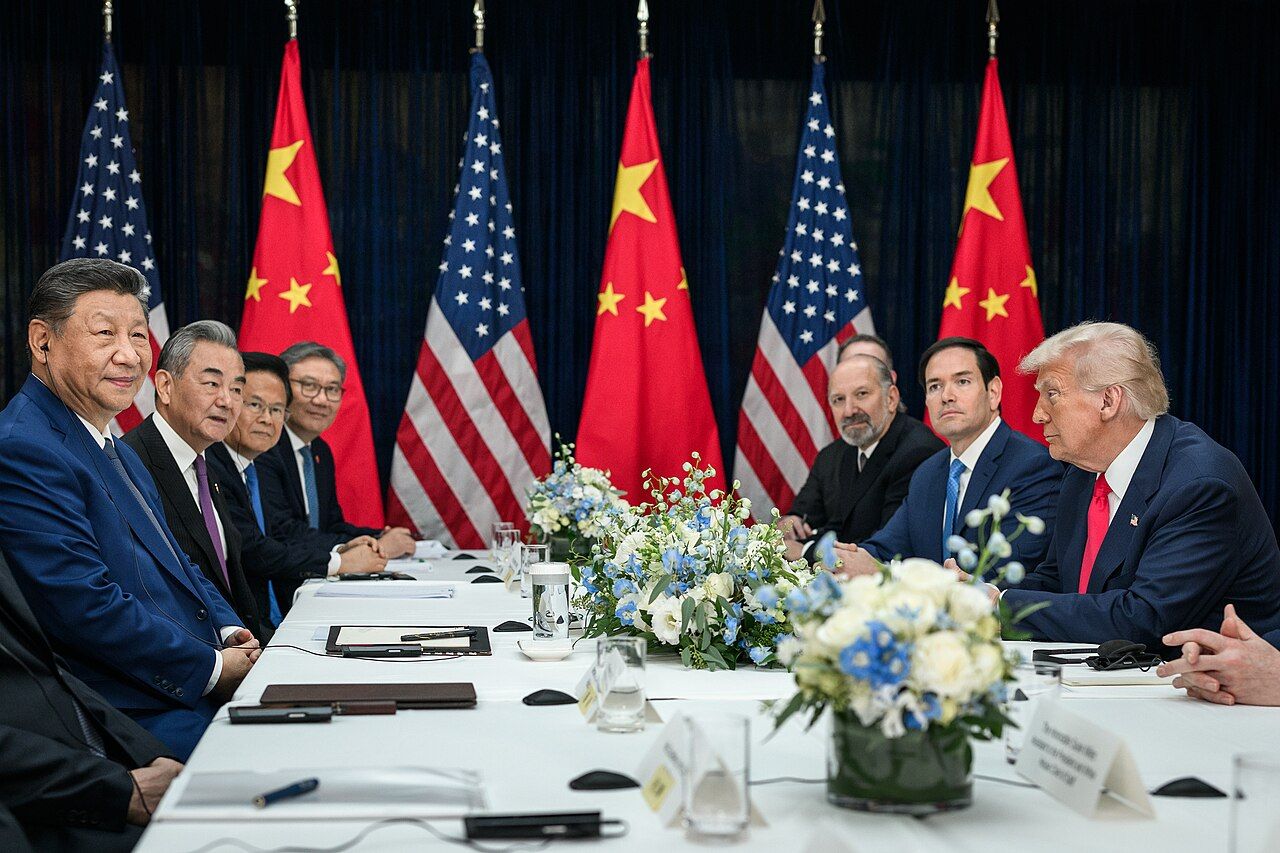
Chinese President Xi Jinping meets with United States President Donald Trump at the Gimhae International Airport terminal in South Korea on Oct. 30. (Official White House Photo by Daniel Torok)
TikTok last month reportedly signed a deal to transfer ownership and control of its United States app to a group of investors, led by software services company Oracle, investment firm Silver Lake and Emirati investment firm MGX. According to reports, the new US entity will be called TikTok USDS Joint Venture LLC and the deal is expected to close on January 22.
That would meet the deadline set by President Donald Trump’s latest executive order delaying enforcement of the TikTok ban-or-sell law that Congress passed in April 2024. TikTok reported as recently as early last year that it had some 170 million users in the United States, an indicator of how the app’s fate has significant implications for entertainment, commerce and speech.
Here’s a rundown of what you need to know about the deal and where things stand on a ban:
Who will control TikTok in the US?
Content moderation will be managed by the American investors, including Oracle, whose founder, Larry Ellison, is a long-time Trump supporter. The deal means the sphere of influence of the Ellison family’s media empire will now span from CBS News to TikTok US.
What does the law require?
On April 24, 2024, then-President Joe Biden signed into law the Protecting Americans from Foreign Adversary Controlled Applications Act as part of a package of foreign aid bills. The law stated that US firms such as internet hosting sites or app stores would no longer be able to provide services to keep TikTok operational in the United States, as of January 19, 2025. But it allowed TikTok to keep operating if its parent company ByteDance sold more than 80% of its US operations to investors that were not from China or a few other “adversary” states. This effectively meant that Apple and Google could no longer allow US persons to download TikTok, but it also meant that companies like Oracle that host TikTok on their servers would have to stop providing such services. When the effective date arrived, TikTok proactively shut down its app before these other services were compelled to do so by law. But TikTok began to spring back to life when Trump, then the incoming president, promised a handful of critical American companies that his Justice Department would not prosecute them for violating the TikTok law. Trump has repeatedly urged his administration to push back the deadline for enforcement, with the latest deadline being January 23, 2026.
Why did Congress target TikTok?
Members of Congress were worried that American speech on TikTok might be manipulated by the Chinese government to favor its geopolitical goals. Lawmakers also worried that TikTok might be used to gather information about Americans, including to build a dossier on what individuals might be interested in, which it might use, for example, to blackmail people or “develop spies,” as the US solicitor general told the Supreme Court. Former Congressman Mike Gallagher, who led the charge to pass the law, told the New York Times that he was more concerned about the possibility of propaganda than of surveillance.
At the Munich Security Forum in February of this year, Gallagher said the effort was largely “dead” on Capitol Hill until after the Hamas terrorist attack of October 7, 2023, after which he said “people started to see a bunch of anti-Semitic content on the platform and our bill had legs again.”
What is the price for the American TikTok?
In September, Vice President JD Vance said that TikTok US would be valued at $14 billion. Needless to say, it is unusual for a vice president to announce a private company’s sale price.
Why was the price so low?
Frank McCourt and a group of investors had reportedly valued TikTok’s US operations (even without the algorithm) at $20 billion in January 2025. TikTok’s US revenues for 2023 alone were reportedly around $16 billion, thus seemingly justifying a much higher valuation than the $14 billion that Vance announced.
There are at least two possible explanations for this low price.
First, TikTok seems to have reserved at least some rights over the most lucrative parts of TikTok US, which include its e-commerce, advertising, and marketing services. Second, this may have been the price that the president insisted on — the price of remaining available in the United States. Would President Trump have approved a purchase by either McCourt or other entities with sufficient capital like Microsoft or Softbank? Unlike these buyers, Oracle’s founder and CEO had a long history of support for President Trump.
Will ByteDance still have a role in the US TikTok?
Yes, ByteDance and its subsidiaries will still have a role in the US TikTok. ByteDance will maintain 19.9 percent ownership of TikTok’s USDS Joint Venture, thereby remaining below the maximum share allowed under the Tiktok law. ByteDance will also reportedly operate subsidiaries in the US that will facilitate global product interoperability and certain commercial activities, including e-commerce, advertising and marketing.
ByteDance’s continued role avoids creating a US TikTok island — where US residents would be able to talk only to US residents and US creators would lose access to their global user base. TikTok’s global entity can ensure that the two apps are interoperable, a process that would have been far more challenging otherwise. If that had happened, I would have expected some US creators to move abroad to try to retain their global audience.
Does the new structure comply with the law?
The TikTok law has an interesting provision that attempts to freeze ByteDance and its subsidiaries out from ongoing relations with TikTok US after any divestiture. It bars ByteDance from the “maintenance of any operational relationship between the United States operations of the relevant foreign adversary controlled application and any formerly affiliated entities that are controlled by a foreign adversary, including any cooperation with respect to the operation of a content recommendation algorithm or an agreement with respect to data sharing.” There is an argument that the new structure does not meet this requirement, as ByteDance still has an operational role —but there is not a clear path to challenge a determination by the president that it does.
Does the new structure address Congress’s concerns?
Because content moderation will be firmly entrenched in American hands, the possibility of improper Chinese government influence seems to have diminished. Of course, foreign actors will still seek to manipulate information on all tech platforms, as Russia’s Internet Research Agency infamously taught the world during the 2016 US elections.
What are other countries doing?
TikTok has remained legal in the European Union, Taiwan, Japan and most of the world. India banned TikTok in 2020 following a skirmish with China in the Himalayas. TikTok is not available in mainland China or Hong Kong. Albania banned TikTok for a year, blaming the app for stoking violence and bullying.
Should we be worried about this change?
The law signed by Biden ultimately gave Trump the power to determine whether ByteDance had successfully divested itself of American TikTok — making Trump the kingmaker for TikTok’s future operations in the US.
Ultimately, we may have traded the possibility of foreign propaganda for the possibility of domestic propaganda. Some will think that offers an improvement, but there is reason to worry about US political influence over who owns one of the most important information platforms in the country.
Authors


.jpg)