How Platform Labor Laws are Shaping Gig Work in Singapore and Malaysia
Lam Le / May 7, 2026Lam Le is a fellow at Tech Policy Press.
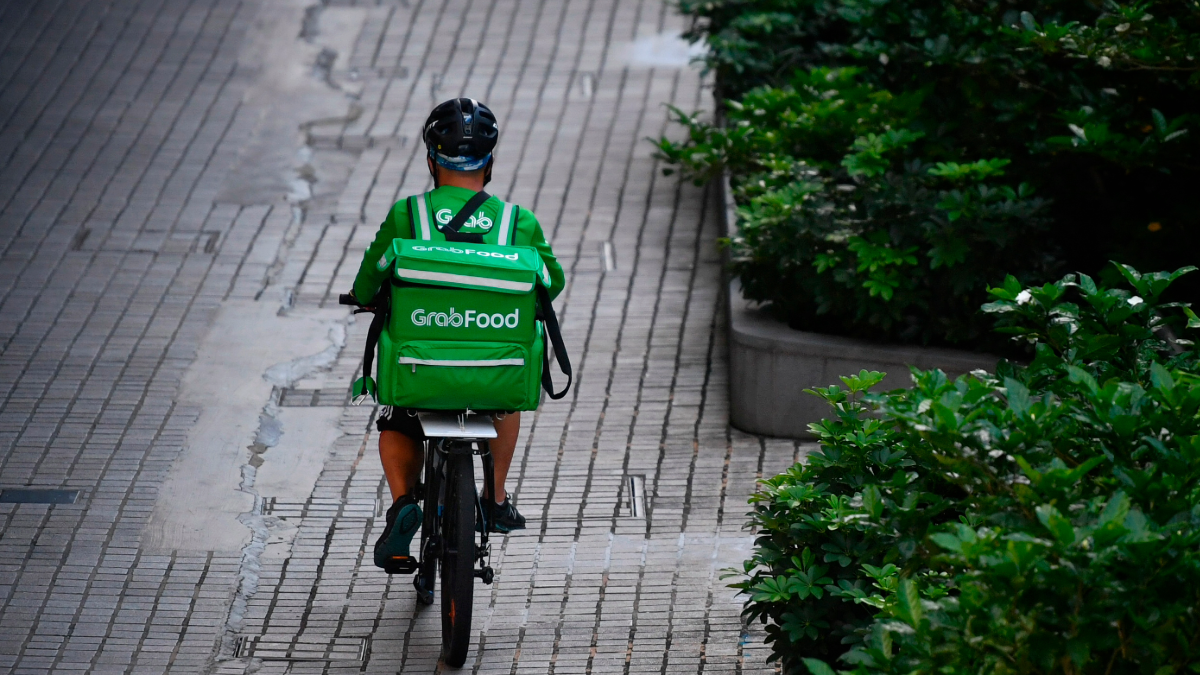
A GrabFood delivery rider on a bicycle. (Singapore Press via AP Images)
One year after Singapore’s Platform Workers Act came into effect in January 2025, Carmen Ortega, a ride-hailing driver, and Hayyan, a delivery worker, are both clocking more hours every week to make up for lower take-home pay.
A portion of their monthly earnings now goes into their social security accounts. “I feel like it’s saving for myself as I grow old and retire, if I want to buy a house, for retirement,” Ortega, who is 40 and drives for various platforms, told Tech Policy Press.
Hayyan, who works mainly for Grab, Southeast Asia’s biggest ride-hailing and delivery platform, sees it differently. “The delivery rider wants immediate cash. That is kind of the whole point of doing this kind of gig work in general,” the 25-year-old, who asked to be called by his nickname to speak freely, told Tech Policy Press. “It’s horrible.”
In 2024, Singapore became the first country in Southeast Asia to pass legislation regulating gig work. In September 2025, Malaysia followed suit, approving the Gig Workers Act, which came into effect on March 31.
This approach differs from the EU’s Directive, where a platform is presumed to be an employer if indicators of control and direction are present. By contrast. Singapore and Malaysia’s laws “actually preserve the traditional employment classification, meaning the gig workers are considered an independent contractor,” Yosuke Uchiyama, a researcher at the Transportation Institute, Chulalongkorn University in Thailand, told Tech Policy Press.
Under Singapore’s Act, gig workers who rely on tech platforms are now classified as platform workers, a third category between employees and the self-employed. Malaysia covers both platform workers, like ride-hailing drivers and delivery workers, and freelance creatives, artists, translators and journalists.
Legislators in both countries came into existence as a growing number of gig workers have become more vocal about low pay and poor working conditions. Both laws offer gig workers additional social protection and safety nets previously unavailable to them.
In Singapore, it is now mandatory for platform workers born in 1995 and after to contribute to their social security fund, known as CPF. Contributions from older workers, who make up the majority of platform workers in the country, are voluntary. Additionally, platforms are obliged to provide work injury compensation insurance to their workers at the same level and scope as employees. And for the first time, platform workers get the right to representation from Platform Work Associations, which act like unions.
Per Malaysia’s Act, gig workers now get social security, transparency in service agreements, and the prohibition of discrimination. But instead of union representation, a tripartite council comprising government representatives, platforms, and gig workers will advise the government on minimum income rates and working standards. Disputes are resolved, first through the Industrial Relations Department, and unresolved cases then go to the Gig Workers Tribunal.
The logic is “if the government over-regulates (gig work), it will collapse (…) because it is based on flexibility,” Associate Professor Dr Nurhidayah binti Abdullah, Faculty of Law at the University of Malaya, told Tech Policy Press. “For social protection, we need it because we don't want our citizens to be not protected, this is going to be a big problem for the country.”
But neither Malaysia nor Singapore requires platforms to be transparent about how their algorithm works. Instead, in Singapore, issues like pay rates, how bonuses and penalties work are relegated to negotiations between the platforms and approved worker associations affiliated with the National Trade Union Council (NTUC).
NTUC has been spearheading negotiations on pay with platform operators. So far, major platforms, which include Grab, Deliveroo, Food Panda and others, have have agreed to three key principles: (1) earnings should be fair and transparent, with incentives designed to complement earnings rather than make up most of their income, (2) platforms should notify platform workers associations (PWAs) about planned changes to incentives schemes that could impact workers’ earnings so that PWAs can be engaged for visibility and support constructive discussions; (3) incentives schemes must follow health and safety guidelines and should not encourage platform workers to work excessively long hours without adequate rest.
“We will ensure fair and transparent earnings,” Grab’s Group Managing Director of Operations, Yee Wee Tang, said. “We will consult drivers and PWAs along the way … As a company, we are fully committed to holding ourselves accountable and playing our part in raising industry standards to support platform workers better.”
The key terms, though broad, appear to align with the concerns of platform workers. SG Riders, a grassroots group of delivery workers, have been calling for the “abolishment of ARCR (acceptance rate and cancellation rate), minimum wages, minimum fare, and platform workers needing to spend less time on the road to earn a decent wage,” Suraendher Kumarr, community organizer at workers' rights group Workers Make Possible, told Tech Policy Press.
There are around 70,000 platform workers in Singapore. The median income of those who work full-time hours is approximately S$2,000 a month (USD $1,500), which is below the income level of the bottom 20 percentile.
It’s unclear how many platform workers have joined NTUC-affiliated associations, but three workers Tech Policy Press spoke to remain skeptical that the NTUC will negotiate fair terms for them because of its close links to Singapore’s ruling party, PAP. Gig workers “getting representation (via NTUC) is generally a good thing, but the bigger problem is that our unions are state-controlled,” Kumarr said. “And so workers don't actually have autonomy in it. We've not had any unions authorize a strike in decades.” The NTUC did not respond to Tech Policy Press’ request for an interview.
To voice their concerns, Ortega relies on her Instagram page, Confessions of a Grab driver; Hayyan vents with fellow riders in private group chats. Wong, a 58-year-old delivery rider for various platforms, actually joined NDCA, the National Delivery Champions Association, an affiliate of NTUC, two years ago out of curiosity. “They didn't really push for change,” Wong, who requested to be referred to by his last name only in order to speak freely, told Tech Policy Press. They just advised on it, he said.
Over in Malaysia, Jose Rizal, Chief Activist at Gabungan eHailing Malaysia (GEM), a grassroots organization for ride-hailing drivers, is concerned about how platforms weaponize algorithmic control. He started GEM in 2020, when he helped a gig worker appeal an unfair termination by a platform.
He’s hopeful the Gig Workers Law will bring positive change, especially the Tripartite Council, which began work in April, with income rates being first on the agenda.
“We think that there will be more transparency and there will be no more unilateral decisions that can be made by anybody, especially from the platform side,” Rizal told Tech Policy Press. But “because the Tripartite Council doesn’t have the power to amend anything,” the outcome depends on whoever is the government official responsible for making the final decision.
Since speaking with Tech Policy Press in February, Rizal has been appointed to the Tripartite Council.
Workers like Wong and Hayyan in Singapore said additional protections are meaningless if the algorithm is still designed to incentivize longer working hours in dangerous conditions. “You are kind of cutting our wages, and you are incentivizing us to be working in more dangerous conditions where it’s raining, and more people are going to get sick, or people are more likely to get injured.”
While a lot of the drivers Kumarr has talked to complained about falling earnings over the past year, “do they think it's because of the act or it's because the number of riders is increasing or like the economy is bad,” he said. “So we will need some more studies to prove that.”
This reality shows still how little transparency there is over how platform workers’ pay is being calculated. Even the commission rate, “it's basically the drivers, they just calculate it,” Kumarr said.
At the end of the day, “we want our autonomy back,” and it starts with the grassroots movement, Hayyan said.
Authors