How a Brazilian Governor Turned Rare Earths Into a Campaign—and Washington Into a Partner
Tatiana Dias, Maurício Angelo / Aug 17, 2026Tatiana Dias is a fellow at Tech Policy Press. Maurício Angelo is the executive director of the Mining Observatory, a journalism and research organization.
This article was updated after publication to apply corrections and clarifications, which are detailed below.
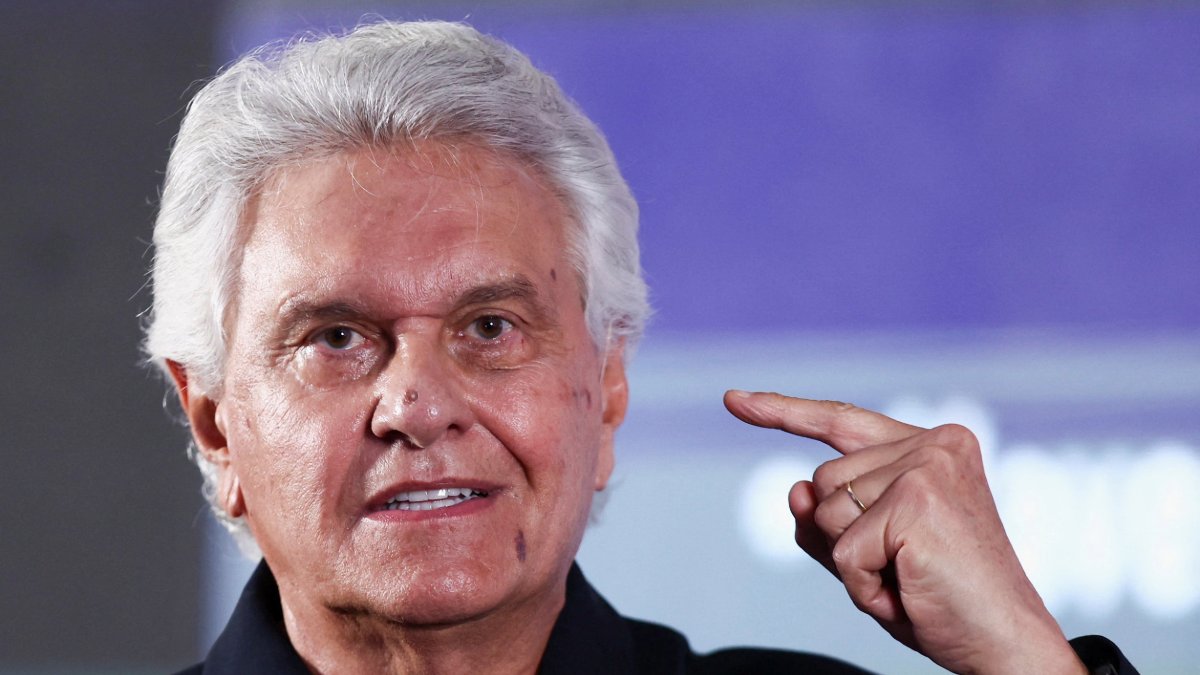
Brazilian presidential candidate Ronaldo Caiado, former governor of Goias state, presents his public security policy in Sao Paulo, Brazil August 10, 2026. REUTERS/Jean Carniel
While the Brazilian federal government was preparing a national rare earths policy aimed at positioning the country as a global leader in the sector — on its own sovereign terms — the governor of Goiás, the Brazilian state home to the largest reserves of these minerals critical to the technology industry, moved first. He not only enacted his own policy, sidelining the Lula administration, but also signed an agreement with the United States that squarely served President Donald Trump's ambitions.
To build his rare earths policy, the then-governor of Goiás, Ronaldo Caiado — now a presidential candidate — enlisted a prominent Brazilian lawyer, Ronaldo Lemos, who serves on Spotify's advisory board; sits on the Oversight Board, the quasi-independent content moderation oversight body established by Meta; writes a technology column for Folha de S.Paulo, Brazil's most influential newspaper; and directs ITS-Rio, a technology and law think tank. Lemos stated that this work was unrelated to his other affiliations.
Shortly after the law was enacted — in line with the lawyer's recommendations, published in a white paper around the same time — the Goiás government signed a memorandum of understanding with the US stipulating that strategic geological data would be "jointly owned" by Goiás and the US, and could be granted on an exclusive basis to entities designated by the US, drawing sharp criticism over the transfer of strategic Brazilian information and raising serious questions about national sovereignty.
In February, Caleb Orr, the US Secretary for Economic, Energy and Business Affairs, declared that the US viewed Brazil as a "strategic partner" for the supply chain, and expressed interest in processing critical minerals in the country.
According to data from the US Geological Survey, Brazil holds the world's second-largest rare earth reserves, after China. That makes Brazil strategically vital for Trump, who is seeking to reduce American dependence on Chinese exports. Today, production is concentrated in the state of Goiás, which took the lead in negotiations.
Internal records from the Goiás state government show that the administrative process that gave rise to the agreement with the US was opened two weeks after the law was enacted — meaning negotiations were already underway when the white paper was published. According to the Goiás government, the state "got ahead of the global debate" following a mission to Japan in July 2025, during which it identified "a growing concern among governments such as those of the US and Japan over Chinese hegemony in the supply chain." "The conversations with these two countries were merely a consequence of the urgency of the debate on the issue," the state government said.
The Goiás government stated that Ronaldo Lemos's role in producing the white paper was carried out "in an individual capacity, on a pro bono basis, helping to draft the regulatory proposals."
Lemos told Tech Policy Press that he took no part in negotiations between governments and the state of Goiás. According to him, the report was produced in the first half of 2025 and delivered to the Goiás government on August 5. On August 27, the law was passed in a flash — in just two days — by Goiás state legislators. According to the government statement, the law was approved "within the legal timeframe," and aligns with a "national development strategy that prioritizes industrialization and technological sovereignty."
By launching its own policy ahead of the federal government, Goiás put itself on a collision course with Lula, who is also a presidential candidate in the upcoming election. For Lula's allies, Caiado opened the door to US interests and ran roughshod over the Brazilian Constitution, which establishes that mineral resources are federal property.
"These people are going to sell Brazil and we cannot allow it," Lula warned. Caiado fired back: "He's the one selling. He's giving everything away, developing no technology in Brazil, and we keep selling raw timber, just like in the colonial era."
In a note sent after the publication of this article, Caiado's campaign challenged the claims that Goiás moved first and sidelined the Lula government, arguing that the state was not the first to adopt a strategic minerals policy, and that "a state exercising its own constitutional powers over infrastructure, environmental administration and regional development sidelines no one." Read the campaign's full response here.
At the federal level, Brazil's strategy for critical minerals is to refuse agreements that require exclusivity. Brazil did not join Pax Silica, the US-led global declaration to secure the supply of resources essential for semiconductor and artificial intelligence supply chains. In February, US government representatives invited Brazil to participate in the Critical Minerals Ministerial in Washington, an event with the express aim of "reshaping global trade." Brazil sent only a junior diplomat as an observer and rejected the bilateral agreements signed by the US with several other countries.
The issue has already become a flashpoint in the electoral race. In March, Lula's main rival, Flávio Bolsonaro — son of former president Jair Bolsonaro — signaled his intention to advance negotiations with the US. "Brazil is the solution for the United States to no longer depend on China for rare earths and critical minerals," he declared at CPAC.
Lula, for his part, has not ruled out partnering with the US in critical mineral exploration, but insists he will not compromise on sovereignty. "Critical minerals are ours, rare earths are ours, and we want to develop them here at home," he declared.
The dispute over mineral sovereignty between Lula and Flávio Bolsonaro appears set to occupy a significant share of the presidential campaign. Lula's party, PT, has just placed rare earths — alongside Brazil's Pix payment system and Trump's tariffs — at the center of the launch of Lula's reelection campaign. But US influence across all these issues, Trump's direct interference, and Washington's alignment with the Bolsonaro family have the potential to shape who becomes Brazil's next president in what promises to be another tight race.
The white paper that architected Goiás' policy
The Brazilian Constitution establishes that mineral extraction is a federal competence, precisely to safeguard national sovereignty. In recent months, the Lula government, working with mining-aligned legislators in Congress, has been discussing a National Critical and Strategic Minerals Policy — belatedly, and with no socio-environmental safeguards in sight.
But Goiás did not want to wait, and found an important ally to craft its own rare earths policy. The starting point was the creation of the Autoridade Estadual de Minerais Críticos do Estado de Goiás — the AMIC/GO — which had been proposed in Ronaldo Lemos's white paper.
According to Lemos, the law and the regulatory decree published in June "concretize a good part of what he has been writing and saying about the topic." For him, the texts reflect "the need to have a sovereign mining policy in the country, promoting development, local value addition, autonomy and technological mastery of mineral production in Brazil." He also says there was no payment or agreement involved in producing the white paper. "I have been speaking and writing frequently about mining policy, which has sparked interest in the topic in the public sector," he said, adding that he has a "personal interest" in the subject.
Lemos leads ITS-Rio, a technology and law think tank founded by lawyers who also work on cases involving tech companies in Brazil. Lemos and ITS-Rio had previously worked with the Goiás government on the passage of what they called "Brazil's first AI law," in May 2025. As with the rare earths project, the state-level bill was enacted before federal AI regulation — still being debated in the Brazilian Congress — could be approved.
On that occasion, ITS-Rio justified the speed in the same terms, arguing on its website that the bill being debated in Congress "insisted on copying Europe," while "Goiás creates an original model that takes into account the country's capabilities and interests." The bill was filed the day after Goiás Governor Ronaldo Caiado visited Google's headquarters in New York, and passed the following day as well, in a snap vote. The Goiás AI law, which included provisions for AI in schools, healthcare and public services, and established an "ex-post" regulatory regime, drew criticism for creating legal uncertainty through two overlapping regulatory frameworks on the same issue.
In the case of rare earths, shortly after Governor Caiado announced and enacted the law in August, Lemos and ITS-Rio published the white paper that underpinned the state's policies. The document was posted on September 16 — the same day the internal government process that would give rise to the exclusivity agreement with the US was opened. ITS-Rio told Tech Policy Press that the institution didn’t participate in the initiative and just published the report written by one of its directors.
In the document, Lemos proposes a series of actions for the Goiás government to leverage its reserves of rare earths, niobium, nickel, copper, titanium and phosphate — minerals that, according to him, would give Goiás "greater geopolitical weight."
The report recommended the creation of the AMIC-GO, the body responsible for coordinating critical mineral extraction and representing the state institutionally in international partnerships and agreements, as well as the so-called "Special Critical Minerals Zones," with economic and fiscal incentives. The report says that, in the environmental licensing of strategic projects, "the AMIC-GO will work in partnership with the state environmental agency to streamline processes, without relaxing oversight". The institutional roadmap was followed closely in the legislation enacted.
For Ricardo Júnior de Assis Fernandes Gonçalves, a professor of Geography at the State University of Goiás, the expansion of mining in the Cerrado — Goiás's native biome — will deepen the territorial suffocation of local communities. "It is a continuation and attempt to reinforce the extractive-mineral dependent model that will keep Goiás and the territories of the Cerrado as global extractive peripheries," he told Observatório da Mineração.
Goiás's law ran in parallel with purchase of a mining company in Brazil by a US company
Seven months after the law was published, the Goiás government — through the newly created AMIC-GO — signed the memorandum of understanding with the US, following the example of other countries such as Australia, Japan and Malaysia. The timeline suggests that the enactment of the law and the construction of the legal framework ran in parallel with the US negotiations.
The MOU, reviewed by Tech Policy Press and Observatório da Mineração, explicitly states that "any data produced from US-supported geological survey projects shall be jointly owned by Goiás (or an entity designated by Goiás) and the US (or an entity designated by the US), with the expectation that such data shall be treated as confidential business information." It also provides for a five-year exclusivity window.
Intellectual property from data produced in US-supported geological survey projects would be shared "in mutually agreed arrangements," with both parties having full access to such intellectual property.
The memorandum, however, states that it is "a voluntary arrangement expressing good faith intentions and not a legally binding document under international or domestic law." According to both governments, the memorandum of understanding amounts to a "declaration of good intentions."
The Goiás initiative was challenged on several fronts. Federal congresswoman Dandara Tonantzin of the PT — Lula's party — requested that Brazil's Attorney General investigate the Goiás government and move to suspend the memorandum. "A member state cannot assume, directly or indirectly, strategic commitments in mineral matters before a foreign power," her petition states.
"We cannot hand over our riches to the North American government and submit our country to Trump's neocolonial agenda. This means deepening Brazil's economic dependence and reproducing a historical pattern of subordination," she declared.
The Goiás government argues that the state critical minerals law does not interfere with the federal government's sovereignty over the subsoil because it "focuses on the stage after extraction."The memorandum explicitly references the development of "a complete local supply chain for permanent magnets (NdFeB or others) and related technologies" used in defense applications, electric motors and smartphones.
Just one month after the signing of the memorandum, a rare earth mine in Goiás belonging to Serra Verde — the only producer of the four essential magnetic rare earth elements at commercial scale outside Asia — entered into an agreement to be sold to USA Rare Earth for US$2.8 billion. Serra Verde, which produces neodymium and praseodymium, the foundation of NdFeB magnets, was previously controlled by US and UK funds and will be under full USA Rare Earth control after the sale closes.
Regarding the Serra Verde acquisition, Lemos says that, based on what he read in the press, "the model has moved away from the principles established by the law and its decree," but argues that the legislation contains provisions that, in his assessment, allow for a response to such situations. The laws protect, for example, against the export of raw minerals and set local industrialization targets — but the obligations are "voluntary in nature" and apply only to companies that opt into state benefits.
Reports show that rare earth mining in Goiás is already impacting protected areas and fueling conflicts over water. There are currently 2,732 applications for rare earth research and exploration registered with Brazil's National Mining Agency. Only seven hold extraction permits — all concentrated in the Goiás city of Minaçu, and all belonging to Serra Verde.
The announced sale of the mining company triggered an intense national debate about sovereignty, with politicians calling for the creation of a state-owned enterprise and student groups launching campaigns toward the same goal, including demands to cancel the Serra Verde acquisition. The Rede party challenged the deal before the Supreme Court, filing for a suspension of the agreement.
USA Rare Earth has drawn direct support from the Trump administration, which has taken the unusual step of investing in mining companies. Another rare earth company operating in Brazil, Aclara Resources, has also received US funding. The US joins Australia and Canada as foreign powers with dominant stakes in Brazil's strategic minerals.
For Luis Eslava, professor of International Law at La Trobe University's Faculty of Law in Australia, a structural tension that could emerge from the US stake in Serra Verde is one of "value capture." "Unless Brazil integrates such investments into a coherent industrial strategy, it risks reproducing the historical pattern of supplying strategic raw materials while higher-value segments remain abroad," Eslava told Observatório da Mineração.
The researcher notes that Brazil is part of a new frontier of mineral extraction in the Global South, and that the central debate should be framed around the terms and conditions of extraction: respect for free, prior and informed consent; meaningful community consultation; distributive justice mechanisms; and concrete pathways toward advancing within global value chains.
Despite the deals, the US remains far from critical minerals independence
Trump's race to secure, increase and improve US stockpiles and access to critical minerals and rare earths is not driven by any desire to bet on the energy transition, electrification or climate action — he has repeatedly said he does not believe in climate change and has taken aggressive steps to unravel what the US once built toward fulfilling its commitments under the Paris Agreement.
Rare earths and other scarce minerals are essential to the defense and technology industries — two sectors that form a crucial pillar of support for Trump. Without these contested inputs, both the military-industrial complex and the artificial intelligence data center boom risk serious disruption, a result Trump and his allies are working relentlessly to prevent.
And reaching a point of real impact on global supply chains will not come quickly for the US or any other nation. The US currently depends on China for 70% of its rare earths, 50% of its graphite and 55% of its antimony, among others. Trump does not want Chinese market maneuvers to trigger scarcity episodes that could damage American industry — and, by extension, his electoral base and political capital.
He has therefore invested in bilateral agreements to "build secure and resilient critical mineral supply chains" and "anchor strategic links in the global technology supply chain," as embodied in the Critical Minerals Ministerial, which convened the subgroup of countries that has come to be known as the Pax Silica.
Trump also launched what has been called "Project Vault," a $12 billion investment to support American mining companies. The bulk — $10 billion — would come from the US Export-Import Bank, with the remaining $2 billion from private capital. The goal is to build up US reserves of critical minerals and support industries including technology and automotive manufacturing. Companies such as Lockheed Martin, General Motors and Google's parent company Alphabet are among the first beneficiaries.
This initiative, however, would build strategic reserves sufficient for only 60 days of consumption — far short of meaningfully reducing US dependence on China.
This dynamic illustrates the enormous difficulty of challenging Chinese dominance in the critical minerals supply chain, and especially in rare earths — one of the main drivers behind Trump's multibillion-dollar investments and political maneuvers.
Caught in the middle is Brazil, with its own interests, contradictions, strategic role in global mining, and historical tendency toward non-alignment in diplomacy – whose resources are now being wielded as a political weapon in a country bracing for yet another polarized election.
On August 18, this piece was updated to include the following corrections and clarifications.
- The prior version incorrectly stated that there were 2,732 open research and exploration applications open in Goiás state; this figure is for the whole of Brazil.
- The prior version referred to Serra Verde as the only producer of the four essential magnetic rare earth elements outside Asia; the company has claimed it is the only producer of the four essential magnetic rare earth elements at commercial scale outside Asia.
- The prior version stated that the Goiás law “enabled” the acquisition of Serra Verde; this claim has been removed and the subtitle that contained it updated to indicate the development of the law occurred in parallel with the acquisition.
- This version has been updated to clarify that the sale of Serra Verde to USA Rare Earths has been announced, but the transaction is not yet complete, and to add more detail on the foreign ownership of Serra Verde.
- This version has been updated to further clarify that it is the US federal government under the Trump administration that has taken stakes in mining companies, not Trump himself.
- This version has been updated to further clarify the provisions of the report published by ITS-Rio and the environmental safeguards contained in Decree 10,921.
- This version was updated to include an additional statement from Ronaldo Lemos indicating that his work on the white paper was unrelated to his other affiliations.
On August 20, the piece was updated to include additional comment from the presidential campaign of Ronaldo Caiado, including a link to its full response, and to clarify that Caiado is the former governor of Goiás.
On August 21, the piece was updated to indicate Caiado and Lula are now candidates for the presidency, rather than pre-candidates, as of August 16.
Authors