Four States Take Meta to Trial in California, the Latest Front in Sprawling Multidistrict Fight
Varsha Bansal / Aug 17, 2026Varsha Bansal is a fellow at Tech Policy Press.
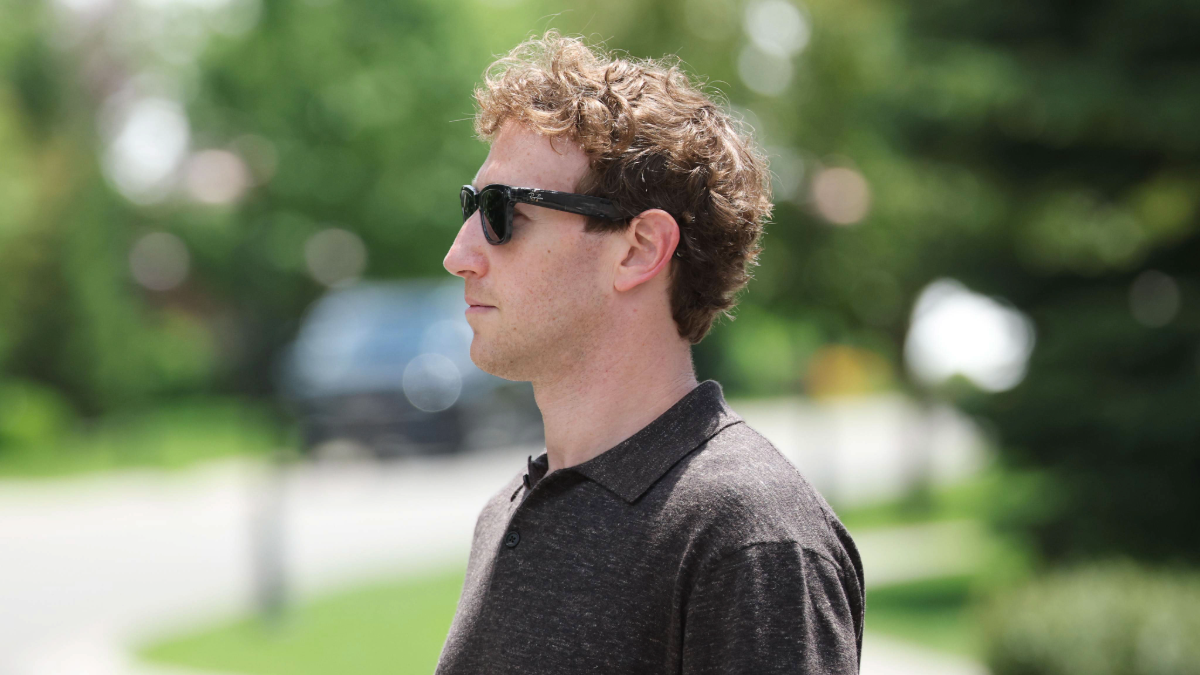
CEO of Meta Platforms Mark Zuckerberg attends the Allen & Company Sun Valley Conference at the Sun Valley Lodge on July 9, 2026 in Sun Valley, Idaho. (Photo by Kevin Dietsch/Getty Images)
Opening statements will be heard this week in a trial in Oakland, California, where Meta will again face a judge and jury over alleged harms to children. Four state attorneys general — from California, Colorado, Kentucky and New Jersey — are the first of 29 to try claims that Meta, the parent company of Facebook and Instagram, violated their consumer protection laws. This trial would also cover allegations by all 29 states that Meta violated a federal law called Children’s Online Privacy Protection Act, or COPPA by illegally collecting children’s data.
Eight people were selected last week as part of the jury. They will play an advisory role, while the US District Judge Yvonne Gonzalez Rogers will make the final ruling. The trial may last six to eight weeks with a verdict in October and during that time, Meta CEO Mark Zuckerberg and Instagram head Adam Mosseri are expected to testify.
The trial is part of the social media adolescent-addiction multidistrict litigation (MDL), which has gathered thousands of cases from around the country since 2022. Among the alleged concerns are that Meta designed its apps to keep minors hooked to them and did that despite knowing from its own researchers that its products cause serious mental health issues for kids.
During the trial, states will show evidence they say demonstrates how the apps were designed to be addictive and Meta’s awareness of it, rather than focusing on the content on these platforms. That’s a deliberate strategy, since social media companies can invoke Section 230 of the Communications Decency Act, which shields them from liability for most third-party content posted on their platforms. The states hope to frame the case around product design and alleged deception.
“A few years ago, these tech companies were mostly seen as untouchable, largely due to the interpretation of Section 230 as a blank check for the tech industry’s recklessness and greed,” said Mary Anne Franks, a professor at The George Washington University’s law school “But as the destructive consequences of this interpretation have become harder and harder to ignore, courts have finally started to scale back their deference to the industry and to treat their broad claims of immunity with increasing skepticism.”
Meta did not respond to a request for comment. Elsewhere the company has disputed allegations made by the state AGs. The company says it could face up to $1.4 trillion in damages, close to its total market value.
The MDL map
This trial is one piece of a much larger and complicated structure. A multidistrict litigation, as the name suggests, allows similar cases that are filed across different federal districts to be consolidated for a single federal judge. For the social media adolescent-addiction cases against tech companies, as of now 3,137 cases have been consolidated under the MDL. These are different from the thousands of cases consolidated separately in California state court under a Judicial Council Coordination Proceeding, or JCCP. In addition, individual states have also filed cases in their own courts which includes the recent New Mexico state AG case where Meta was ordered to pay a combined amount of $942 million, and the ongoing trial against Meta in Tennessee.
The MDL includes four different tracks: the first are individual lawsuits filed by minors and parents alleging tech platforms to cause anxiety, depression, self-harm among its young users. The second track is that of the cases filed by school districts who have sued for public nuisance alleging that these platforms created a mental health crisis inside their schools. The third group is that of 29 state attorneys general and the fourth (and smallest) track is a set of cases filed by Native American Tribes.
From these thousands of cases, the judge has selected 11 as “bellwether” trials: five personal injury lawsuits and six school district cases.
“The idea is that there are so many cases that have been filed, rather than trying to hear them all, the court will pick some sample of those cases, try those, and hope that gives the parties enough information to figure out a resolution,” said Eric Goldman, a law professor at Santa Clara University, adding that the first bellwether trial from the MDL did not go as expected.
It was a case brought on by Breathitt County School District in Kentucky against the four tech platforms — TikTok, Meta, Snap and YouTube and was scheduled for a trial in June. But the case was settled in May even before it could go to trial, with the four defendants agreeing to pay a total of $27 million to the school district. This included $9 million from Meta.
This means the upcoming trial would be the first from the MDL to reach a jury — and also the first one to be brought by the state AGs — making it “the first real test of the federal litigation’s merits.” said Franks.
Lawyer Haley Hinkle, who has been tracking all the social media lawsuits, believes this upcoming trial is going to be an important one for several reasons. The four states are expected to ask Judge Rogers to tell Meta to make some changes to the platform: including implementing age restrictions, getting rid of the infinite scroll feature, and deleting algorithms built on children’s data.
“When you've got four states from across the country, including the state that is home to Meta, trying their claims together on behalf of the harms to all the families, that's going to be very significant,” said Hinkle, policy counsel at Fairplay, an organization that works to protect kids from Big Tech. “They are going to be pursuing not only damages but changes to the platform's conduct — these AGs are highly motivated to see actual change, and that’s why they’ve been so aggressive and so coordinated across all the states in getting these types of claims to trial.”
The main arguments
Legal experts explain that the state AGs are expected to make two main arguments against Meta. The first is regarding the violations of the four state’s consumer protection laws where the states are going to point at Meta for profiting enormously from exploiting the attention and time of children.
This is expected to be their core argument: “You have come into our state and gone after our consumers, our kids, and you've lied to them about your product: you've told them it's safe, but it's not. It's addictive, and when we go and look at all your records, your internal conversations reveal that you know it actually is addictive, and that it can create a lot of mental health problems. So you're lying to them,” explained Benjamin Zipursky, a law professor at Fordham University School of Law.
As for the COPPA side of things, legal experts say that the states are going to argue that Meta violated this 1998 law which tells companies to get parental consent before they collect data of users who are under 13.
“There are a ton of kids under the age of 13 on these platforms — that has been something the platforms know and have ignored, [and] failed to take appropriate measures to remove those kids from their platform,” said Previn Warren, co-lead counsel for some of the plaintiffs in the MDL. “And they've done that because having young kids on the platform is financially beneficial to the company: every fresh crop of kids with a smartphone is a new generation of kids for Instagram to add.”
What’s ahead?
More MDL trials are anticipated to get underway early next year. The next school district bellwether trials, filed by Arizona’s Tucson Unified School District and South Carolina’s Charleston County School District, are scheduled for February 2027.
As of now, it’s unclear when the individual bellwether cases from the MDL will be tried. But with the deluge of lawsuits and a wave of new legislation, one thing is clear, say some legal experts: change is imminent.
“In my mind, [it is] fairly clear that social media, as currently constructed, will not survive the legal onslaught. Something will change — I don't know how many different things [or] how structural those changes will be,” said Goldman. “The only way that social media could potentially remain as it is currently today is essentially if the social media services win everything: they win all the court battles and they win and defeat all the legislation. And I just don't see how that’s possible.”
Authors