Europe’s Digital Sovereignty Has a Funding Gap
Mark Scott, Richard Woods / Sep 24, 2026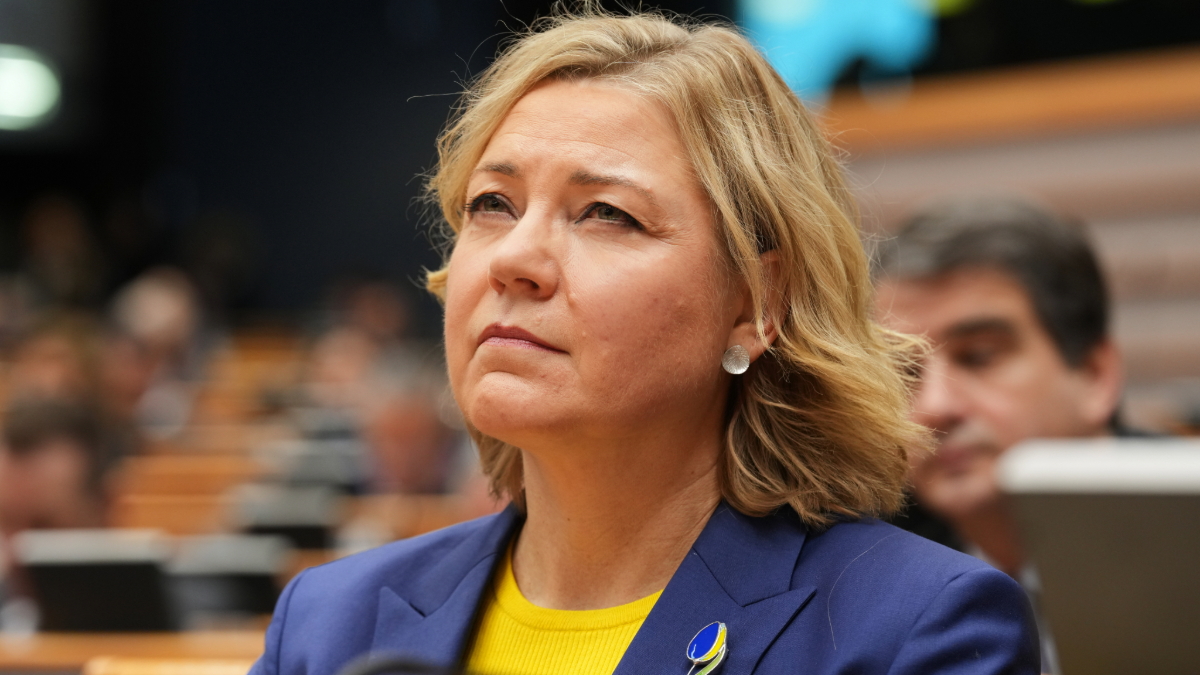
European Commissioner for Tech Sovereignty, Security and Democracy Henna Virkkunen. (AP Photo/Marius Burgelman)
Europe has gone all-in on digital sovereignty.
From pouring in billions of euros of public funds to build AI gigafactories to courting Canada as an associate member, Brussels wants to reduce its dependence on Washington and position the European Union as a legitimate force in the global Digital Great Game.
Yet just as EU officials flex their muscles — including the earmarking of tens of billions of euros in the bloc’s next seven-year budget for cloud computing, semiconductors and other strategic technologies — Europe has left itself exposed to outside forces.
Brussels’ growing stable of digital rules, including the recently announced EU Kids Act, relies heavily on outside groups to provide the evidence for regulatory enforcement, live fact-checking and election monitoring in its democratic processes and the defense of citizens’ fundamental rights, both at home and abroad.
These groups, collectively, are Europe’s Democracy Stack.
They are the independent media outlets, disinformation research groups, regulatory compliance organizations and internet governance bodies that represent the strategic public infrastructure at the heart of the bloc’s digital and geopolitical ambitions.
At their core, they provide the democratic accountability layer to the EU’s digital sovereignty agenda. These groups hold both companies and governments to account in an increasingly digital age. They also connect European citizens to the bloc’s long-term plans to become more sovereign and more autonomous.
Yet Europe’s Democracy Stack is anything but sovereign.
An analysis from the Atlantic Council’s Democracy + Tech Initiative and the Global Disinformation Index of almost 100 organizations at the center of this public-interest infrastructure quantified, for the first time, how much Europe relies on others — and the United States, in particular — to pay for the bloc’s digital aspirations.
Currently, only 12 percent of the annual budget for Europe’s Democracy Stack is funded by EU institutional funds, based on a review of groups’ statutory filings, the annual reports of philanthropic organizations and a tallying of EU and non-EU government grants.
In contrast, almost 60 percent of the capability’s annual 144 million euro operating budget for 2024, the latest full-year figures available, comes from either the US government or US philanthropic organizations. The remainder came from EU national governments or commercial and membership income.
That includes non-EU institutional funds to protect Europe’s elections from foreign interference; fund strategic litigation to defend the bloc’s fundamental rights; and support the regulatory compliance functions of groups that both the European Commission and EU member state governments routinely rely on to enforce Europe’s digital rulebook.
Such EU dependency on US funding did not appear overnight.
Until recently, Europe’s digital rights, election integrity and democratic resilience agenda went hand in glove with the priorities — and deep pockets — of both Washington and major US philanthropic organizations. This alignment allowed Brussels to mask its own limited funding for Europe’s Democracy Stack with that of like-minded non-EU government agencies and foundations, which received a global halo effect of backing Europe’s Third Way.
Between 2021 and 2024, it helped to expand the collective funding for Europe’s Democracy Stack by 51 percent, cumulatively, at a time when Brussels was writing, implementing and enforcing the Digital Services Act, Digital Markets Act and Artificial Intelligence Act.
This expansion, however, was built on faulty ground. Between 2023 and 2024, for instance, almost 40 percent of groups reported a decline in their income, according to regulatory filings. In the wake of a changing of the guard in the White House, US government funding has dried up.
The EU-US alignment is now over.
Washington has pivoted hard away from such digital rights work, and now even funds programs that openly challenge aspects of Europe’s Democracy Stack. US philanthropic organizations have similarly cut back on supporting European groups. They have shifted focus toward domestic concerns or doubled down on investments targeting artificial intelligence.
Confronted with this financial shortfall for groups central to the bloc’s digital sovereignty project, EU officials have failed to respond.
What current public funding exists for Europe’s Democracy Stack is overly bureaucratic, short-term in nature, and misaligned to the bloc’s digital needs, based on a previous analysis from the Atlantic Council’s Democracy + Tech Initiative that drew on a series of EU member state workshops.
In part, this failure is political. Just as US federal officials have openly criticized Europe’s digital-focused groups for censoring Americans’ free speech, so too have some EU politicians, including those in Germany, complained that Europe’s scarce public funding should not be earmarked for civil society groups.
At a time of sluggish European economic growth and belt-tightening expected in Europe’s next seven-year budget, such reticence is understandable when many lawmakers believe supporting these outside groups is a luxury, not a necessity.
Yet this is a fundamental misreading of Europe’s Democracy Stack.
As part of the EU’s next budget cycle, officials have determined that reducing the bloc’s structural dependencies on other countries, most notably the US, is a political imperative. That includes a so-called European Competitiveness Fund worth roughly 400 billion euros to fund research and deployment of strategic technologies, among other priorities.
Europe must apply that same logic — that reliance on outsiders for the bloc’s digital future is no longer acceptable — to the public-interest capabilities necessary to provide democratic accountability to the public money spent on artificial intelligence, semiconductors and the implementation of the EU’s digital sovereignty agenda.
Reducing that dependency is the missing layer of Brussels’ political ambitions. It can only be resolved through greater EU institutional support, via the next bloc-wide seven-year budget, for the public-interest infrastructure that defines Europe’s Democracy Stack.
That is where Brussels needs to act, and the fix isn’t complicated.
Currently, Europe only provides roughly 17 million euros a year for the fact-checkers, election-monitoring watchdogs and digital rights groups upon whose work the bloc’s digital rulebook — and global reputation — depends, based on the analysis of the finances of Europe’s Democracy Stack.
Matching what the US government and philanthropies have traditionally paid would mean Brussels providing closer to 85 million euros a year. Importantly, it must be committed for several years at a stretch instead of doled out grant by grant to ensure Europe’s Democracy Stack can be the public infrastructure it was designed to be.
Next to the 400 billion euros which Brussels wants to fork out for high-end semiconductors and AI infrastructure, such figures are mere rounding errors. When confronted with threats to its sovereignty, Europe found the money for glitzy AI gigafactories. It now also needs to find the money for its Democracy Stack that keeps its digital rules accountable to citizens.
Authors