EU Parliament Committee Confronts US Visa Bans Over DSA, Urges Commission Action
Ramsha Jahangir / Feb 25, 2026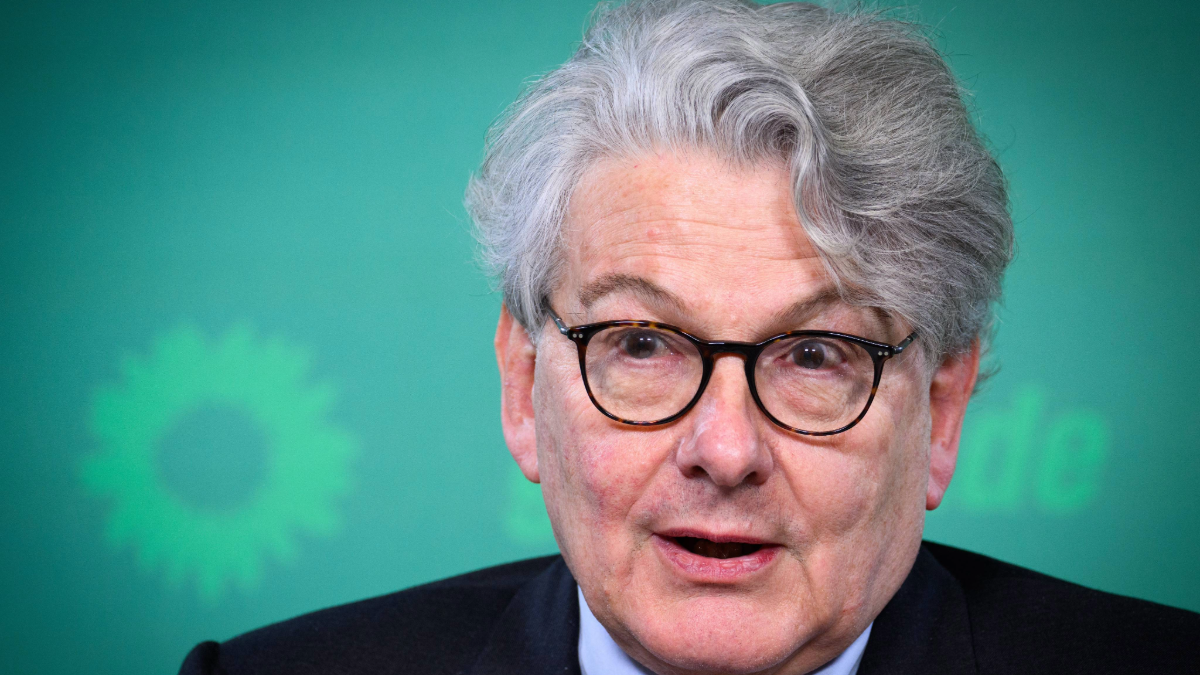
26 January 2026, Berlin: Thierry Breton, former EU Commissioner, speaks at a press conference after the Bündnis 90/Die Grünen federal executive committee meeting at the party's federal headquarters. Photo by: Bernd von Jutrczenka/picture-alliance/dpa/AP Images
Two months after Washington imposed visa bans on four individuals over the EU’s Digital Services Act, the European Parliament summoned them on Wednesday to account for what many MEPs see as a direct challenge to Europe’s regulatory authority.
The Committee on the Internal Market and Consumer Protection heard from former European Commissioner Thierry Breton, HateAid co-founders Anna-Lena von Hodenberg and Josephine Ballon, and Global Disinformation Index CEO Clare Melford in a session titled “When US Sanctions Target EU Citizens: Defending the DSA and Europe’s Digital Sovereignty.”
On December 23, US Secretary of State Marco Rubio accused five individuals of leading “organized efforts to coerce American platforms to censor, demonetize, and suppress American viewpoints.” The sanctions came days after the European Commission’s first major enforcement action under the DSA, a roughly €120 million fine against X for deceptive design of its blue verified checkmark, failures in ad transparency, and inadequate researcher data access. Elon Musk responded by calling for the EU’s abolition.
For those targeted, the sequence was clear. Von Hodenberg told MEPs in Wednesday session that HateAid's sanctioning came fourteen days after the Commission's first DSA fine on X, and explicitly because of its role as a trusted flagger under the DSA. "This is not about us," she said. "We are just a pawn in a wider transatlantic struggle. These sanctions are actually a message to you." She warned that further escalation, including cancellation of bank accounts and digital infrastructure, had been signaled through diplomatic channels, and that HateAid was already preparing. Almost all operational services relied on by European organizations, she noted, are provided by US companies.
Clare Melford situated her organization’s designation within the same framing. The State Department accused the UK-based Global Disinformation Index of using American taxpayer funds to compile “blacklists” of media outlets. At the hearing, Melford rejected the characterization, arguing that the GDI’s work assesses structural risks in online advertising markets rather than policing speech. The effect of the sanctions, she suggested, was not only reputational but operational as they cast legitimate research and transparency efforts as censorship, chilling cooperation with platforms and advertisers alike. In that sense, she indicated, the issue was less about any single report than about redefining oversight itself as interference.
Consistent efforts from US to dismantle DSA
The broader campaign against DSA has unfolded over months. The State Department issued a cable ordering US diplomats to pressure European capitals over the DSA, Rubio decried the law as "Orwellian" censorship, and the Republican-led House Judiciary Committee has been issuing subpoenas to tech companies seeking information about European regulators' oversight efforts — a preview of the congressional escalation to come.
According to a Follow the Money report published yesterday, the Judiciary Committee chair, Rep. Jim Jordan (R-OH), threatened to force European researchers and NGOs to hand over internal documents, with at least three organizations operating in both the EU and the US receiving such letters in the second half of 2025. Last week, Reuters reported that the US planned to launch an online portal intended to help Europeans and others bypass the censorship of material, including alleged hate speech and terrorist propaganda.
Josephine Ballon of HateAid said the House Judiciary Committee report — referenced repeatedly by MEPs in the session — contained thousands of pages of internal emails subpoenaed from online platforms. The platforms, she said, "were obviously very happy to comply." The selective redaction was notable as platform employees' names were removed, but staff from civil society organizations and the European Commission were left fully named. "This makes it impossible to safely engage with online platforms in general, for all actors," she said. She called on the Commission not to be intimidated, noting that the sanctioned civil society organizations had not been.
Is US misreading the DSA, or deliberately reframing it?
The hearing discussed whether the United States genuinely misunderstands the DSA, or whether the censorship framing is deliberate. The European Parliament’s DSA working group chair Christel Schaldemose, who had traveled to Washington the previous week, said that US officials seemed unfamiliar with what the law actually does, and asked whether Europe needed to do more to explain it.
Breton pushed back on the suggestion, saying he had spent years explaining the law personally to platform CEOs and government officials, that they understood it, and that the current posture was a deliberate political choice. Europe does not have the first amendment, he acknowledged, but it has its own rules governing speech in the physical world, and the DSA simply applies those rules online — "not more, not less."
On the question of what, if any, support was provided to him by the Commission, Breton said the Commission had offered to help co-finance his legal costs, but he did not see this as a legal matter. "It's not a question of a legal story, it's a question of political attitude." The right resolution, he said, was political engagement at the highest level — backing France president Emmanuel Macron's approach of direct conversation with Donald Trump on the matter.
MEPs demand more Commission action
Across political groups, MEPs condemned the sanctions and pressed the Commission for a firmer response. Schaldemose said, “The more you push out, the more we probably will stand up for it.” Netherlands’ Kim van Sparrentak described the US campaign as an “unprecedented attack on EU democracy, following the states of Russia and China.” French MEP Stéphanie Yon-Courtin asked whether Commission President Ursula von der Leyen had written directly to Trump.
MEPs demanded clearer political backing for those sanctioned, a more assertive public defense of the DSA, and concrete steps to shield European regulators and civil society from external pressure.
Authors