Brazil’s Competition Watchdog Opens Google Probe Over Publisher Pay
Laís Martins / Apr 24, 2026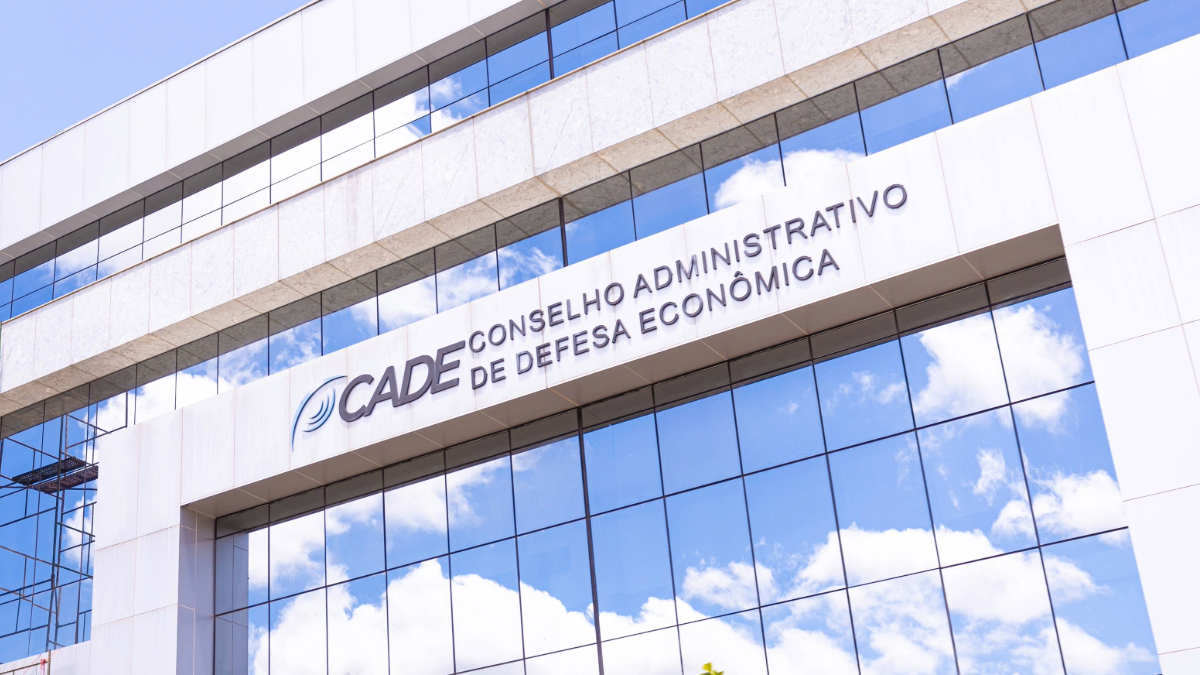
Brasilia, Federal District—Brazil. The offices of CADE, the Brazilian Administrative Council for Economic Defense. Shutterstock
Brazil’s competition watchdog, Conselho Administrativo de Defesa Econômica (CADE), unanimously decided Thursday to open a formal investigation into Google’s use of news content, including in its AI Overviews, without compensation to publishers.
The investigation will consider whether Google’s scraping of journalistic content to feature in the ‘News’ tab and to produce AI Overviews is an anti-competitive practice and whether outlets that decide to opt-out from being featured in the overviews are being penalized with less visibility.
More than an antitrust matter, the case will be followed closely because its outcome could have implications for the sustainability of Brazil’s news media industry and, more broadly, to the public debate and democracy.
“Although the instrument is antitrust law, the effect is broader: we are talking about democracy, diversity and information integrity,” Samira de Castro, president of the National Journalism Federation, Fenaj, told Tech Policy Press.
When one sole platform concentrates people’s access to news, and more recently, starts to respond directly to the user based on third-party content, it stops being only an intermediary and starts influencing what circulates, what gains visibility and what disappears, said Castro.
“This has a direct impact on informative pluralism, because it affects mainly smaller, regional and independent outlets that are fundamental for the diversity of voices in the public debate. And it also affects the quality of information, because it enfeebles the economic model behind professional journalism,” she added.
Google’s AI Overviews feature could reduce web traffic to news websites by at least 20.6%, according to a study produced by Authoritas and submitted to CADE by four civil society organizations. The same study found that Google overwhelmingly favored Youtube, owned by the company, as a source for its overviews.
With AI overviews displayed at the top of Google’s result pages, many readers consider themselves satisfied and do not click to read the original piece in what experts have come to call the “zero-click” phenomenon.
“With AI Overviews, Google captures that information, produces a summary and people don’t search or click. This is the zero-click phenomenon. It is not only an antitrust matter, it is affecting journalism, it is affecting access and it’s affecting democracy, and this has enormous weight,” said Stella Caram Abduch, head of Legal at Foxglove, a tech justice non-profit that submitted contributions to CADE on this case.
But the matter is not only about Google failing to redirect readers to news outlets’ websites, but also the fact that the content displayed in the overviews can only be produced in the first place thanks to the company’s previous scraping and training of AI models on journalistic content—without having adequately compensated the publishers that produced it.
“News outlets are already seeing a reduction in traffic with tools like AI Overviews. If this model is consolidated without any type of regulation or intervention, what we may end up seeing is an even bigger reduction in direct audience, followed by a decrease in advertising revenue, that has already, in large part, migrated to platforms ” said de Castro. In a statement sent to Tech Policy Press, Google said it is following CADE’s move to refer the case to the General Superintendency, but believes “the decision reflects a misunderstanding of how our products work and the value we deliver to news publishers.” The company said it “remains committed to the open web and continues to send billions in clicks to websites daily,” adding that it will continue its dialogue with CADE.
Google under scrutiny internationally
With the new investigation against Google, Brazil joins other jurisdictions like the United Kingdom and the European Union, which are also investigating Google’s practices and their impact on publishers.
These proceedings are still underway, but they all kicked off with the recognition of serious indications of potential anti-competitive practices. Now, Brazil will join the list. “Although this is not a binding decision against Google, this is a very important signal that the biggest competition regulator in Brazil is looking seriously at the matter, that there are enough signs for it to open an investigation,” said Abduch.
In Brazil, the case was initially brought before CADE in 2019, but ended up being dismissed in late 2024. In March 2025, the case was brought back by Commissioner Camila Cabral Pires Alves and was distributed to Commissioner Gustavo Augusto Freitas de Lima, then president of the watchdog body. Lima left CADE after his term ended.
In early April, Commissioner Diogo Thomson de Andrade, who had requested time to examine the case records in June of 2025, cast his vote recommending the case be sent to the General Superintendency of CADE for the establishment of an investigation.
After Thomson’s vote, Commissioner Cabral also requested time to examine the records. This Thursday, Cabral and the two remaining Commissioners, Carlos Jacques and José Levi Mello do Amaral Júnior, cast their votes. Unanimously, all commissioners decided to submit the case to the General Superintendency to open a formal investigation.
When the case was initially taken to CADE, the focus of the publishers’
complaints were Google’s scraping of journalistic content without compensation. But in the years since, the rollout of features that rely on artificial intelligence, like AI Overviews, has shifted the focus.
Keeping up with the pace of Google’s new features will be a challenge for CADE as it dives into the investigation, said Caram, from Foxglove. To address this gap, remaining open to civil society contributions will be crucial to keep regulators informed of the technology as it changes.
In his vote, Commissioner Diogo Thomson highlighted the contributions submitted so far to instruct the process as a reflection of the “need to increase the openness of competition policy to the involvement of civil society and of actors who, although not directly competing in the
market under scrutiny, represent diffuse interests and perceive, with particular sensitivity, the social, economic and informational effects of any abuse of economic power.”
From Fenaj’s point of view, the more urgent measure is to reduce the information asymmetry that exists today between Google and the rest of the market. “More than one unique solution, what is urgent is creating conditions for a more transparent and balanced environment, that allows us to correct distortions and to preserve journalism’s sustainability in the country,” said De Castro.
While CADE decided upon the matter, two of the largest newspapers in Brazil—O Estado de S. Paulo and Folha de S. Paulo—announced in the last few months individual agreements with Google to license their journalistic content to train Gemini. The amounts or specific terms of the agreements have not been publicly disclosed. Smaller news outlets, on the other hand, have less leverage to bargain individual agreements with Google.
Google’s funding of journalistic activities in Brazil, from conferences to associations, also remains a point of tension. Many of the organizations that once benefited or still indirectly benefit from programs like Google News Initiative are the same news outlets that have seen their traffic crash after the introduction of AI Overviews.
“It’s decimating this entire market that has an enormous meaning for democracy and society. We are not talking about the paper or furniture markets. We are talking about a market that is the very backbone of democracy,” said Abduch.
Authors