Attorney General Raúl Torrez on What's Next in New Mexico's Case Against Meta
Justin Hendrix / Apr 22, 2026Audio of this conversation is available via your favorite podcast service.
On March 24, a Santa Fe jury found Meta liable for 75,000 willful violations of New Mexico’s Unfair Practices Act, awarding $375 million in civil penalties—the statutory maximum of $5,000 per violation. The jury deliberated less than a day following the nearly seven-week trial.
New Mexico Attorney General Raúl Torrez sued Meta in December 2023, alleging the company made false public statements about the safety of its platforms while knowing internally that its products facilitated child sexual exploitation. The court denied Meta’s Section 230 defense in May 2024.
This is the first jury verdict against a major social media company on child safety brought in a standalone case by a state attorney general.
The next step in New Mexico is a bench trial beginning May 4. New Mexico is seeking injunctive relief, including mandatory age verification, private-by-default accounts for minors, bans on addictive features, a 90-hour monthly cap for minors, highly accurate CSAM detection, the appointment of a court-supervised “child safety monitor,” and “commitments to correct and not to make misleading statements.”
Meta has called the demands “stunningly broad” and said it plans to appeal the verdict.
To learn more about the case and what’s next, I spoke to Attorney General Torrez this week.
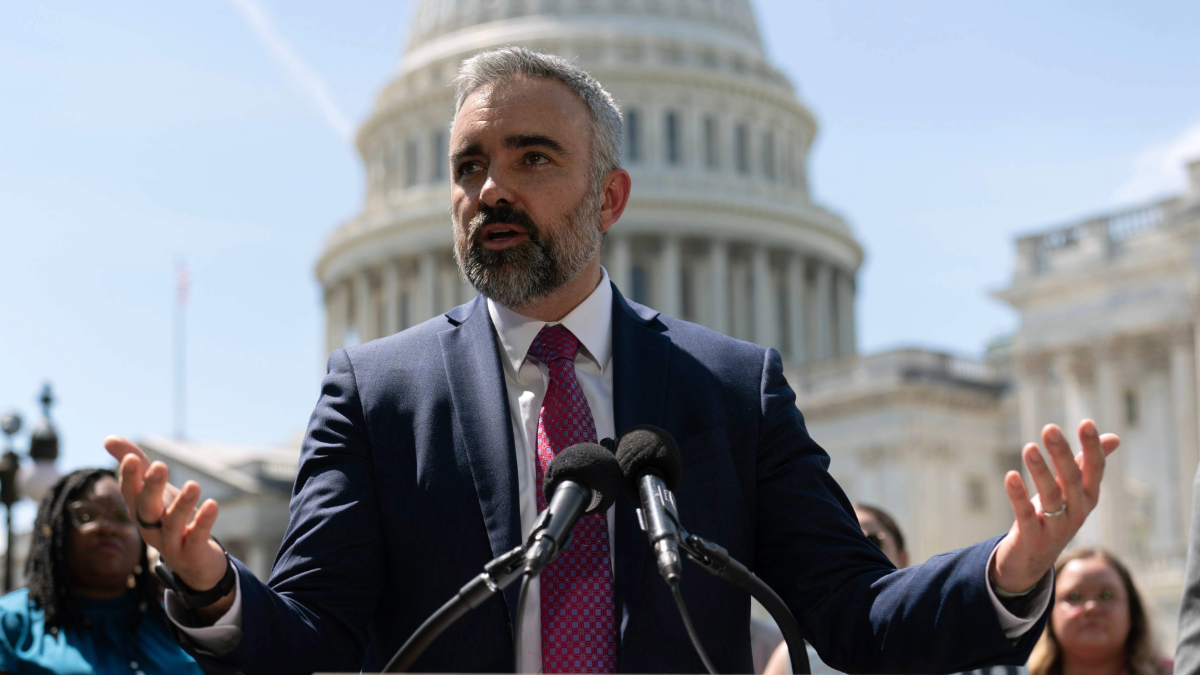
New Mexico Attorney General Raúl Torrez speaks during a news conference to call on Congress to pass legislation to protect kids online and to hold Big Tech companies accountable on Capitol Hill in Washington, Tuesday, April 14, 2026. (AP Photo/Jose Luis Magana)
What follows is a lightly edited transcript of the discussion.
Media montage:
All right. Some breaking news just into us, everybody. A jury in New Mexico deciding social media giant Meta violated state law there in this landmark lawsuit over child sexual exploitation and user safety.
Jurors in New Mexico ordering the owner of Facebook, Instagram, and WhatsApp to pay $375 million in damages for failing to warn users about the dangers of its platforms, in a civil case brought by the state's attorney general.
When all is said and done, the judge is now set to hold a hearing in May to determine what additional penalties might apply here, and what are some of the structural changes this company has to make? Do they have to slap a warning label on, like a pack of cigarettes?
Meta saying in a new statement, quote, "We respectfully disagree with the verdict and will appeal. We work hard to keep people safe on our platforms and are clear about the challenges of identifying and removing bad actors or harmful content. We will continue to defend ourselves vigorously, and we remain confident in our record of protecting teens online."
Justin Hendrix:
On March 24th, a Santa Fe jury found Meta liable for 75,000 willful violations of New Mexico's Unfair Practices Act. The jury deliberated less than a day following the nearly seven-week trial. New Mexico Attorney General Raúl Torrez sued Meta in December 2023, alleging the company made false public statements about the safety of its platforms while knowing internally that its products facilitated child sexual exploitation. The court denied Meta's Section 230 defense in May 2024. This was the first jury verdict against a major social media company on child safety brought on a stand-alone case by a state attorney general.
The next step in New Mexico is a bench trial beginning May 4th. The state is seeking injunctive relief, including mandatory age verification, private-by-default accounts for minors, bans on addictive features, a 90-hour monthly cap for minors, highly accurate CSAM detection, the appointment of a court-supervised child safety monitor, and commitments from the company to correct and not make misleading statements. Meta has called the demands stunningly broad and said it plans to appeal the verdict. To learn more about the case and what's next, I spoke to Attorney General Torrez this week.
Attorney General Raúl Torrez:
My name is Raúl Torrez. I am the New Mexico attorney general.
Justin Hendrix:
Attorney General Torrez, I'm pleased that you could join us today.
You joined this podcast almost two years ago, back in 2024, and you said at the time, "I can tell you this. If we navigate all the legal traps, all the motions, and the army of lawyers that they're going to be throwing at this thing, if we get our day in court and I have a chance to stand in front of a group of citizens in the state of New Mexico and make this case to them, Meta should be very, very concerned about not what I have to say, but what those group of citizens are likely to do when they hear about how this company has conducted itself."
The jury deliberated for less than a day, as I understand it, after a seven-week trial. What single piece of evidence, single moment in that trial do you think was most decisive for them?
Attorney General Raúl Torrez:
You know what? When you put on that kind of case with the complexity involved, I don't know that there was any one piece of evidence. I think, frankly, it was the totality of what we revealed about what the company had been saying publicly, the way it had been positioning itself in the marketplace, positioning itself with policymakers, and how starkly divergent that was from what they knew internally and what their own trust and safety people were raising concerns about, and it was the disconnect. Right?
It was the dishonesty that lies at the heart of what this company understood in terms of curating and creating an addictive and dangerous product, and also a product that facilitates sexual exploitation, and the extent to which they sought to keep that information from the public. And that's what we were able to do in the course of the trial, is to reveal everything that had been hidden from view. And once the jury had the opportunity to see that on display, I mean, their answer was pretty unequivocal and pretty powerful.
Justin Hendrix:
You said this is just the beginning. What do you think this verdict accomplished that hadn't been accomplished before, and what's next?
Attorney General Raúl Torrez:
Well, I think it punctured this aura of invincibility that had been developed over, frankly, nearly 30 years since the passage of Section 230. It had been virtually impossible for individual plaintiffs or states like mine to get their case to a jury, to get the facts in front of everyday citizens. And so, the fact that we were able just to do that, to actually have our day in court was a monumental thing.
And I think the verdict is a signal from members of my community and, I think, probably a foreshadowing of what other community members across this country are going to have to say when they understand just how much these products put their kids in danger. And so, I think it's the beginning. Right? It's the first crack in the dam that leads to fundamental change.
I also believe it's going to put a lot of pressure on policymakers, and I hope specifically policymakers at the national level and Congress to actually wake up and see that this is an issue that has broad bipartisan support. It is deeply concerning to American voters, and they want and expect change in this space.
Justin Hendrix:
There's been a lot of headlines. A lot of folks around the world who may be listening to this are familiar with the fact that a verdict was reached. They may not know as much about what's going to happen next. What does phase two of this look like? What are you seeking going forward?
Attorney General Raúl Torrez:
Well, in many ways, phase two of this case is probably more consequential, I would say, for the company in terms of shaping behavior than even the verdict that was reached in the first half. We have an outstanding public nuisance claim that we'll be bringing in front of the district court on May 4th, and we will be outlining the damages and the abatement plan that we have to try and help the kids who have been harmed by these unsafe products.
But more importantly, we're going to have an extensive argument on injunctive relief, and that means specific structural changes to the way these platforms operate on everything from requiring real age verification to eliminating or at least minimizing push notifications to kids in the middle of the night or during the school day, the ban on having unconnected adults being able to solicit and then target and exploit kids on the platform, limitations on algorithmically driven content that focuses in on the unique vulnerabilities of children in these spaces.
And so, if we're successful in convincing a judge that those changes need to be made in order to make this product safe for New Mexico's kids, it creates a lot of pressure, because it will create a blueprint, not only for our state, but for how this platform should operate around the country and around the world. It also places a lot of pressure on competitors in the space about what our expectations will be in terms of having these products in the marketplace and still being able to sort of navigate things that are safe for adults, but also protective of kids that we know are placed in harm's way based on their current business practices.
Justin Hendrix:
Now, I want to press you a little more on some of the phase two relief things you're looking for. As I understand it, one of the things you're interested in is having outside experts make recommendations. What kinds of things are you looking for in that? What types of design interventions or other types of specific changes do you think you'd like to see made?
Attorney General Raúl Torrez:
Well, again, the key from my perspective is real age verification. Right? You have to understand and then be able to design fundamentally different experiences for adults as compared to kids, as compared to underage users who we already know are in these places and in these spaces. And so, you have to create a system that both enables the companies to get a pretty, at least we say, 95% accurate estimation of the age of these young people while also protecting privacy, because I know that's a concern that's been raised in terms of age verification.
We are looking to eliminate end-to-end encryption and end-to-end encrypted communications for minor users, not for adults, but for minors, because that is a primary channel by which groomers and predators on the platforms escalate and elevate their targeting of children. We are looking for the elimination of algorithmic mechanics that connect predators on the platform to kids.
One of the things that Arturo Béjar said in the course of the trial, which I do think was a pretty dramatic moment, he said, "Look, these platforms are great at understanding what your interests are and connecting you with those interests. And if your interests are in little girls, it will be very good at connecting you with little girls." We are looking to disrupt the algorithmically driven mechanics of connecting predators with children in these platforms.
And so, those are just a few of the examples that we'll be using, but these are technically complex things to try and master, and we also recognize that the technology is going to change. And so, we have to be able to iterate over time, which is why the appointment of an independent monitor is so essential. I don't expect the district court judge in Santa Fe to have the technical expertise or the time to referee every technical redesign challenge that may flow from this injunctive relief, but that's why you appoint technically qualified, independent monitors who can come in.
They can look at the data that they're seeing in the platform, the steps that the platform is hopefully going to be taking in response to the court's orders, and then measure compliance, and then report back to the parties and, more importantly, to the court about the way in which these products have been incrementally made safer over time.
Justin Hendrix:
But not everybody is uniformly pleased at this outcome. I mean, certainly, you've already mentioned there are privacy concerns that some folks have about proposals like limiting encryption. Other folks look at this result, and they see in it the possibility that the logic could be weaponized against other platforms, news organizations, anyone who uses algorithms. How do you think about those criticisms? Where do you, in your mind, draw a line between holding a platform accountable for its design and holding it accountable for what people do on it?
Attorney General Raúl Torrez:
Well, so first, at a very basic level, we have a long history in this country of not allowing the makers of particular products to just make those products with built-in, dangerous features and elements, and then not be honest and forthcoming in their knowledge of the dangers that they have created or affirmatively misrepresenting the danger in their products. Right?
And so, to a certain extent, what we are doing is taking a very old logic that was previously applied to pharmaceutical companies and car companies and tobacco companies to just a different line of products. So I think I have that as a very basic sort of framework. I also think that there is a long-standing history in this country of setting rules that recognize the inherent vulnerability of children, and this entire case was built around protecting kids.
It has nothing to do and has never had anything to do with the kinds of experiences that consenting adults engage in and the kinds of private communications that they would have. In other words, the criticism about, for example, "Why would you want to end end-to-end encryption?" Well, if it's two consenting adults, I don't care at all. Have an encrypted conversation. If it's a 50-year-old man talking to a 12-year-old little girl, I have a very serious problem with that, and I think we're capable enough from a policy perspective and a legal perspective to walk and chew gum and not make everything, as we often do in this country, an all-or-nothing, binary choice.
It's a complicated space. We obviously have real privacy concerns, but I am unwilling, and I think most members of our community are unwilling to say, "The price we have to pay for the free exchange of ideas and all of these other issues is the sacrificing of the safety and the physical well-being and the lives of a certain amount of children," because then the question will become, "Well, how many kids need to be sacrificed? How many kids is too many that should be exploited in this space?"
I think the technology is capable enough, and the regulatory policy can be synced up in a way that we can have a free and open society that enables an exchange of controversial ideas without saying, "We shouldn't regulate any part of this, even if it's hurting and killing kids." Right? That's a false choice that I don't accept. I have never accepted that.
It doesn't mean it's not complicated. Right? You obviously have to sync up age verification and then apply the results of that process to different levels and forms of the way that these products work. But I don't think saying, "Let's addict a whole generation of kids, because it might have an adverse effect on somebody else if we try to step in and regulate that." That's a choice that we shouldn't be forced into. Right? We can have complicated conversations about complex problems without denying that the problem exists.
Justin Hendrix:
And are you also seeking some intervention around AI chatbots?
Attorney General Raúl Torrez:
Yeah. I mean, we did have some very limited conversations and evidence and testimony about that that was a little bit tangential to what we are talking about. To be perfectly honest, we have active litigation against other companies, and we have active investigations involving a whole range of issues, and I can say definitively that that includes artificial intelligence companies, and a specific interest in these companion chatbots where they are specifically marketing to kids.
I have very serious concerns about the types of, frankly, unhealthy relationships that are being developed between developing minds, developing young people, and a technology that presents itself as being, whether it's a psychiatrist, a psychologist, a counselor, a friend, a romantic attachment. That is a very dangerous and concerning thing, and then we're going to be looking at it very, very carefully.
Justin Hendrix:
I assume you also watched very closely the Los Angeles verdict the day after yours. And as I understand it, different theory. It's sort of negligent design theory versus the consumer deception theory. I suppose some overlap in the concepts, but what did you learn from looking at that particular verdict?
Attorney General Raúl Torrez:
Well, again, I think it was interesting that we just had this coincidence of these two similar but distinct cases land within a day or two of each other. Ours, as you noted, is predicated on this very old consumer product line of cases and about knowing an intentional design, but more importantly, about misrepresentations. A lot of what we got into were the misrepresentations about the product.
Theirs is slightly different, because although it is a product liability case like ours, they also have to prove causal connection between how that product design then impacted individual plaintiffs. I don't bear that burden when it comes to advancing a case under my consumer protection statute. I don't have to say, "Because of this specific feature in the product, this particular person was harmed." It's enough for me to say that this is a defective and dangerous product that you knew about and that you lied about to the entire marketplace.
And so, to a certain extent, ours takes a broader approach, and it lacks the sort of detailed impact. And the most interesting thing for me in the presentation, at least what I could discern from the California case, is that it had a lot more information about the individual plaintiffs and their individual lived experiences from being on these platforms, and I think that was actually really powerful and really helpful.
My hope is that these two lines of approach, both at the individual level, but also at the state level, will have the requisite deterrent effect that we have, not only on companies as they exist today, but technology more generally as they move down the line.
Justin Hendrix:
You've continued to push Congress to pass legislation in this space. You do seek to reform Section 230. Nothing's happened since the last time we spoke. A lot of things have been considered in committee and gone back and forth. How do you look at that these days? What do you make of the conversation in D.C.?
Attorney General Raúl Torrez:
Yeah. I was just there last week meeting with a number of senators. We had a press conference with Senator Durbin and Senator Hawley. I met with Senator Graham, with Senator Britt, and a number of leaders on Capitol Hill. I think they recognize the kind of landmark decisions that both of these cases are in terms of reshaping the types of liability that these companies may face in the future, but it also, because of the focus on the trial and its outcomes, we've gotten a lot more information into the public conversation and debate around what these companies have been engaged in, and that, in and of itself, adds a lot of pressure.
I know there are a lot of technical disputes between the latest version of the bills that are moving both through the House and through the Senate. My larger take was Congress should take an affirmative step to create clear standards for how these products can operate with respect to young users and vulnerable populations.
But in the absence of their willingness or ability to take that step, at a minimum, they should dramatically either revise or repeal Section 230 and let the states step in and protect our kids and protect communities, because it makes no sense to me, and I don't think it makes sense to many Americans that a law that was passed at a time when we were still waiting for a dial-up tone from AOL in the pre-smartphone era is still being applied to shield the largest companies on this planet from any kind of accountability.
And now, I am grateful and am honored to have been able to move past Section 230 because of the way in which these cases were put together, but I don't know that there's going to be a uniform reading of that statute that I can imagine that there will be other judges in other jurisdictions who will look at cases like this and conflate design and content, will conflate or expand the view and reach of Section 230.
And my argument to Congress is to get off its ass and do something proactive and affirmative, but at a minimum, just get in there and get out, take Section 230 off the table, and let us do our thing, because if we are allowed to do it, if we are allowed to bring all of these cases everywhere, companies are going to change their behavior, because a lot of the conversation up to this point is about, "Well, the 375 million wasn't big enough to shape behavior for companies this large."
New Mexico is a very small place with a very small user base. If you start applying that same math and that same logic to places like New York and California, big blue states, or red states like Florida and Texas, the bill is going to get very big very quickly, and that, in and of itself, will be enough to shift behavior in the space.
Justin Hendrix:
Sort of presages my next question, which is, you told University of New Mexico public radio that you think there's a potential for your approach to be a model for the country, for the rest of the world. I guess first, for the country, have you talked to other attorneys general since the verdict? Have other folks paid close attention to what's happened there? Are you sharing information?
Attorney General Raúl Torrez:
Yeah. We are in very close contact, especially at the staff level. The litigation teams in our case are working and communicating with other states about the course of the trial and the evidentiary presentation by both parties. And so, they're learning a lot, I think, just from us having gone through that experience. I think there are more than 40 AGs, Republicans and Democrats, who are advancing litigation either collectively or individually in their various jurisdictions.
And so, we are doing what we can to try and bolster and support all of those efforts, but we're also sharing information about our lists of injunctive demands and requirements for product design so that we are on the same page, or at least they're aware of what we are asking for in terms of what a redesigned and safer product would look like.
Justin Hendrix:
And when it comes to the rest of the world, have you had any conversations beyond the US border?
Attorney General Raúl Torrez:
Yeah. We are actually, we've been asked to participate in conversations with some European tech regulators that want to know more about the case. They want to know more about how we intend to ask this court to order a product redesign to enhance child safety. So we're working with folks there. We've had outreach from media from around the world, including Australia and different places that have taken a more aggressive approach and a more assertive role at the national level in trying to regulate these spaces. So it's been interesting to share ideas beyond borders about how to build a digital ecosystem that's better for everyone.
Justin Hendrix:
So thinking beyond child safety, are there other things you're looking at with regard to artificial intelligence as you look ahead? Do you think about other ways that perhaps tech firms may be involved in deception aimed at New Mexico residents?
Attorney General Raúl Torrez:
Yeah. We proposed a deepfake bill, an AI synthetic content bill that we advanced last year. Unfortunately, it didn't get a message from this governor, who is now wrapping up her final year in office. I anticipate really having a more robust debate around deepfakes, but we're also looking at how to force more transparency and accountability in this space.
I think this era generally of tech companies extracting value from users and then using all the data that they have gained to curate products in ways that don't fully disclose how that information can be used and how it can be brokered are certainly things that we're going to be looking at. We've been working actively on trying to pass a data privacy bill in New Mexico for a couple of years. So I think all of those things will be on the table in the next legislative session in New Mexico.
I know that there are a lot of states who are eager to step in and regulate artificial intelligence, because... And what's interesting about that is the extent to which there's a bipartisan sort of consensus on a lot of this where it's not just Democrats, not just Republicans. You see people like Governor DeSantis and others who are resisting the president's efforts to try and shut down state-level AI regulation. I think all of that would be better served by some real leadership in Congress, but we haven't seen that.
And so, again, the parallel for us is to try and signal to these companies before the next leap forward in artificial intelligence takes place that even if Congress is unwilling to step in and lead and protect people, the states, both Republicans and Democrats, are more than willing to do that, and we intend to be very aggressive, I think, in policing how these companies market themselves, whether or not they are truthful in their disclosures about safety risks, and that is especially true when it comes to kids. Right? This space, as I mentioned earlier, of AI companions being marketed to children is a deeply concerning thing for me and something we're going to look very closely at.
Justin Hendrix:
Has New Mexico seen any tangible evidence of scrutiny from the White House related to any of its initiatives around AI?
Attorney General Raúl Torrez:
No, not yet, and I think part of that is because we haven't actually been able to advance legislation formally. I think once we do that, I think once we push some of these bills over the finish line, we will start feeling some pressure from the administration and their friends in Big Tech and the lobbyists and the lawyers who are engaged in trying to shut all of this down.
I know a lot of money has been poured into pushing back against any elected official at any level, members of Congress, and others who are raising concerns about technology. But I think in an earlier generation, and a lot of people don't know this. I worked in Silicon Valley briefly in the first dot-com boom-and-bust in '99, 2000. And so, if you went back in time and you asked people, "What does the future hold?" I think there was a lot more optimism at that moment. There was a lot more of a sense of people innovating in ways that were almost uniformly going to improve things and make things better.
The last 26 or so years have sort of really changed the perspective that I think a lot of people, not only in this country, but around the world, have about what technology promises for them and what the leaders of these big firms are actually focused on, and I think it's a lot more extractive and abusive. And if they're left to police themselves, we can now look at the social media experience, and everyone can see, "Well, this is what happens when you leave these guys to figure out for themselves what the rules ought to be." And I don't think many people are probably satisfied with how that balance has been struck.
Justin Hendrix:
That startup long ago was somehow focused on good government. Is that right?
Attorney General Raúl Torrez:
That was the idea. I mean, it was revolutionary at the time. It's almost silly to talk about now, but it was this idea that you could actually speed up government services by making such things as your license renewal available online. Right? All the things that you see now in every government agency that processes a license or process a permit or the whole concept was to make government more responsive and efficient and effective.
And most of the things that we were trying to talk about, and I was specifically trying to talk about to government officials, they're so ubiquitous that everybody takes it for granted, but I have to remind my kids that, "No. Once upon a time, you actually had to get in your car and go down to some government agency to do X, Y, or Z. And now, most of that is all available online."
Justin Hendrix:
Well, I hope we'll have the opportunity to connect again perhaps after some other auspicious moment in your various efforts here. I'm grateful for the time, Attorney General Torrez. Thank you so much.
Attorney General Raúl Torrez:
Yeah. Really appreciate it.
Authors