Which 'AI Sovereignty' Are You Buying?
Haakon Huynh / Aug 10, 2026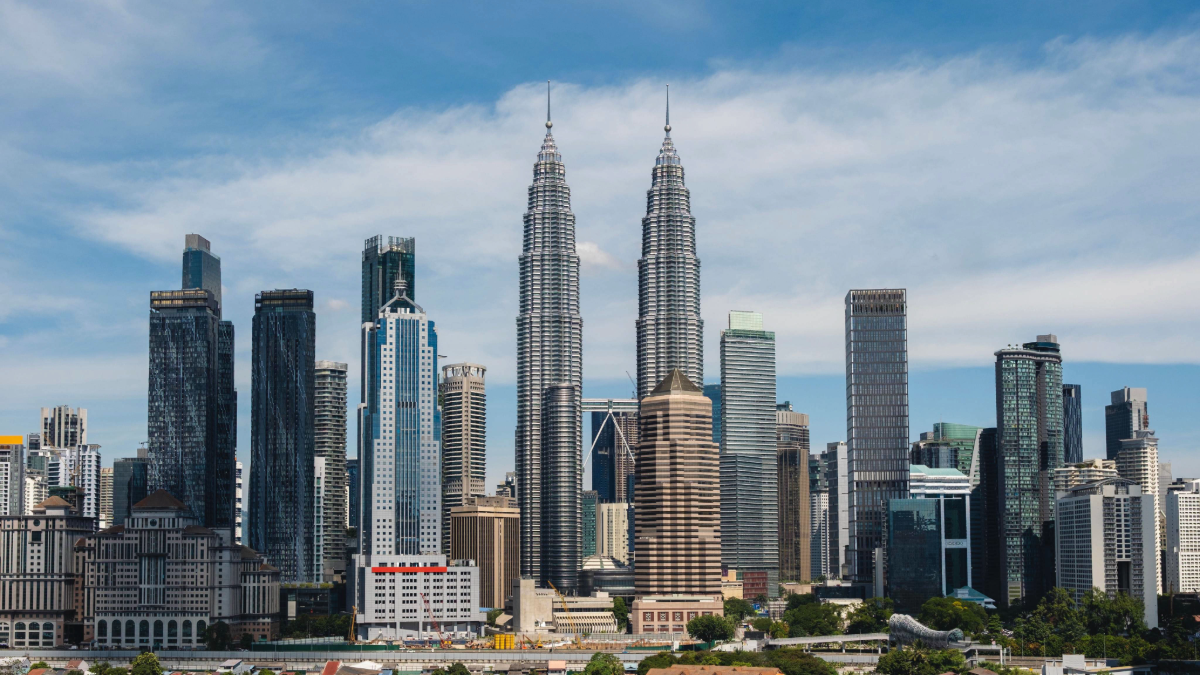
The Kuala Lumpur, Malaysia skyline. Shutterstock
For the European Union, “AI sovereignty” has meant restricting foreign cloud providers from sensitive workloads under its recently proposed Cloud and AI Development Act, reducing dependence in critical sectors at the price of higher costs and near-term capability gaps. For Malaysia, “AI sovereignty” has meant preserving an exit option by hosting both Amazon Web Services and Alibaba data centers, a strategy that potentially undermines territorial authority by exposing infrastructure on Malaysian soil to the extraterritorial reach of US and Chinese law. Clearly, “AI sovereignty” is a fuzzy concept that can be used to justify disparate—and even opposite—policy responses, which suggests that the term itself is underspecified. The threats are real, and governments are spending on and invoking “sovereignty” without agreeing on what it means, even if full stack AI sovereignty ultimately proves to be unattainable for most. What each government gets for its money depends on a distinction most have not made.
In his 1999 book Sovereignty: Organized Hypocrisy, the political scientist Stephen Krasner showed that sovereignty comprises several distinct phenomena rather than a single one. States routinely possess one while lacking another, and this was true long before the invention of AI: nineteenth-century Ottoman rulers held full legal title to their territory while foreign creditors ran their customs revenue; small states today hold seats at the UN while their monetary policy is set abroad. Krasner's decomposition became the standard way political scientists understand the concept precisely because it explains situations a monolithic notion of sovereignty cannot. By roughly applying Krasner’s conceptual framework, we can distinguish three distinct “AI sovereignties”: First, Westphalian sovereignty, whether internal AI usage, infrastructure and policy are independent from external actors. Second, domestic sovereignty, whether a state has the capacity to actually implement its AI policy and legislation. Third, interdependence sovereignty, whether a state controls what crosses its borders, which now includes data, compute, and capital. Across the EU, Malaysia and India, I highlight three policies aimed at different conceptions of sovereignty.
EU: Governing infrastructure
The EU’s Cloud and AI Development Act (CADA) sets four sovereignty tiers, each demanding different standards of European ownership and localization depending on the strategic sensitivity of the infrastructure. The CADA aims to effectively restrict non-EU providers from operating cloud infrastructure for sensitive workloads. However, for non-sensitive workloads the restrictions primarily constitute data localization to be considered “sovereign”. This carveout reveals the economic and diplomatic tradeoffs Brussels weighed when designing the policy. In the absence of a credible European alternative that can provide commercial cloud services at scale, these segments will continue to be dominated by American and Chinese companies.
In Krasnerian terms, the CADA increases Westphalian sovereignty by insulating sensitive workloads from two laws that follow the provider rather than the data: the US CLOUD Act, which compels American providers to disclose data in their control regardless of where it is stored, and China's National Intelligence Law, which obligates Chinese firms to cooperate with state intelligence work, including abroad. It does so at the price of higher costs and near-term capability gaps. Continued reliance on the same hyperscalers also leaves the EU’s interdependence sovereignty weak. The four-layer sovereignty levels are a price list. Brussels is deciding which sovereignty it will pay for and where.
Malaysia: Hedging between superpowers
Over the last few years, Malaysia has pursued a hedging strategy by building data centers using both Chinese and US cloud providers. This strategy strengthens its interdependence sovereignty because it keeps an exit option in case either superpower tries to weaponize the interdependence by threatening to cut access, or through other coercive means.
On the other hand, it sacrifices some Westphalian sovereignty by potentially exposing citizen data processed on the infrastructure to US and Chinese extraterritorial law. In response to pressure from US and Chinese authorities to pick a singular stack, Malaysia reaffirmed its AI “neutrality” and justified its hedging as part of its AI sovereignty strategy.
Why would Malaysian policymakers assert sovereignty through measures that so clearly undermine its own territorial authority? By disaggregating sovereignty into multiple dimensions, we can start to make sense of the decisions. In this case, Malaysia may have purposefully invited these sovereignty violations, well aware of the tradeoffs.
India: Governing the platforms
In February 2026, India's government introduced new rules regulating AI-generated content on online platforms. Synthetic media must be labeled and carry provenance metadata; large platforms must deploy automated tools both to check whether content is AI-generated and to proactively catch unlawful material such as child sexual abuse material; and illegal content must come down within hours. Notably, the rules toughened the detection duty from an effort-based standard to a strict obligation to deploy such tools. However, last month, the BBC broke the story that Instagram had allegedly run paid ads in India directing users to CSAM, indicating that they had cleared the automated review Indian law now requires. The Indian government moved within a day, ordering Meta to disable the content and explain itself within a week.
Here, Krasner’s conception of control and authority as distinct components of domestic sovereignty becomes useful: India asserts the legal authority to bar the sharing of CSAM within its borders, yet lacks the capacity to control the private systems that platforms use to moderate content. India's rules show how far legal authority over the information space can outrun actual control of it, when the systems that would deliver that control are built and operated by private companies rather than the state.
The policymaker: Choosing which sovereignty to buy
Given that gains in one dimension routinely come at the cost of another, governments should ask themselves a few questions when developing sovereignty policies and spell out which kind of sovereignty they actually need before spending money on it. Which kind of sovereignty does this measure actually protect? What does it cost in the other kinds? Does the gain advance a defined national objective better than the same money spent elsewhere? Left undefined, “AI sovereignty” will go on doing what it does now: costing enough to strain a budget while meaning little enough to justify almost anything.
Authors