Transcript: House Hearing on Legislative Solutions to Protect Children and Teens Online
Justin Hendrix / Dec 7, 2025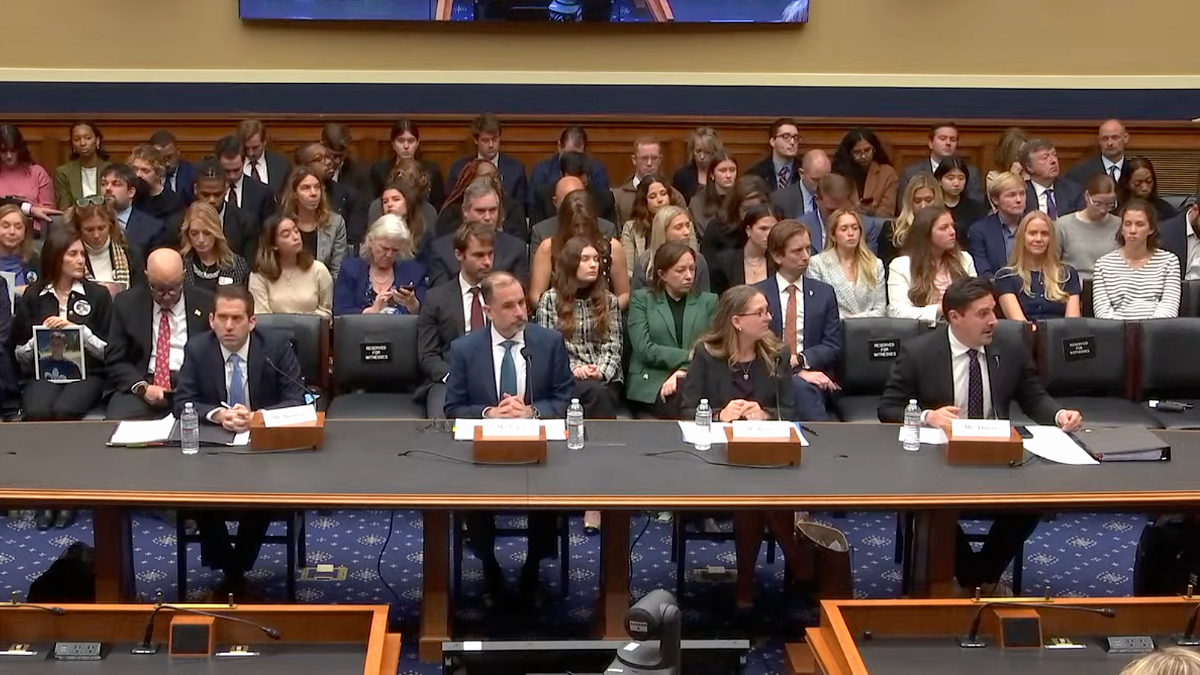
The Subcommittee on Commerce, Manufacturing, and Trade of the Committee on Energy and Commerce held a hearing on Tuesday, December 2, 2025, entitled "Legislative Solutions to Protect Children and Teens Online."
On Tuesday, December 2, 2025, the United States House Subcommittee on Commerce, Manufacturing, and Trade of the Committee on Energy and Commerce held a hearing entitled "Legislative Solutions to Protect Children and Teens Online." Witnesses included:
- Marc Berkman, Chief Executive Officer, Organization for Social Media Safety (written testimony)
- Joel Thayer, President, Digital Progress Institute (written testimony)
- Paul Lekas, Executive Vice President, Software & Information Industry Association (written testimony)
- Kate Ruane, Director of the Free Expression Project, Center for Democracy & Technology (written testimony)
What follows is a lightly edited transcript. Refer to the video of the hearing when quoting to check for accuracy.
Rep. Gus Bilirakis (R-FL):
We will come to order. The chairman recognizes himself for five minutes for an opening statement. Good morning and welcome to today's hearing to discuss legislative solutions to protect children online. Our children are facing an online epidemic. This issue is personal. We have parents on both sides of the aisle and we all have constituents who have been affected there. Why We are here today, we're examining almost 20 bills today, which together form a comprehensive strategy to protect kids online. Our approach is straightforward, protect kids, empower parents, and future proof our legislation. As new risks and technologies emerge, these bills are not standalone solutions. They compliment and reinforce one another to create the safe, safest possible environment for our children. There is no one size fits all Bill to protect kids online and our plan reflects that parents must be empowered to safeguard their children online. Just as a parent can observe their children's activities and social behaviors at home and that school functions, so should they be able to check on their kids' activities online.
Our bills ensure parents have the tools and resources to keep their children safe. In the modern world, a child's life in the 21st century is much more complex than generations past and parents need the tools to adapt. Our bills are mindful of the constitution's protections for free speech. We've seen it in the states. Laws with good intentions have been struck down for violating the first amendment. We are learning from those experiences because a law that gets struck down in court does not protect a child and the status quo is unacceptable. As far as I'm concerned. All our bills employ this strategy including the Kids Online Safety Act or KOSA that I'm proud to lead that KOSA sets a national standard to protect kids across America. It mandates false safeguards and easy to use parental controls to empower families. It blocks children from being exposed to or targeted with ads for illegal or inappropriate content like drugs and alcohol.
It takes on addictive design features that keep kids hooked and harm their mental health and most importantly, it holds big tech accountable. With mandatory audits and strong enforcement by the FTC and State Attorneys General, I made precise changes to ensure KOSA is durable. Don't mistake durability for weakness. Folks, this bill has teeth by focusing on design features rather than protecting speech, we will ensure it can withstand legal challenge while delivering real protections for kids online and then kids and their families. I'm proud of the members of this subcommittee for working on legislation to address a myriad of harms and challenges. This is used personal to every one of us up here. It shows in the number of bills before us today. I know this is a shared bipartisan goal. My office is open. Call me or find me on the floor. I think you'll know that I'm willing to listen. Let's find a way to work together and this is not a partisan issue folks. Let's find a way to work together and save America's kids from the threats they're facing online. That's the bottom line. I yield back the balance of my time. The chairman recognizes the Ranking Member, Ms. Schakowsky for her five minutes for an opening statement. You're recognized.
Rep. Jan Schakowsky (D-IL):
Thank you Mr. Chairman. There is not a single thing that we deal with that in my view is most important to take care of our kids and I do not believe that the legislation that has been offered by the Republicans does not do the job and it's really frustrating because we have been working on this bill and moving it around here and there for a long time. Yesterday I had the privilege of meeting with three women who are here today in the audience who have been here for five years because their children died. Not necessarily they didn't need to die and it's the kinds of things that we can learn from them that we can do much better. I mean to say that who can't states? Not states. Yeah. The different estates. What is it? States, what not states. The states. States, sorry. Cannot do their own bill. Cannot do their own bill. I'm sorry. We have a long, long way to go to protect our children and to make sure that all our involved. Now I want to yield at this point to Congressman Mullin to continue in this discussion.
Rep. Kevin Mullin (D-CA):
Thank you. Ranking Member Schakowsky. Thank you Mr. Chair for convening this hearing on a very important topic. Protecting kids is perhaps the single most unifying bipartisan issue we have here in Congress. We all want to keep our kids safe. I myself am the father of two small boys who aren't yet but will be before I know it. An age when they'll be navigating the internet on their own to say I am worried for them is an understatement, but the country and Congress is not without tools to keep people safe online. In fact, more than 100 years ago, the Federal Trade Commission was set up to prevent harms to consumers of all kinds, including kids. Indeed, most of the bills we will be discussing today rely on the FTC to enforce them. So that is why it has been stunning to see the contempt in which the Trump administration has held the FTC.
Rather than seeking from Congress a change in the law, president Trump has simply attempted to unlawfully fire two of its commissioners eliminating bipartisan input. Meanwhile, the chair of the FTC has attempted to dramatically reduce the commission staff through buyouts and other drastic measures. He's actually bragged that he wants to get the commission staff size to its lowest level in 10 years. The chair has also been using the tools of the FTC to wage, a culture war against medical professionals and parental choices. He disagrees with this is more than a harmful deviation from the commission's mission. It undermines consumer protections for all of us by taking cops off their normal beat. Yet today we'll be talking about all the things we want and need the FTC to do to protect kids online, but who will be doing that work? The remaining employees at the FTC who are already stretched too thin as evidenced by this long list of bipartisan bills, there's clearly a lot of alignment across the parties about the role we want the FTC to play in that spirit. I hope that as we discuss the legislative proposals today, we acknowledge the need to fully fund the FTC, protect its bipartisan commission structure and ensure the FTC is focused on the mission Congress gives it. I look forward to a robust discussion today. With that, I yield back
Rep. Gus Bilirakis (R-FL):
Gentlemen yields back. Now I'll recognize the chairman of the full committee, Mr. Guthrie for his five minutes.
Rep. Brett Guthrie (R-KY):
Thank you Chairman Bilirakis. Thanks for having this hearing today and thank you to our witnesses for being with us here today. Tragedy strikes children every day online. In March, I shared the story of a constituent who took his life due to a sextortion scheme. I know each of us here today and many others have similar stories to share and while we passed the Take it Down Act into law earlier this Congress to address sex extortion, countless other harms persist and it is our responsibility to find a solution. That is why we're here today. We have almost two dozen bills before us that take a broad approach to create a comprehensive strategy to protect children online. Imagine a 14-year-old child trying to download a social media app on their phone. There are many different layers needed to protect them from harm and we are discussing a comprehensive approach today where different types of legislation could work in harmony to address various concerns.
For example, age verification is needed first and foremost, including appropriate parental consent even before logging in. Once our user's age is known, privacy protections under COPPA 2.0 would be triggered. We also have a range of bills to further address issues like parental monitoring of online activity restrictions on the types of apps kids can access, how information is presented to kids in apps and how children's data is used by online platforms. And finally, the Kids Online Safety Act provides robust parental controls and limitations on harmful design features to ensure that platforms live up to these standards. Now I would note that we went to great links to address concerns that members of the house on both sides of the aisle raised regarding KOSA in the last Congress as well as concerns that the previous version would not pass a legal challenge and thus not protect a single child.
The KOSA we are considering today still holds platforms accountable while addressing these concerns. Further when it comes to AI chatbots, we learned about this in committee a couple of weeks ago. The Safe Bots Act and AWARE Act will ensure users are appropriately informed and their using AI and that there are educational resources for kids, parents, and educators on the safe use of AI chatbots. These exemplify our strategy that chairman Bill Rakus has highlighted. The Unli world is large and complex and there is no silver bullet solution to protect kids. Each bill we're looking at today could be piece of a puzzle designed to work together to create the safest possible environment for children online. They empower parents through parental consent mechanisms, standards for parental tools and educational resources. They are curated to withstand constitutional challenges. A law that gets struck down protects no one, and if that happened, we'd fail to protect the very children We're here to protect. We have a unique opportunity to work together to craft a multifaceted solution to protect children online. Thank you again to our witnesses for being here. We really appreciate the effort you made to be here. We greatly look forward to the discussions and I'll yield back.
Rep. Gus Bilirakis (R-FL):
Gentlemen yields back. Now I recognize the Ranking Member of the full committee, Mr. Pallone for his five minutes.
Rep. Frank Pallone (D-NJ):
Thank you Chairman Bilirakis. Today we're discussing the important topic of youth online safety and as more of our lives are lived online, there have been tremendous changes in how we communicate, socialize and learn. And with these changes come new challenges to ensuring the health and wellbeing of all Americans, but particularly our youngest and most vulnerable. We can all agree that we want our kids and teens to be safe online Congress along with parents, educators, and states can and should play an active role in keeping minors safe. And that role includes prioritizing strong comprehensive data privacy legislation, which unfortunately is not included in the 19 bills we're considering today. Comprehensive data privacy legislation is something I've cared about for many years, but in the absence of data privacy legislation, companies will continue to collect, process and sell as much of our data and the data of our kids as possible.
And this data allows companies to exploit human psychology and individual preferences to fuel invasive ads and design features without regard to the harm suffered by those still developing critical thinking and judgment. Artificial intelligence is only accelerating existing incentives because like social media, AI relies on the exploitation of our data. Without such a strong legislative solution for children, teens and all Americans, we must recognize that the measures we take in Congress will not address the full scope of the problems perpetrated by an online ecosystem Fundamentally built on reckless and abusive data practices. We can and should do more for our children and for all consumers, but if comprehensive privacy legislation was easy, it would already be law and the urgency of addressing harms to children and teens presents an opportunity to make progress towards ensuring the internet is a safe replace for all Americans. And this is why I'm pleased we'll be discussing my bill that will prevent shadowy data brokers from selling miners data and allow parents and teens to request the deletion of any data already in the hands of brokers.
We simply should not allow nameless data harvesters to profit off of our kids' data. Our kids deserve the right to enter adulthood with a clean slate, not a detailed dossier that will follow them throughout their adult lives. They also deserve online safety legislation that will make the internet safer, not put their data and physical safety more at risk. And I'm concerned that mandating third party access to children's data and requiring additional collection and sharing of sensitive data before accessing content, sending a message or downloading an app would move us in the wrong direction in the fight for online privacy. Congress must also remember that unfortunately many kids find themselves in unsupportive or even abusive or neglected households that can be real world harm from allowing parents complete access and control over their teen's existence online. Instead of shifting evermore burden onto parents and teens and putting evermore trust in tech companies, we can give everyone safer defaults and more control over their digital lives.
We can also require companies to evaluate their algorithms for bias and harms before making our kids the Guinea pigs. And we can resist efforts to preempt existing protections and let states continue to respond to rapidly evolving technologies like AI chatbots and enforce their existing child safety and privacy laws and we can all stand up for an independent Federal Trade Commission. Now the FTC under both Republican and Democratic leadership has consistently been America's strongest champion against the abuses of all who seek to exploit our nation's children and adults for profit both on and offline. When President Trump attempted to illegally fire the FTC’s Democratic Commissioners, he made our children less safe online. If my Republican colleagues want to further empower the FTC to protect kids and teens, they must join Democrats standing up for a bipartisan and independent FTC. They should join us in demanding that the democratic commissioners be reinstated. So I look forward to the discussion today on this important issue and I thank you Mr. Chairman. You'll back the balance of my time,
Rep. Gus Bilirakis (R-FL):
Gentlemen yields back. We appreciate that. And now we are going to introduce our witnesses for today, Mr. Mark Berkman, CEO of the Organization for Social Media Safety. Welcome sir. Mr. Paul Lekas, executive Vice President Software and Information Industry Association. Welcome Ms. Kate Ruane, director of the free Expression Project Center for Democracy and Technology. Welcome and Mr. Joel Thayer who is Joel Thayer who is president of the Digital Progress Institute. Welcome to all our witnesses. So Mr. Berkman, you're recognized for your five minutes of testimony.
Marc Berkman:
Thank you Mr. Chairman. Good afternoon and thank you to this distinguished members of this committee for the opportunity to offer my organization's social media safety expertise at this historic legislative hearing to protect our children from online harms. My name is Mark Berkman and I am the CEO of the Organization for Social Media Safety. The first national non-partisan consumer protection organization focused exclusively on social media. The reason for this legislative hearing must be explicitly clear. Social media is harming children. It is harming millions of America's children up to 95% of youth ages 13 to 17 report using a social media platform with more than a third saying they use social media almost constantly. Nearly 40% of children ages eight to 12 use social media In our own study with UCLA School of Education including over 16,000 teens, we have found that 50% self-report using social media for more than five hours daily.
The evidence based on credible research and testimony in this very chamber shows severe pervasive harms related to adolescent social media use, cyberbullying harassment, predation, human trafficking, drug trafficking, violence, fraud, extortion, suicide, depression, cognitive impairment, eating disorders, and more social media related harm is far reaching, impacting homes in every congressional district, families of every demographic. But to understand the true toll we need look no further than the many parents here with us today who have tragically lost a child to a social media related threat. Sitting behind me is Rose Bronstein, her son Nate Bronstein, forever 15 died by suicide after suffering severe cyber bullying over social media and Samuel Chapman, his son Sammy Chapman, forever 16, died after ingesting fentanyl poison drugs that he easily acquired from a drug dealer operating on social media. Rose and Sam and the many other angel parents who traveled from across the country to be here today have collectively spent years fiercely and bravely advocating for urgently needed legislative reform.
In the hope that Congress acts to ensure that other families do not have to suffer such tragedies, we owe them a debt of gratitude. The record on the extent and severity of the social media related harm impacting our children is clear. Yet the social media industry continues to fail to protect our children. Thank you to the brave work of whistleblowers and attorneys general across the country. We know that the industry has an entrenched durable conflict of interest when it comes to safety. Even in the face of mounting child fatalities, social media executives have prioritized growing the number of child users and engagement on their platforms over our children's safety, making a federal legislative response absolutely essential and critically urgent. The social media industry has been too slow, their solutions to ineffective their apathy sadly to a parent and so we are grateful that the committee today recognizes that a broad approach with multiple tactics are needed.
Resources for education, accountability and rules for platforms, research, privacy reforms, and critically safety technology. I would like to highlight Sammy's Law. One of the most effective ways for parents to protect children is by using third party safety software, which can provide alerts to parents when dangerous content is shared through children's social media accounts, enabling life saving interventions at critical moments. For example, if a child is suffering severe cyber bullying via social media, then a parent who has received an alert through third party safety software can immediately provide critical support. We know that this intervention is highly effective. Over the last several years, safety software companies have provided alerts to parents that have protected millions of children saving numerous lives. Sammy's law will finally provide families with this option on all major social media platforms while also substantially increasing data security and child privacy over the status quo. We urge this committee to pass this bipartisan common sense legislation that will save lives. American families have sat for years living in quiet despair, watching social media steal from their children's potential and wellbeing. We are hopeful that this year this committee can join together and deliver the solutions families so desperately need. Thank you and I look forward to your questions.
Rep. Gus Bilirakis (R-FL):
Thank you so very much. Now I recognize Mr. Lekas for his five minutes. You
Paul Lekas:
Recognize sir Chairman Bilirakis, Ranking Member Schakowsky and members of the subcommittee. Thank you for the opportunity to appear before you today. My name is Paul Lekas and I serve as Executive Vice President for the Software and Information Industry Association. SIIA represents nearly 400 organizations at the forefront of innovation. From startups to global leaders in ai, cloud computing, education, technology and more. Our mission is to support policies to foster a healthy information ecosystem that cannot occur without responsible data use. We share the subcommittee's goal making the internet a safer place for all. We appreciate that the subcommittee has taken a fresh look at how to achieve this. We are here to urge passage of bipartisan legislation that protects online youth privacy and safety. It's exactly for this reason that we work closely with industry and policy makers to develop our child and teen privacy and safety principles in 2024.
Many of the themes and the principles are reflected in provisions of the bills under consideration today, I'd like to highlight a few of these. First is data minimization. Companies must be required to minimize the collection of personal data from youth and restrict how that data is used. This is widely recognized as a best practice by privacy experts and is even more important in the youth context. Second, we believe companies should not advertise to youth based on their online behavior, nor should they create profiles of youth for targeted advertising. Contextual advertising should remain permitted to ensure that youth receive age appropriate content. Third is empowerment and transparency. Legislation should incentivize companies to provide easy to use tools that allow families control over their settings and data transparency is key to building trust and helping families make informed decisions. Finally, we need national consistency. The internet is not partitioned by state lines.
The current patchwork of state regulations creates confusion for both platforms and consumers. A federal law must be strong and preemptive to ensure all American children have the same high level of protection. As Congress considers new legislation, a threshold is to strike the right balance between the constitution's protection of free expression and the governmental interest in youth safety. Thus far, many online safety laws have failed to strike that balance. Several states have proposed inherently content-based regulations requiring platforms to judge speech as harmful or detrimental. These regulations trigger strict scrutiny and courts have historically struck them down for being overbroad and infringing on the free expression of adults and minors, including content reflective of their own religious or political speech. Recent case law provides a roadmap. The Supreme Court in 2025 confirmed that age verification is constitutional when targeting sites with unprotected sexually explicit material. On the other hand, the ninth circuit in 2024 warned that broadly requiring platforms to assess the risk of harm can transform a design regulation into an unconstitutional content regulation.
Legislating in this area is possible but requires precision. There is much that is permissible securing data, restricting certain features, leveraging non-technical tools like digital literacy. Vague duty of care models like the Senate version of CSA that require filtering content based on subjective harm will invite and fail constitutional scrutiny. The version of CSA before this subcommittee reflects a serious attempt to grApple with this challenge. In addition to creating new tools, we support modernizing older ones like Kapa. We support codifying recent FTC regulations and crucially strengthening the privacy protections at the intersection of COPPA and FERPA. We must ensure that when schools contract with vendors, student data is used solely for educational purposes and we are not overburdening our families. We also urge Congress to avoid unintended consequences in two important but very different areas. The first is age assurance. Mandating age verification requires collecting sensitive data, often government IDs from all users, not just kids.
We should incentivize age estimation and parental controls which protect youth without creating high value data repositories for cyber criminals. We must also recognize that everyone in the ecosystem has a role to play. The second involves the collection and use of third party data. Many institutions rely on data about minors for essential services like extending auto insurance to teen drivers, helping youth to develop credit history, protecting minors from identity theft, college scholarships, financial aid, countering human trafficking. The list goes on. We should prevent actors from misusing youth data without disrupting vital societally necessary practices. Online safety and privacy for children and teens requires a holistic approach. There is no silver bullet. There is room for legislation and we're, the subcommittee, is considering an array of bills to identify the right mix. I welcome your questions and look forward to continuing to work with you to advance legislation to keep youth safe while preserving the internet as a resource for learning and connection. Thank you.
Rep. Gus Bilirakis (R-FL):
Thank you Mr. Lekas. It's now recognize Ms. Ruane for your five minutes. You're recognized.
Kate Ruane:
Thank you so much. Thank you Chair Bilirakis, Ranking Member Shakowsky, Chair Guthrie and Ranking Member Palone for the opportunity to testify today. I am Kate Ruane, director of the free expression project at the Center for Democracy and Technology. Children will use online services for their entire lives. The subcommittee is right to focus on their future. I'd like to raise five points essential to protecting children online. First, Congress should address root causes of online harms including privacy. Comprehensive consumer data privacy legislation is the best way to protect everyone online. Currently many online services business models are based on advertising sales powered by platforms, collection use and sale of personal information. This is harmful because it is privacy invasive, increasing the risks of data breaches. It is also deficient because it ignores better signals of what users value about online services. By conflating engagement with user preference, Congress could realign this business model to benefit everyone through comprehensive privacy legislation.
Enhancing children's privacy protections is also a laudable goal. Measures like COPPA 2.0 and don't sell Kids Data Act crafted properly would address some of the root causes of harm to kids online. But the bills under consideration today put the FTC in charge of enforcement at the same time, the current administration is undermining its independence and ability to enforce the law fairly. As the committee considers how to protect kids, it must also ensure that the FTC executes its policies to protect all children and support the rule of law. Second, protecting children includes protecting their right to express themselves online. Minors use social media for everything including to access news, communicate with family and friends, do their schoolwork and create art. Children have First Amendment rights and as Justice Scalia wrote, only in relatively narrow and well-defined circumstances may the government bar public dissemination of protected materials to them.
We are encouraged that today's Kids' Online Safety Act narrows the overly broad duty of care in an attempt to grApple with the tension between ensuring safety and protecting free expression. This is a difficult balance to strike, but it's preferable to flatly banning minors from accessing critical speech services like social media. We hope to work with the committee as the bill moves forward. Third age assurance creates significant privacy risks that should be mitigated in legislation. Age verification and assurance raise significant concerns for all users' rights to name just two age assurance techniques mean either more collection or more processing sensitive data, leading to increased risks of data breaches, which could include people's IDs or biometric information. Age assurance also chills online engagement with sensitive topics that people want to keep private. These concerns are not theoretical. Researchers at Georgia Tech have a forthcoming study demonstrating that the privacy and security concerns related to the use of age assurance techniques are playing out in real time with increased risks for end users.
If Congress nevertheless feels obligated to impose age assurance requirements, it should mitigate the risks by requiring the highest levels of privacy guardrails, including data minimization, deletion, reliance on high quality data transparency and accountability. Fourth, creating good policy requires taking into account the perspectives of minors and their caregivers. CDT has conducted research asking a sample of teens and their parents about features of current child safety proposals. To give just two salient examples of their views, first, parents and teens expressed safety and privacy concerns with subjecting minors to age assurance methods preferring parent centered approaches that enable parents to declare their children's age. Second, we found that teens preferred algorithmic recommendations. Teens trust these feeds precisely because they feel that they are in control of that content. Knowing what parents and minors want and how they currently navigate their online lives will improve policymaking at both companies and in legislatures.
Finally, Congress must not unduly restrict a state's ability to act. Many of the bills at issue today would preempt state laws and regulations that simply relate to the provisions in the bills. We're concerned that the “relates to” standard will broadly preempt many existing state laws and emerging legislation that provides significant protections to children online even if state law would provide better protections for kids. To make matters worse, public reporting indicates that Congress may be negotiating a deal to pair a kid safety package with the controversial provision preempting state laws on artificial intelligence. It would be ill-advised to broadly preempt states’ ability to enact laws related to AI's impact without putting in place strong federal protections at least equal in scope to any such preemption. Thank you for the opportunity to testify and I look forward to your questions.
Rep. Gus Bilirakis (R-FL):
Thank you very much. Appreciate that. Now I recognize Mr. Thayer for your five minutes
Joel Thayer:
Chairman Bilirakis ranking Member Shakowsky and members of the esteemed committee, thank you for holding this incredibly important hearing to advance legislative solutions that ensures the health and safety of kids online. I'm Joel Thayer. I'm a practicing attorney and I sit as president of the Digital Progress Institute, a think tank dedicated to finding bipartisan solutions in the tech and telecom policy spaces. Finding political consensus on incremental solutions to today's acute concerns in tech policy is at the core of our advocacy. Indeed, some of the bills before you today are based off of frameworks we help develop. This hearing coupled with its bevy of bills makes a few things abundantly clear. First, we care about our children and their wellbeing on and off their devices. Second, we are no longer satisfied with the status quo in so many ways today's youth are robbed of their innocence far more easily than ever before.
This is thanks to the ubiquity of mobile devices and the services they host. Large tech platforms are inundating kids with lewd and lascivious exhibitions and even connecting them to child predators. This is well-documented. Senator Marsha Blackburn even went as far as describing Instagram as the premier sex trafficking site in this country. Despite what the tech companies trumpet in their press releases, parents are left with almost no resources to combat their encroachments. Worse tech companies are in fact perpetuating the problem. Herein lies the rub. Big Tech’s form of child exploitation pays very well. Our children are not only big text users but are also their product. Meta specifically targets young users and even places a monetary value of $270 on each child's head. But the issue is we're still children are not only feeding big tech algorithms to sell to advertisers but are also used to inform their respective AI programs.
AI programs like chatbots that have already resulted in some child deaths by encouraging kids to commit suicide. At DPI, we are all for winning the AI war, but we do not believe children should serve as its casualties. It is why measures you are considering today are so essential to both ensuring that we remain dominant in the AI race and we protect our most vulnerable, our children. However, we cannot ignore the long road ahead to get these passed. Big Tech lobby is not only fierce but also unrelenting. They admire the validities of these solutions by instilling fears of consumer forfeiting privacy and the stifling of speech. But this is all a farce. As to privacy, I say consider the source courts, regulators and consumers have found every one of these companies to have violated their user's personal privacy. Take Apple for instance, that proclaims your privacy is a fundamental human right.
Discovery from a class action lawsuit, however, reveals that since October, 2011, Apple had routinely recorded users' private conversations without their consent and disclose those conversations to third parties such as advertisers. Some of these disclosures included private conversations with their doctors so much for privacy being a human right. One of Google's privacy violations was so egregious that the Federal Trade Commission created a first of its kind settlement requiring Google to implement a comprehensive privacy program that it unbelievably didn't already have. Social media companies do not fare better. Again, an FTC report found that social media companies like Snap, Meta and TikTok have all engaged in vast surveillance of users with lax privacy controls and inadequate safeguards for kids and teens. Point being, these companies are hardly in authority on proper privacy hygienics. As to free speech, I stand on the shoulders of Third Circuit Judge Paul Matey, who poignantly stated that big tech smuggles constitutional conceptions of a free trade in ideas into a digital cauldron of illicit loves that leap and boil with no oversight, no accountability and no remedy.
And it's true Big Tech has leveraged the admittedly messy First Amendment jurisprudence to turn our bull work for free expression into a sword to cut down laws they frankly don't like. But here's the good news. The Supreme Court is creating a clear pathway for these measures to start. In TikTok v Garland, the Supreme Court categorically rejected Tiktok's argument that the mere regulation of an algorithm raises First Amendment scrutiny even better. The court clarified that a law regulating a tech platform doesn't invite First Amendment review if the law's primary justification is not content-based, even if its ancillary justifications are in some of the bills before us today, particularly the App Store Accountability Act. The Screen Act and the Kids' Online Safety Act have taken these considerations into account and are poised to resolve many of the challenges parents are facing in today's digital age with respect to child safety. With that, I appreciate the committee's time for inviting me to testify and I look forward to all of your questions and working with you further.
Rep. Gus Bilirakis (R-FL):
Thank you so much. Now I'll begin the questioning and recognize myself for five minutes. Mr. Berkman, for too long, the narrative has been that online safety is solely a parent's responsibility, but as you know, 80% of parents say that harms now outweigh the benefits and they feel completely outmatched by these highly complex platforms designed to keep their kids hooked. My bill, the Kids Online Safety Act, again, it's a discussion draft fundamentally flips this dynamic. We require platforms to enable the strongest safeguards by default rather than forcing parents to dig through multilayered menus to find these critical tools. Can you explain why shifting the burden of safety from the parent to the platform can change the trajectory of this dire safety crisis?
Marc Berkman:
Thank you for the question chairman, and I think it's a very apt one. You are correct that parents across the country are frustrated, they're saddened and they feel defeated. We work with hundreds of thousands of families partnering with K through 12 schools teaching essential social media safety skills, and so we can hear from families on the ground nationwide, children are using multiple platforms many hours a day with many different features and they are not set to be safe by design. And so we do believe that the provisions you've put forward in your legislation would materially move safety forward and ensure that parents are not battling for their children's safety alone. And I would note Sammy's law as well would give parents one unified tool to help maximize safety and so that is why we support that bill.
Rep. Gus Bilirakis (R-FL):
Thank you very much Mr. Thayer. In your testimony you state that KOSA, along with many of the other bills considered today, will resolve many of the challenges parents are facing in today's digital age with respect to child safety, KOSA includes numerous other protections such as parental controls, default settings, policy to address design features and mandatory audits. Can you explain how KOSA will empower parents to protect their kids online and will hold big tech accountable?
Joel Thayer:
Well, you took the word right out of my mouth. The key word there is accountability. And right now there is absolutely none at this point. We have to rely basically on their musings via press releases and other terms of service that we hope they will adhere to and we have actual data to support that at this time, TikTok, Meta and the like all have so-called parental protections and they all have failed miserably. The problem is, is that there are frankly no laws that actually articulate what their goals are and what they're responsible for. Things like KOSA, which I prefer over more general statutes, articulates clearly what these companies are responsible for doing and when they run afoul of those responsibilities and when we can enforce at this point they have no sort of damocles over their head and even if they did, we wouldn't be able cut it down to get the results that we need to protect kids and protect parents. So KOSA will go a long way in ensuring that the status quo is not going to be the status quo forever.
Rep. Gus Bilirakis (R-FL):
Thank you very much Mr. Lekas. In your testimony you call for online tools that empower children, teens, and families in your view are KOSA requirements for platforms to implement new safeguards and parental controls workable.
Paul Lekas:
Thank you for that question. In our sense, and we're still reviewing this with our members, but the tools that would be required under KOSA are definitely workable. There's a number of companies that have implemented some of these tools already, but we need them to be implemented across the board. We need to protect all children on all children on all platforms. The other thing I would say about KOSA is the requirements to establish procedures and processes and so forth seem really well designed to address the constitutional concerns that have come up with respect to earlier drafts of this legislation.
Rep. Gus Bilirakis (R-FL):
Very good. Thank you very much. I yield back and I'll recognize now the Ranking Member of the subcommittee, Ms. Shakowsky for her five minutes of questioning.
Rep. Jan Schakowsky (D-IL):
The biggest guess. Okay. Ms. Ruane, I wanted to ask you, what is the biggest gap that you see right now that if we were to begin right now to fix it, what do you think is the biggest gap that we are encountering?
Kate Ruane:
Thank you representative Shikowsky for the question. I see a number of gaps that would be left by the legislation. Even with the 19 bills, I see a number of gaps that would be left. The biggest one that I see is the preemption standard is within all of the bills that are currently before the committee. We are concerned that the relates to preemption standard will preempt state laws that specifically protect kids and also state laws that have general protections that also apply to children. So state UDAP laws, state tort laws and also state comprehensive privacy laws that have specific protections for children including enhanced protections for children's data as sensitive data. Texas, for example, protects all children's data as sensitive data at a higher standard than the current COPPA does. The current preemption standard under the bills that are that we're considering today would likely preempt that law as applied to kids.
If we finish this process with the “relates to” standard in place, we will likely wind up with children having less protections at the state level than they do today and we will have failed to do our jobs. So I think that's one of the biggest gaps that I see. I also see that there is not enough in any of the bills that require age verification. We do not see sufficient guardrails to protect and require privacy and security practices within the age assurance requirements and to ensure that any age assurance techniques that are used are fairly and equitably accessible to everyone that has to go through the age assurance process.
Rep. Jan Schakowsky (D-IL):
When I listen to you, I think there are so many things that need to be changed as soon as possible and the idea that the states cannot do anything in the legislation is quite shocking to me. And so I just really think that we have to go back to the drawing board and make sure that we know. The other thing I wanted to ask you is about LGBTQ kids and making sure that they have some authority to be there to be heard. And I wonder if you could comment on that?
Kate Ruane:
Absolutely. Thank you for the question Ranking Member. We are significantly concerned that any censorship incentives within some of the bills that are before us today and within the Senate's version of KOSA could lead to the censorship of LGBTQ speech access to that content by LGBTQ kids and speech by LGBTQ kids because oftentimes that speech can be miscategorized as sexual speech or as speech that falls into categories that platforms look to take down because they're concerned about enforcement and about harms to children related to accessing sexualized content. Our second concern with respect to that is that the bills that issued today delegate authority to enforcement authority to this current FTC, which has demonstrated its willingness to target groups that it disfavors, including transgender families, including transgender people, their families, and their caregivers. If we do not have an independent FTC that is enforcing the law fairly as it applies to all children and protects all children, we have have significant concerns about how these bills would operate in practice, even if the way that they are currently constituted is neutral and would protect everyone.
Rep. Jan Schakowsky (D-IL):
So appreciated. And with that, I yield back. Thank you.
Rep. Gus Bilirakis (R-FL):
Gentle lady yields back now. Recognize the chairman of the full committee, Mr. Guthrie for his five minutes of questioning.
Rep. Brett Guthrie (R-KY):
Thank you. I appreciate that and thank you all for being here. So Mr. Berkman, there is no single solution for protecting kids online and that's why we're advancing a comprehensive strategy of nearly two dozen bills that build in layers of protection from age verification and COPPA 2.0, privacy protections to parental tools and default by design. Can you speak to the urgency of this moment and the need for Congress to protect kids and children and teens online?
Marc Berkman:
Yes, I appreciate the question. We're seeing still an alarming disconnect in terms of the awareness of how severe and pervasive the harms of social media are. We are seeing millions of children across the country harmed. We are on the ground working with families and the actual data is absolutely stunning and the stories are heartbreaking. And so I appreciate the approach taken by the committee. We need to find consensus and pass meaningful social media safety legislation this year to protect our children.
Rep. Brett Guthrie (R-KY):
Thank you. And to add to that, Mr. Lucas and Mr. Thayer, can you explain why we need a layered comprehensive strategy rather than just one single bill?
Joel Thayer:
Thank you for the question. And I think the question sort of beckons the answer is that individual layers require different policy solutions. The same thing that would apply to a social media company may not be apropos to maybe something on the app store layer or even the operating system layer or device layer. Each one of these folks have a role to play or each actor has a role to play and every policy solution should be attuned to what those particular rules are. So a comprehensive approach, whether it's privacy competition or even child safety has to be administered and thought through. So again, in full agreement with what I've heard today, and it seems to be the case that each individual layer requires a special sensitivity to what those particular areas do and needs a policy solution that meets them where they are.
Rep. Brett Guthrie (R-KY):
Thank you, Mr. Lekas.
Paul Lekas:
Thank you for that question. I think the overall goal that seems to be the consensus of everyone in this room is we need to protect youth online. We need to improve the privacy protections and the safety protections for youth. And I think stepping back and looking at all the different components here and trying to identify what's the best way to do each of these components is a really smart way to proceed. Congress has been debating legislation in this space for years and it's urgent to move forward now. So we appreciate the approach taken by the committee.
Rep. Brett Guthrie (R-KY):
Thank you. And also, Mr. Thayer, in my opening statement emphasized that a child, a law that gets struck down by courts won't protect a single child From a legal and constitutional perspective, why is it so critical that Congress can step in to establish a single uniform national standard? And how does this package of bills learn from the defects of laws that have failed judicial review?
Joel Thayer:
Well, as someone that really does appreciate the structure of our constitution and especially the federalist structure that they've created, and again, leveraging the insights from different justices, much smarter legal minds than my own. Justice Brandeis, for instance, said that the states are the laboratories of our democracy. But at the same time, those laboratories yield results. And I think what we've seen in the past 10 years, absent federal insight onto as to what Congress actually wants or what the national standard is, has allowed for a lot of these experiments to go all the way through the courts. The courts have evaluated each one of these standards and has given, as I said in my opening testimony, a pathway for Congress to actually set those standards. Because part of that experiment is not just only seeing where Congress can step in. It's seen the limitations that states have in fully protecting children. A child in Texas should be equally protected as a child in California or in Iowa and everywhere else. And that's where I think the federal standard is probably preferable in many cases. But again, that comes from a lot of the insights that we're getting from states.
Rep. Brett Guthrie (R-KY):
Okay, thank you. And that concludes my questions. I'll yield back.
Rep. Gus Bilirakis (R-FL):
Gentlemen yields back now. Recognize the Ranking Member of the full committee, Mr. Pallone for his five minutes of questioning.
Rep. Frank Pallone (D-NJ):
Thank you, Chairman Bilirakis. Data brokers collect and sell billions of data points on nearly every consumer in the United States, including children. And while I believe that comprehensive privacy is the preferred path to addressing the risks of data brokers, I also believe it's imperative to do what we can now to prevent data brokers from exploiting the personal data of our kids. So I have a series of questions for Ms. Ruane. If you could just answer them quickly, otherwise I won't get through them. First is why is it so important that kids and teens are able to enter adulthood without an extensive profile already built of their online activities and inferences about who they are?
Kate Ruane:
Thank you, Ranking Member. Well, kids are growing up online, right? They are sharing all of their information all of the time. They are engaging constantly and their data is also being collected constantly in ways that they might not understand or even be aware of or be developmentally capable of making decisions about. They don't know they're making a trail that's going to follow them forever. But what's most important is that children are not commodities and their lives and privacy have to be respected, ensuring that their information cannot be bought and sold by shady data. Brokers will meaningfully protect their privacy in general and their ability to enter adulthood without a profile that will follow them for the rest of time.
Rep. Frank Pallone (D-NJ):
Well, thank you. Now, many of the bills being considered for this hearing today contain broad preemption clause and in many cases preempting any state laws that relate to the legislation. So the next question is, what are some unintended consequences of such broad preemption? Could common law and product liability claims currently being used to hold tech companies accountable be impacted by that?
Kate Ruane:
Yes, absolutely. We are concerned that currently extinct state protections that protect everyone will no longer be able to protect children across all 50 states. One other thing to note is a lot of the bills today focus on legacy platforms and services that have existed for a while, and they do not focus on emerging technologies like generative ai. If we institute a broad relates to preemption standard across all of these bills, we run the risk of preempting states’ ability to act on emerging technologies quickly.
Rep. Frank Pallone (D-NJ):
Okay. Many of the bills being discussed today also have provisions that expand access to the data of teens, both to third parties and to parents in the name of increased safety. And while I encourage parents and teens to have conversation about teens online activity, that also needs to be balanced against teens rights to privacy. So as we consider the bills before us, how do we best balance privacy and safety? Are there any specific provisions in these bills that pose a threat to kids' privacy?
Kate Ruane:
Absolutely. Parents and kids' families need tools to help them navigate their online lives. And CDT fully supports giving parents those tools and children those tools. But we are concerned about any provisions that give parents access to and control over the content of kids' communications. One thing that the current version of KOSA does well is it ensures that parents' platforms do not have to disclose the contents of kids' communications. But today's new version of KOSA, of COPPA 2.0, for example, contains language that might allow parents to delete kids, to delete their kids' data and to delete content that they may have created. When we talk to parents and kids about whether they wanted to have those sorts of tools, parents told us that that seemed overly burdensome for parents and kids told us that seemed overly invasive to them. Moreover, as you noted in your opening statement, not all kids are growing up in families that are perfectly supportive and some kids are growing up in situations where they don't have families at all.
Rep. Frank Pallone (D-NJ):
Well, that's sort of my last question because I know we're going to run out of time, but unfortunately, the reality is that there are parents who abuse or neglect their children. And for these kids, access to safe spaces online can be critical. So the last question is how do we foster healthy connections online while ensuring that kids and teens are protected? Are there potential risks to children and teens in dangerous or hostile family environments caused by the measures in these bills?
Kate Ruane:
Well, when we talked to teenagers about how they use, for example, direct messaging services, they told us that what they really want are more controls over, more controls over who gets to message them. So the ability to reduce their own visibility online Congress could also incentivize more friction or speed bumps in interaction with unknown profiles or unknown adults. We also took note that one of the bills today would restrict access to ephemeral messaging. Now while it's understandable that in some circumstances ephemeral messaging could be linked to harm, we also want to note that it could also be used to protect kids' privacy. So for example, children might communicate with each other, teens might communicate with each other through racy text messages. Ephemeral messaging could reduce the likelihood that those messages be used for abusive purposes like non-consensual intimate image distribution at a later date. Ephemeral messages could also be helpful for children who have relationships with domestic violence victims or who are domestic violence victims themselves to ensure safety and to ensure their ability to communicate privately without risk to their physical selves.
Rep. Gus Bilirakis (R-FL):
Thank you. Thank you, Mr. Chairman. Thank you very much. And the gentleman yields back. We'll recognize the vice-chairman of the subcommittee, Mr. Fulcher for his five minutes of questioning.
Rep. Russ Fulcher (R-ID):
Thank you, Mr. Chairman. A question for Mr. Berkman. This has to do with recommendations you might have for young adults who are engaging with some self-harming behavior. In your testimony, you cite some statistics having to do with self-harm, cyber bullying with eating disorders and that particular topic. And we've also learned at various court filings that social media companies have known about this. They know this is going on. Not long ago we had some hearings with TikTok and we learned that they had sent 13 year olds even more content on self-harm and with eating disorders. And that came out also that meta had pushed body image content when teens had expressed some dissatisfaction with their body. So these social media companies, they know about this. And I dealt with this in a previous life and as a state legislator with some mental health issues. And I just want to ask you from your perspective, what recommendations or guidelines can you offer for this body here to address this growing problem?
Marc Berkman:
Thank you, Congressman for the question and I appreciate it. It is true, and something we really need to recognize across this country that these companies have a durable inherent conflict of interest between our children's safety and their profits. And so for the last decade, we have seen child harmed after child harmed. And so one of the bills that we really support here is a bill called Sammy's Law, and that would give parents families access to what we call third party safety software, software not connected to the social media platforms themselves that can provide families with critical lifesaving alerts like eating disorder related content, content involving suicidal ideation so that families can provide lifesaving support at the exact right critical moment, which right now they are not getting. And because of that, we are seeing fatalities.
Rep. Russ Fulcher (R-ID):
So engagement with the parents in that third party software is help.
Marc Berkman:
Third party software, and I would note it's significantly, it adds to privacy in a significant way over the status quo. This is technology that we now have that can limit alerts to parents on a list of harms that every member of this body agrees on and that children vitally need support to protect themselves from.
Rep. Russ Fulcher (R-ID):
Thank you for that. I'm going to come back to you here in just a second, but I want to get a question. Mr. Thayer here. We really need real consequences for bad actors and in the enforcement that goes with it and all the bills we consider here today. They place regulatory obligations on tech platforms and include both FTCs first fine authority and authorizes State Attorneys General to engage with this. First of all, do you see that as adequate and can you discuss the benefits of these enforcement tools and how they will actually be used to hold some of these tech firms accountable?
Joel Thayer:
Yeah, our DPS position is the more cops of the beat, the better. State Attorney Generals have a very special role when it comes to consumer protection, as does the FTC. I think one value of these bills is that they are specific authority statutes as opposed to general authority statutes, which means you can target the specific harms on both the federal and the state level on exactly, on what they want. And in terms of combining the two, you have the FTC, which has a giant remit already. They have a national remit, whereas state attorney generals can react almost in real time or if not very close to the local issues that they can observe. So I've worked very closely with State Attorney General's offices in California, Texas, and Louisiana. And I can tell you that they look at these statutes and they look at these statutes in a very comprehensive way, and they also look at it from the perspective of protecting their populations in particular. So again, in my view, you need both. You can't just have put all the reliance on the FTC. You're going to need some state attorney generals looking at this as well.
Rep. Russ Fulcher (R-ID):
Great. Thank you Mr. Bergman. I got 20 seconds left. Any input on that?
Marc Berkman:
Yeah, we agree. You need a robust enforcement regime. State attorneys general kind of added to that regime. We have leadership across the country from Mississippi, Illinois, Arkansas, and California Attorneys general prosecuting in an effective way, violations of law by the social media industry that is impacting children. They're doing it collaboratively, which means pooled resources. That means infective enforcement. That means save lives. Great.
Rep. Russ Fulcher (R-ID):
Thank you Mr. Bergman and Mr. Chairman. I yield back.
Rep. Gus Bilirakis (R-FL):
Gentlemen, yields back now recognize Ms. Castor from the great state of Florida. You're recognized for five minutes of questioning.
Rep. Kathy Castor (D-FL):
Well, thank you Mr. Chairman. Thank you for teeing up action on to address the privacy intrusion surveillance and targeting of kids online and the growing harms due to the malign design of online apps that lead to physical and mental harm to young people. I want to thank the witnesses, but the panel is missing a parent. There are many here today who could have testified you're missing a young person. There are other young people here who could have testified you're missing a psychologist or a pediatrician and one of the many whistleblowers former tech company employees to testify on the insidious schemes to addict and exploit children. Even as tech company executives knew of the harm to kids. It was 2021 when Frances Haugen, the Facebook whistleblower, testified before Congress that Facebook meta built a business model that prioritizes its profit over the safety of its users.
She said Facebook repeatedly encountered conflicts between its own profits and safety, and that Facebook consistently resolved those conflicts in favor of its own profits. She went on to testify that Facebook became a trillion dollar company by paying for its profits with our safety, including the safety of our children. Doesn't this remind you of the tobacco company propaganda of years ago? This committee knows too well that the big tech companies take advantage of young people online. That is why it is so disappointing that Republicans in the house are offering weak ineffectual versions of COPPA and KOSA. These versions are a gift to the big tech companies, and they're a slap in the face to the parents, the experts and the advocates to bipartisan members of Congress who have worked long and hard on strong child protection bills to protect them from what's happening online. So despite a broad agreement among house members and Senate members, we really need to address these watered-down bills.
And I'm hoping that the rank and file membership and the members of this committee will chart that course. For example, we should not put a ceiling on kids' protections at the state level or stifle the good work of the states or weaken knowledge standards that are critical to holding tech companies accountable. Ms. Ruane, you've already addressed preemption. You said a lot of the preemption language in the bills would provide less protection to kids. You've touched on weaker enforcement that's contained here. You talked about data minimization. There's now a difference in the knowledge standards too. The Senate versions are kind of viewed as the strong bipartisan versions. How does the Senate knowledge standard further protect young people compared to what's in the house versions?
Kate Ruane:
Thank you, representative Castor. Yes, there is a difference in the knowledge standard in the bills at issue today, particularly in COPPA 2.0. We see a tiered knowledge standard that preserves actual knowledge for the vast majority of actors, and that's basically preserving or maintaining the status quo. The Senate version of COPPA 2.0 has an updated knowledge standard, which would apply to all actors. Honestly, this is a difficult balance to strike, but the hope is to land on a standard that does not permit a company to look the other way when they know there are kids on their service while avoiding incentivizing broad age assurance across the entire internet. While we think there needs to be changes to House COPPA, we fully support enhancing protections for children's privacy and we hope that we can all work together to update COPPA 2.0 in a way that would do so.
Rep. Kathy Castor (D-FL):
Thank you for that. Do you want to say anything else about enforcement as well? You already talked a little bit about the FTC, but when we're talking about kids, isn't it appropriate to have a number of tools in the toolbox to make sure they're safe and tech is held accountable?
Kate Ruane:
Absolutely. It's not just appropriate. It is also how Congress has approached protecting children. Historically, Congress has generally not chosen to preempt states’ ability to act and has always ensured that there are more tools in the toolbox. It was good to hear and it is good to see that the FTC would have things like first fine authority and that State attorneys general would have the ability to act, but we also need to see things like private rights of action as a force multiplier for families and kids to be able to enforce their rights under any statute, any statute. That comes to
Rep. Kathy Castor (D-FL):
Pass, and thank you for that. I also want to make sure that I get into the record a number of provisions. Mr. Chairman, at the end of the hearing, we will have a number of documents to submit for the record. A lot of letters from groups, the Federal Trade Commission, September, 2024 report that I recommend to the committee, some of the whistleblower testimony from the United States Senate that is very illuminating, some of the other reports from various medical societies. Think all of this would really inform our decision making as we move forward.
Rep. Gus Bilirakis (R-FL):
Thank you.
Rep. Kathy Castor (D-FL):
And I'll ask unanimous consent at the appropriate time.
Rep. Gus Bilirakis (R-FL):
Absolutely. Okay, thank you. Alright, now we'll recognize Dr. Dunn. He's the vice chair of the full committee. I'll recognize you for five minutes, sir.
Rep. Neal Dunn (R-FL):
For your time. Thank you very much. Mr. Chairman. I've been fortunate to wear a lot of hats in my life. I was a soldier. I served my community as a surgeon for 35 years, but the title that keeps me up at night that drives me is granddad. My sixth grandchild was born yesterday. As you know, Gus. Fortunately I made it look easy, but we're living through a crisis right now. We've handed our children devices that are more powerful than the most powerful computers that sent man to the moon, but we failed to install the digital equivalent of seat belts and smoke detectors on these things. As a doctor, I see when I see patient bleeding and to supply a tourniquet, I don't call a committee meeting right now. Our children are bleeding. Our children and our grandchildren are being targeted, groomed and exploited on social media platforms that are designed intentionally designed to hide the evidence of their exploitation.
That's why I introduced HR to 62 57, the Safe Messaging Act for kids or the SMK Act of 2025. This bill is a direct intervention to stop two specific mechanisms that predators use to hunt our children, ephemeral messaging and unsolicited contact. The problem is disappearing evidence. Let's talk about ephemeral messaging. This is a fancy term for a dangerous feature that messages automatically delete themselves after they're viewed. Imagine if a drug dealer could sell fentanyl to a teenager in a school hallway, and then the moment the transaction is done, any security camera footage automatically erased itself. That's what's happening online. Predators love ephemeral messaging. It's their best friend. It destroys any evidence of grooming, cyber bullying, illicit transactions before the parent ever sees it. And before law enforcement can build a case, my bill would put an end to this. Under section three of the SMK acts, social media platforms would be strictly prohibited from offering ephemeral messaging to any user they know or willfully disregard is a minor under 17.
If you're a tech company and you know your user is a 14-year-old child, you should not be handing them a tool to destroy evidence. It's that simple. The solution is of course, parental authority. The second part of this bill is unsolicited contact. Right now in the digital world, strangers can walk up to our children and whisper in their ear. We would never allow that on a playground. Why do we allow indirect messages? The SMK ACT mandates parental direct messaging controls. We are putting parents back in a driver's seat. For children under 13, the bill requires that direct messaging features be disabled. By default. A 10-year-old should not be fielding messages from strangers. If that feature is to be turned on. A parent must proactively give verifiable consent. For teenagers under 17, parents have to have the tools to see who's knocking on the door.
The bill requires platforms to notify parents of requests for unapproved contacts and gives the parents the power to approve or deny those requests before any messaging occurs. This isn't about hovering. This isn't helicopter parenting, it's just about paring. It's about giving moms and dads a dashboard. They need to keep kids safe. Mr. Chairman in medicine you knew we take an oath, do no harm for too long. We have allowed social media platforms to violate that oath and they've built features that harm our children, drive engagement by our children. The Safe Messaging Act for Kids is a common sense treatment plan for this. And it preserves the evidence of crimes that restores parental authority, that protects our kids. And I urge my colleagues to support this legislation. I will submit questions for the panel. I'm sorry I've used up my time, but I wanted to make a case for this. Thank you so much, Mr. Chairman.
Rep. Russ Fulcher (R-ID):
Thank you. The gentleman of Florida. Mr. Soto is recognized for five minutes.
Rep. Darren Soto (R-FL):
Thank you Mr. Chairman. Today we're here to empower parents to protect kids online and Congress needs to do its job and make rules of the road. It's been five years since the Children's Online Safety Act has been filed five years too long to address this critical issue. When we look at the internet and social media, we see education, entertainment, communication with friends, all great things for kids, but we also see a quagmire of issues that they could fall into, which is why we need guardrails to protect children's privacy, stop access to adult content, unbridled chatbots, even predators online. So today we have 19 bills, including our bipartisan Promoting a Safe Internet for Minors Act. With representative Laurel Lee, my fellow Floridian, HR 6289 directs the Federal Trade Commission to conduct nationwide education campaigns to promote safe internet use by minors, encouraging best practices for educators, parents, platforms and minors, and sharing latest trends about negatively impacting that are negatively impacting minors online and making publicly available online safety education.
The only issue is we have an FTC where President Trump fired both the Democrats and now there are only three out of the full five strength that they need. And the courts have been taking their sweet time to address this issue. And so it's critical that we as a committee make sure we get the FTC up to strength and hold the present accountable for this unlawful action. We also need to limit kids' access to chatbots. We saw a tragic story from central Florida of Sewell Setzer III's story, a ninth grader from Orlando Christian Prep. He died by suicide last year at age 14 after being prompted by a chatbot that he was listening to. Sewell's mother, Megan Garcia testified in the Senate Judiciary Committee in September of this year. In her testimony, she described how Sewell was manipulated by the chatbot and sent sexually explicit material.
She has filed a wrongful death lawsuit. This is why bills like the Safe Bots Act that we see, which would develop AI policies to prevent harm. AI disclosure prohibiting them from posing as licensed professionals. And then enforcement's key, the FTC, which we need to fully restore to its full strength and state attorney's general. And then back in Florida we see a new law that restricts use under 14 years of age, parental consent, 14 and 15 years of age, and it was just recently upheld on appeal. And lastly, we're working with local sheriffs like the Osceola County Sheriff's Office to get them millions in funding to protect kids online with the internet Crimes against Children Task force, absolutely critical for our local kids. Ms. We saw President Trump illegally fire two of the Democratic members of the FTC. Even with all these bills that we have filed, even if they pass, how does the decimation of the FTC affect enforcement of laws meant to protect kids online?
Kate Ruane:
Thank you, representative Soto. So the FTC has historically had as an independent agency, has historically had a reputation of protecting consumers. Regardless of the party in office, the current administration is undermining that reputation and threatening the FTC's ability to enforce the law fairly. If I say this in my testimony, but I'll say it here again. Laws are only as good as their enforcement mechanisms. They are only as good and fair as their enforcers. Laws without good enforcement are at best just words on the page. But at worst, they are weapons to be used by the powerful against the powerless. And the worry with the FTC becoming a politicized institution is that rather than enforcing the laws to protect everyone and uphold the rule of law, it will instead become a partisan tool that could be used and weaponized against those that the administration, whoever occupies the office dislikes or on the other hand favors. If for example, the president has a particular relationship with a particular company or a particular CEO, we are concerned that the politicization of an FTC could lead to favorable treatment and lack of enforcement of laws against those companies. And on the other side, targeting or retribution against those who would.
Rep. Darren Soto (R-FL):
Thank you, Ms. Ruane. Mr. Thayer, we talked a little bit about bots being out of control. What rules of the road do we need to help make sure we protect our kids?
Joel Thayer:
Well thank you Congressman. And look, we're going to need a lot, but I mean the rate at which this adoption is happening is unlike anything that we've ever seen, even with respect to social media and particularly when it comes to kids. Kids are now using chatbots for everything under the sun, whether it's
Rep. Russ Fulcher (R-ID):
So the time’s expired. If you could wrap really quick please.
Joel Thayer:
Sure. But in general, solutions that you guys have proposed today can go a long way. Also, what Senator Holly has introduced is another interesting avenue along with Senator Blumenthal. So I look forward to working with you in your office. Thank you for that.
Rep. Russ Fulcher (R-ID):
Time's expired. The chair recognizes this gentle lady from Florida. Ms. Cammack, please.
Rep. Kat Cammack (R-FL):
Well, thank you Mr. Chairman. Thank you to our witnesses and for everyone in the audience here today as a new mom, today's hearing certainly is hitting pretty close to home. Today we're reviewing 19 bills, but we are missing a critical one, the App Store Freedom Act. This bill would empower parents and consumers foster innovation and most importantly, protect kids online and their data. This bill has brought bipartisan support on this committee and is a critical step in keeping kids safe online. I want folks to imagine for a moment what it would look like if parents parents were allowed to build an online marketplace, an app marketplace where they could vet the apps and knew for sure that their kids were safe. Today that is not possible and only our bill, the App Store Freedom Act can do that. I would also like to point out for the record that last year alone in 2024, that Apple App Store facilitated nearly 406 billion in sales.
So taking that into consideration, the 30% tax, no matter how you slice it, that Apple requires of these apps and their subscriptions is a multi-billion dollar industry. So it would stand to reason that Apple has a couple billion reasons why they don't want to protect kids online and they don't want parents creating their own marketplace. So I'm going to jump to our questions panel. We're going to go rapid fire to start. In 2024 in my home state of Florida, 13 and 14-year-old boys were using notify apps to take pictures of their 12-year-old classmates and digitally unclothed them the perpetrators because that's what they are. Then shared those images with their classmates and others. Another investigation into Apple showed that it allowed a notify app in its app store and then rated it Apple rated that app as appropriate for four year olds, four year olds. So for the panel Rapid Fire, we'll start with you Mr. Beckman, do you think that app stores should be allowed to have children accessing notify apps? Yes or no?
Marc Berkman:
No.
Rep. Kat Cammack (R-FL):
Mr. Lekas.
Paul Lekas:
No.
Rep. Kat Cammack (R-FL):
No.
Paul Lekas:
Hell no.
Rep. Kat Cammack (R-FL):
Excellent. I like this rapid fire for the panel, yes or no. Today, Apple and Google Profit by taking a 30% commission for sales of app subscriptions, apps that include the ability to notify under age classmates. Is that acceptable? Yes or no?
Paul Lekas:
No. I have no awareness of those facts. I can't speak to the question.
Rep. Kat Cammack (R-FL):
Interesting. Yes or no?
Kate Ruane:
I'm not sure, but I think no, because...
Rep. Kat Cammack (R-FL):
God, I would hope no. Mr. Thayer?
Kate Ruane:
The question is whether they should profit off of notify apps?
Rep. Kat Cammack (R-FL):
Should Apple and Google be profiting off of?
Kate Ruane:
No, no one should profit off of notify apps.
Rep. Kat Cammack (R-FL):
I appreciate the clarity in your answer. Thank you. Mr. Thayer.
Joel Thayer:
Again. Hell no.
Rep. Kat Cammack (R-FL):
No, I appreciate that. Now, I think we're all aware that there have been investigations into notify apps being used by minors against fellow minors and also adults using these apps to notify minors. This has been covered extensively through the BBC, Fox News, CNN, CNBC, and others. So Mr. Thayer, Apple and Google have said that they're keeping kids safe online, but based on that track record that is well-documented, do you think that Apple and Google are doing everything that they should to keep kids safe in the App store?
Joel Thayer:
Not even the bare minimum.
Rep. Kat Cammack (R-FL):
Perfect. Now, as mentioned before, we have a bipartisan bill with many co-sponsors on this committee that would stop Apple and Google from maintaining their app store monopoly because that is in fact what they have. Often when we talk about monopolies, we focus on price gouging. But there are other good reasons why you would want to stop a monopoly from abusing their power. Like speeding up innovation, improving quality, protecting kids, for example. So Mr. Thayer, you recently signed a letter in support of our bill, the App Store Freedom Act. Thank you for that. It's not easy taking on the tech giants. Is it
Joel Thayer:
Someone who's taking them on in every state? No,
Rep. Kat Cammack (R-FL):
You can just keep your microphone on too.
Joel Thayer:
Okay.
Rep. Kat Cammack (R-FL):
Now could you...
Joel Thayer:
Just point of clarification, I think we led that letter.
Rep. Kat Cammack (R-FL):
Yes, you did. Thank you. Thank you for your leadership in that. Could you help the committee here understand how more competition keeps kids safe?
Joel Thayer:
Well, it's pretty intuitive. So I mean more competition means more tools. More tools means more access for parents to use. So at the end of the day, competition is another area where we can actually increase parental controls and also make privacy actually a thing that you have to fight for in the market. Right now, as you note, there is no free market in the app store market. There actually is no competition in the search market either. But I would like to just quote one thing from an antitrust case that involved Apple the Supreme Court.
Rep. Kat Cammack (R-FL):
Okay, go fast.
Joel Thayer:
This is Justice Kavanaugh. There is no intermediary in the distribution chain between Apple and the consumer, and they need to be held accountable.
Rep. Kat Cammack (R-FL):
Mr. Thayer, appreciate that. And I just want to end on this. Do you think that any monopoly, particularly those like Apple and Google are in the best position to protect kids and their data,
Rep. Russ Fulcher (R-ID):
Make that a yes or a no?
Joel Thayer:
Yes, but without what we actually, we need legislation to make sure they actually do what they say they're going to do. But the answer is kind of
Rep. Kat Cammack (R-FL):
A bit of the fox guarding the hen house.
Joel Thayer:
Little bit.
Rep. Kat Cammack (R-FL):
Okay.
Joel Thayer:
More than a little bit.
Rep. Russ Fulcher (R-ID):
Thank you. Time's expired.
Rep. Kat Cammack (R-FL):
I appreciate that.
Rep. Russ Fulcher (R-ID):
Chair recognizes the gentleman from Massachusetts, Ms. Trahan for five minutes.
Rep. Lori Trahan (D-MA):
Thank you, Mr. Chairman. Well, I don't think I need to belabor the points that my colleagues have correctly made about this hearing's policy and procedural failures. The flagship proposals for today's hearing, KOSA and COPPA 2.0 have been gutted and co-opted by Big Tech and in their process of backroom deal making, committee leadership has shunned parents, advocates and bipartisanship. I sincerely hope we can move past this to get meaningful balanced kids safety legislation across the finish line. And I'm here as I always have been, to work with my colleagues on both sides of the aisle to achieve that. To that end, I do want to call attention to an area that is missing from this hearing's slate of Kids Safety Measures app Store Competition. App stores are the distributors of the software kids rely on to run their digital lives. Apple and Google control access to nearly all American smartphones and federal courts have already found that they hold monopoly power over those markets.
They wield that dominance to block third party app stores while profiting from their own inadequate child safety practices. As a coalition of child safety organizations recently noted in a letter to the committee Without meaningful competition, these firms have continually failed to protect children from sexual exploitation exposure to obscenity abuse of their data and more. In the case of Apple, one of its engineers even said in private messages that it is the greatest platform for distributing child porn and called child predator grooming a quote under-resourced challenge. Mr. Thayer, in your testimony you call out some of the specious arguments offered by big tech against practical solutions to improve kids' safety. What is your response to Apple and Google's suggestions that the App Store Freedom Act and other measures will hurt kids' privacy and security. And are these company's financial incentives actually aligned with the needs of our children?
Joel Thayer:
So in my testimony, I'll state it again, it's all a farce. It's always the case where they play this game of if you want to regulate competition, it's a privacy issue. If you want to regulate privacy, it's a competition issue. So frankly, it's the same story being told over and over again. And as I said in my testimony, big Text Lobby is unrelenting and unwavering on these points and frankly, it has to stop. And the fact that they've been gaslighting us for the past couple decades is a bit absurd. And I think it's now time to act on bills that you propose and many of the bills that we're seeing today.
Rep. Lori Trahan (D-MA):
Thank you. It is, I agree. Exhausting. What we need is competition in parents and kids' interests. And as my colleague from Florida posed earlier, imagine for a moment a kid's first app store, one built from the ground up to protect children replete with a curated set of apps, tailored review practices run by experts in child safety and feature rich parent controls. In this app store safety rated ratings are vetted by experts, not self-reported. Bad actors are promptly booted and not allowed to return. Such an experience is technically feasible, but made virtually impossible by Apple and Google's policies. Mr. Thayer, do you agree that the App Store Freedom Act, a bipartisan bill that I'm co-leading with Representative Cammack and Soto and others would empower parents with meaningful choice over what software is on their kids' devices?
Joel Thayer:
I think it's a huge step in the right direction and it would absolutely go a long way in helping parents. More competition means more tools.
Rep. Lori Trahan (D-MA):
Thank you. In closing, I urge this committee to internalize two important points. Apple and Google cannot be trusted to protect our kids and parents deserve better. It is vital that Congress ensures that the open market can foster competition that unlike big tech, actually takes kids safety seriously. Thank you. I yield back
Rep. Russ Fulcher (R-ID):
Gentle lady yields, chair recognizes gentleman from California. Mr. Obernolte, please.
Rep. Jay Obernolte (R-CA):
Well thank you very much Mr. Chairman. And I'd like to thank the committee for holding this hearing. This is a critically important topic and frankly, Congress is far behind in enshrining some of these protections into federal law. So we've been trying for years to get this across the finish line. I'm hoping that this is the year that some of these bills will make it through a markup, get past the house. As most of the people on the committee know, for many years I ran an app developer and so when I read these bills, I kind of look at them through the lens of if I was still developing, how difficult would these be for me to comply with and how would I go about complying with these requirements? And through that lens, unfortunately the bills that we're considering today have a couple of pretty serious implementational problems.
Let's start with age verification, which is key to the protections we're trying to provide here because if we're going to say that that an application can't do things if certain things, if a user is a minor, then we have to be able to figure out whether or not the user is a minor. That's really central to the protections we're trying to provide. The problem is, and a couple of the panelists brought it up in your testimony, when you force every single app developer to do that and the typical user might have a hundred apps on their phone, you're collecting private information used to verify that ages a hundred times and you're storing it a hundred times. And that creates these repositories of private information that are really attractive targets for cyber criminals. So lemme just suggest that it's much more efficient and much safer to do that just once at the operating system level.
And that means that in the case of an iPhone and Apple would do it in case of an Android phone, Google would do it. They have a lot more information than developers do about the users of those platforms. And when you do it that way, you can enforce other protections. For example, if you have an application that's labeled for adults only, the operating system shouldn't even launch it if a minor is the current user of the system. A couple of the bills talk about this when an application developer is allowed to rely on the age signal that's being generated by the operating system and there's been kind of an assertion that there are conditions under which application shouldn't be able to rely on that signal. That's crazy because the developer doesn't know as much as the operating system does. Let me just assert that if your application is for adults only and the operating system is telling you that if there's an adult using it, you should be able to rely on that.
Another thing that I think is really important for us to have a discussion on is this concept of duty of care. And I think it's reasonable that we should impose a duty on the people that are developing and deploying these applications. But I also think that it is lazy legislating for us not to define what we mean when we say duty of care. We had a good example in a hearing in this subcommittee, I believe it was last year when we were talking about whether or not an application should have a duty to prevent online bullying by taking down a post if it was reported as bullying. And we all could agree that is reasonable, that's a reasonable requirement, but we're also obligated to say when we impose that requirement, well what is the requirement? What's a reasonable amount of time? Is it two days?
Is it a day? Is it an hour? If we don't define what we mean when we say duty of care, then we are allowing some court in the future to be arguing about what we meant when we crafted the legislation. And lemme just assert that it's our responsibility to not put our courts and our judicial system in that place and define what we mean. Upfront enforcement. There's been a couple assertions by the panelists that a private right of action is a good thing. Let me just say we have to be really cautious about that. There are numerous examples in states across the country where that has gone awry. I'll give you an example from my home state of California. We passed in the state legislature a few years ago, something called the Private Attorney General Act that allowed private parties to enforce labor laws. And now if anyone that has a district in California has horror stories about where abusive law firms go after not big businesses because they can defend themselves, but small businesses and I could point to multiple businesses in my district that have been driven out of business by frivolous lawsuits that anyone would agree is frivolous.
And then one last, and I'm not going to have time questions. I talked too much, but we're talking about preemption. Here's the deal. We are trying to craft a compromise between being permissive, being protective. I mean, if we wanted to completely protect our kids, we would say kids can't go online. Right? But we don't want to do that. We want to strike a balance. Once we've struck a balance, why would we allow different states to enact different balances that creates a barrier to entry that favors large businesses over small businesses? And just think about how difficult it is to comply with potentially 50 different state standards if you are two people in a garage somewhere trying to start a development company. So I'm really happy we're having this conversation and I think it's critically important we get this balance rate. We get something across the finish line this year. Appreciate the discretion, Mr. Chairman. I yield back.
Rep. Gus Bilirakis (R-FL):
Okay, gentlemen yields back now I'll recognize Mr. Mullin for his five minutes of questioning.
Rep. Kevin Mullin (D-CA):
Thank you Mr. Chair. Turning to the Safe Bolts Act. Pardon me. Safe Bots Act. As of some of the other bills being discussed today, I'm concerned that this bill would require sensitive age verification data from users for it to be effective data that as pointed out by my colleagues in recent times has not been collected or safely stored by companies. So Ms. Ruane, in your testimony you described the first amendment and privacy concerns with the age verification tools. Can you briefly outline some of the tools or ways companies verify the ages of their users and some of the risks with those methods?
Kate Ruane:
Yes, absolutely. Thank you for the question. Yes. Age assurance techniques create privacy and security risks regardless of where they're deployed. And if we are going to require their usage, we need to require them under the safest, highest guardrails we can possibly implement, including ensuring data, data minimization and deletion of that data. We also need to ensure that there is equitable access to services that impose age verification to access them because age verification, some age verification techniques are disproportionately ineffective when applied to people who have differing gender identities with differing skin colors than white people basically.
Rep. Kevin Mullin (D-CA):
So thank you for that. I believe the Safe Bots Act discusses important issues. AI chatbots should not impersonate licensed professionals, but I think this is true under all circumstances, not just for minors especially given the difficulties around verifying the age of the user. So turning to a separate issue in your testimony, Ms. Ruane, you outlined this important role that states have historically played in protecting minors from harm. I believe this is an important point to acknowledge, particularly as lawmakers look to close gaps and loopholes that may have left some emerging technologies outside the reach of current law. So what are the risks of widespread preemption, displacing longstanding state level protections or preventing lawmakers at all levels of government from adapting current laws to novel circumstances of chatbots?
Kate Ruane:
Absolutely. Thank you for the question. Red states and blue states alike are currently examining the impacts of emerging technologies on children and frankly on everyone, we don't fully understand how these technologies work, how they gather data, how they use data, and the bills at issue today. Do not focus enough on chatbots to ensure that there will be comprehensive protections going forward. States are light years ahead of the federal government on that issue right now, and we need to preserve their ability to act not just with respect to kids, but with respect to everyone.
Rep. Kevin Mullin (D-CA):
Thank you for that. So lastly, turning to KOSA. There is certainly no question that we need to protect kids online, but we need also balance concerns around young people's right to access legitimate information. Kids use the internet to find community as well as to access important resources that are essential to their health, safety, personal development that may not be available or easily accessible in offline circumstances. As we consider proposals like coa, we need to ensure we're reducing real harms without creating new risks through unintended censorship or limiting access to critical resources. So again, Ms. Ruane, you noted in your testimony the current version of KOSA moves in the right direction by strengthening protections for kids online while preserving access to information. Could you elaborate on that just a little bit? Why do you think this better ensures we maintain that balance and avoid unintended restrictions on the resources kids and teens are currently relying on?
Kate Ruane:
Absolutely. Thank you. So in the Senate version of csa, one of our concerns is that it gives too much authority to platforms and requires them essentially to guess what types of content will harm children. And the guessing process is going to be backed up by whatever the government in charge of it. In this case, this, the current FTC will determine harm to children. So for example, LGBTQ related content or other controversial content like climate change related content or content related to armed conflicts going on in the world could be censored under KOSA if platforms guess that it will harm children. The house version of KOSA narrows the duty of care requiring platforms to essentially address what are already illegal categories of content, hopefully narrowing and limiting the amount of guessing they will have to do about what content to deliver to kids. And we think that that is moving in the right direction in terms of preserving all kids' ability to access information and speak online.
Rep. Gus Bilirakis (R-FL):
Thank you for that yield back. Appreciate it gentlemen. Yields back now, recognize Mr. Bentzfor his five minutes of questioning.
Rep. Cliff Bentz (R-OR):
Thank you Mr. Chair and thank the panel for sharing with us today. Your thoughts on this most important issue back in Oregon where I'm from, legislators have contacted me and asked what we're going to do in this space. Their primary concern is preemption. And so Mr. Thayer, starting with you, one of the questions that's been asked is that several states, California, Utah, Arkansas, Texas, Florida have passed our implementing laws that require parental consent, a default time limit, curfews or age verification for minors. If this bill preempts those laws, but does not itself impose comparable restrictions, aren't you effectively asking congress to shield business models from the very protection states to decide children need?
Joel Thayer:
So on the issue of preemption, obviously it's a sticky wicket, something that we have to take heavy thought and I actually agree a lot with Ms. Ruane’s — and I apologize if I'm mispronouncing your name — statements when it comes to the “relates to” standard. I like a more conflict type of preemption and be a little bit clearer about what it's conflicting out. And so at Digital Products Institute, we're very interested in narrow preemptions and so again, happy to work with your office and I'm sure other folks as well would like to work with you as well to figure out exactly how to straddle that line.
Rep. Cliff Bentz (R-OR):
Mr. Berkman, your thoughts?
Marc Berkman:
On the App Store Accountability Act
Rep. Cliff Bentz (R-OR):
Specifically? No. On the thought of if we act here as we are going to, I hope to protect children and we include in that packet of legislation, a preemption of states getting involved. How do we explain to the states that we've gone to the very top level of protection when many would say no you haven't. In other words, how does this preemption piece fit and how do we justify it here in Congress by saying to states like my Oregon saying, Hey, we have it right, and you guys can just watch.
Marc Berkman:
Yeah, so we make this analysis on a bill by bill basis and our calculus is very clear. We're looking for a robust national framework that improves social media safety in the totality of the circumstances. And so we will move bill by bill in that analysis.
Rep. Cliff Bentz (R-OR):
Well, when I was thinking this through, and I haven't given it enough thought, I'll admit that right off, it seemed to me that it was a commerce issue, right? You got 51 different approaches, 50 50 depending upon who you count as states and who aren't. The question is why would we say we in Congress want to take this upon ourselves when we're basically established a ceiling as opposed to a floor? That's how the question's been put to me, backed by my legislature,
Marc Berkman:
Legislators. It really is, in our view, it's a bill by bill analysis and in some pieces of legislation like Sammy's Law, preemption is non-controversial, bipartisan, and makes a lot of sense. And so we're looking at the end of the day, where are we going to get the most protection for children and what is the analysis per bill?
Rep. Cliff Bentz (R-OR):
So your thought would be look at each bill, measure each bill and go from there. And then somehow you can go back to the states and say, well, we may not have taken care of it here, but we have over there. That takes us nicely to the remarks made by my colleague, Mr. Ulti, where he was talking about the difference between a general duty as opposed to specific things that you can't do. Share with me why one is better than the other, the broad general duty, undefined, although we hope we could as opposed to calling out specific practices that are not allowed
Marc Berkman:
In terms of a duty of care.
Rep. Cliff Bentz (R-OR):
But tell me which one's better for the protection of the child.
Marc Berkman:
I mean our focus today is on the legislation in front of us and we're desperately trying to seek consensus on legislation that moves social media safety forward. And so right now we're not looking at a broad level duty of care in the hearing today.
Rep. Cliff Bentz (R-OR):
Well, ignoring that attempt to not answer my question, which one do you think is better or is it a combination of the two or because as a lawyer I understand how great it is to have a specific clear standard that you then have to prove as opposed to a broad general thing that you're shooting at as you're bringing witnesses in. Which one do you think is better? I mean
Marc Berkman:
It's really hard to answer. In the hypothetical, we support language, specific language that is going to give the most robust workable protection for children. At the end of the day, we want language that can pass Congress. We want language that's going to stand, be implemented and enforced.
Rep. Cliff Bentz (R-OR):
Thank you. Thank all of you for being here.
Rep. Gus Bilirakis (R-FL):
Yield back, gentlemen yields back. Now I recognize my friend from the great state of Michigan, Ms. Dingle for her five minutes of questioning.
Rep. Debbie Dingell (D-MI):
Thank you Mr. Chairman, and for holding this important hearing and to all the witnesses for testifying today. But I hope Mr. Chairman, this is our last hearing and we move to action because we need to be moving legislation. I want to remind us why we're here today in this room. There are parents who lost their children because big tech failed to protect them. This picture sits on my desk. Sam and Laura Chapman are here for their son. Sammy was just 16 years old when a drug dealer contacted him through a private Snapchat message and delivered fentanyl laced pills to his home. On February 7th, 2021, he was found dead in his bedroom and that is why. Along with Representative Evans, we have introduced the No Fentanyl on Social Media Act.
Joanne Bogard is here for her son. Mason was a 15-year-old who filmed himself attempting the choking challenge that he had seen on YouTube that day. On May 1, 2019, his father found him unconscious. He died three days later. This coin sits on my desk too. Maureen Molak is here for her 16-year-old son, David, who died by suicide on January 4th, two 16 after enduring relentless cyberbullying harassment, humiliation and threats by his peers via text message and on social media. Rose Bronstein is here for her son Nate, a 15-year-old who died by suicide on January 13th, 2022 following nonstop cyberbullying and online harassment by his classmates in which no one stepped in to stop. And Deb Schmill is here for her daughter Becca, who was 18 when she bought what she thought was cocaine from a dealer she found on Facebook. It was laced with fentanyl and it killed her on September 16th, 2020, the night before she was supposed to enter rehab.
These families are here today because they're fighting for what's right to hold big tech accountable and protect every child online. And I know there are other parents here, I want to hear your stories, but Sammy, Mason, David, Nate, and Becca are just five of the countless young people whose lives have been stolen because big tech won't act and it's time for us to act. We owe these families real bipartisan action. So I'm going to move to my bill quickly. I want to discuss the legislation that I've introduced with Congressman Evans. This bill directs federal agencies to examine how traffickers use social media to reach minors, how platform design enables access to fentanyl, which I hope anchors the president of the United States on down through all of us. And what solutions could help keep deadly drugs out of kids' hands? Mr. Berkman, how can this research under our bill help identify platform design features that enable fentanyl access and trafficking that targets minors?
Marc Berkman:
Thank you Congressman for the question and for your legislation, which we do support. There are a number of families here today. You mentioned some you don't have time for all of 'em. There are a number of families here that lost children due to fentanyl trafficking and drug trafficking over social media. This is a vital issue. We see it impacting children across the country. And so your legislation is incredibly important because we need to understand with more specificity the features of platforms that are enabling trafficking and it is happening. Someone mentioned drug trafficking happening in high schools. It was an example in person. It's happening on phones in high school via social media platforms. We have looked into this issue. We have been able to connect with a drug dealer that we obviously did not know before in minutes. That is how accessible this has become. Drugs have become two children in the social media age, and so your research is necessary so that we can have the interventions both legislative and educational as well.
Rep. Debbie Dingell (D-MI):
Thank you Mr. Chairman. I'm going to beg my colleagues on this committee. Can we please work together to protect children and keep other children from dying? And with that I yield back.
Rep. Gus Bilirakis (R-FL):
Absolutely. I'm with you, that's for sure. Okay, next, I'll recognize representative Fry from the great state of South Carolina. You're recognized for your five minutes of questioning.
Rep. Russell Fry (R-SC):
Thank you, Mr. Chairman. I actually really have enjoyed hearing the discussion here today on the bills. I think in preparation my staff made this giant binder of homework that I had to go through, but I really wanted to kind of hear the discussion evolve because what I see on this issue generally is that you have two sides that are talking at each other or past each other, but not necessarily with each other. And I think it's really important. We've got parents in the room typically in an energy and commerce hearing. You don't see this level of engagement or people that have tremendous interest in watching what happens in these hearings, but I think it's important that we get this right. It's incredibly important. I've got an 8-year-old and thankfully he's not on social media and I don't anticipate any time in the near future where he would be on social media, but kids are, and it's important that Congress gets this right in the audience.
We have Brandon Guffey from the state of South Carolina. He is a state legislator from the Rock Hill area, not my district. I represent the beach, which is a much better place, Brandon. But Brandon has made his life's mission to go after Sextortion, his son committed suicide as a result of a sextortion plot by a Nigerian man with 30 letters in his first name. I cannot pronounce it, messaging people on social media apps. And so the concern is absolutely there as a parent myself, certainly he has done incredible work in the state of South Carolina, but beyond that, we have to get this right. And I think, again, I have a simple bill in this, the Kids Internet Safety Partnership Act, which I think encourages that dialogue that it takes stakeholders, parental groups, social media companies, tech industries, big, small, medium, putting together best practices not only for the companies but for the parents too on what to do and how to act and how to protect your children in this very connected environment.
So I'm super happy with that. I'm happy that it's bipartisan and no one's talked any bad things about it today. So I think we're doing something right. I think I hope. Paul, I wanted to ask you something though. Your association published a child and teen privacy and safety principles talking about data minimization, parental tools, transparency and risk assessments. How well do you think that the partnership model like COPPA can do the bill that I have, operationalize those principles part one and two, will your member companies commit to fully participating if Congress were to pass this in order to be signed by the president?
Paul Lekas:
Yeah. Well thank you for your question and we appreciate your legislation as well. I think it's a really smart approach and bringing more people together in a room to come up with solutions is always valuable and especially here, not every solution is going to be legislative. There are things that Congress can and should do. So I think that this is an area where a lot can be done on a voluntary basis, but it also needs some teeth from Congress and we're supportive of turning data minimization for youth into law, prohibiting targeted advertising of youth. We think there's a really important meaningful steps that can be taken and the challenge is we may be able to bring together a number of companies that believe in upping their game and being more responsible and recognize the real concerns out there, but we don't know that that's going to be the case across the board and very likely there will be that. Thank you for that.
Rep. Russell Fry (R-SC):
Real quick, I want to jump into the hot topic of the day, which is preemption. You like the house version preemption component as opposed to the Senate pass version. Is that fair to say?
Paul Lekas:
With respect to? Well, we believe in preemption. We think that preemption is an important concept to start with because right now…
Rep. Russell Fry (R-SC):
I understand, and I've got 46 seconds, so I want to nail this down. You like the House version of the preemption better than the Senate version?
Paul Lekas:
We're still reviewing that with our members, a specific language, but we believe there needs to be a strong national standard for everybody.
Rep. Russell Fry (R-SC):
Mr. Thayer, you do not like the preemption of the house version, is that correct? Not as much as maybe the Senate version.
Joel Thayer:
I'd prefer it be conflict preemption over as it relates...
Rep. Russell Fry (R-SC):
The Senate version.
Joel Thayer:
I believe the Senate version has something similar to what the House version has, but it is unclear right now as to whether or not this is a conflict preemption standard, but as it relates typically is a broader standard at DPI. We typically like incremental approaches to different policies. So the closer we can get to a conflict preemption standard, I think the better off we are
Rep. Russell Fry (R-SC):
Ma'am. And you like the conflict preemption standard over the broad preemption standard, is that correct, ma'am?
Kate Ruane:
Pardon me? Yes. Yes. We prefer conflict preemption to “relates to.”
Rep. Russell Fry (R-SC):
And unfortunately, chairman, I'm out of time. I actually really wanted to dive into a legal argument about the or legal discussion about this to figure out where the components are that really drive the differences and are there ways to rectify that, right? I mean you hear the arguments on the other side on why maybe a broad sweeping preemption would be beneficial, but then there are compelling arguments too on the other side of allowing states the flexibility to do their thing too. So unfortunately, chairman, I'm out of time so I yield back, but I still want to have that discussion with y'all.
Rep. Gus Bilirakis (R-FL):
Absolutely. Alright, gentlemen yields back, now I recognize Representative Kelly for her five minutes of questions.
Rep. Robin Kelly (R-IL):
Thank you, Mr. Chair, and thank you to the witnesses in Illinois and across the country. Children and teens are becoming increasingly subject to the risk of AI chat, chatbots, social media, and other online services. So without thorough comprehensive privacy laws for all Americans, I worry we aren't meeting the moment to ensure the health and safety of our children, particularly concerning the mental health of children and teens. The bills we are discussing today present some opportunity for, but also give me some concerns. Ms. Ruane rates of depression and suicidal ideation among teens are alarming in Illinois. There's a law passed just this year to prohibit the use of AI for direct therapeutic purposes such as generating treatment plans. Can you describe how overbroad federal preemption could overrule this and other important state laws?
Kate Ruane:
Absolutely. Thank you. Representative Kelly, red and blue states alike are currently examining kids' interactions with chatbots and online services and emerging technologies, and they're working to design ways to address concerns related to kids' privacy and their use of these services like Illinois's Law, preemption relates to preemption in particular would put an end to that necessary thought and design process that is currently happening at the state level. Ossifying incomplete federal standards and eliminating the possibility for states to step up and fill in gaps would be a mistake.
Rep. Robin Kelly (R-IL):
Thank you. Children might feel inclined to disclose sensitive data about their emotions, issues at school, mental health struggles to an AI chatbot. Alternatively, they may look to these tools to receive guidance on addressing their struggles in lieu of a friend, family member, or trusted adult. We have seen this lead to devastating situations as Adam Raine, who ended his life after seeking emotional support from ChatGPT. With that in mind, how can we prevent chat box from attempting to diagnose, manage, or treat children?
Kate Ruane:
Absolutely. So we think that chatbots should not be allowed to present themselves as mental health professionals when they are not licensed to do so. Another aspect of this that's worth thinking about is this is another good example of why broad preemption would be concerning in this circumstance. Chatbots, basically all generative AI services are data vacuums. They are collecting and compiling information from first parties, from third parties, from data brokers all over the internet, and they are still in need of more and ever more data to train their services. If we preempt state's ability to deal with that issue along with the issue of the prompts that children are giving to services that are, as you noted, very private and related to extremely sensitive information, we will be failing children if we leave that gap in federal law and at the state level as well.
Rep. Robin Kelly (R-IL):
You answered my other question, how do we protect, but I did want to ask everyone really quick. This is a question that was posed to me that I'm just going to ask someone wanted to know. Why don't we just codify massive statutory damages that make it so painful to be caught that then companies will pay attention. Do you think that would work and just go down the line?
Marc Berkman:
Yes.
Rep. Robin Kelly (R-IL):
Oh, you do. Oh, that was short and sweet.
Paul Lekas:
I think there needs to be a showing of harm.
Rep. Robin Kelly (R-IL):
A showing of harm. Actual harm.
Paul Lekas:
Yes.
Kate Ruane:
We absolutely agree that damages need to be meaningful. For example, earlier this year, the FTC issued a find against Disney for $10 million for cop violations. Disney is a $200 billion company. $10 million is a rounding error. We need any damages that come as a result of violations of these privacy laws to be meaningful so that it incentivizes compliance.
Rep. Robin Kelly (R-IL):
Thank you.
Joel Thayer:
Yes, with strong injunctions.
Rep. Robin Kelly (R-IL):
Thank you so much. Thank you to the witnesses and I go back.
Rep. Russ Fulcher (R-ID):
Thank you. Chair recognizes gentle lady from Florida, Ms. Lee for five minutes please.
Rep. Laurel Lee (R-FL):
Thank you, Mr. Chairman and our witnesses. I also want to thank Chairman Bilirakis and Chairman Guthrie for including two of my bills, the promoting a Safer Internet for Minors Act, which is co-led by my friend from the great state of Florida, Mr. Soto and the Children and Teens Online Privacy Protection Act, also known as COPPA 2.0, which I'm proud to co-lead with Mr. Wahlberg of Michigan in today's hearing. So I have dedicated much of my career to protecting the most vulnerable in our society, including children and teens online and am committed to working with this committee to continue that work. I very much appreciate the discussion today about advancing policies that protect children and also empower parents as they navigate the digital landscape while also safeguarding our first amendment rights. Mr. Berkman specifically thank you for your work in empowering children and families with the tools they need to navigate social media safely and securely. Digital technologies change so fast that even the most engaged parents struggle to keep up with the latest apps and features. That's why the promoting a Safe Internet for Minors Act would direct the FTC to launch a nationwide education campaign to help kids and parents learn how to stay safe. Would you share with us why a national education campaign similar to what the federal government has done for belts and cigarettes is important, and what type of information or tools you believe would be the most important to include?
Marc Berkman:
Yeah. Thank you so much for the question and for your co-sponsorship of that legislation. We support it. We are across the country, as you mentioned, educating students, parents and administrators at schools on how to keep children safer on social media because of that harm. And so I'll say first on the advocacy part of your campaign, it is absolutely critical. I've mentioned this before in the hearing, there is an alarming disconnect in the awareness of how severe and pervasive the harms are. People are concerned and frightened, but they just don't understand how truly bad this is. And so your legislation in that campaign is very sorely needed to bring awareness and that helps us and other NGOs do our job in terms of specific education. We need help, certainly, on the ground. We can't cover every single child in every single school though that is our goal in terms of talking about best practices, there is a lot of talk out there. It seems accessible when we talk about social media safety. It's a lot of talk out there about social media safety and curriculum that is not necessarily evidence-based and that leads to time wasting at best and at worst counter results or detrimental results to the child. And so we thank you for your legislation. I think it's going to do a lot of good and I hope it passes.
Rep. Laurel Lee (R-FL):
Thank you. Mr. Lekas, thank you for your work as well in protecting the safety of miners online and your perspective on modernizing COPPA for the 21st century when it was originally enacted. Of course it was well before today's landscape of digital devices and online platforms. One of the principles that you have discussed is the approach to child and teen privacy and restricting advertising to minors. COPPA 2.0 would prohibit targeted advertising to children and teens. But would you explain for us how targeted advertising differs from contextual advertising and the risk that targeted advertising poses to young people?
Paul Lekas:
Absolutely. Thank you very much for that question. So targeted advertising involves delivering advertisements that are specific to an individual based on their online behavior and the information that may be collected about them. So think of perhaps creating a profile or a dossier on an individual machine would do this and then deliver advertisements that seem suitable according to the automated system, to that individual chairman, Ranking Member Palone, excuse me, raise some concerns earlier today about the way in which data can be used, minor's data can be used, and when they turn 18, there's this dossier on them. And that's what we're seeking to prevent. We think that contextual advertising, which is based on things like age appropriate advertising, where your location is, is something that is appropriate because it doesn't require collecting individually specific information and creating a repository of very sensitive information.
Rep. Laurel Lee (R-FL):
Thank you, Mr. Chairman. I yield back.
Rep. Gus Bilirakis (R-FL):
Lady yields back now. Recognize Ms. Schrier, Dr. Schrier, for her questioning.
Rep. Kim Schrier (D-WA):
Thank you, Mr. Chairman. Thank you to all of our witnesses for this really important discussion today. I am very glad to see Sammy's law included in this hearing. I've worked closely with the Representatives Carter and Miller-Meeks and Wasserman Schultz to really carefully craft this bill over and over today and in past hearings, we have heard about all of the tremendous dangers that kids and teens are facing online and the real world problems and dangers that social media can create or make much worse. And as discussed, we're talking about anxiety and depression and eating disorders and bullying and sexual trafficking and abuse and exposure to or access to drugs and even suicidality. And it feels really almost impossible for parents to protect their kids online. This bill, and you already saw a picture of Sammy is named after Sammy Chapman, who when he was just 16, bought a fentanyl laced pill over Snapchat and it killed him, one pill.
And Sammy's dad, Sam is in the room today and I just want to thank you, Sam, for your advocacy and for stepping up to protect other kids from that same fate. Sammy's law is simple. It would just make sure the parents can monitor their teens on social media and we worked so hard to find the right balance. So parents are alerted by third party watchdog apps, but kids' privacy is also protected. And so if certain topics rise up, then a parent gets a warning. But this only works if the social media companies will allow these watchdog apps to work with them. Mr. Berkman, thank you for being here today. I was wondering if you could just expand on why the existing settings and controls for miners on social media apps just aren't cutting it and why we need these watchdog apps.
Marc Berkman:
First of all, thank you so much for your co-leadership of this legislation, especially given your background as a pediatrician. And I say that as a son of a pediatrician, swipe reverence for that experience. Sammy's law is an essential part of this puzzle in terms of protecting children. First of all, it protects against almost the full spectrum of harms that are impacting children. You named a lot of them, not even all of them. There is a lot of them. To be clear, we have mentioned numerous times in this hearing that the social media platforms have an inherent conflict of interest between our children's safety and their profits, they move slowly. And a perfect example here is drug trafficking over social media. This was not really a major harm when we started our work as the organization for social media safety. It really exploded on the scene around 2020 and we started seeing a of deceased children because of drugs that they purchase over social media.
We saw safety software companies which do exist today and are actively protecting children immediately act to make sure that they were keeping up with the language used by dealers to communicate with children, the emojis, the acronyms. Meanwhile it took the social media platforms years to even acknowledge the problem. And so that is point number one. Point number two, really quickly I'll make really quickly is this technology sending parents alerts, maintaining a child's privacy as well. Alerts just on the harm is incredible technology. We are able to alert parents to imminent risk that social media platforms cannot do that.
Rep. Kim Schrier (D-WA):
Thank you. Thank you. I'm going to cut you off there. Just I want to make a couple more comments. We've heard about this today. I want to just talk about KOSA, the Kids Online Safety Act, which is a great bipartisan bill that passed, I believe unanimously or almost unanimously in the Senate has teeth, has a duty of care for social media companies that really holds them accountable. And yet the version this year that we are taking on of KOSA has been gutted. It is toothless, it does not give the enforcement mechanisms. And all of the people I was a co-lead of the last one who supported it last time are feeling so frustrated that this is not the best we can do. And I just want to emphasize that the previous bill, the one with teeth, is the one we should be bringing up today to really protect kids online. Similarly, there's a discussion today about getting kids under 16 off social media. I just want to say that there is a Kids Off Social Media Act cosma that also has a bill bipartisan in the Senate with a path that could be signed by the president and we need to be taking that bill up if we're serious about doing something soon to protect our kids. Thank you. Yield back
Rep. Gus Bilirakis (R-FL):
Generally yields back. We'll recognize Representative Kean for his five minutes of questioning.
Rep. Thomas Kean (R-NJ):
Thank you, Mr. Chairman. And thank you to our distinguished witnesses for being here today. Protecting America's children is of the utmost importance. The internet and social media have brought many opportunities to the American people, however, they've also brought with them dangerous harms to American children. I look forward to hearing from our witnesses on how we can ensure parents have the tools necessary to safely guide their children through their online activities. Mr. Berkman video games are a part of daily activities for many families in New Jersey and across this nation. While many view these games as merely toys, the truth is that many video games have become fully functioning social networks. For years, the gaming industry has defaulted to open communication, letting anyone talk to anyone. That is why I introduced a Safer Gaming Act. My bill requires that for minors, the default setting must be the safest one, meaning voice and text chat with strangers is turned off until a parent turns it on. Can you discuss how miners are using social gaming platforms and the risks to minors using these platforms?
Marc Berkman:
Thank you very much for the question, Congressman. We believe that these types of gaming platforms, so you call social gaming. They are social media. They are a space where children and adults can go on, meet other people on the platform and exchange content in the gaming situation, context, video and text mainly. And so because of that, we see the same risks essentially that we see on other types of social media platforms, severe cyber bullying, sextortion, sexual predation, abduction as well. So there is a full range of very serious risks here.
Rep. Thomas Kean (R-NJ):
So as a follow up to that, we know that predators often use the shared interest of a video game to build trust with a child. The statistics show that about two thirds of minors say that an online only contact has asked them to move from a public chat into a private conversation on another platform. How will the default safeguards in my bill, which limit communication with strangers automatically disrupt that cycle before it even starts?
Marc Berkman:
Well, the shorter answer is it is as effective as you can get with a legislative change to mitigate this threat. If we are removing the ability for adults to contact minors over gaming platforms, that is almost entirely effective in terms of mitigation. And let's be clear, when children go on these gaming sites, they're spending anywhere from 20 minutes to many hours to many hours a day over months with adults that they do not know in real life. That is a lot of time for adults with mal intent to spend with a child and conduct that grooming process. We saw in April, I should note in April, a 10-year-old abducted after using the gaming platform, Roblox, this is an active, serious threat.
Rep. Thomas Kean (R-NJ):
Thank you, Mr. Berkman. Mr. Thayer, the data is alarming. Nearly 70% of teens report they're playing online games with strangers at least weekly and three quarters of players have experienced harassment in these games. My bill takes an important step to address that. The Safer Gaming Act says if a user is under 18, they should not be participating in chats, particularly with adults unless a parent explicitly allows for it. Mr. Thayer, what harms can arise when every teenager playing an online video game automatically has open communication line to a random adult stranger?
Joel Thayer:
Welcome. The short answer is too much. And I think you've seen that even outside of your typical games that you see on Xbox or PlayStation, you see it. But on mobile apps, I mean this has been a longstanding problem with mobile apps in particular. Pokemon Go for instance, was a hot button game and actually indirectly or actually directly led kids to new predator's hands because the point of the game was to go into public areas and go find Pokemon, which guess who picked up that? Kids like that and also tracked kids with Pokemon. So again, this is a longstanding issue. It's been something that's been strategically, maybe even categorically ignored by the tech companies and maybe it's time for a lot of congressional oversight and legal oversight.
Rep. Thomas Kean (R-NJ):
Thank our entire panel for being here today and for your insights. Are you back
Rep. Gus Bilirakis (R-FL):
Gentlemen? Yields back now. Recognize Representative Clarke from the great state of New York for your five minutes of questioning.
Rep. Yvette Clarke (D-NY):
Good afternoon and thank you very much Mr. Chairman. I thank our Ranking Member Schakowsky for holding this hearing and thank you to our witnesses for joining us today. Earlier this year in March, the subcommittee held a hearing titled Examining Online Harms with the expectation to discuss how Congress can help protect children from online harms. That hearing was derailed when that the days leading up Donald Trump attempted to illegally fire the Democratic commissioners of the FTC, the very agency tasked with protecting kids and adults online. The FTC has a long bipartisan history of working to protect children online through their enforcement of the Children's Online Privacy Protection Act, the FTC Act and their rulemaking authority. But since March, the FTC has been unable to do its job in good faith and maintain its historic role as a bipartisan independent cop on the beat. As I said to this committee nine months ago, I'm curious how Mr. Trump and my Republican colleagues think the firing of Democratic commissioners furthers the mission of the FTC to protect kids online and the public from deceptive or unfair business practices.
If my colleagues, my Republican colleagues are serious about protecting kids from online harm, we should all be able to agree today that the Rebecca Slaughter should be reinstated to the FTC. But unfortunately, my colleagues on the other side of the aisle are not serious about this topic and that's why they continue to entertain the idea of a moratorium on state AI laws even after it was defeated 99 to one in the Senate in 2025 alone, all 50 states introduced legislation on AI while republicans in Congress offered no federal alternative other than preemption. No mistake that the only Republican proposal frees AI and Big Tech companies from all oversight without a comprehensive federal standard. Existing state laws are the only legislation keeping kids safe online right now without comprehensive federal online data privacy law, all of these attempts at protecting our children online will be in vain. Today's legislative package is missing the mark.
This includes the state laws include state bills like the AI companion law in New York that clearly and regularly notify users that they are not interacting with the human and detect signs of self-harm and can direct users to crisis resources, any kind of broad preemption or moratorium on existing AI state legislation. With kneecap the important work states like New York have already done to protect kids instead of talking in circles and restating the obvious today, I encourage my colleagues to finally act, demand the reinstatement of Commissioner Slaughter, demand the exclusion of an AI moratorium in must pass legislation. Demand that Donald Trump stop giving handouts to big tech and let Congress do our job to protect kids and adults online with comprehensive legislation. As I look out at the many families representing their loved ones here today, I find today's hearing extremely vexing. My staff has noted that this committee has had at least five hearings on the threats to kids online over the past five years. This is ridiculous. It is time for us to add colleagues every moment that we sit here restating the obvious children and our families are at risk. With that, Mr. Chairman, I yield back.
Rep. Gus Bilirakis (R-FL):
Gentle lady yields back. Now recognize Ms. Houchin for her five minutes of questioning.
Rep. Erin Houchin (R-IN):
Thank you Mr. Chairman and the Ranking Member for holding this hearing today and for the bipartisan work reflected in today's hearing. I think the witnesses for being here and for offering your testimony, the importance of this work is impossible to overstate because behind every policy choice are families who are living with the consequences. I've been deeply moved by the parents, some of who are here today, who despite losing a child, continue to fight for stronger protections. So no other family has to experience the same tragedy. Their experience brings an urgency and a clarity for policymakers and we owe it to them to turn that into meaningful change. Every parent I talk to is doing everything they can to guide their kids and protect them online on social media through gaming platforms and now AI and they're simply overwhelmed and cannot keep up. Policymakers can barely keep up with the advance in technology.
So this Congress we're recognizing how quickly the risks are evolving. I worked to launch the Bipartisan Kids Online Safety Caucus so members can stay current and engage with parents, researchers, schools and industry. I'm also proud that today's hearing includes bills that I have been working on. The AWARE Act, the Safe Bots Act and the Reset Act as well as the Parents Over Platforms Act, which I'm helping co-lead with Representative Kinlaw kids deserve the same safety mindset online that we have with car seats and playgrounds and other harms. The bills today reflect that approach. The AWARE Act gives parents and educators clear accessible guidance on how chatbots work, what red flags to look for and where to go to for help. The Safe Bots Act ensures no AI system can impersonate a licensed professional and requires age appropriate disclosure. So kids always know that they're talking to software, not a human being.
The Reset Act asks whether 13 should still be the standard the age of internet adulthood. Given that research shows the highest risk for social media harms fall below the age of 16, this bill creates a bright line and a national rule that platforms may not maintain accounts for users under 16. They must delete known under 16 accounts and their data and must follow a single standard enforced by the FTC and state's attorney's General. The legal and global trends point in the same direction. Protecting minors from high risk digital environments is both necessary and clearly permissible and possible. Our job is to learn from these developments so we can set guardrails worthy of the moment and I look forward to working with colleagues on both sides of the aisle to accomplish that. I do have a few questions with the remaining time that I have. I'm going to go to Mr. Thayer. We've heard a lot of concerns raised about the First Amendment with relative to some of these bills. The 11th circuit decision on HB 3, the Florida legislation emphasized that states can act decisively to protect minors from harmful digital environments even when platforms claim editorial rights. Does that signal in your view that Congress can likewise adopt resets type of bright line federal standard under 16 account prohibition deletion without triggering First Amendment concerns that big tech continues to raise?
Joel Thayer:
Absolutely. So the 11th Circuit, as you rightly noted, did uphold a law that was somewhat similar to what you were describing and just to reiterate what the ruling basically said, which was just a rehashing of what was said in the Supreme Court in the TikTok, the Garland essentially said that the court basically clarified that a law has to be based off of what it's attempting to regulate. If the regulation is attempting to regulate something that is a nons speech related thing, even if the ancillary aspects of that regulation does impact speech, it is likely going to be content neutral with some provisos. So I think that what the 11th circuit did was clarify something that the Supreme Court has said and I think it would be very wise to heed that guidance and move forward accordingly.
Rep. Erin Houchin (R-IN):
Thank you. We've talked some today about preemption. I just want to note that we do seek a federal standard so that states cannot go below. I certainly wouldn't want a state like California who has a 13-year-old standard. So if we're talking about preemption, I think we have to be cognizant that if we want the states to be nimble, but we also don't want them to go below a standard set federally that we have determined will protect kids. Otherwise we might as well not do this work and just leave it up to the states. Protecting children in the digital age is one of our most important responsibilities that we have as elected leaders. It's clearly one of the most important moral things, responsibilities we have as parents. AI is not going away, social media is not going away. It's our obligation to defend and protect the innocent and the next generation. Thank you, Mr. Chairman. I yield back.
Rep. Gus Bilirakis (R-FL):
I thank the lady for all her good work on this issue. I next will recognize Representative Evans for his five minutes of questioning.
Rep. Gabe Evans (R-CO):
Thank you Mr. Chairman, Ranking Member and of course to all of our witnesses for coming. My first question will be to Mr. Berkman. Before I came to, I spent over a decade as a cop in the Denver metro area and I saw the fentanyl crisis grow in my state and across the country. In 2023, Colorado had the second highest overdose rate in the nation for teenagers and 75% of that was attributed to fentanyl. Earlier this year we had the sixth largest fentanyl seizure in US history happen in the south side of the Denver metro area, 6.8 million lethal doses of fentanyl in that seizure. And we know a lot of this stuff is trafficked to our kids through things like social media. So to counter this threat, one of the bills that I'm carrying is the no Fentanyl on Social Media Act, which seeks to address this problem by assessing the full scope of how social media is used to be able to traffic fentanyl to our kids. Can you discuss the role of social media in trafficking drugs and how this piece of legislation can help to resolve that issue?
Marc Berkman:
Yes. Thank you for your legislation. We enthusiastically support it and we need it. Children are acquiring drugs over social media. The accessibility is astonishing. This is not the situation that we had pre-social media in terms of the accessibility. They're able to get on quickly, connect with a drug dealer, sometimes one that they don't know. There was solicitation happening with regularity to teens. They're able to conduct a drug transaction and then have drugs delivered to their door like a pizza. This is the tragic story of what happened to 16-year-old Sammy Chapman as well. I will note this is also happening cross platform, which is a safety concern where drug dealers can advertise on one platform, conduct a conversation in transaction on another, and then receive payment on yet another. That is a very severe problem. So we need your bill to understand the full facet of how this is happening, the features that are enabling it to happen as well and go undetected
Rep. Gabe Evans (R-CO):
Online games with the chat feature, I mean again, I saw it during the course of my career. This is first situation. What we just discussed is situations where somebody is potentially looking to go buy drugs, that's their intent. Can you talk a little bit about storefront apps where maybe somebody is not actually looking to go buy drugs, they just bought a painkiller that they thought was legitimate, but it ends up being counterfeit and so then when they consume what they thought was a legitimate product, they end up dying of an overdose because it was an elicit or a fraudulent pill. So can you just talk about how policy solutions, like what we're discussing today, can be used to fix some of the storefront nature of these apps where people are buying something they think is legit but ends up being fraudulent.
Marc Berkman:
This focus of this on children, so I'll focus on children there. We see this happening with children and again, Sammy Chapman thought that he was buying Xanax over social media. I wish I could name all the parents and children here and honor them. That's the case with a lot of the parents here as well. And so legislation like Sammy's law would help protect against a child that is otherwise bored trying to go out and get something like Adderall, Xanax, Vicodin, which we're now seeing being poisoned with fentanyl and being lethal. That education awareness needs to spread as well. But Sammy's law is a very strong deterrent to that behavior.
Rep. Gabe Evans (R-CO):
Thank you. And then final question here in your comments, you talked about some of the other harms that come from kids on social media. We've talked a lot about drugs As a cop, I unfortunately had many situations where I interacted with kids being human trafficked over the internet and over social media. And for me as a cop, probably the most shocking statistic once I really got into this space was understanding that a lot of times this trafficking happens within a half a mile of these kids' home. It's done through peer pressure over social media and then the exploitation, whether it's digital, whether it's sexting, whether it was sexting, whether it's an actual in-person encounter, I mean it can happen in their own home. I had one girl 14 years old that was repeatedly trafficked in her own basement through social media and online peer pressure. So can you just talk about things that this committee can do legislatively to be able to put guardrails around situations like that? 20 seconds?
Marc Berkman:
Yeah. Trafficking sextortion, our children are no longer safe in their homes. That includes cyber bullying as well, which does not end at the end of the school day. And so there are a range of solutions on here. I have five seconds. Let me highlight Sammy's Law once again, all the dangers that you mentioned, a parent would get an alert as that risk is imminent and occurring so that they could provide immediate lifesaving support loop in the parents. Sounds good. Yield back Chairman.
Rep. Gus Bilirakis (R-FL):
Gentlemen, yields back now recognize Mr. James from the great state of Michigan for his five minutes of questioning.
Rep. John James (R-MI):
Thank you Mr. Chairman. First I want to express my sincere gratitude to you and Chairman Guthrie for your leadership in organizing this amazing hearing. I also appreciate all our distinguished panelists for being here today. I look forward to hearing from your insight and I've been enjoying your feedback thus far. I've said for years Facebook is the Philip Morris of our time. Yet they're just one example of the cesspool that is the modern internet. Americans are waking up to Big Tech’s game. They provide lip service on how they're protecting children while actually delivering none of those protections. Social media has been labeled the primary culprit and for good reason. Countless studies and multiple congressional hearings make clear that social media is not only addictive service for children, but it's also harmful for their mental acuity and overall mental health. The damage social media is doing to our kids is unconscionable and extremely disturbing.
Big Tech is knowingly and willingly wreaking havoc on our kids' mental health. As a father of three school aged boys, the warning signs of social media's impact on kids are abundantly clear to me and to all parents. My bill, HR 31 49, the App Store Accountability Act ensures that children are not assessing, accessing age restricted material through online app stores and gives parents real control over what their kids can download. In fact, a national poll commissioned by Digital Childhood Alliance found that 88% of parents want app stores to require parental approval before miners can download a new app. 88%. Can you imagine any other issue that 88% of Americans agree on? We've printed 83 letters just today from parents and groups who agree just as brick and mortar stores are held responsible for selling age restricted materials like tobacco or alcohol to minors, the App Store Accountability Act will hold digital app stores accountable for providing adult or addictive material to minors as well.
Kids cannot consent. I say again, kids cannot consent and any company that exposes them to adult or addictive material should and will be held accountable. The App Store Accountability Act holds big tech companies to the same standard as local corner stores. It protects the next generation by empowering parents now and making clear that when it comes to safeguarding our children, knowing it's a free pass. My time is limited, so I'll get right to it. Mr. Thayer, as excited as I am to lead this App Store Accountability Act, I do want to share the logic is very simple. App stores are a gateway to the internet for social media for our children. You've played a very critical role in shaping similar legislation at the state level. Can you state one more time why Placing the burden to verify a user's age on the app store rather than on individual websites or apps is the most efficient and privacy protective way to ensure online safety for kids.
Joel Thayer:
Well thank you Congressman to all your work on this. You've been a real champion and it's been an honor and privilege working with you and your staff. Actually, I think who said it better was congressman Obernolte themselves. They have the data already. They already have all of the access to this information and not only that, they already are developing the tools currently. So in the states we got I think three states to subscribe to the abstract accountability and pass it. Texas is among them and as a result, it actually forced Apple to create the APIs that would be necessary in order to accomplish all of this as you, this is a very simple idea, leverage the existing infrastructure to do amount of good and at the end of the day, they're the ones calling themselves a store, not us. So if they want to be a store, we should hold them to the same accountability as any other store in any other market. It's absurd that merely because you put electrons into a store, it's somehow magically new. They know what they're selling, they know what's on their product, and most importantly, they know the age of their user better than any other company in the world.
Rep. John James (R-MI):
That's exactly right. And maybe you could help me to respond to some of, I won't say the critics, but those who may not know the intent or the details, what we're trying to do here. Can you help explain a little bit differently privacy concerns that some may arise?
Joel Thayer:
So I actually don't have to because as Apple itself has said that they can actually do all of this in a privacy conscious way. So to be clear, all the ACT is really requiring Apple and Google to do is to share an API that's encrypted and they do this on multiple different layers, not just to verify age, but actually they've done it every time you do a financial transaction. That's an API that is an API that's connecting with some other app that says, Hey, the transaction has gone through Apple and Google Act as the direct, not even intermediaries. They're basically the brokers to all of these issues and they've been able to say with a straight face that they can do so privately and put all the safeguards in place. All this act does is hold them accountable to what they tell the American population. That is it.
Rep. John James (R-MI):
Thank you Mr. Thayer. Thank you Mr. Chairman. My time has expired.
Rep. Gus Bilirakis (R-FL):
Thank you, gentleman yields back. Dr. Joyce, you're recognized for your five minutes of questioning.
Rep. David Joyce (R-OH):
Thank you, Mr. Chairman. Today's hearing is an important step toward protecting our children from the harms of social media. And I want to personally thank Chairman Bill Araki and Chairman Guthrie for their tireless work to protect the most vulnerable among us. Two weeks ago, the oversight subcommittee held a hearing on the risks of AI chatbots and the way that these platforms can be improved to keep children safe. As new technologies like AI chatbots are deployed online, we must honestly evaluate their potential benefits and risks and enact operational future proof safeguards that will protect current and future generations. So I welcome the opportunity to learn more about the proposals before us today and how they can achieve our shared goal of protecting children online. Mr. Lekas, the Don't Sell Kids Data Act is predicted and predicated on the view that data practices of third parties are inherently harmful to children and teens. Yet while privacy protections are essential, not every use of data is harmful. In your opinion as drafted. Could the Don't Sell Kids Data Act bring about unintended adverse consequences for kids and teens?
Paul Lekas:
Thank you for that question. In my view, yes, there are no exemptions in this law and I think there's something that the general public doesn't understand, which is the many ways in which data is used behind the scenes to actually provide us with benefits that we don't see, such as extending auto insurance to teenagers or enabling students to apply for financial aid or be scouted for college scholarships. There's a range of positive uses that don't rely on social media data that we've been talking about today, but they rely on data that actually is protected by other privacy laws, the FCRA and the GLBA and these laws that already provide a means to protect that data. So it's only used for legitimate purposes.
Rep. David Joyce (R-OH):
Continuing Mr. Lekas, the Don't Sell Kids Data Act includes private right of action to enforce that bill. And in your written testimony you state that effective enforcement should be designed to improve privacy and safety practices and that enforcement shouldn't be watered down with private rights of action. That's a quote from your testimony. Can you expand on that point and discuss how a private right of action could actually weaken enforcement and hurt consumers?
Paul Lekas:
Happy to. We've seen a number of instances across the country and state laws, especially with private rights of action where that lead to lawsuits that are based on statutory violations even if there is no showing of harm and the impact of this, there's a number of impacts that result from this. One is that it causes firms to act in a more defensive posture. They're trying to minimize their legal risk rather than actually trying to fulfill what their duty is to their consumers or their users or in some cases as in here, the youth. And another thing is it drives up costs, especially legal and compliance costs. Particularly hardest hit are the smallest firms, startups, small, medium sized enterprises.
Rep. David Joyce (R-OH):
Could this deter those small startups, those small firms from entering into the market?
Paul Lekas:
It very well could. There have been a lot of studies done on this about the actual economic costs on companies based on privacy laws. There's a long health in Illinois called Bipa, which has been particularly notable in this regard. So we want meaningful, we want meaningful enforcement and accountability, but we want that enforcement accountability to lead to change where we need change and for there to be a recourse for individuals who are truly harmed by practices. And so that's why we would recommend in some of these children's focus laws to really hone in on FTC and Ag enforcement.
Rep. David Joyce (R-OH):
Thank you Mr. Thayer. Many proposals rely on age verification technology. Some have critiqued age verification as violating privacy and age gating the internet. What advances in age verification technology give you confidence that we can effectively verify users' ages accurately while at the same time protecting their privacy?
Joel Thayer:
Well, in short, many. So you saw this play out in the Supreme Court in the Paxton case where part of the assessment that the court was grappling with was not just the content that was at issue, but also the technological advances since the last time they evaluated this was I believe was in 1996 or 92. And the internet has completely changed, right? I mean with the amount of sheer amount of data that we give, these companies have completely altered the landscape and now you have vertically integrated systems like Apple and Google's systems for instance, which where Apple and Google both own not only the device, they own the operating system, they own the app store, and they even have their own native apps. So the idea that somehow they know exactly when you go to the bathroom and what you want to eat, but yet your age confounds them is a bit of a ridiculous and almost outdated view.
Rep. David Joyce (R-OH):
My time has expired. Mr. Chairman, again, I thank you for holding this important hearing and I yield back.
Rep. Gus Bilirakis (R-FL):
Thank you doctor, appreciate it very much. Now I'll recognize last but certainly not least, Dr. Miller-Meeks for her five minutes of questioning.
Rep. Mariannette Miller-Meeks (R-IA):
Thank you Chairman Bilirakis and Ranking Member Schakowsky for allowing me to wave onto this important hearing. I also want to thank our witnesses for being here today. Protecting children and teens online is one of the most urgent responsibilities we face as policymakers. As digital platforms become central to how young people learn, communicate and navigate the world. And importantly how much they trust these platforms. We must ensure that these spaces are safe, transparent, and designed with their wellbeing, not corporate profit as the driving priority and to one of the witnesses points. It's astonishing to me that we can build computers, build platforms, build apps, all through a digital world. But somehow Casey's general store can verify your age no matter how old you look, but a digital platform that has this remarkable innovation can't verify an age when inappropriate apps or content is accessed. So my Build the Spy Kids Act takes an important step towards that goal by prohibiting online platforms from conducting market or product focus research on children under 13 and by requiring verifiable parental consent before such research can be conducted on teams.
After all, didn't the public health community raise red flags about serial companies marketing directly to children for the type of serial that they would purchase? So it's not impossible that we do this. This legislation matters because the online environment our children encounter today is fundamentally different from anything previous generations have experienced. Platforms are engineered to capture attention, collect sensitive information and shape behavior in ways that young users may not recognize or be able to navigate safely. Children and teens should not be profited, studied, or targeted for commercial advantage, especially without parental oversight. By limiting how platforms can analyze and monetize minor's data, spy Kids Act helps reduce the risk of manipulative marketing practices strengthens privacy protections and reinforces the principle that the wellbeing of America's youth must come before business models of technology companies. Our goal is simple to build an online ecosystem where children can grow, learn, and connect without being exploited in the process.
Mr. Berkman, before I came to Congress, I was the doctor and director of the Iowa Department of Public Health. The CDC recommended limits to screen time and in the medical world we have strict ethical rules about conducting research on children. You cannot just use a child in research without the parents' informed consent even when it comes to drawing cord blood. Yet it seems that big tech companies run tests and psychological experiments on our children every single day to see which color or sound keeps them addicted the longest. In your view, what are the most pressing risks minors fate from being profiled or studied? For commercial purposes online,
Marc Berkman:
I would refer the members to the former Surgeon General's Advisory on mental health. First of all, the longer our children are online, the more at risk they are for adverse mental health outcomes, including suicide. They're also more at risk for all the acute harms that we see through social media, cyberbullying, sextortion, and trafficking as well. So innovation in the social media industry means how many features can we design to get our children to use the social media platforms more? Our children's time is their profit.
Rep. Mariannette Miller-Meeks (R-IA):
Thank you. Mr. Thayer, how can behavioral research targeting miners be used to shape features that may increase addictive or manipulative design patterns?
Joel Thayer:
Well, we're seeing it play out in real time. I mean Big Tech's, big experiment on our kids is evidence of that. Not to mention as Congressman James noted, there are immense amount of research that demonstrates that these addictive behaviors will actually manifest in multiple different ways, even outside use of the app. So even after the app is long turned off, they're still susceptible to all of the harm that has been caused based off of the repetitive nature of the videos, based off of the inundation of all the materials and even the features themselves, which happens not just at the app layer, but the apps really in the operating system. And these devices on the whole are designed to keep you addicted and designed to keep you experienced. I guess the kids don't call it this anymore, but it's called fomo. And so ultimately if you take, I mean just ask any parent who's ever taken a tablet or phone away from a child, I mean you'll recognize that these kids do not look like themselves after that they act a lot like your average drug addict.
Rep. Mariannette Miller-Meeks (R-IA):
I've seen it in my doctor's office with both the parents and with children. Thank you so much. With that, I yield back
Rep. Gus Bilirakis (R-FL):
Gentle lady yields back. So we finished with questioning, however, now I would like to recognize the Representative Castor. Now I will tell Representative Castor that the documents that she's going to propose have already been submitted for the record, but you're recognized to elaborate on that if you'd like.
Rep. Kathy Castor (D-FL):
Well, thank you very much Mr. Chairman, for adding to the record a pass KOSA letter of 10-15-25 from 408 organizations in all 50 states calling on House and Senate leadership to pass the Senate version of KOSA. Also a parent letter to Congress of November 24th. It's a letter from over 300 parents to the house and energy and commerce urging them to pass the Senate KOSA and stand strongly against the demands of tech industry to gut this and the other children's online privacy and safety legislation, the Common Sense Media opposition letter of December. First opposing these versions of CSA and COPPA 2.0 and parents SOS KOSA one pager of December. First, a coalition of over 20 families who've lost their children to online harms with significant concerns about the House Republican KOSA draft. Mr. Berkman mentioned the US Surgeon General's Advisory of 2023. It's very important that that is in the record of the 2023 American Psychological Association Advisory, examining the potential beneficial and harmful effects of social media, including 10 recommendations based on scientific evidence.
The Pew Research Center report on teens’ social media mental health of 2025, saying that roughly one in five teens say social media sites hurt their mental health and a growing share, think that they harm people their age. Also, the 2024 Federal Trade Commission report a look behind the scenes that is the detailed report finding large social media and video streaming companies have engaged in vast surveillance of users with blacks, privacy controls and inadequate safeguards for kids and teens. The design it for us letter of December 1st, 2025 of several organizations led by design for us in support of a strong KOSA in opposition to a federal provision that would undermine existing state protection for kids and the Senate Judiciary hearing materials. If you haven't read through the whistleblower materials or the transcripts in the questions, that would be very edifying for legislation and the master complaint in the Meta lawsuit 2025, and "Teen Accounts Broken Promises, How Instagram is Failing to Protect Minors," the 2025 Fair Play report on the weaknesses of Meta's teen accounts spearheaded by a whistleblower and verified by university researchers. Thank you for including these in the record today.
Rep. Gus Bilirakis (R-FL):
Absolutely. I ask unanimous consent that the documents on the staff documents list be submitted for the record if I don't hear any objections. So ordered. Okay folks, thank you very much. Again, I remind members that they have 10 business days to submit questions for the record and I ask the witnesses to respond to the questions promptly. Members should submit their questions by the close of business day December 16th, and I'd like to thank everyone for being here today. The testimony was excellent. I thought it was a great hearing and I want to thank the parents, the parents that are here today on behalf of their children and other children. We appreciate you so very much and the personal stories definitely do matter. So without objection, the subcommittee is adjourned.
Authors