The Overlooked Issue Undercutting EU’s Out-of-Court Dispute System
David Sullivan, Jonny Shipp, Farzaneh Badiei / Sep 24, 2026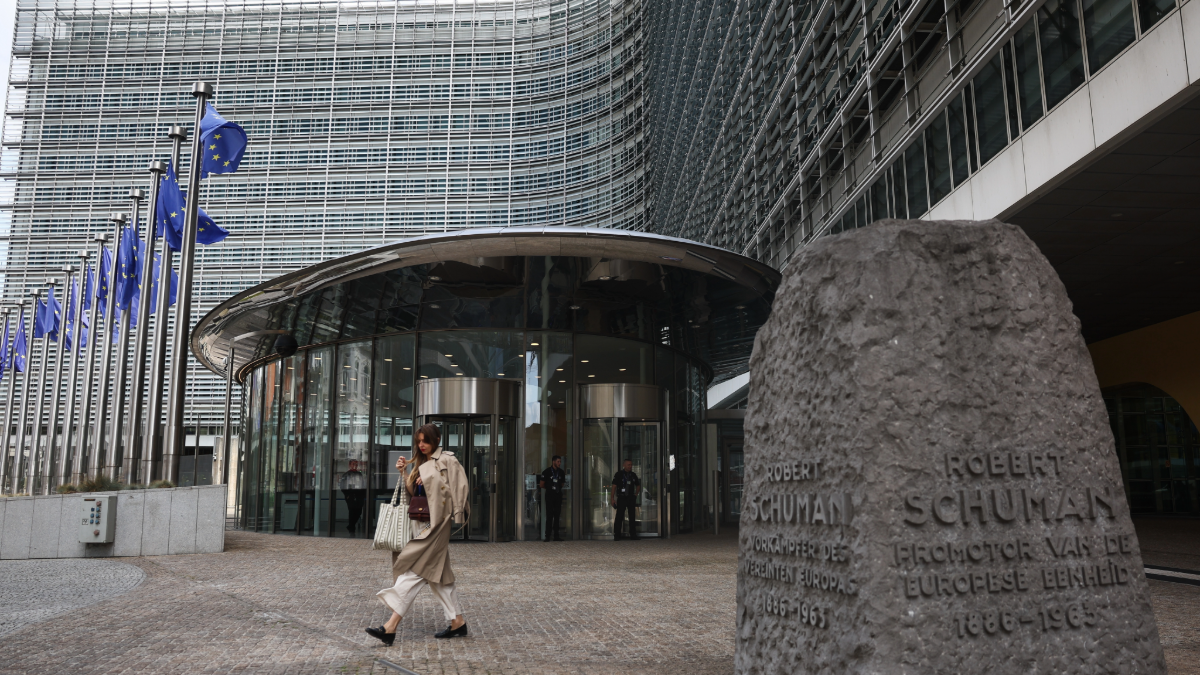
A view of the Berlaymont European Commission building in Brussels, Belgium on July 20, 2026. (Photo by Jakub Porzycki/NurPhoto via AP)
You posted it and they removed it. Every day, across the many online platforms available on the internet, content is removed and accounts are deactivated for failure to abide by the rules. You appealed and they denied it. Now what? Do you take the platform to court?
For Europeans, there is another option. Today, as a result of Article 21 of the Digital Services Act, eleven certified out-of-court dispute settlement (ODS) bodies will take up your dispute with the platform. All of them are currently free for the user, with the platform bearing the costs, whether or not the body finds in your favor.
During the DSA's development, proponents and critics of ODS made predictions and ran tests to see if this system would help or hinder the rights of EU internet users. Now that it has been up and running, with a full calendar year of data on hand, one thing is clear. The fee structure intended to increase quality has been replaced with one that drives quantity. Empirical study is needed sooner rather than later, lest this flaw become fatal.
The ODS system has the potential to offer what DSA expert Martin Husovec has called a "second opinion" that could incentivize better quality content moderation through the market mechanism of external redress. Although external appeals will always represent a fraction of internal appeals, a well-functioning system could deliver quick and cost-effective improvements, while a poorly designed one not only wastes time and resources, but potentially restricts rights.
For more than a year, the Digital Trust and Safety Partnership has facilitated a working group of online platforms to identify best practices and propose solutions for a successful ODS ecosystem. From this position, we have observed the practical challenges of this new regime for bodies, companies, and regulators.
Why out-of-court dispute settlement?
The DSA updated the EU’s digital intermediary liability regime, introducing tiered transparency and accountability requirements. This includes providing mechanisms for users to appeal content moderation decisions through internal and external processes. Appeals had long been a focus of civil society advocacy for improved content moderation practices, and many platforms adopted them voluntarily and codified them as a best practice in international standards. Purely voluntary efforts like the Oversight Board showed that there was appetite for some companies to seek outside views, informed by human rights expertise, on where their decisions may have erred.
Given the vast scale at which online platforms operate, and what lawmakers saw as the impracticality of seeking redress in court, an out-of-court route had intuitive appeal.
The origins of ODS
Article 21 was not added to the Digital Services Act in a vacuum. Digital dispute resolution had been around for more than 20 years in the case of the internet's domain name system, was used in the EU for consumer protection in other sectors, and a self-regulatory mechanism operated under Germany's NetzDG law from 2020 to 2023 prior to the DSA.
In 2018 and 2019, researchers Lenka Fiala and Martin Husovec conducted an experiment on the use of alternative dispute resolution for content moderation, leading to a paper whose “solution was adopted by the European Commission as a part of its major overhaul of the digital services regulation” that became the DSA. In a lab setting, Fiala and Husovec recreated the conditions of content moderation with a game, which introduced the possibility of an alternative dispute solution.
They found that the existence of this kind of dispute process, which was binding on the platform in the version they tested, “leads to higher accuracy of provider’s decisions" and improves the "accuracy of the delegated enforcement system, which benefits the business ecosystem and freedom of expression."
These results, however, were "subject to a particular fee structure." The complainant pays a "not negligible" fee to bring a complaint. Only if that complaint is successful does the platform reimburse the fee and pay the dispute resolution body. This was the model adopted in the initial draft of the Digital Services Act presented for consultation by the European Commission in late 2020.
From legislation to regulation
The final text of the Digital Services Act made several critical changes to the ODS system. First, ODS body decisions were made non-binding, in response to well-founded fears from experts and policymakers that a binding out-of-court system could effectively privatize the judicial system. Second, the fee model survived the negotiation, but as an optional nominal fee for users, reimbursed when the user prevails. The only problem is that neither the ODS bodies nor the national regulators responsible for certification of ODS bodies have taken this up.
This is not hard to explain. When users choose which body hears their dispute, any body that charges a fee is at a disadvantage against those that do not. The market drives user fees to zero. Three ODS bodies initially used or announced user fees: Ireland’s Appeals Centre Europe announced a five euro fee for users at launch, but never charged it. Italy’s ODS body mentions a 10 euro nominal fee in an FAQ on their website, but they dropped this in practice.
Hungary’s Online Platform Vitarendező Tanács did charge an approximate 10 euro fee to users, but this fee, unique in that it was set by their regulator, was changed to zero in updated regulation in March 2026. This decision was justified as removing a barrier to access, but could also be explained by the need for the Hungarian body to compete with two other ODS bodies accepting disputes in Hungarian and while charging zero user fees.
Husovec saw it coming. Writing in November 2024, before the first bodies were operating, he observed that a system where only the platform pays is “likely to undermine the independence of ODS bodies,” leaving a body with “an incentive to hear many disputes to attract consumers even if it cannot help them.”
A one-sided fee structure could undermine incentives at the heart of the ODS system that Fiala and Husovec tested. The fee makes the user consider whether the case is worth bringing, and it makes winning meaningful. These are the conditions under which Fiala and Husovec observed improvements in moderation accuracy.
So what happened?
More than two years on, 11 bodies certified by eight national regulators are submitting thousands of disputes to dozens of online platforms. None currently charge a fee for users.
The result is a large volume of disputes, most of which are never decided on their merits. At Appeals Centre Europe, the largest body by volume of disputes according to publicly available data, 72 percent of decisions in its most recent report were procedural decisions siding with the user without reviewing the substance. In the great majority of those cases, platforms did not share the information ODS bodies requested, for reasons ranging from expired retention periods and data protection limits to disagreement about what falls within scope. A second body, User Rights, reported the same pattern — two-thirds of its substantive decisions turned on missing information rather than on the merits.
Where content was shared and cases were reviewed on their merits, platforms were overturned in 59 percent of cases with ACE. User Rights reported that platforms' decisions were overturned in four out of five cases where it had all relevant information, although this was based on only 400 merits reviews. What can we conclude from this state of play?
Not very much, yet. High overturn rates could be a result of platforms making incorrect decisions at a high rate, or ODS bodies siding with the people who choose to bring complaints to them, or might have more to do with the types of complaints that people bring to an external body.
In 2022, Daniel Holznagel, a judge who had worked on the German predecessor to the Digital Services Act while in the German Federal Ministry of Justice, warned about the economic and expression risks that would arise from even a non-binding system, which would lead to a “self-regulatory race to the bottom.” Because users get to choose the body with which they lodge their dispute, but the costs are borne by the platform, the system incentivizes bodies to reverse company decisions in order to succeed financially. In November 2024, Holznagel assessed the startup of the first four ODS bodies with cautious optimism. His analysis, however, was based on public information at the time that showed two of four bodies charging a user fee, and he still worried that Article 21 might “might incentivize ‘worse’ content moderation.”
We cannot say with certainty that Holznagel was right about the race to the bottom, but we also know that in the absence of the fee structure validated by the Fiala and Husovec study, the benefits of ODS have yet to be realized.
What to do about it
Making ODS work for users requires short- and long-term action from ODS bodies, platforms, and regulators.
These efforts do not need to reinvent the wheel. Common sense abuse prevention practices were identified before the first ODS body was certified in a publication by Thomas Hughes, then writing in his personal capacity and now leading ACE. Hughes recommended a number of steps to prevent abuse of the system, including use of the nominal fees Article 21 envisages that nobody has adopted.
There are more areas for multistakeholder collaboration, including investing in common definitions and measurements to make reporting from platforms and ODS bodies interoperate in ways that would save headaches for regulators and researchers alike. But nominal fees would be a quick step in the right direction, and should be considered by regulators as part of the certification of ODS bodies.
In the long term, getting ODS to do what it was intended to do requires recalibrating the impact of the fee structure on the relationship between users, platforms, and ODS bodies. The DSA is subject to an extensive review that begins next year. Article 21 is one of its most novel mechanisms, and probably the only regulatory mechanism that took root from a published lab experiment. More field experiments of the kind called for by Fiala and Husovec are needed to see whether what was lost from study to practice needs to be corrected.
Authors