Tech Policy Press Announces 2026 Fellows
Ramsha Jahangir, Justin Hendrix / Jan 20, 2026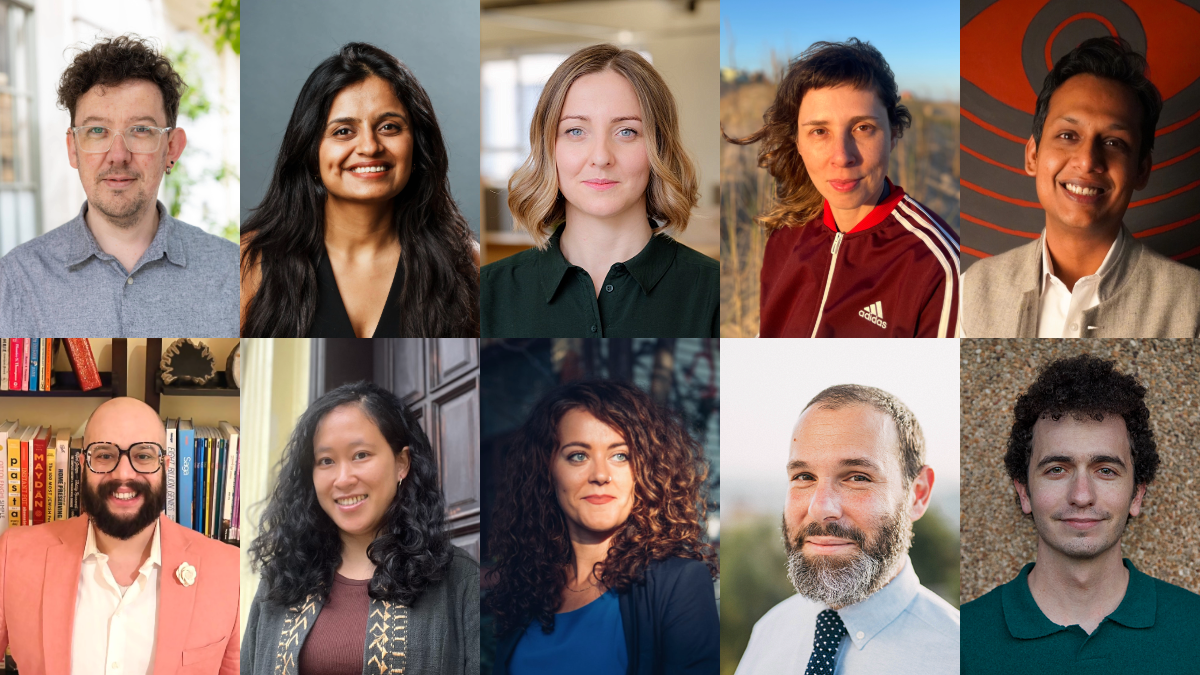
Top left to bottom right: James Ball, Varsha Bansal, Liz Carolan, Tatiana Dias, Apar Gupta, Jake Laperruque, Lam Le, Petra Molnar, Vas Panagiotopoulos, and Chris Mills Rodrigo.
Tech Policy Press is pleased to announce its third fellowship cohort, selecting 10 fellows from around the world for the 2026 program.
Since 2023, the Tech Policy Press Fellowship has supported independent reporting, opinion and analysis on urgent questions at the intersection of technology and democracy, with the goal of informing the public and decision-makers and supporting diverse perspectives on tech policy issues. Together, these individuals will help us expand our coverage and engage with new issues and world events.
For the 2026 cohort, we received more than 2,200 applications and selected 10 fellows from across a wide geography and representing a range of disciplines and areas of expertise.
The 2026 Tech Policy Press Fellows are:
James Ball
James Ball is a journalist and author who has written on technology and politics for 15 years. Over that time, he has worked on major international scoops including the Snowden disclosures, Panama Papers and offshore leaks, and Chelsea Manning’s document releases through WikiLeaks. He is a PhD candidate in the faculty of laws at University College, London, and a fellow at the British thinktank Demos. His research interests cover the interaction of legal systems and AI, particularly in the domains of surveillance and intellectual property.
Varsha Bansal
Varsha Bansal is an independent journalist based in Los Angeles who investigates AI companies and how the technology is reshaping workers, communities and society. With over a decade of experience as a tech reporter, her work regularly appears in WIRED, The Guardian, TIME, Fortune, MIT Technology Review, Rest of World and more. Prior to going freelance, she worked with top Indian business dailies The Economic Times and Mint. Varsha was a Knight-Bagehot Fellow at Columbia University (2024-25) and has received multiple awards, including Freelance Journalist of the Year by One World Media and Outstanding Business Reporting by South Asian Journalists Association for her reporting on technology's impact on Indian gig workers. She was also an inaugural AI Accountability Fellow with the Pulitzer Center in 2022.
Liz Carolan
Liz Carolan is a writer, advisor and advocate working on technology and its impact on democracy, with a particular interest in corporate accountability and digital and industrial policy in the European Union. She founded Digital Action, a global campaign organization demanding better standards from the governments and corporations responsible for our digital environments. She also set up the Transparent Referendum Initiative, which identified overseas interference in Ireland’s referendum on abortion rights and led to changes in social media platform policy on the transparency of political advertising. A political scientist by training, she has held research and advisory roles at the Institute for Government, the Open Data Institute and the Africa Governance Initiative. She is currently based in her hometown of Dublin, where she works as an adviser to a number of European and global tech and society initiatives, publishes the TheBriefing.ie newsletter, and is a regular commentator in Irish print and broadcast media.
Tatiana Dias
Tatiana Dias is a Brazilian investigative journalist specializing in technopolitics and human rights. She holds a degree in journalism from Faculdade Cásper Líbero and is a master's student in Communication Sciences at the University of São Paulo. In 2023-24, she was a Pulitzer Center AI Accountability Fellow, where she conducted the investigation “The Factory Floor of AI” on labor rights violations in the AI industry. As executive editor of the independent investigative outlet Intercept Brasil, she coordinated major coverage in technology, lobbying, surveillance, politics, and human rights. She won the 36th Human Rights Journalism Award in the digital category, was a Gabo Award finalist in 2023, and was nominated for the One Media Award in the environmental impact category in 2020. As a reporter and editor, she has over 19 years of experience in Brazilian newsrooms — including IstoÉ, Estadão, Galileu, HuffPost, and Nexo.
Apar Gupta
Apar Gupta is a lawyer and writer on democracy and technology, and the Founder Director of the Internet Freedom Foundation (IFF). He has acted as a counsel in leading constitutional cases on freedom of speech and privacy. Apar was the cofounder of the SaveTheInternet.in, a grassroots campaign that mobilized over a million Indians and secured strong net neutrality safeguards, and since 2018, he has led IFF, where he pairs campaigns with policy advocacy and impact litigation on issues of digital access and coercion. He has assisted in drafting three distinct Private Member’s Bills introduced in the Lok Sabha and also deposed before Parliamentary Committees of Information Technology and Science and Technology on topics of study, including Net Neutrality, Internet Shutdowns, online obscenity and the DNA Bill. In recognition of this work, Apar was elected an Ashoka Fellow in 2019 and named by Rest of the World in its ROW100 for Global Tech’s Changemakers.
Jake Laperruque
Jake Laperruque is a policy advocate and expert on privacy and technology, and serves as the Deputy Director of the Security and Surveillance Project at the Center For Democracy & Technology (CDT). His work focuses on national security surveillance, AI surveillance tools, facial recognition, location privacy, drones, and other key issues at the intersection of new technologies with privacy, civil rights, and civil liberties. Prior to joining CDT, Jake worked as Senior Counsel at the Constitution Project at the Project On Government Oversight. He also previously served as a Program Fellow at the Open Technology Institute, and a Law Clerk on the Senate Subcommittee on Privacy, Technology, and the Law.
Lam Le
Lam Le is a freelance journalist based in Hanoi, Vietnam. Her work examines the intersection of tech, labor and supply chains in Southeast Asia. She was previously a tech reporter at Rest of World, where she produced some of her most impactful work, including how the global tech supply chain has changed factory labor, and ways in which gig workers adapt to, resist and influence tech platforms. She has also written for the Wall Street Journal, The Guardian, Al Jazeera and others, covering everything from the global pandemic to human trafficking and energy policy. Beyond reporting, from 2022-2023 she was an editor at Mekong Eye, a publication covering environmental issues in the Mekong region. Before becoming a journalist, Lam worked in various fields, like communications and research. She holds a degree in Economics from the University of Cambridge.
Petra Molnar
Petra Molnar is a lawyer and anthropologist specializing in migration and human rights. A former classical musician, she has worked in migrant justice since 2008, first as a settlement worker and community organizer and now as a researcher and lawyer. She writes about digital border technologies, immigration detention, health and human rights, gender-based violence, as well as the politics of refugee, immigration, and international law. She is the co-creator of the Migration and Technology Monitor, a collective of civil society, journalists, academics, and people-on-the-move interrogating technological experiments at borders. She is the Associate Director of the Refugee Law Lab at York University and a Faculty Associate at the Berkman Klein Center for Internet and Society at Harvard University. Petra’s award winning first book, The Walls Have Eyes: Surviving Migration in The Age of Artificial Intelligence, was published by The New Press in 2024, chronicling 6 years of research at the world’s borders.
Vas Panagiotopoulos
Vas Panagiotopoulos is a Melbourne-based journalist who regularly contributes to WIRED, and a researcher at Deakin University in Australia, specializing in the commercial spyware industry and its influence on political systems. His journalistic work has appeared in Politico, Quartz, Vice, the European Journalism Observatory, openDemocracy and the investigative outlet Follow the Money, among others. Since 2017, he has served as Greece correspondent for Reporters Without Borders (RSF), advocating for spyware victims, including journalists, and co-developing RSF’s surveillance policy proposals for the Greek government. He has a background in EU public affairs and corporate communications.
Chris Mills Rodrigo
Chris Mills Rodrigo is the managing editor of Inequality.org, a project of the Institute for Policy Studies, and a freelance journalist covering tech and politics, based in Brooklyn. He previously covered tech policy for The Hill.
Tech Policy Press is grateful to its foundation funders and the individual donors who make this work possible.
Authors