Geofence Warrants and Privacy in the Digital Age
Justin Hendrix / May 17, 2026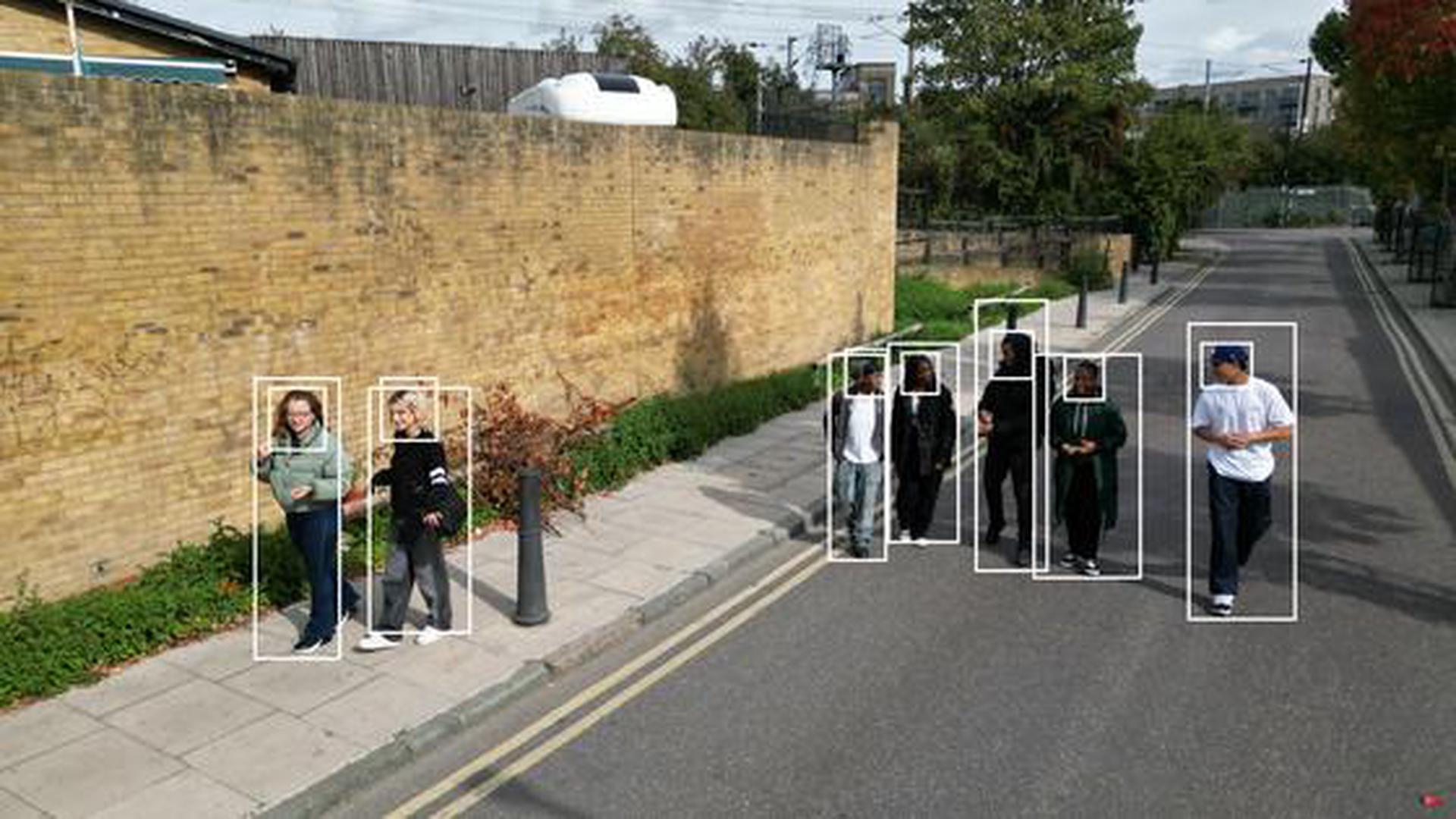
Surveillance View A. by Comuzi / Better Images of AI / CC by 4.0
Good morning!
At the end of last month, the Supreme Court heard oral argument in Chatrie v. United States. The case involves the use of a geofence warrant, which police use to demand information on all cellphones within a certain area and period of time. The outcome of the case, which revolves around Fourth Amendment questions, could have profound implications for location tracking and privacy in the digital age.
To learn more, Tech Policy Press fellow Jake Laperruque, who is monitoring the case, spoke to Michael W. Price, who serves as litigation director for the Fourth Amendment Center at National Association of Criminal Defense Lawyers (NACDL), one of the lawyers representing the plaintiff.
Laperruque and Price discuss what geofence warrants actually are, the Fourth Amendment and third-party doctrine puzzle, the rise of "Frankenwarrants" served on carriers like AT&T and T-Mobile, and Price's argument that Congress shouldn't wait on the Supreme Court to act on privacy. He points to long-stalled updates to the Electronic Communications Privacy Act (ECPA) and the Fourth Amendment Is Not For Sale Act.
There is a wealth of excellent material on the site this week—I hope you will read on, click through, and share with your networks.
AI governance
- When a federal agency changes AI vendors, it may also change how government systems perform and how they interpret policy goals and constraints. That could have huge implications, write Paulo Carvão, senior fellow at Harvard Kennedy School’s Mossavar-Rahmani Center for Business and Government, Isabel Adler, a dual Harvard Kennedy School master’s in public policy and Tuck School of Business at Dartmouth candidate, Jeffrey Zhou, an A.B. candidate in Computer Science and Economics at Harvard College, and Claudio Mayrink Verdun, a research scientist at the Massachusetts Institute of Technology.
- Eli Talbert, a data scientist supporting the US Special Operations Command, writes that as government agencies increasingly rely on software and algorithms to make decisions, these tools may shape outcomes through their architecture in ways the public never sees and courts can't review. “The result is a form of invisible policymaking: design choices or architectural constraints that determine outcomes across cases without the public notice, comment, or transparency that US administrative law requires,” he writes. Accountability thus requires that design choices be visible and transparent.
Coalition for Independent Technology Research v. Rubio
- Murad Ali Bhatti and Siddharth Muchhal, former legal externs at the Knight First Amendment Institute at Columbia University, discuss amicus briefs supporting a challenge to a Trump administration immigration policy targeting researchers, fact-checkers, and trust and safety workers. The three briefs warn that the policy is already chilling online speech, research, and press freedom.
- An important court hearing took place in that case this week in Washington, DC. Courtney Radsch, director of the Center for Journalism and Liberty and a board member at Tech Policy Press, sends a dispatch from a DC federal hearing in Coalition for Independent Technology Research v. Rubio, the suit challenging Trump's visa restrictions on researchers who study online harms.
Information integrity
- Tech Policy Press fellow Tatiana Dias covers the rise of "Dona Maria," an AI-generated political influencer created by a Brazilian Uber driver that is reaching millions online, highlighting the challenge deepfakes and synthetic content pose ahead of the 2026 election. “So far, the evidence already shows that AI tools have had an impact on the disinformation landscape in Brazil,” she reports.
- State media is a component of LLM training data. A new Nature study says this material is laundered into what presents as objective chatbot text. LLMs also give more pro-regime answers when prompted in the official language of low-press-freedom countries than in English. I wrote about the findings.
Markets, monopolies, and open-source alternatives
- Jack FitzGerald, a former Talos Fellow at the Open Markets Institute, writes that OpenClaw, an open-source AI agent, shows that vertical integration in the AI market is not such a necessity. OpenClaw and its offspring point towards a future where users are in control, without a single firm mediating and monitoring their every move, he writes.
- Article 19 senior EU advocacy lead Mark Dempsey writes that Anthony Whelan's appointment to lead DG COMP comes at a critical moment for the EU. As the Commission pursues a "competitiveness" agenda and considers weaker merger control, the key question is whether EU competition policy will resist corporate concentration or accommodate it. “Whelan’s appointment is a test—both for him personally and for the credibility and effectiveness of EU competition policy as a whole. Ireland will be watching,” he writes.
- Renjie Butalid, co-founder of the Montreal AI Ethics Institute, writes that surveillance pricing isn't competition. It's companies using your data to decide what you specifically are willing to pay. Ontario doesn't need to "let the market decide,” it should draw a line before the practice becomes normalized.
- Maria Buza and Tommaso Giardini of Digital Policy Alert offer another installment of the Global Digital Policy Roundup, highlighting tech policy developments in content moderation, artificial intelligence, competition, and data governance.
Platform accountability & child safety
- The TAKE IT DOWN Act passed a year ago, and the FTC is reminding platforms of their compliance obligations set to kick in next week. Alejandro Cuevas, who researches the parts of the Internet that don’t want to be researched at Princeton’s Center for Information Technology Policy (CITP), writes that whether platform accountabilityproves more effective than criminal deterrence is now at test.
- Georgetown University tech and public policy scholars CJ Larkin and Max Morgan write that states across the US are advancing laws to restrict youth access to social media through bans, parental consent rules, and age verification. They map where these efforts are happening, which bills have passed or stalled, and the laws that have been challenged in court. Check out the visualization, this was a substantial amount of work!
- Ariel Fox Johnson, founder of Digital Smarts Law & Policy, LLC, and a senior advisor to Common Sense Media, argues that the Ninth Circuit's latest rulings mark an important shift in the legal landscape for online child safety. The contours of the decisions offer lawmakers and advocates a guide for privacy and safety laws more likely to survive judicial scrutiny. “Ultimately, the Ninth’s Circuit CAADC II decision bodes well for the future of thoughtful privacy and safety laws that can make the internet a safer and healthier place for all kids,” she writes.
- Prediction markets are in the headlines. Leah Ferentinos, an AI governance researcher and strategic advisor to All Tech is Human, Glenn Borsky, a cyber intelligence analyst specializing in cyberwarfare, influence operations, and cognitive security, and Sean Anthony Guillory, co-founder and CEO of Betting Intelligence, write that prediction markets don't just reflect reality—they can shape it. They call on the trust and safety community to engage with this fast-growing space.
AI & the public interest
- The fight over AI-generated art and copyright is not just about statutory interpretation, says Laurel Kilgour, a research manager at the American Economic Liberties Project. The Founders understood that republican government relies on public knowledge—and on a critical mass of citizens who write, create, invent, and exercise creative judgment, she writes. “The hardest practical question is where human authorship ends and AI generation begins,” she writes.
- André Côté, the executive director of the Dais at Toronto Metropolitan University, and Nancy Naylor, who served in the Ontario Government for over 35 years in various roles, write that Canada's new federal AI strategy must address K-12 education. Their four-part plan: 1) AI literacy and skills, 2) AI-resilient soft skills like teamwork, 3) thoughtful AI use in teaching and administration, and 4) governance for youth safety, cybersecurity, and digital privacy.
What we're watching
According to recent polling from Gallup, 7 in 10 Americans oppose constructing data centers for artificial intelligence in their local area—a higher share than those who oppose building a nuclear energy plant (53%). The findings mirror mounting public pushback on data center expansion nationwide and around the world, as communities, regulators and civil society groups seek to slow down or halt development, hold data center providers accountable for environmental harms and prevent the burden of rising energy costs from falling on households.
Yet large-scale projects continue to advance despite sustained opposition, including the approval this week of a massive AI data center project in Utah following considerable public opposition over its projected energy and water use. We welcome contributor perspectives on the state of these efforts, including which strategies and approaches are shaping outcomes in different jurisdictions.
One final note… Along with my colleagues Ramsha Jahangir and Ashley Faler, I’ll be spending the week in Brussels at the 2026 Computers, Privacy, and Data Protection (CPDP) conference, where Tech Policy Press is a media partner. We're interested in contributions connected to CPDP—and if you're at the event, come find us!
I wish you the best for the week ahead.
-Justin
Authors