Local Reporter Neil Strebig on Covering xAI's Expansion in Memphis and Beyond
Justin Hendrix / Jun 21, 2026Audio of this conversation is available via your favorite podcast service.
Two years ago this month, the Greater Memphis, Tennessee Chamber of Commerce announced a deal to host a substantial new computing facility with Elon Musk’s artificial intelligence company, xAI. Dubbed "Colossus," the data center was built in an old Electrolux factory. It was brought online at record speed, and almost immediately drew questions about transparency, air quality, water use, and how a project of this scale had moved through local government so quickly.
Two years on, the story continues to expand alongside the company’s growing footprint, with a second campus—Colossus II—across the state line in Southaven, Mississippi; a contested gray water recycling plant; an ever-rising count of gas turbines; multiple lawsuits; and communities in South Memphis still pressing for straight answers.
Few people have tracked the details more closely than Neil Strebig, a reporter with The Commercial Appeal in Memphis who has covered the xAI story daily from the beginning. He’s attended community meetings and hearings; filed right-to-know requests; parsed the differing interpretations of the Clean Air Act by the EPA, the Shelby County Health Department and the Mississippi Department of Environmental Quality; counted turbines; and spent time with residents living alongside the facilities. The result is a command of a level of detail that few can match.
In this conversation, Strebig brings us up to speed on the latest developments — including a newly updated lawsuit citing unpermitted turbines in Southaven, the implications of the SpaceX IPO and the impending IPOs of other AI firms, and the stalled water recycling plant Memphis leaders had counted on. And, he reflects on what it has been like to chase facts as the story spread across two states and a thicket of jurisdictions.
This is the first of three episodes we’ll release over the next few days on the situation in Memphis and Southaven, and what it tells about the future of the AI infrastructure boom in the United States and the political debates and power struggles surrounding it.
What follows is a lightly edited transcript of the discussion.
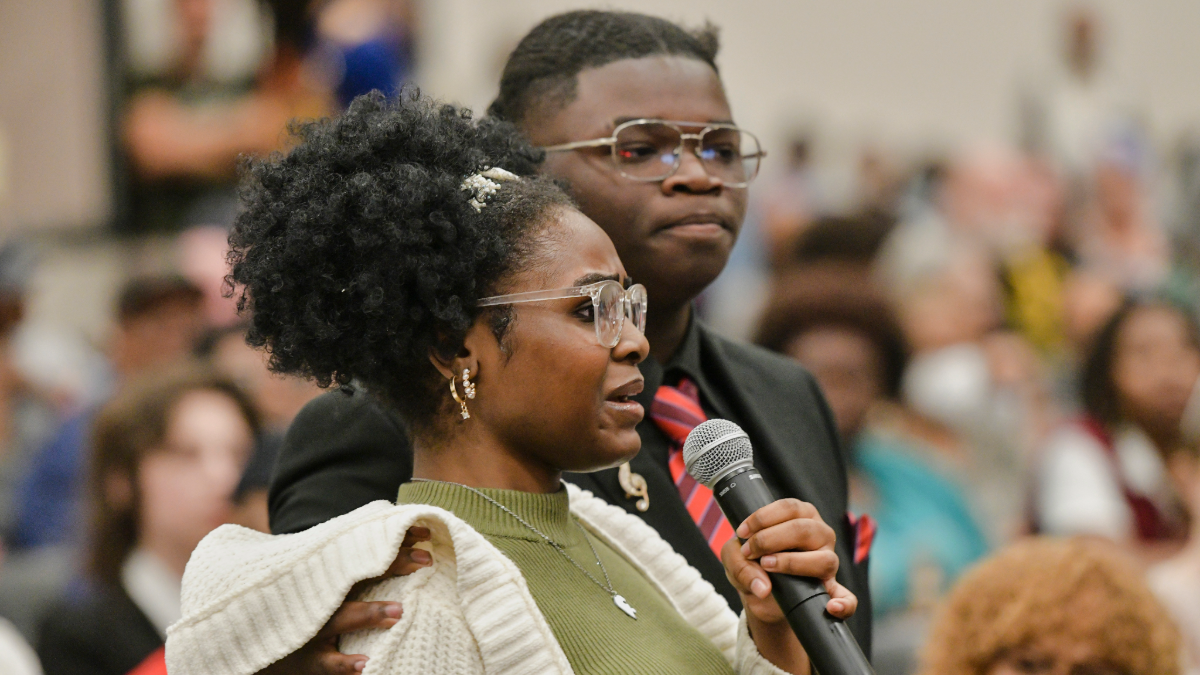
Local students speak in opposition to a proposal by Elon Musk's xAI to run gas turbines at its data center during a public comment meeting hosted by the Shelby County Health Department at Fairley High School on xAI's permit application to use gas turbines for a new data center in Memphis, TN on April 25, 2025. (Photo by Brandon Dill for The Washington Post via Getty Images)
Neil Strebig:
I'm Neil Strebig, reporter with the Commercial Appeal out here in Memphis, Tennessee.
Justin Hendrix:
So, Neil, the last time I saw you, it was a hot day in Memphis and I was there just briefly. It was just before I actually had a chance to take a drive out to see Colossus, the xAI facility out in South Memphis. And I don't think I told you this, but I got about three quarters of the way there and somewhere on one of those industrial roads I caught a bolt in the tire of the car I was driving, got a flat and ended up having to change the tire on the side of the road. Some nice gentleman from South Memphis pulled up and offered a hand. I had it mostly in hand at that point, but just goes to show, I suppose, how friendly the folks in Boxtown are.
Neil Strebig:
Yeah, no, they definitely are. Did you end up seeing the site then after that or no?
Justin Hendrix:
I did. I got to drive past and could see these much disgust turbines in operation and it was a hot day, a humid day and you could see the exhaust coming off those. Of course, that was in the early days of this story. You've been following this since the very get go and want to talk to you a little bit about your coverage and what you've learned, but you have stories just up in the last couple of days on xAI and what's going on there. Bring us up to speed to the news. What's going on? What are you covering right now at this very moment?
Neil Strebig:
It's definitely a lot. And this week especially because we're just a little bit over the two-year mark. It was June 2024, so two years and a week and change figure. But I mean, this week I would say SpaceX purchasing it this year, SpaceX IPO, that's the big component there. There was a civil lawsuit filed from residents in Southaven, Mississippi where their secondary plant is Colossus two. And we can get in all those weeds as well as far as the campuses and the names because it is confusing. It's a lot of redundancy all names and just the sheer amount of land xAI has purchased here in Memphis is fascinating.
I mean, I had a story in January this year and at that time they had just over 1,100 acres, which is about more than almost a third of downtown Memphis as far as total acreage and square acreage. Just to give you an idea of scope in just two years time, they accumulated that much land between Memphis and Southaven, Mississippi, which is just fascinating. But the main things here are the greywater treatment plant named Colossus Water Recycling Plant. That is a big topic here in Memphis because that was promised when they got here. That was also a need long before xAI even got here as well, but that was something that city leadership really hung its hat on to get off the Memphis Aquifer.
The other component is of course Colossus II, Southaven, the power plant, the use of gas turbines. There's two lawsuits down there with that. That one lawsuit just got updated as well yesterday actually. The discovery for the legal team and the groups suing, the advocacy groups and the Mississippi chapter of the NAACP. The lawsuit is filed on their behalf by the Southern Environmental Law Center, but their discovery team just saw that there's 57 unpermitted turbines at the site now, which when they filed it back in May, it was actually outdated when they filed it at that time.
So, there's about 30 more turbines from when their initial filing from May, just to give you an idea of how much has happened since then. And again, we can go in the weeds of why that's an issue because the interpretation of the Clean Air Act law with the EPA's new changes is a big portion of what's happening down in Southaven on top of just residential concerns with noise and air pollution.
Justin Hendrix:
So, one of the things throughout this has really been how to get accurate information. I mean, there's been lots of back and forth about how many turbines are on this site, that site, what's actually in operation, what's going on. Can you just take us behind the scenes? I assume you're effectively trying to sort through this, trying to tack these things down, get to the facts. What's it been like effectively dealing with these technical claims both from the city, the community, and of course from xAI itself?
Neil Strebig:
Well, it's tricky and I think I got a lot more gray hairs because of it. But I think the biggest thing and we see with a lot of Musk companies as well, don't really have a media team. I mean, here in Memphis, xAI developed one about middle of last year and even still with a bunch of leadership changes, shakeups, that's hit or miss as far as response times and everything else. But for a long while, that was a big component that was difficult here because there really wasn't a media personnel, even an email to kind of reach out to or anything to connect with. Katie Miller filled that role for a short bit of time. She's still associated to the best of my knowledge with the company.
But again, as far as here's a media person to directly connect to xAI can be hit or miss with that, which is a bit of a headache in itself. But as far as reporting information goes, a lot of right to know requests sourcing here, I mean, you have your regular sources on the ground talking to people in the community, but it definitely is tricky. And I think the trickiest part of this story in the last two years is just how much has happened. I mean, the layers in this story are plentiful to say the least. You could talk and go in the weeds just from turbines and microgrids. You can go in the weeds on water usage. You can go in the weeds on hyperscale data centers versus regular data centers.
It kind of list goes on and on. And then you just get into, even this week, the IPO and the role that xAI and SpaceX's artificial intelligence arm plays into that whole offering. Because I mean, I'm not sure if you look at the IPO. They're basically just hemorrhaging money if you look at the IPO from the artificial intelligence side. Now, that's not unique to xAI either. We see that with Anthropic and some of the other IPOs that came out the last two weeks, but in a general sense, it is kind of fascinating to think that these companies are just losing billions of dollars and doing this AI race. And just from the monetary side, it's like you do have to ask yourself, is it worth it?
That's a general kind of 30,000 foot view. But for me personally though, the biggest bit has just basically been tracking the scale and how they're building out. And I think when you were down here, it was just Colossus at 3231 Paul R. Lowry Road, the old Electrolux facility here in Memphis. I mean, they've got a bunch of land even around that. The Colossus Water Recycling Plant is just north of that, but I mean, it's really just ballooned up now with their property in South Memphis off a two lane road and connecting into Southaven, Mississippi.
And that's really kind of their focus then too. The blowback here in Memphis has been that Musk himself said that they're prioritizing Colossus two over the great water recycling plant, Colossus Water Recycling Plant, which is supposed to be the greywater treatment plant here in Memphis. And like I said, that was the big component locally that city leadership essentially kind of kept coming back, hanging its hat on as far as a positive for the city. And xAI's credit, that was something they promised to pay for and build themselves and did their due diligence to get the land, the state permits, all of that.
So, that is a bit of a black eye, so to speak, for the city then after the rug kind of got pulled on them. And that is a massive talking point here. But when you look at the grand scope of things, I mean, it's just pick your poison. What layer and what type of weeds do you want to go into? I mean, you guys talk about a lot on your website and your stories and content. I mean, the AI and hyperscale just energy needs and the microgrid component to me is the most fascinating part of it all of just how you're going to meet those needs. You're talking a gigawatt of power plus in a short amount of time is just fascinating.
Justin Hendrix:
And how about your sourcing in the community? I mean, I think one of the most extraordinary things about this story and one of the reasons why it's resonated across the country and across the world has been such an extraordinary set of leaders on the ground there in Boxtown and the broader Memphis area. How do you think the community's feelings have changed over the last couple of years? I mean, I wanted to ask in particular, I mean, I know that the community, the city has negotiated some benefits directly to the surrounding community and now there are, as I understand it, some resources that'll be set aside out of the tax revenues. What do you make of that relationship right now?
Neil Strebig:
Chippy, I think is the best way to describe it. That particular group actually just had their third meeting before some more budget hearings and that group essentially met to discuss how the resources are going to be used and then present that to city council as a recommendation and we'll see what city council does and how they decide with that. But even in those meetings, just from a very micro level, there's discrepancies of they used a survey to get a sense of what residents in South Memphis wanted. Initially, they put the survey out, not a whole lot of people responded to it.
And again, Boxtown, Whitehaven, South Memphis, you do have some older populations that just aren't tech-savvy either. So, sending out an email survey might not be the best way to get responses. So, they did use different avenues. I forget the exact number of responses. I want to say it was around like 3,000 or so maybe. What they responded to use for funds and how it was worded was essentially where do you want to see investment back in your community? So, a lot of it was public safety, potholes, infrastructure. I think it was fifth or sixth on the list as far as environmental quality or air monitoring. So, for some of the folks involved, that again is kind of like, that's not what this was designed for.
There is animosity there of, "Hey, we want to use these funds for specific uses." And when you're talking about you have a cap on as far as the tax revenue going into that, just in a ballpark figure, if you have three million going to even, hey, say public safety, and then you have to cipher that down into 30 other things. Well, 30K on any one matter versus three million is a big difference no matter where you're allotting those funds. So, that has been the discrepancy just from how those funds are going to be allocated. But since this was announced in 2024, to me, the consistent theme from the public's perception of this project is twofold.
One, you did have environmental pollution and air pollution, legacy pollution in South Memphis, that's been ongoing. xAI did kind of reiterate that conversation and bring a lot of that back up and some of that indirect criticism towards them just kind of coming into a problem that existed for decades and perhaps should have had solutions or better pathways around it already. The other half of this is a lot of folks weren't anti-xAI when this started. They had questions around it, and Musk is a polarizing personality. He was polarizing before the election, perhaps more so now.
But you take that aside, a lot of residents that spoke in front of city council and in front of public meetings, they just had questions they wanted answered and they didn't have any questions answered or they got immediate pushback and kind of felt that they got floored. Memphis as a community prides itself on the civic outreach. And again, that's tied for decades as far as how the city's conducted itself, handled itself and essentially been a big proponent as far as free speech is concerned, especially in black communities here in Memphis. That was atypical and I think folks took notice of that of, "Hey, usually when we stand up and voice concerns, we can get at least an extra meeting or there's going to be a pause here."
We're speaking up and this is just getting steamrolled through in city council. And that I think is what raised a lot of flags to where people then, they were like, "Hey, new business is good for Memphis. We're excited. We have questions. They're not being answered." That's when it started to turn as far as, "Hey, we don't feel like we're being heard. We just don't like this project at all." And that's when you go in the weeds then as far as environmental concerns, power concerns, water concerns. And again, pick your poison as far as the layers you're going to go in the weeds with. I think that's really why we see a bit more animosity towards it now than we did when this was initially announced two years ago.
Justin Hendrix:
Do you get a sense that in that kind of developing relationship that there's also a kind of change in the sentiment about xAI as a AI project? Are there concerns about artificial intelligence that are coming in a little more broadly to just the concerns about the facility and the data center, or are those still sort of on the margin?
Neil Strebig:
On the margin I think would be fair just because that's still pretty broad. Here in Memphis, there's a term that was coined by Fred Smith, FedEx founder with the late great Fred Smith, if you will, and the Greater Memphis Chamber called the Digital Delta and that's essentially a big push towards being a tech hub and industry. And that has been thrown around quite a bit associated with this project. And I would say Memphis from a medical device side of things has had a significant tech boom. So, AI infiltrating all industries and aspects has kind of been added to that. And I think still scratching the surface is how that's going to be interpreted.
And I think a big part of this though is this is the biggest hyperscale data center we've seen. And as you've covered, xAI has also from how they've built out their particular data center is also a bit atypical of what we've seen. The reliance on turbines for microgrids is a bit more unique and especially the scale they've built that. And we can get in kind of the weeds of why that is with them having to catch up and kind of coming in late to the race, they needed power to meet the demand and maybe that public input was just sacrifice to meet said demand. But the other half of this too is across the river in West Memphis we have Google building a massive campus out there as well.
So, you do have two massive tech companies and two massive hyperscale data centers coming into the area, which is very unique. And again, is Memphis going to be an AI capital as far as workflow and tech in the Silicon Valley? I think we're way too early to tell on that. And again, you can kind of work those jobs from anywhere. So, it doesn't necessarily mean that's all going to come here in Memphis per se.
It has been a bit fascinating to see in West Memphis and actually this week as well, big news week, I guess for me, Olive Branch in DeSoto County, same county Southaven Mississippi is in and where Colossus two and the xAI power plant is located, they responded to some zoning ordinances and essentially called Memphis and Southaven out as far as language and say, "Hey, we saw what happened in those cities. We're trying to get ahead of it on future data centers."
Google and West Memphis with how they've approached water, public input, public partnerships, and essentially their entire rollout for that project, there has been members within that that have said like, "Hey, we looked at what happened in Memphis and thought, let's do the complete opposite." So, I do think that's a fascinating component of this as well of right or wrong, you are seeing other communities or other businesses say like, "Hey, let's not go about it that way. There's a better way to perhaps do this."
Justin Hendrix:
That's fascinating. I want to also just ask you a little more about Southaven. I mean, since xAI effectively kind of jumped the state line for this second facility, is there anything different about that project to what you see in South Memphis? Anything that sets it apart? Is the jurisdictional kind of arbitrage something that you can tell whether the company's kind of taking advantage of somehow or I don't know, what do you make of it?
Neil Strebig:
I don't know if I'd say taking advantage of our job as a reporter is to figure some of that stuff out and as we already mentioned it's definitely a story that can flood out some information sometimes and then slow leaks at the other times. But to give an idea, when you were here, it was just Colossus. That was at Paul R. Lowry Road. They're renting out that building and honestly, that building is going to be partially rented out by Anthropic now as well, which is fascinating. In February 2025, an xAI affiliate CTC Property LLC purchased about 186 acres off of two lane road and White Haven is a neighborhood in South Memphis.
Colossus is in Boxtown, which you're familiar with and White Haven is about southeast of that, give or take 10, 15 minutes. Right at the end of two lane and where xAI purchased that property is state line road and then that connects into DeSoto County and Southaven. Colossus two is there. They've got work permits for two other warehouses on the two lane properties and then in July 2025 they purchased Duke Energy site, the former Duke Energy site was a gas power plant in Southaven and that's right next to an industrial plant as well, industrial park, if you will. What they've done then is basically put all the turbines at the Duke Energy site on 2875 Stanton Road.
That's the source of power for Colossus. Their next stages would be Macro Harder, which was announced in January of this year that was, they caught a $20 billion investment, a lot more money than 20 billion is going into all of this, but what's happening in two lane road in White Haven and that portion of South Memphis and Southaven, that really is the kitten caboodle. I mean, that's the big operation really at this stage. The Colossus site, when you were here, that's kind of where things got started, but it's been a massive shift down below and part of that is because that power plant in Southaven, where the turbines are and the former Duke Energy site is, that's powering everything across state lines.
So, now that's kind of, you have one data center operational right there, you could have three more in who knows by the end of the year, next year. Either way, that's coming on top of the property that they've already built up Colossus, which you have visited. And the last count is 57 turbines at that site. Now that's between... that was in the lawsuit that was filed June 10th, the updated one and that count comes from an engineering firm that helped do some of the studies on turbines for some of the permits here in Shelby County and also with the Mississippi Environmental Department of Quality MDEQ.
MDEQ staff and folks from the engineering firm turning into consultants, I've reported all this stuff this week as well, always feel free to, if you need me to drop links or anything else, let me know. But all stuff I've reported on, but those emails cite that there's 57 portable turbines there. 59 total, two of those are not on the site. Where that gets tricky with Southaven and I'll kind of shed more light on why this has been such a, I don't even say tale of two data centers. It's just a shift of some of the same issues, but on a much larger scale in a very short amount of time. They got an MDQ permit, PSD permit in March approved for 41 turbines.
But to my knowledge, and as it's been explained, those turbines aren't at the site. It's still unpermitted turbines because they're portable, which is tricky. Now you have residents in Southaven that since xAI got control of that property in Stan Road, the old Duke Energy site have cited concerns over noise and air pollution. The civil lawsuit that was filed this week, one of the residents in Southaven, Jason Haley, he's one of the plantiffs in that lawsuit, did a big deep dive in the community back in February about what they were going through, visited his house, talked to him. This is 11:30, 1:00 in the afternoon. You can hear it and we're about three, four miles away.
Now you showed me a video of like 2:30 AM from his house and it's like a lawnmower in your living room just from the audio from his phone at 2:30 AM. We were there in the afternoon. I mean, it's a construction hum that's noticeable. I mean, it's one of those things of like once you pick up on it, if you're locked on it's not going to go away once you hear it. At that time, Southaven was supposed to be building a sound wall that's still going and that February story highlighted some discrepancies between city leadership and Southaven with the mayor citing that the noise is kind of temporary.
I think that's been the rub with a lot of this and going back to public perception is they say things are temporary, either it's noise pollution, whether it's turbines, construction, this or that, and just more stuff is getting added or happening. Whether that's coming from my personal reporting or another outlet, that to me has been from a resident side point of view. You can understand the frustrations they have. It's kind of like, what is going on here? We're getting more information from news outlets, which again is our job, but when you're coming to city leadership, whether it's in Southaven or it's in Memphis and you're getting question marks or you're leaving with more questions and answers, it's not leaving too much for the public to really be happy with at that point.
There's going to be frustrations. I know that was a lot I threw at you, but I mean, it's changed a lot since you last visited and you got the crash course in Memphis roads. They are where tires go to die.
Justin Hendrix:
Well, I mean, it sounds like this part of this, the complexity is just the regulatory machinery spread out two states, multiple jurisdictions. You've mentioned the Mississippi Department of Environmental Quality, the Air Pollution Control Board, the Shelby County Health Department, EPA also of course playing a role here. I don't know, is that part of it, that it must be exceedingly difficult just to keep up with what each of these agencies is doing, the timelines for their different deliberations, the methods of extracting information from each of them.
Neil Strebig:
Yeah, it's kind of plucking hairs for each one, so to speak, anecdotally, but EPA's involvement is, well, twofold, I guess you can say starting with just a turbine topic. Here in Shelby County, that was an issue when you were here for the big thing. I think that got up to 30 some turbines at that time. They eventually did get an air permit for 18 of them by the Shelby County Health Department, but Shelby County Health Department kind of set the statute of you could use permits or turbines unpermitted for up to 334 days. So, basically up until that one day in a year mark, you could operate all these turbines didn't need a permit.
That was Shelby County's interpretation of this and they said that was based on EPA guidance at that time. There was an appeals process here in Shelby County that got denied then by some environmental groups. That was back in December and that was a fascinating hours long meeting as well, which we can talk about if you want to go in the weeds with that. That kind of became the precedence here and again, folks were upset because more turbines kept getting added. It took them a while to finally apply for the permit. It wasn't like these things weren't being used.
So, even if the company was operating in good faith, the reality was you did have unpermitted turbines in operation and that did ruffle a lot of feathers here from environmental groups and residents in Boxtown that were already dealing with legacy pollution. That's a very general topic of how could that have been handled better or worse however you go. In Mississippi then, the change there, MDEQ is interpreting the law the same way Shelby County Health Department did saying the portable turbines don't need permits. In August, and I had an article this week detailing all this and I think a couple weeks ago too, that went into more details with the timelines on the Southaven plant.
They approved basically 18 unpermitted turbines that scaled up significantly by December and now here we are in May 2026, it's at 57. So, you went from 18 in August 2025 and now you're at 57 in less than a year. That's a big jump and you're talking emissions for these overly supersedes Tennessee Valley authorities combined and cycle plant, well, potential total emissions for these, the TVA's combined cycle plant and the Memphis International Airport. Memphis International Airport is the second-largest cargo airport in the world. I mean, yes, we have passenger there, but it's commercial with FedEx there.
So, just to give you an idea of a very active airport and the Southaven plants already almost quintupled the amount of emissions coming out of that, which is just wild. Where the EPA comes in with the Southaven plant is in January when they update the Clean Air Act Federal Register. They updated it saying that all turbines portable or not with either temporary operating for under a year require permits. So, that's been the very big rub here then of in Shelby County, you could be retroactive interpretation that you take that out of the equation.
Here in Mississippi then we've seen 30 some turbines be added just from when the EPA changed those regulations, yet there's one approved permit back from March for 41, yet those 41 are not at the site still based on information that we've received and confirmed. That's a lot of discrepancy there and how they're interpreting the law, you guess is as good as Fine. All we can go on is what we're seeing, how that federal register is worded right now. I don't really know how it's going to unfold still, but from a public perception then, I mean, that's where a lot of the angst comes through then as well.
As myself, other news outlets are reporting on all this, it poses more questions than answers and that's naturally going to lead more frustration.
Justin Hendrix:
In the next few months, what are the key things that you're going to follow? What do you expect will be coming up, deadlines and lawsuits or filings or particular pivot points or decision points that communities will face?
Neil Strebig:
Yeah, definitely have to follow the lawsuits, see how that goes. I am still a bit curious myself with just how the IPO and the tech industry and IPOs unfold with that just in the sense of investment. I mean, what in first quarter of 2025 AI and data centers were what? 90% of the GDP at one point, which was NVIDIA strangled hole on the economy and propping it up. I'm curious on the supply chain there with all these companies going public and how that investment in supply chain's going to be impacted. For me, I think it's going to be the tax revenue here in Shelby County. How things continue to scale because that's been a big component of this locally Southaven Memphis side.
The thing we've been told is that they're in a continuous state of build and scale. What does that mean? I haven't seen too much discussion on that from a citywide leadership side of things too, which again, I think leaves the public with a bit more questions than answers. I think the other half of this too is the water here in Memphis. That is a really big topic with the recycling plant being put on hold. I cannot stress enough of how much people in Memphis are prideful of the Memphis aquifer and having some of the cleanest water in the world. That is a huge thing that people here hang their hat on.
So, the Colossus Water Recycling Plant being put on hold is definitely, you could argue that's a bigger concern for residents here in Memphis than having a hyperscale data center in the backyard than even the legacy air pollution issues as well. People really do care about their water. So, that is something that definitely would be on the radar and see how that unfolds. The other half of this too is kind of what other data centers are going to pop up there. They have the third one at 2400 State line Road, which is the third one announced, but they have two construction permits for two more buildings, about 300 square feet on those two lane properties I mentioned before.
So, again, that's a total of potentially four data centers right there on the border of Shelby County and Southaven, Mississippi.
Justin Hendrix:
Memphis in many ways kind of became a early harbinger, a kind of bigger story than just in the local community. You've been obviously following this incredibly closely. You've got probably more detail in your head than most folks will forget about any of this. What do you make? Are you able to zoom out and think about Memphis as an example for the broader kind of data center story that's been roiling the country?
Neil Strebig:
I think it's very fair to say this has been a pulse on that conversation. And I think it's twofold. One, because xAI came into the AI race so late. So, it's kind of like you could make a case of how does a company, anybody take the world's richest man out of the equation? How does anybody essentially start an AI company from scratch? Because in some capacities, xAI did do that to their credit with how they came into the race and how do you meet those power needs and demand and make all that happen. So, I do think that's a fascinating component there.
The other part of that is I do think, as I've mentioned before, we've seen already one company in Google and one community in Olive Branch address like, "Hey, we want to do things differently than what we saw happen in Memphis and Southaven." I think from a larger scale, when you take it from a national lens, you have folks that are now associating all data centers, not just hyperscale data centers, because there is a difference as no-fly zone or no go. You see Memphis then as a community that didn't have a whole lot of chances to push back on this per se. It kind of all happened and happened fast and some of that too, like some of the things we couldn't report on fast enough either.
So, I do think that's part of that gambit, but naturally there's going to be retroactive and proactive things that come out of anybody being first. And Memphis definitely was the fastest boom and also a company that happened to be using a microgrid system that was very unique to the rest of the AI world. So, from a tech sphere, and I'm sure your audience and your reporters have dove into that, that microgrid capacity they did relying on Tesla battery packs and megapacks as one for redundancy and then this reliance on gas turbines to meet their energy needs is fascinating.
We've seen the massive push for fossil fuels coming back, but xAI was the first one to really be like, "Hey, we have the megapacks in place for extra redundancy. We're going to lean on getting this massive amount of energy demand and the best and cheapest way to do that is through turbines." So, yeah, from a national lens then, as cheap and efficient as turbines can be as options, it is also a very significant issue with air quality then in an area that already had legacy pollution.
So, yes, Memphis absolutely I think is a pulse in that national conversation of should there be more public input with construction economic development like this, but it's difficult because historically, any new development, economic development or industry push, historically in America, it takes a long time for those conversations to really come into the fold and have, I think it's more subjective as far as communities that do open up and delay development to have those discussions and do things with everybody involved in progress as efficiently as you can.
Here, you did have a case where a company was trying to get into a rat race as fast as possible and they were able to do that. We could argue about effectiveness or could that have been done better, but I do think for a lot of reasons Memphis absolutely is the pulse on this entire data center component and you could extend that further even Tennessee with Oak Ridge and the Oak Ridge data center out there, which is a research data center, but Oak Ridge is also applying small modular reactors to power things and SMR reactors are still the safest, most efficient way to power data centers, hyperscale data centers specifically.
The thing with turbines is the electricity yield on those, don't completely quote me on this because I'm going to give a general, I want to say it's 75% to 80% electrical yield in that ballpark. I could be over, under on that. SMR reactors are about 88%, 90%. Turbines are the closest to that, but you can hook up a turbine next day, day of. Small modular reactor is going to take years to build infrastructure wise. So, there is a gap there as far as scale to need and market demand as xAI needed versus, okay, we could do this cleaner and efficient, but that's going to take X amount of years.
If they wait, there's a point in time to where essentially if the data center wasn't up and running for a week, two weeks, you could probably make the case that'd be out of business. That's how small the margins were at a point in time. So, if you're talking about four to five years to build a small modular reactor, there's no business plan there, you're out. So, I mean, that to me, I do think is a fascinating component of all this as well to where we are seeing some data centers implement that, but that is still a very early discussion on as far as understanding how microgrids work to power these data centers.
And there is a lot of attachment with fossil fuels because it is quick, it is cheaper and you need this power demand, that's the easiest thing to flip on the light switch. But how it's all going to unfold nationally, it's going to be subjective. It might be kind of like local news. Depending if you have a paper and everything else, it's going to be very subjective of how that either A survives is moratoriums we've seen in LA, or is it a coexistence? I don't know.
Justin Hendrix:
Neil, is there anything I didn't ask you about that you, I don't know, feel like it's important to focus on for our listeners to know about?
Neil Strebig:
I think the EPA and interpretation of the Clean Air Act, I think is going to be a big part of hyperscale data centers going forward. Take xAI out of it as I kind of just mentioned with how microgrids work and powering and the yields and the outputs on this because that's the thing. Some of the clean alternatives, whether it's windmill or hydro, for the GPU needs and energy needs, the yield is, this is again, Loudoun County was ahead of this for a long time and this is where I've reported on a lot of this stuff already with my stuff. Loudoun County being Data Center Alley got way ahead of the curve on this because of what they're the most densely populated data center capital in the world there.
They did a lot of these studies that I've used as my own research and then talking to tech experts and AI folks just to get up to speed on this. With the fossil fuel reliance and turbines being in there and small modular reactors still kind of being this very new and nuanced thing, I think that's going to be how the EPA guidelines are interpreted for each community is going to be a big, big factor on all of this. I think a lot of communities, we're going to see more pushback. They might take up the zoning law ordinances like we saw Atlanta do. A lot of counties changed that as around as well. Olive Branch is trying to do that here in the mid-south.
That's a good way to essentially create a pause and get room to talk about data centers from a community output. So, I do think that's something to watch. I think the education of what is a data center versus the hyperscale is also a big component of this. And I think why the EPA guidelines, why I'm sticking to that is that change happened so quick here, I'm not sure how you can keep up with that from a law standpoint either, because that's the thing with this is we're going to see these build outs happen. By the time it gets to the courts, what's the interpretation? Is there a new standard?
And there's also somewhat of a backdoor policy in there that still, even though turbines require permits, if a tech company proves that they need X amount of capital to operate, depending on how it's interpreted, there is room in the federal register to basically say that capital outweighs human life. New York Times did a big bit on that, NPR, the Guardian when those regulations changed, but that I do think, especially for a community here in the Mid-South that you're doing this firsthand, the other data centers are reactivating coal plants to do so. That's going to be a difficult thing to interpret it nationally and across the board.
And I think how that unfolds is going to be very unique and subjected to each of the communities. But to me, that is the big factor here unless everybody decides to get on board with nuclear and modulary actors and tech companies don't mind waiting a little bit longer, which you and I both know tech companies are not very patient.
Justin Hendrix:
Well, Neil, if any of my listeners were wondering about the value of local journalism and local news reporting to pay close attention to the details of these issues, I think they just got a kind of case study and why it's so important to have someone following every filing, every detail and talking to people in the community about their concerns. I appreciate you taking the time to speak to me.
Neil Strebig:
Of course. Appreciate it. Thank you.
Authors