Ireland's Whelan Must Prove EU Competition Law Still Has Credibility
Mark Dempsey / May 13, 2026Mark Dempsey is Senior EU Advocacy Lead for ARTICLE 19.
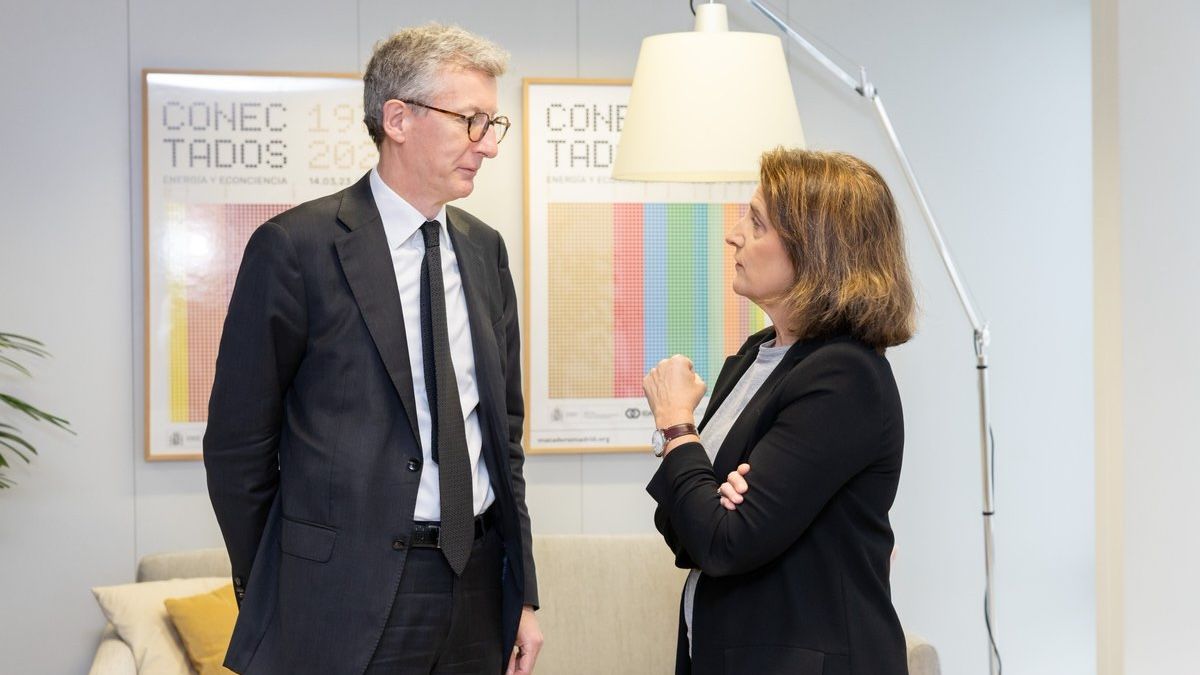
Anthony Whelan, Director-General of DG Competition is pictured on the left. (EU Competition, April 13, 2026)
In recent weeks, Irishman Anthony Whelan was appointed as Director General of the European Commission’s Directorate General for Competition (DG COMP). The appointment was welcome news for the Irish government, which has long sought to reverse the decline in the number of Irish-born officials in senior Brussels roles and it matters far beyond Brussels. The last Irishman to hold a position of note at DG COMP was the late Peter Sutherland, who was the Commissioner for Competition from 1985 to 1989. During his tenure, Sutherland helped open the airline, telecoms, and energy sectors to competition. He also played a major role in reinforcing state aid control through landmark cases, notably the high-profile Boussac case.
Whelan, a seasoned veteran of EU diplomacy and longtime digital advisor and ally of European Commission President Von der Leyen, now holds arguably the most powerful role in the EU bureaucracy at one of the world’s most sophisticated antitrust authorities. DG Comp oversees, among other things, inter alia, investigations into US tech multinationals and state-aid probes. It also supported the ECJ’s ruling on the Apple tax case in Ireland.
Competing priorities
With Whelan at the helm, carrying the weight of his close ties to von der Leyen, can we expect a shift, more of the same, or a further easing of regulatory oversight in support of the Commission’s “competitiveness” agenda? His appointment comes at a challenging moment for Europe against a backdrop of sluggish economic growth and a Commission increasingly guided by the recommendations in Mario Draghi’s report on EU competitiveness. The report calls for a more “strategic Europe” where companies can scale up to compete globally. This shift comes amid increased threats of trade retaliation from across the Atlantic and concern that the EU’s once-ambitious digital rulebook is now at risk of being diluted in favor of deregulation.
Known for his deep understanding of competition policy, Whelan faces a central challenge: whether to rigorously enforce Europe’s most powerful market-shaping laws in the public interest, or compromise those levers and succumb to US pressure. This is the balancing act that Whelan has before him. His record, however, is not unblemished. During his time in the cabinet of former competition commissioner Nellie Kroes from 2004 to 2014, there was significant activity in everything but merger control. Notably, Google’s acquisition of DoubleClick, arguably the most consequential digital merger to date, was approved under Kroes. Merger policy may now prove Whelan’s biggest test.
On April 30th, the Commission published updated draft merger guidelines following an extensive consultation process. The guidelines followed a leaked draft reported by the Financial Times, suggesting the European Commission was set to relax rules governing corporate mergers in favor of consolidation. The shift reflects repeated statements from Von der Leyen supporting weaker merger control and the creation of European "champions" to compete with the US and China. Such a policy would give European companies more leeway for consolidation and mergers, which is at stark odds with what EU competition policy should actually deliver: preventing market dominance and monopolies. At the time of writing, my preliminary analysis of the draft Guidelines does not contradict the Financial Times reporting.
Strong competition rules do more than protect markets from monopolies. They also serve an important function by keeping prices down for households, enabling more choice and preventing a small number of dominant firms from capturing political influence. At a time of growing corporate concentration, Europe is experiencing rising markups and profits for the largest companies and a decline in business dynamism. The consequences affect consumers, businesses, workers and Europe’s broader resilience.
EU reticence and Ireland’s lax enforcement record
Tech giants, including Google, Apple, and Meta, have made Ireland their European base, and with Ireland’s six-month Presidency of the Council of the EU beginning on July 1, the country will be in the spotlight. Ireland’s record of enforcement, especially regarding the EU’s foundational data protection law, the GDPR, has been extremely poor. Recent appointments to Ireland’s data protection authority have also elicited serious concerns from Brussels, Member States and civil society organizations across the EU. Bearing all this in mind, the need for strict antitrust enforcement is pressing.
The European Commission’s own record for bold action has been mixed, with concentration in the tech sector only increasing. US courts have found Google to have illegally monopolized the digital advertising market and similar findings by the EU have resulted in EUR 2.95 billion in fines (for context, that amounts to 0.85% of the nearly EUR 350 billion in revenue that its parent company, Alphabet, reported in 2025). Decisions are still pending on whether the Commission will impose structural remedies, including possible divestitures, to address the Commission’s concerns. Germany’s Handelsblatt has reported that fines against Google for non-compliance with the Digital Markets Act (DMA) have been put on hold at the behest of Von der Leyen, adding to concerns that Brussels is yielding to pressure from the US Administration.
Whelan now has an opportunity to ensure that DG COMP can withstand the relentless corporate and political lobbying pressures from both the US and EU corporations and interests. With an extensive professional and academic background in digital and competition law, he must now show that he can work well with Commissioner Teresa Ribera and navigate an ever-polarized and complex political environment at a critical moment for Europe.
Whelan’s appointment is a test—both for him personally and for the credibility and effectiveness of EU competition policy as a whole. Ireland will be watching.
Authors