How Civil Society Is Fighting to Protect Digital Rights Amid Global Crisis
Luisa Ortiz Pérez, Rachael Kay / Dec 12, 2025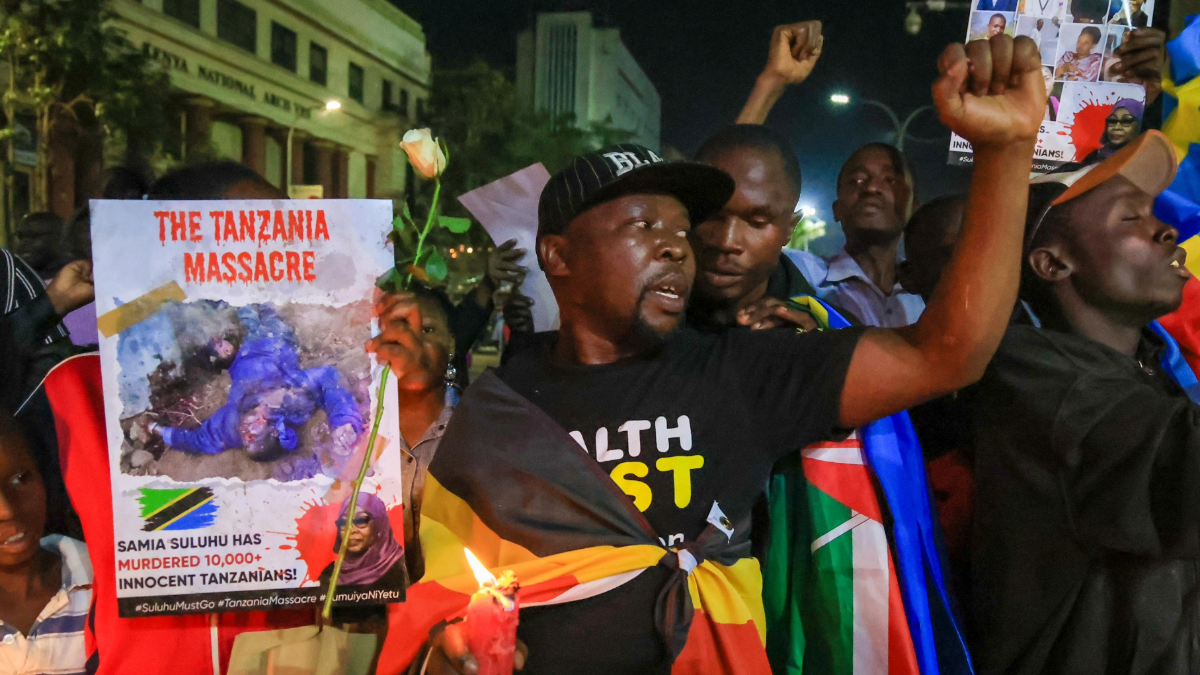
NAIROBI, KENYA - NOVEMBER 20: Activists hold a candlelight vigil to commemorate those who lost their lives in post-election violence in Tanzania. Participants carried flags and banners, sang solidarity songs, and lit candles. The United Nations Human Rights Office had reported that hundreds of people were killed in the protests that erupted after last month's elections, in which President Samia Suluhu was declared the winner. (Photo by Lucas Mukasa/Anadolu via Getty Images)
In his work, Dr. Tabani Moyo, an advocate for freedom of expression at the Media Institute of Southern Africa (MISA), confronts the daily reality of trying to protect freedom of expression and privacy in a “polycrisis era” marked by conflict, climate change, shrinking solidarity, and chronic underfunding for human rights organizations. He has witnessed the consequences firsthand: violent post-election periods in Mozambique and Tanzania, internet shutdowns masking abuses in multiple countries, and declining regional cooperation compared to just a few years ago. Yet, the work carries on.
“What we have been is hanging in there,” he said during a session hosted at the Mozilla Festival in Barcelona titled “Working Under Pressure: Upholding Free Expression, Digital Access, and Online Safety in a Time of Global Uncertainty.” During the conversation, which was curated by Vita Activa and brought together practitioners from across the globe to examine how shrinking resources, shifting alliances, and rising technical threats are reshaping the landscape of human rights work, Dr. Moyo warned that without strategic prioritization and renewed commitment from global allies and philanthropies, even the remaining support structures that make his organization’s work are at risk of collapse.
MISA is not alone. The discussion in Barcelona, grounded in insights from the Human Rights Funders Network’s (HRFN) 2025 report, Funding at a Crossroads, highlighted an urgent reality: at a time when digital repression is escalating, global funding for internet freedom and human rights advocacy is contracting at historic levels. As advocates are forced to prioritize and narrow their focus, the very structure of the global human rights movement is becoming increasingly lean and stripped to its essentials. Only urgent collective action by the global community of advocates, progressive allies, and philanthropists will sustain the fragile ecosystem of organizations committed to this work.
A sector realigning under pressure
According to HRFN’s analysis, support by governments for human rights advocacy is projected to fall by $62 billion annually by 2026, a 28% decline from 2023. Cuts announced by 12 donor countries—most significantly the United States, Germany, and the United Kingdom—could have severe humanitarian consequences.
For digital rights organizations already operating with lean infrastructure, this decline compounds an increasingly unstable environment. Many participants in the session described not simply budget tightening, but existential threats to core services such as helplines, legal support and digital safety programs.
In the United States and Europe, political alliances around free speech and privacy are increasingly unstable. Jillian York of the Electronic Frontier Foundation emphasized that the shifting political environment—and platforms responding to, and seemingly more frequently capitulating to, clear and persistent political pressure—make our work more difficult. These fluctuations affect not only advocacy strategies but also funding streams, pushing some organizations to rely more heavily on individual donors and to diversify their support base.
Access Now executive director Alejandro Mayoral Baños described a profound shift in donor priorities. “Many allies are openly saying they no longer care about human rights,” he said. “They want national security, transnational repression, and AI innovation.”
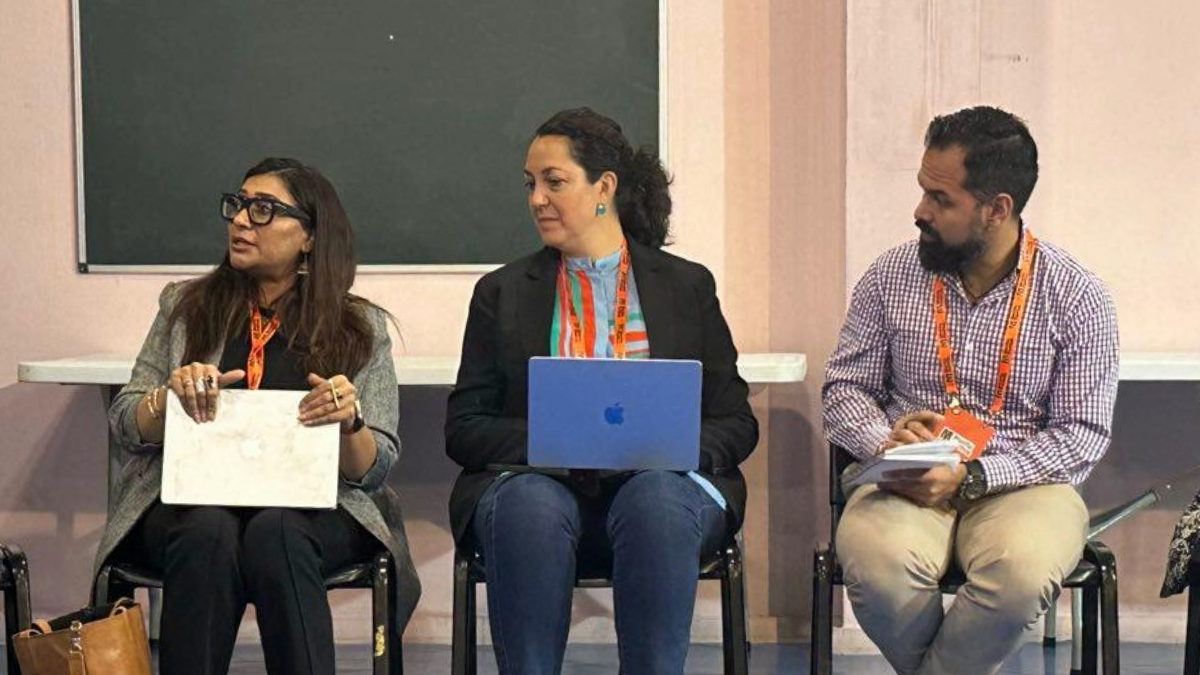
(L-R) Nighat Dad, executive director of Digital Rights Foundation; Luisa Ortiz Pérez, executive director of Vita-Activa.org; Alejandro Mayoral Baños, executive director of Access Now.
This shift has already led to the disappearance—not just deterioration—of local help desks and frontline services in multiple regions that address digital rights threats even as they increase. Organizations are now grappling with the challenge of staying mission-aligned while adapting to a funding landscape that increasingly rewards technological hype around AI or work framed around security over rights-based approaches.
Perhaps the starkest warning comes from what the team at Vita Activa has observed: a dramatic rise in cases where AI chatbots are used as tools of manipulation, harassment, and psychological harm. This trend has reshaped expectations about digital safety support while simultaneously pulling resources and attention away from human-centered work. As noted during the panel, the adversary is now a machine built to please people.
This reflection underscored a growing fear across the sector: even as AI is promoted as a solution, it is also amplifying harms at a pace civil society is not equipped to manage.
Lessons from the Global Majority
Several participants in the workshop stressed that the global funding downturn and rising authoritarianism may feel new in the Global North but are familiar conditions in the Global South.
“For us, working under pressure is not new—it has been the default,” said Nighat Dad of Pakistan’s Digital Rights Foundation. Her organization has spent 15 years operating amid political volatility, limited funding, and gendered online violence. Its digital security helpline continues to receive thousands of cases a year, despite staff and volunteer burnout and insufficient resources.
Dad challenged the notion that human rights work in the Global South should adapt to donor priorities. “We survived with little because there was no one else to do this work,” she said. “What we need now is solidarity—not extractive consultations, but shared survival strategies.”
Across regions and roles, the workshop participants agreed that traditional tools, advocacy models, and institutional alliances are increasingly inadequate. Instead, they emphasized:
- Authentic, long-term cross-movement collaboration, including with environmental, feminist, and equity-focused groups.
- Deep listening to communities on the ground, particularly those historically marginalized.
- Shared survival strategies—learning from organizations that have long worked under authoritarian conditions.
- Critical AI literacy, focusing on understanding—not just adopting—technology.
- Re-centering empathy, trust, and humanity in all digital rights work.
A call for collective action
The discussion at the Mozilla Festival closed with a clear throughline: the challenges of this moment cannot be solved sector-by-sector or organization-by-organization. The path forward requires building and repairing alliances, resisting extractive models of collaboration, and collectively redefining priorities in an era of rapid technological and political change.
At a time when threats are multiplying, resources are shrinking, and adversaries include both states and increasingly advanced AI systems, the digital rights community is being asked to do more than ever. But as every speaker affirmed, it is also a moment for solidarity, creativity, and a renewed commitment to the values that first brought these organizations into being. We must put the ‘human’ back into human rights.
Authors