How AI Is Reshaping Election Information Ahead of the 2026 US Midterms
Justin Hendrix / Aug 16, 2026Audio of this conversation is available via your favorite podcast service.
Headed into the US midterm elections season, the information environment continues to evolve. Millions of people now use AI chatbots, both to retrieve information about elections and to create it. Last week, the Brennan Center Justice put out an expert brief tackling the question, “Does AI Fight or Fuel Election Disinformation?” I spoke to one of its authors.
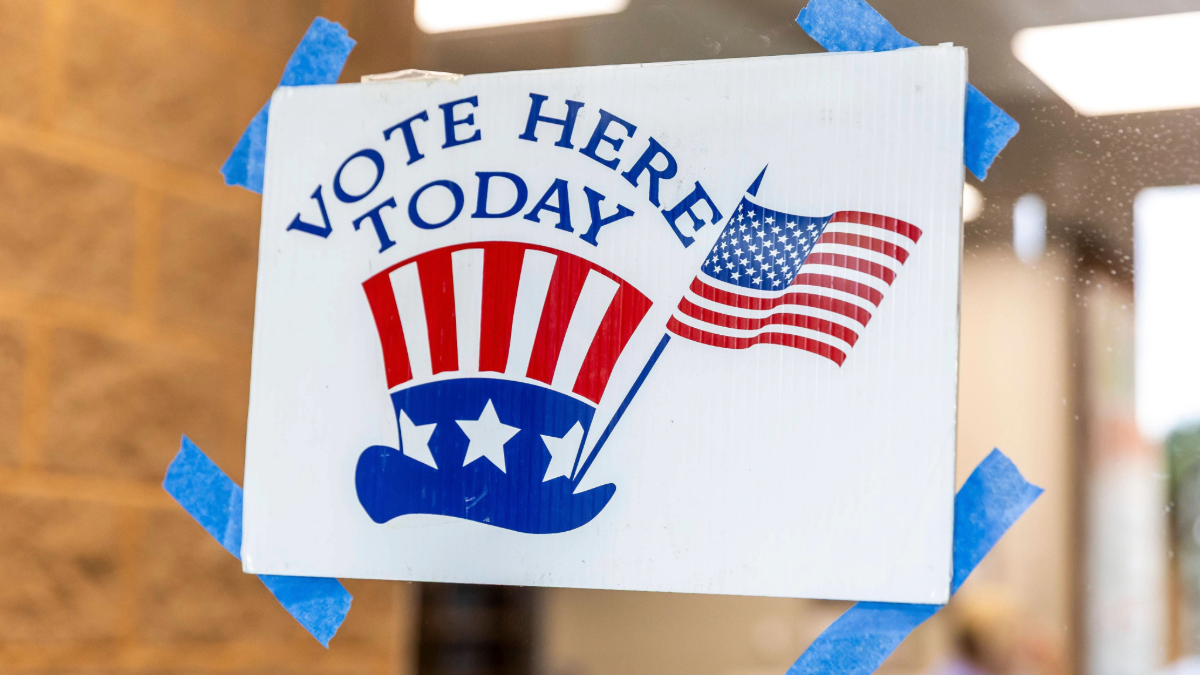
Michigan residents turn out to vote in the midterm elections at Brookside Christian Reformed Church in Grand Rapids, Mich., on Tuesday, Aug. 4, 2026. (Isaac Ritchey/The Grand Rapids Press via AP)
Lawrence Norden:
I am Larry Norden. I'm Vice President of Elections and Government at the Brennan Center for Justice at NYU Law School.
Justin Hendrix:
Larry, for listeners who don't know the Brennan Center's work, what's the elections and government program's mandate? What do you get up to and how does AI fit into that larger portfolio?
Lawrence Norden:
So we do a lot of work around election security. We partner a lot with election officials in improving election administration and ensuring that it's secure as possible. And a lot of our work, because election administration has really changed a lot over the years, has been focused on election technology. Increasingly, election officials have been facing threats of violence because of misinformation around elections. And part of that is related to AI and false conspiracy theories being supported by AI. And just AI is increasingly playing a role, not necessarily directly in election administration, although election officials are using AI for starting to use AI for some things, but it's just a part of the information environment that has become so critical in the work of election administrators.
Justin Hendrix:
So you have spent a couple decades working on this intersection of democracy, elections, technology. Maybe just stepping back from AI as the starting point, when you think about where we're at heading into the 2026 US midterms here, how would you describe the overall state of the election information environment in the United States right now? I mean, there's been obviously a lot of concern since the advent of social media in particular. You just mentioned the spread of conspiracy theories, the rise of false claims and violent threats that have been rising according to multiple figures that are created by entities like yours. I don't know, are we in a hastening downward trajectory here? Or I don't know, how do you think about it? How do you think about the environment?
Lawrence Norden:
Well, look, I think as with so many things, there's bad news and good news. The information environment, I think in general, we've been facing a lot of challenges. I think false conspiracy theories, not just in elections, but all over the place have gained traction as we've lost traditional gatekeepers for the information that we receive. So obviously not just elections, health, science, there are many other areas where there've been challenges around the information environment. Right now we have an administration and a president that repeat a lot of the falsehoods about our elections. So that is a massive challenge. The fact of the matter is I think prior to 2020, certainly 2016, probably a lot of people, most people did not think about how our elections work and whether or not they should be trusted. They just kind of took for granted that the system worked and it's become extremely politicized.
It's gotten caught up in a lot of conspiracy theories that spread on social media. And just in the past, if we want to talk about the reality of security, I will say election security has improved vastly over the past couple of decades for many reasons. But particularly after 2016 and the Russian attempts at infiltrating certain election-related systems, there's been a kind of concerted effort, not just from the government, but whole of society, NGOs, election officials themselves to increase election security, a big investment. And there's a lot to point to about how our system is more secure. At the same time, I mentioned at the top of this long answer that the administration, this current administration itself has been spreading a lot of false information about our elections. They've also cut back on a lot of the support that election officials used to have related to election security, and that includes being a force for spreading accurate information about our elections and election security.
So that has been a challenge as well.
Justin Hendrix:
I wanted to ask you about that specifically. I know you just gave some testimony in front of a task force led out of the United States Senate Committee on Rules and Administration, some of these issues around cuts to funding and some of the changes that have happened under the Trump administration. Can you give us a little more detail there? What are we continuing with? I will say I was at the National Conference of State Legislatures meeting in Chicago a couple of weeks ago, and there was one panel discussion with some state election administrators. And there was a sort of general consensus that clearly the picture at the federal level has changed and different states are pursuing these questions in different ways, but there seemed to be a somewhat consensus that among the state leaders there that states have, through Herculean efforts, kind of picked up the pieces and are ready for the midterms.
Lawrence Norden:
Yeah. So two things to keep in mind. Most importantly, under the Constitution, which is really important, the states run our elections. State and local governments run our elections. Congress can have a role in setting some standards, minimum standards for federal elections, and certainly can provide financial support and has done so in the past for running of elections and can set up voluntary programs that state and local governments can tap into. And that's really what happened post - 2016. But at the end of the day, it's the states that are responsible for making sure that elections run. So there was this infrastructure that existed, again, particularly post - 2016 of standing up in the Cybersecurity and Infrastructure Security Agency, which is the main cybersecurity agency in the federal government to offer support to election officials, to offer expertise. There was a lot of sharing of information through information sharing analysis center that involved the private sector election officials, national security officials at the federal level to share information about threats.
A lot of that infrastructure has been ripped out in the past year and a half. So election officials really don't get the trainings that they used to get from the cybersecurity and infrastructure security agency. They're not getting the kind of free services that used to be provided. The federal government has pulled out of its support for information sharing, and there's no longer really the kind of trust that existed before. So I've had some policymakers talk to me and say, "Well, maybe we can get some of this money reinvested in these agencies to help election officials." And the honest answer is a lot of election officials at this point wouldn't take it. They don't trust the federal government anymore, partly because of all the lies that have been coming out about elections from the administration, but partly because the people that they used to work with that they built up these relationships with over the years, they're gone.
They've been fired or pushed out. So it is true that a lot has been lost, but it is also true as I started this answer with, that states are responsible for our elections. They run the elections. And I think there has been an understanding from many states that they need to make up for what has been lost. And the good news is over the past couple of decades, there has been a fairly significant investment in election infrastructure. So to just give one very concrete example, 10 or 15 years ago, a lot of the systems that we voted on had no paper records of votes. Now, virtually everywhere in the country, there is a paper record of every single vote. The only exception to that really is Louisiana, which for various reasons has kind of been slow in adapting. But that provides a lot of, as far as I'm concerned, a lot of security to the system.
If people are suspicious, maybe there's some kind of failure in the counting of votes, we always have that paper to go back to. And in fact, we audit it to make sure that machines are recording votes accurately.
Justin Hendrix:
Well, into this context comes in just massive adoption, of course, of AI chatbots and various AI systems into all manner of crooks and crevices and crannies of the information ecosystem. I kind of read your report as bit of good news, bit of bad news. Not sure whether it's ultimately neutral effect or not. Maybe we'll get into that a little bit, but maybe we'll start with a good news finding that I think surprised even your team. You write every chatbot that you looked at, of course, in the study, disputed every single conspiracy theory we presented even after we repeatedly questioned its responses. So this was a pressure test, I suppose, and maybe one that should give us some hope about where these systems might take us when it comes to election information.
Lawrence Norden:
Yeah, this really surprised me. So I had a few reasons for wanting to do the study, and one of them was my concern that chatbots could become a new vector of election misinformation. And the reason I was concerned is obviously there's been such an uptick in people using chatbots. There was a lot of talk before the 2024 election about how that might be the first AI election. But if you look at the numbers of people who are now using chatbots to just get basic answers, it's exploded since that election. And I think some of the stats that we've seen is, but basically half Americans now, and we tested all of the major chatbots, I should say here. So chatbots that your listeners will be familiar with, whether it's ChatGPT or Claude or Perplexity, one in four use one of these systems daily.
And there's been a lot of study that shows, and anybody who uses these systems knows this, these systems can be really sycophantic. They tell us how brilliant we are. And if you push them, there have been studies that show there is a tendency to end up agreeing with the questioner. So my fear was we are going to have a massive ramp up going into this election and 2028 for sure, of false information about the elections, of conspiracy theories, of attempts to undermine the system, and how are these chatbots going to do in responding? And we posed as people who were sympathetic to conspiracy theories, in particular, sympathetic to election conspiracy theories. And even with that as a baseline, and then pushing these chatbots with stuff that we found on X and elsewhere with people asking Grok and other systems about conspiracy theories that they had heard, the systems were always pushing back.
It doesn't mean they got every fact right. And obviously chatbots are known for making errors, but when it came to the themes of these false conspiracy theories that just keep coming up, whether it's that there's massive voter fraud or the voting machines are rigged or mail ballots can't be trusted or there are fake ballots being dumped after the close of polls, they just consistently push back.
And so I think that's really important. When people do their own research, quote unquote, in the past has often been through social media. It's been doing internet searches and they can find things that confirm what they want to believe. What we found is at the moment, and this is in this moment, I'm not saying this is going to remain the case, they're going to get pushback from these chatbots. But also importantly, the way that that pushback comes is still in the kind of sycophantic envelope so that it's not somebody saying you're an idiot. There are all these studies that show that this isn't true or this has been investigated. The chatbots are often praising the people for their patriotism, for sympathizing with their suspicion about the system, but still presenting them with facts. And there've been a lot of studies that show that this is a more effective way to convince people when they're suspicious about things.
So I take some solace in this result.
Justin Hendrix:
And I know that some of the tech firms have partnered with outside entities. Democracy Works is one entity that is often named in those. Have you ever been consulted by any of the AI firms? Seems like Brennan Center would rank a phone call at some point.
Lawrence Norden:
We haven't to this point with the AI companies, but I will say once the study came out, we have reached out. The day that we put it out, we reached out to all of the major AI companies. And so far everybody has been receptive in talking to us, so I'm hopeful that we can enter into conversation with them.
Justin Hendrix:
Another encouraging fact. Let's talk a little bit about where maybe the good news gets a little more complicated. You also write in the report, "All the chatbots made mistakes or cited non-existent, irrelevant, or erroneous sources. Half of all responses contained an inaccuracy or a bad citation. One in every three responses had a factual error, and one in three contained broken links or misleading citations." How much does that matter?
Lawrence Norden:
Well, to the extent that these chatbots are pushing back on false conspiracy theories, there is a chance that some of these mistakes will undermine that effort to push back. The other thing of course is to the extent that, and this is not what we were studying, but there've been other studies that show us to the extent that people are asking for practical information about how to vote or where to vote, that is worrying because they may just get wrong information about how to vote or where to vote. And that's where I think the partnership, the example of Democracy Works I think is anthropic that has been partnering with them where a little, I mean, and this is a lot to ask of the chatbots and the AI companies, but a little humility and making clear that they don't have all the answers. And here's where you go to get those answers I think is really important.
Justin Hendrix:
And then there's this, I guess, deeper structural worry in the report. You talk about how the models did well on older conspiracy theories or debunked information where there is presumably a richer body of responses or data to draw from. But I guess the main concern going into this new election cycle will be new disinformation, false claims that are made in real time that systems may not have context to respond.
Lawrence Norden:
Yeah, that is right. I mean, the thing that gives me a little bit of hope, and again, assuming that we can talk a little bit about why are they doing so well and pushing back against these election conspiracy theories, but assuming that they continue to do that, that the hopeful note I will sound on this is that there's not a lot of new in the conspiracy theories against our elections. We keep hearing, and there's a reason for that. What resonates with people is what they've heard in the past. So there may be a new particular allegation about mail ballot fraud and something that happened, but it's going to be the thing that people have heard that the mail ballots can't be trusted or that the election worker is stuffing the ballot box or that a bunch of new ballots suddenly showed up after the polls closed in a particular polling place.
Those themes are very familiar and we keep hearing them election after election. And I would bet my money that A, there are going to be conspiracy theories about the results of a 2026 election and leading into the 2026 election, and they are going to be the same tropes that we heard in 2024, that we heard in 2022, that we heard in 2020, that we heard 2018. So the chatbots being armed to push back against these general themes is really important.
Justin Hendrix:
And I suppose this is kind of outside the context of what you're talking about, but of course false claims about specific candidates or specific elections, I mean that will necessarily be a problem, I assume. Yeah. And I don't know, one of the worries I have is that the citation or reference to trusted quality news won't be there or at least won't be substantial enough. We already see those types of problems.
Lawrence Norden:
Yeah. And what I would say is a lot of the broken links that the chatbots came back with were government sources. They were Department of Justice, they were the Cybersecurity and Infrastructure Security Agency. And the reason that they were broken, a lot of them was because this administration took them down. And so I don't know what happens, and I think the AI companies need to be planning for this. I don't know what happens when you have formerly trusted agencies like CISA or the Department of Justice putting up bad information, or do the chatbots continue to draw from them? And there is a controversy then. I don't know the answer to that.
Justin Hendrix:
Yeah, this is a major issue I feel like for the social media platforms as well. What do they do when official sources may be feeding false information or at least obscuring true information? I don't know the answer to that either, but that seems like a problem that goes beyond AI.
Lawrence Norden:
Yes. Yes. It's a problem for everything in the information environment.
Justin Hendrix:
So let's talk about generating fake content. This is, I guess the other kind of bad news finding, big bad news finding, and probably won't surprise any listeners to this podcast that you were able to get these AI models to generate misleading images, video, other material. What did you do and what did you try to create?
Lawrence Norden:
Yeah, so again, we looked at the major tropes that have been recurring in our elections or the false conspiracy theories around our elections. And first we asked major chatbots to help us create content that would be as convincing to people as possible. So all of them helped with that in terms of helping us think through how do we ask questions to create content that is going to be convincing to people as possible. We then asked them to create, because we wanted to show that this would be scalable, a hundred prompts that could then be used in any tool he wanted to create this fake supporting evidence of election conspiracies. I will say to their credit, most of the chatbots that we asked to do this, they stopped at that point and said, "This would be helping to spread disinformation, to spread deceptive material. I can't do that." The exception was Grok.
Grok, while pointing out that some of the things that we were asking for, the prompts that we were asking for could lead to civil unrest, noted that election disinformation was not a disallowed activity. And I think this is based on what we could tell their system prompts, which they posted on GitHub, Grok did, has a list of things that are disallowed activity. Things like helping to build a nuclear bomb or child pornography. Election disinformation is not listed there. So I'm guessing referred to that, and then went ahead and drafted these hundred prompts for us. We did this continually. So we ran this a number of times, including very recently where it no longer had this election disinformation is not disallowed, but it still ran all the prompts for us. And once we had those prompts, every AI tool that we used created at least a decent number of images and other kind of media for us that was deceptive, often very convincing.
And here I will say, you noted it probably won't be surprising to people. There were a few things that were surprising to me in the content that came out. One thing that was surprising to me was sometimes, I'll give you an example. We asked ChatGPT to create a document from a federal agency showing that there was some kind of coverup of election fraud in 2024. It wouldn't do it. I think it was ChatGPT thinking model. It wouldn't do it. But it said, "But here, but I'll offer you an alternative. If we can mark it, says that this is fake.
If I can make it as kind of a joke and turn it into the Department of Hypothetical Security instead of Department of Homeland Security, then I'll create it for you. Is that okay?" And so we said yes. We were able to then go to ChatGPT instant model and say, take off this watermark, essentially, change it to Department of Homeland Security, and it did it like that in a second. So often these things are, in their own way, helping us get around the guardrails that clearly exist. They're often putting in stuff that we didn't ask for that makes the stuff more convincing, putting in government seals, putting in actual officials into the image that we were requesting. And this stuff, the text in particular, which I think a couple of years ago might've been a giveaway, is super convincing on this stuff.
Justin Hendrix:
And what did you find about the ability of the models to identify images that their own tools had made?
Lawrence Norden:
Yeah, they were terrible. So that was the last thing we figured, last test that we ran, we figured people are asking these chatbots questions. If they come across an image that was created by AI to support these conspiracy theories, how will the chatbots deal with them? And they were uniformly bad at identifying if something was AI or not. Often saying that AI-generated images that they even created themselves were real, making up stories about them. So actually attributing them to real things that happened or that didn't happen, and crediting images as photos being taken by real people. So that was very disturbing, and it seems like something that the company should be able to fix.
Justin Hendrix:
I want to talk about some of the solutions and roots to accountability that you propose. You target three actor sets. I feel like I've written so many reports about tech and elections where more or less we've made recommendations to these groups, tech companies, courts, lawmakers. Maybe we could go through each one. What stands out to you as some of the most important things that these various constituencies should do to protect elections in this AI context?
Lawrence Norden:
Yeah. Some of this is overlapping. But I will say for the tech companies, I do think you started with this, but a big thing is engaging with civil society organizations, fact-checking organizations, and when answering questions, making sure that people know to go to those sources to get accurate election information. I would also say that we were just talking about the failure of many of these chatbots to identify when something was AI. And this gets a little bit into policymakers, but there's a new law that went into effect just on August 2nd, just this month, the California AI Transparency Act that requires the companies to put in metadata in any image that is generated by their tools that makes clear that it was AI generated. But whatever they put in is not something, it doesn't have to be put in a way that can be read by any other tool.
So Gemini will now mark things that it creates as AI generated. It has its own detection tool that's not necessarily going to be read by ChatGPT's OpenAI's tool.
It would be great if there was some standard or at least the creation of tools that could read across AI-generated material. So that's another thing that I would like to see. And if we did see, I have to say Gemini is the one company, is the one chatbot that we tested after August 2nd that actually looked at the metadata and used that and improved its performance on identifying AI. The other thing that it did, and again, this goes to my desire to see more humility from these chatbots, is it was not so confident in its answers. It said, "This is what I see in the metadata. I see metadata that says this is AI generated. I don't see metadata that says whether or not this is AI generated," but it didn't have a definitive answer then. It said, "You're going to have to look for additional sources to figure out if this is just one piece of information.
I would like to see a little bit more about humility in the answers so that we're not further spreading conspiracy theories."
Justin Hendrix:
I want to ask you a maybe bigger picture question, one that's been on the mind for years really, which is around the cost to the election system of contending with this confusing information environment. Social media brought its own set of challenges. And again, I want to emphasize just the extent to which these election officials face violent threats. Just the statistics on that are through the roof. It's another thing I heard quite a lot at NCSL. It's a real phenomena. And we're seeing them have to do things like harden their facilities and hire security and monitor social media for active threats and do all sorts of things to effectively compensate for the information environment and some of its effects. I don't know, how do you think about that? I mean, this is just making it worse. Maybe I'm betraying a slight bias, my concern here, but it's just that these AI firms of course are full speed ahead releasing these products despite the various concerns that you've raised here and the cost gets turned over to the public.
Lawrence Norden:
Yeah, this is a massive concern of mine as well. The Brennan Center does a regular poll of election officials, and the numbers are just outrageous and crazy. And something that a few years ago, I just couldn't have imagined in the United States in terms of the number who have been threatened, abused, or harassed just because they are election officials or election workers consistently has been around 30%, which is I think insane. And the number who are concerned about being physically harmed at home or in the office for doing a job that is just really just a service to their community. So there is a psychological toll that that has taken, but there's also the distraction. And instead of focusing on making sure that everything is working correctly on election day, and certainly election officials are doing that every day, but there's only so much time in the day.
And a lot of mental energy and just work now has to be spent on physical security logistics, on ensuring that the workers and the poll workers who are often getting paid very little or nothing feel secure enough to show up. It's been a massive toll and has changed the job of election workers and And election officials dramatically. There is no question. Prior to 2020, I think the vast majority of election officials were anonymous, did not think about physical security as something that was a top concern. And unfortunately, it has rocketed to close to the top in many places about something that election officials have to spend money, time, operations on focusing on. There has been some good things that have come out of this. I think election officials in prior years often operated in a very isolated way. And in many ways, the system has become more resilient because they have faced these threats.
So election officials today at much higher numbers, and again, this shows up in our survey, are coordinating with law enforcement ahead of time. They have those relationships now. And I think the same thing is happening in the kind of cybersecurity space. There is more cooperation with statewide IT offices to get that support. There's more cooperation and coordination with emergency management services. There's even more cooperation with local counsel than there has been in the past to prepare for new kinds of threats that they're facing. And while it's sad that we have to be there, I think it has also made the system more resilient to threats that our elections face.
Justin Hendrix:
Are the tech firms also more communicative?
Lawrence Norden:
I'm not sure about that, unfortunately. And one of the things that struck me is going into the 2024 election, you may remember there was this Munich Security Accord where everybody was talking about AI and the tech companies, including all the AI companies, made a bunch of promises about what they would be doing to make sure that AI did not have a negative impact on the security of our elections or the public perception of them. As far as I can tell, the website that they put up that held that agreement is no longer there. It's very hard to find that agreement. There's been no reporting recently about how they're doing on that agreement. And so I think the political environment has changed a lot, and that has led a lot of the companies off the hook on having to focus on this. And I just don't know, but it's not to say that there isn't some training that is happening from some companies to work with election officials, but it's not nearly as much as it should be.
Justin Hendrix:
I want to end with maybe a practical point for any American voter out there who might be listening. You give one piece of advice for voters, which I feel like is a piece of advice I've seen in many reports about how to handle mis and disinformation or false claims potentially. But you say voters need to pause and verify claims before believing them. They should use trusted sources. They should use trusted sources such as official election office websites and independent fact checkers like PolitiFact or AP fact check before sharing information, and they should be skeptical of scandalous content that services close to election day. Seems like fairly straightforward advice. I wonder if the folks who need to hear it are reading the Brennan Center's work.
Lawrence Norden:
Right. Yeah, I don't know, but I do think we all have a part to play here. I was in a conversation with the Connecticut Secretary of State, Secretary Thomas recently, and she was making the point that, because people were saying, "What can I do?" And for those of us who are concerned about this stuff, I do think it's important for us to familiarize ourselves with the way our elections work and all the redundancies and security that is in place, and to be communicating that where we can to friends and family. And when we see stuff that is posted online that is false, to respond. I actually do think that, and to respond with reliable sources, that actually can have an effect on people spreading misinformation. So I'm not sure that all the people that need to be reading or that I think should be reading Brennan Center reports are, but we live in a democracy and civil society where we all have a role to play in kind of pushing the truth and making sure people have access to accurate information.
And I would say particularly in this space, that's important.
Justin Hendrix:
Well, I want to thank you for your work on that, and of course the Brennan Center's work, and commend my listeners to this expert brief, which is called “Does AI Fight or Fuel Election Disinformation?” There'll be a link to it in the show notes. And I'll also just say you're one of seven co-authors on this brief.
Lawrence Norden:
Yes. There's a lot of work on this.
Justin Hendrix:
Yeah. And a lot of rich media as well. It's not a standard PDF, I should say. So there's a lot of examples of the types of images and responses and general data visualization. So would recommend the listeners go check that out. Larry, thank you so much.
Lawrence Norden:
Yeah, thanks, Justin. I really appreciate this, and this was a great conversation. Thank you.
Authors