Exploring Belief and Belonging in a Fractured Online Age
Justin Hendrix / Dec 4, 2025Audio of this conversation is available via your favorite podcast service.
On this podcast, for years we’ve discussed issues such as conspiracy theories, mis- and disinformation, polarization, and the ways in which the design and incentives on today’s technology platforms exacerbate them.
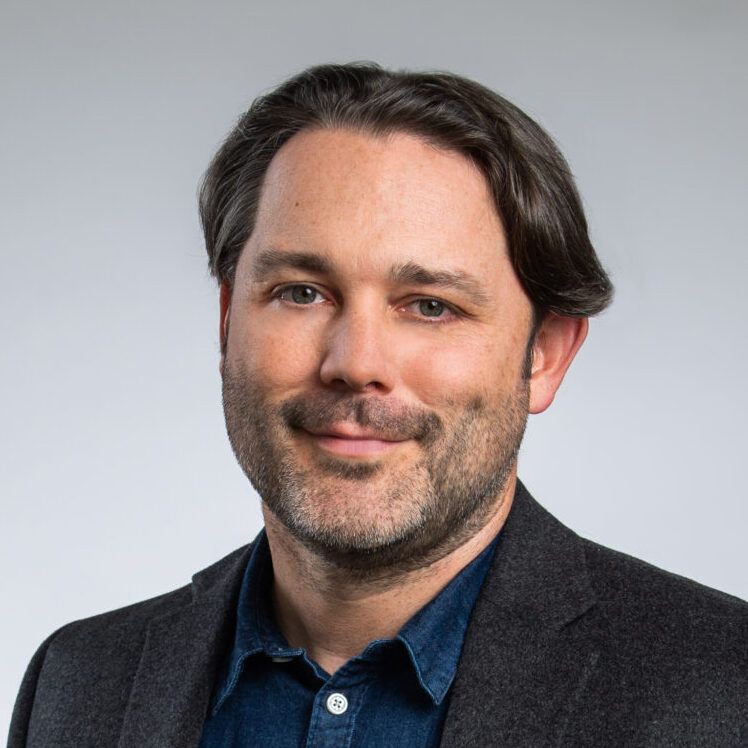
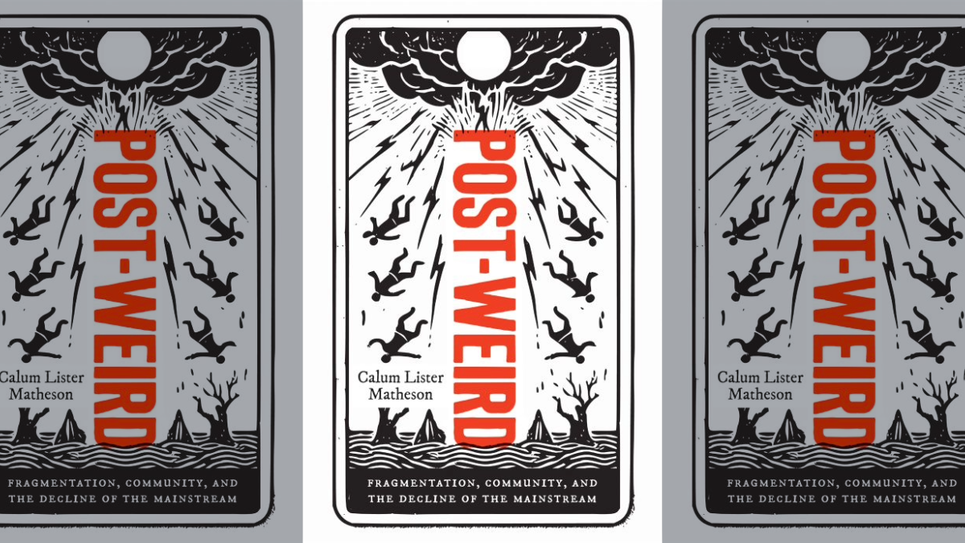
Today’s guest is Calum Lister Matheson, associate professor and chair of the Department of Communication at the University of Pittsburgh and a faculty member of the Pittsburgh Psychoanalytic Center. He's the author of Post-Weird: Fragmentation, Community, and the Decline of the Mainstream, a new book from Rutgers University Press that applies a different lens on the question as he searches for insights into the seemingly inexplicable behaviors of communities such as serpent handlers, pro-anorexia groups, believers in pseudoscience, and conspiracy theorists that deny the reality of gun violence in schools.
What follows is a lightly edited transcript of the discussion.
Justin Hendrix:
Good morning. I'm Justin Hendrix, editor of Tech Policy Press. We publish reporting, analysis, and perspective on issues at the intersection of tech and democracy. On this podcast, for years, we've discussed issues such as conspiracy theories, mis and disinformation, polarization, and the ways in which the design and incentives on today's technology platforms exacerbate them.
Today's guest has a new book from Rutgers University Press that applies a different lens on the question as he searches for insights into the seemingly inexplicable behaviors of communities such as serpent handlers, pro-anorexia groups, believers in pseudoscience, and conspiracy theorists that deny the reality of gun violence in schools. Here's my guest.
Calum Lister Matheson:
My name is Calum Lister Matheson. I am an associate professor and the chair of the Department of Communication at the University of Pittsburgh and a faculty member of the Pittsburgh Psychoanalytics Center. And I am the author of Post Weird: Fragmentation, Community, and the Decline of the Mainstream.
Justin Hendrix:
Calum, I had the opportunity to meet you at a symposium that Dr. Sam Woolley organized at the University of Pittsburgh not that long ago, just a few weeks ago. And as part of that, you submitted a provocation to Tech Policy Press around questions on threats to knowledge in US democracy. And I think we're going to come back to that as a subject in this conversation even as we talk about your book, which I learned of at the symposium. I think I want to start by asking you a very basic question. For any listener that isn't terribly aware of the field of psychoanalytics, what do we need to know about psychoanalytics before we even have this conversation, before we even get started?
Calum Lister Matheson:
It's a great question, and it's one that I hear a lot, but I hope I can answer it concisely and well. Psychoanalysis is an old field of study that began before psychology was really its own standalone area of inquiry. The way that psychoanalysis is applied in my field is less about trying to determine pathologies, but instead psychoanalysis influences rhetoric and areas of inquiry like psychosocial studies that are really concerned with how we interpret parts of language and human expression that exceed our ability to easily rationally describe them. And in particular, the one concept from psychoanalysis, I think, that really influences our field still, and a lot of psychoanalytic stuff is now considered outdated or doesn't meet the standards of evidence that we apply. But there are always these persistent questions about why people do things that exceed our ability to answer them with easily gatherable, observable, quantitative evidence.
The psychoanalysis and rhetoric, which is my primary field, both of them are sort of about how we attempt to speculate about why people do what they do and what remains unsaid and what remains beyond the bounds of our direct observation. It's necessarily has limitations. It's necessarily speculative, but concepts like the unconscious still resonate for us because it's clear that people do things in ways that they themselves do not understand or consciously recognize. And that element of the unconscious is ultimately what psychoanalysis is about now, at least in the way that it's applied in my work. So there's this one very brief example I have. I wrote an article a while ago about the sadism in American politics. And what inspired me to do that was this woman who came up to Chuck Schumer on the streets in New York and told him that she was sexually excited by watching him hide under his desk during the January 6th insurrection.
There's a lot of ways you could explain that incident. You could use a lens of political ideology or explain that there's some rational result that she wants to get out of this interaction. But I think it's really hard to explain something like that without pointing towards this larger structure of unseen motivations that people seem to have. What rational reason does someone have to do that? What explains both that affective response and the need to shout it at someone on the street? That's the kind of situation where psychoanalysis, that's really what it's for, the edges of speculation that lead us to questions and answers that we think are important, but that we know that we can't really pin down with any certainty forever.
Justin Hendrix:
We've spent a lot of time on this podcast talking about social media, misinformation, disinformation, talking about issues like polarization, how people come to consensus, the role of tech and disintermediating news and journalism, all sorts of issues that are important to this book, but you're coming at it from a very different perspective. One of the things I appreciate is that you're really engaging with this idea of fantasy, collective fantasy, the ways in which people kind of formulate explanations about the world around them. You write in the introduction, "Ultimately what unites us is this willingness to pretend as if we're not pretending." And I kind of highlighted that line in particular because I don't know, as I've thought about a lot of these issues, and I think everywhere I look, I see people more or less pretending at some level, right? We're all doing that. And if we dig far enough into our own beliefs, we find not so much sturdy ground, but we find the point at which we start to pretend, I suppose.
Calum Lister Matheson:
I think that that's really important. And there's a lot of different ways to approach disinformation, fragmentation, conspiracy theories, things like that, all topics that I study. One thing that concerns me about how we think about those things is I think we tend to focus sometimes too much on rational and mechanical explanations of them when elements of them are very difficult to describe. So there's this narrative, some studies of disinformation. I think popular approaches to it do this a lot where someone will lament the fact that we're all in opposition now and that our society is so polarized and wasn't it better when there were only three channels and Tom Brokaw could just tell you what the truth was and so on. That itself is a kind of fantasy. We've never really had a narrative that united everyone. In the 1950s and '60s, that kind of cultural consensus wasn't really a cultural consensus. It was an effort to insist that there was a cultural consensus.
And the same kinds of values and experiences that defined mainstream media weren't necessarily true for Indigenous Americans, for example, or Black folks in the South. There are all these splintering threads of differential experience in relationship to media that never really were united. So one of the reasons that I wrote this book is I think that the way that we talk about societal fragmentation now is sometimes too nostalgic for an era of unity that never really existed. And what's changed isn't so much that we are less united than we used to be. What's changed is that we're less willing to tell a story about how united we are. And I think that that distinction is important.
Justin Hendrix:
You talk about this in terms of the decline of symbolic efficiency. What is symbolic efficiency? How does that play into this?
Calum Lister Matheson:
This is an old concept and sort of cultural psychoanalysis. Slavoj Žižek, who is a controversial and somewhat noxious public intellectual, had this idea in the '90s, he described the decline of symbolic efficiency. Symbolic efficiency is the capacity for a symbol to stand in for what it is supposed to represent. And that's a sort of convoluted way of saying that it's about authority, essentially. It's about the way that symbols, words, signifiers, images, that those things stand in for authority, that we take them to mean something because we've all sort of agreed that they do a classic example as the white coat that a doctor where someone sees that. And it isn't just, you don't see the 180 pounds of meat and blood and so on that's contained within the coat that we call a person. What you see is this larger structure of medical knowledge and this establishment and power and authority and all these other things.
So it's the way that these symbols stand in for those larger structures. Žižek was interested in as the way that that authority seems to slip over time, that the same symbols that used to signify something greater increasingly don't do that, that you start to see the person rather than the institution. And I think actually that white coat is another great example. The way that vaccine skeptics responded to Fauci during the pandemic is a good example of this. Someone who might have been 50 years before, perhaps people would've just said, "Well, he's a doctor. Take his word for it." And now all of a sudden, "No, being a doctor isn't enough. I do my own research and we're skeptical of all this authority," and so on. So the same symbols that used to signal a particular kind of social order lose their ability to do that over time.
And Žižek was really sort of maybe describing this as a broader social phenomenon than I am. The point is not that language in general or symbols in general no longer signify authority, but the kinds of symbols that signify particular kinds of authority erode and change over time. And what I was interested in this book partly is that while there's a lot of discussion about how that authority declines, people still form new communities and they do it around particular shared symbols. So how does that happen? We kind of agree that there is a certain kind of fragmentation. How do people build new things in the wreckage, both in concerning ways and in ways that might give them abilities for community that otherwise they have lost.
Justin Hendrix:
I sometimes in a conversation like this one will wait a little later to say, "And what's tech got to do with it?" But I think I want to ask you that one upfront. You do present a kind of tech critique early in the book as well. You talk about the role of social media in particular in creating and fomenting these kind of communities at the fringe. I love this one particular phrase, so I have to say it on the podcast. You write, "At the risk of coining a new internet law, for every subjugated group that finds space for self-expression online, another finds space to advocate the extermination of that group." I guess we'll call that Matheson's Law. But what is the kind of fundamental tech critique that you have in this book?
Calum Lister Matheson:
Always wanted to have a new internet law. It's shameful that it has to be that one in particular. But I think I'm somewhere maybe in the middle about debates about technology and society. I don't think that social media caused any of our problems. I'm not a technological determinist. I don't think that the minute that the internet was invented, that this is the inevitable outcome of it, or even that social media necessarily had to do what it is doing. On the other hand, I do think that new communication technology has vastly accelerated processes that would've happened in a different way. So the era that we're living in, I think, is new in the sense that this has never happened before in the way that it's happening now, but it's not totally new because there's always been centripetal forces in a society and centrifugal forces as well.
There's always been fragmentation and unity. There have always been groups of dissenters who stick together in ways that don't fit what people understand as the societal mainstream. And polarization is not a new thing either. Societies and their values collapse and change over time. So the way that it's happening now, I think, you can't describe what is this present moment without accounting for the way that our technological development influences it. But I think it would be a mistake to start from the assumption that it is just a result of that technological development, that there's more going on as well. And what I'm writing about Matheson's Law about these communities that advocate for evil things on the internet and so on, I don't think that that's because of the internet. I think that we were too optimistic when the internet first became a thing, that there was this era of technological optimism where people thought this would end the possibility of authoritarian control because you couldn't censor information anymore, or there'd be this new kind of wave of democratization.
And you got this in sort of the Netizens Declaration of Independence and so on in the '90s and then all the way through maybe the so called Twitter revolutions in the 2010s. There was this idea that this technology really was liberating and there was a utopian force behind it. And I don't think that we should necessarily immediately swing to the opposite and say, no, this is the source of all evil in the world. But that utopian promise most certainly failed. I think we have to begin by the recognition that this utopian promise fails. And this is one of the insights of psychoanalysis that makes it attractive to me. Much psychoanalytic thinking when it's applied to societies, not individuals, is really about the way that our collective fantasies fail. We imagine these kind of salvific moments and those things just never live up to the promises that we have for them.
Justin Hendrix:
Well, I want to talk about some of the examples that you give of communities that are forming fantasies or perhaps trying to exert their desires, both through their internet fora where they come together, but perhaps otherwise in the world. This book, different chapters on everything from Sandy Hook denialists, to serpent handlers, to pro-anorexia bloggers, to folks who are rejecting science. I kind of want to start with where you start. I want to start with the Sandy Hook denialists. This is a particular phenomenon that does feel to me, in many ways, to have occupied a dark corner of the internet and yet played into our current day politics in probably more significant ways than we might like to admit. What did you learn from digging deep into this particular realm of conspiracy theory?
Calum Lister Matheson:
I think that Sandy Hook is particularly interesting and partly because of the time when it happened. The conspiracy theories are not new. They've been around for thousands of years. Norman Cohn in this book Europe's Inner Demons, begins with this account of the blood libel as something that actually precedes its antisemitic variants and was originally used against Christians in the ancient Roman Empire. I mean, we've been telling the same sort of conspiratorial stories in different versions for thousands of years, and they exist all over the place and so on.
So conspiracy theories are certainly not new, but in the last 30 years or so, you can see them changing in response to technology. And I think that you could periodize them a little bit. So the 9/11 truthers were really the first internet conspiracy community. Documentaries like Loose Change. And I was a weird kid and I was into conspiracy stuff for as early as I can remember, but this really marked a change in a way. It's a kind of mainstreaming of conspiracy discourse that we hadn't really seen in exactly the same form. There's some parallels to Kennedy's assassination and things like that in the '60s.
Sandy Hook was really the first social media conspiracy theory. It was the first one where if Loose Change was disseminated by the internet and you saw these documentaries on YouTube where you found these conspiracy sites and so on, much of the Sandy Hook conspiracy community formed through Facebook and in ways that it couldn't have really before. It had this mass audience right away. And it was participatory in a way that a lot of conspiracy theories previously hadn't, where there were sort of prominent conspiracy theorists. And then here is the way that these theories are debated amongst people who are interested in them or followers. There's this really kind of almost organic upswelling of conspiracy theories about Sandy Hooks.
Alex Jones popularized it on his radio show Info Wars, but I don't think he started it. There were people who called into the show and said, "Well, this never happened." And you can almost hear this moment where Alex Jones pauses and then thinks like, "Do I want to lean into this or not?" And chooses to his eventual ruin, "Yes, I do want to lean into this." So there's something different about Sandy Hook that I think is common in other conspiracy theories now. So I chose it partly because of that difference, but also because of its continuity. The core conceit behind it or one version of it. There are lots of different conspiracy theories about Sandy Hook. The one that I was most interested in is the crisis actors theory that the children who died in the massacre that day weren't actually killed, but they were actors who played the parts of these children and their siblings and so on.
That's not new. There's other versions of that historically, but it also sounds very close to an old psychiatric diagnosis for goalie disorder where people imagine that someone in their life has been replaced by an actor. Actually, several people in their lives are played by the same actor. So there's this kind of shocking discontinuity in the way that we're talking about this over social media, but also this continuity that references back to old sort of repeated fantasies that people have had. And what I found out by examining this is that several ways that we approach conspiracy theories, I think, are not adequate by themselves. If you try to explain them just as outgrowths of technological change and say, look, the structure of this theory is new, that's helpful but incomplete because the contents of those theories harken back to older societal phenomenon.
But if you try to say, "Oh, look, nothing's changed. This is just another conspiracy theory. These have been around forever." Then I think you miss what is genuinely new and the way that these theories are disseminated and the ways that communities can form around them in a fashion that they couldn't before. If you thought that Sandy Hook was a conspiracy theory and the internet didn't exist, your capacity to broadcast that view or find affirmation in other people who share it would be severely limited. So I think it takes sort of a mix of those two things, a historical continuous look at this stuff and to recognize that the structure of this conspiracy theory is very similar to many others, but also to recognize that the particular ways that it manifests could only happen now.
A lot of it involves people getting together on the internet and analyzing videos or making these comparisons between what they think are actors in the Sandy Hook narrative and actual D-list celebrities or whatever. That kind of thing, that kind of mix of not just, "I don't trust the official story, but I now have access to what I think is the direct truth that my eyes tell me by looking at these videos and photographs and so on." That kind of thing is, in a sense, new, I think, and that it has to be accounted for. Because we've done a lot of thinking about how the stories and the narratives of conspiracy theories work. And I think we also need to account more for the way that those things change when the medium through which they're expressed changes, not just video, but the internet broadly and the possibilities it has both for community and for the particular kind of paranoid investigation that this theory represents.
Justin Hendrix:
And let me ask you to comment a little more on that. If, as you say in the book, desire is the mortar of community, how is the internet creating pathways or how are some of the social media platforms that perhaps in this example, the Sandy Hook community in particular rely on, how is that allowing them to pursue their desires? I'm not sure I completely understand what the desire is fundamentally, but putting that aside, what about the media environment enables that pursuit?
Calum Lister Matheson:
I'm not entirely sure what the desire is either. I have some theories about that, but again, the kind of limitation to what I do is that they have to be speculative, but by their nature, I'm sort of guessing at the unseen. And if I could drag them into the light, then this would be a very different kind of investigation, I think. I think desire is important, partly because we have to think... If we want to understand these communities, we can't come to a definitive answer that says they are doing it because of this thing and now that the problem is solved. It's worth thinking about and speculating in the most rigorous way that's possible. Why is it that people form communities, not just around these specific things, but around this kind of phenomenon? How do these little fragments hold together when the sort of consensus version of truth seems to erode?
And in the particular case of Sandy Hook, I think that it's difficult to say exactly why people are doing what. But they can find validation in a way that they couldn't before, that the internet and social media, that those things create the possibility of community to arise in a different way where people can both participate in creating these theories. I think QAnon is really the apotheosis of this in some ways, but you can see it in Sandy Hook too. The new possibilities of community, they're created by this technology, create opportunities for people to stick together around these theories and find validation. And maybe reaffirm and fall further down the rabbit hole than they would otherwise, but that also creates at least the illusion of exposure to more information about these events than they had before. And so, the investigations can happen in a different and more rewarding way.
If you were really into the Kennedy... I had a middle school teacher who was really into the Kennedy assassination conspiracy theories. And he could play the Zapruder film and talk about what happened on Dealey Plaza or whatever, but he wasn't there and he couldn't interview the witnesses and he couldn't have a complete picture of what happened that day. The people who are Sandy Hook conspiracy theorists think that they can do that now, that their exposure to a massive amount of information convinces them that they can really access the truth in a way that people couldn't before. You can watch hundreds of hours of videos, of interviews, and pictures that were taken. You'd see thousands of pictures that were taken at the site and so on and so forth. And that creates a new sort of playground for fantasy that didn't exist. And the reason that I chose the communities that I wrote about in this book, I chose them not just because they seemed to have a similar structure in the way that their fantasies worked, but because that the contents of those fantasies are self-destructive in some way.
So serpent handlers who I wrote about in another chapter are killed in the pursuit of their religious practices. Some Sandy Hook investigators have ruined their lives. They've ruined their relationships, end up divorced and alone. They get ostracized as cranks. Some of them have devoted tens of thousands of dollars of their personal money to investigating these things. There's something going on here that gestures towards desire, I think, because it's self-destructive in a way that's hard to explain as just a fandom. Star Trek fans don't typically blow their lives up watching Star Trek, but Sandy Hook enthusiasts definitely do that and some people in these other communities literally kill themselves in the pursuit of what they're getting after. Desire, I think, is the closest that we can come to a good name for that motive force that lies beyond the limit of what we can directly observe and what they're doing.
So you said putting aside the question what the specific desire is, I think it's a little different for all these groups. But one way to think about it that relates to your question about technology, I think, is that in all of these cases, people have a really difficult time dealing with the fact that their lives are contingent and out of their control to a large degree. One of the things that a sort of agreed on cultural narrative does, it doesn't just give us new tools for understanding reality. It gives us a filter so we can kind of limit our focus to one thing, that we can block out the questions of chaos and contingency and so on that really frighten us. That we can make the universe seem like a more stable, and interpretable, and understandable place than it really is.
When things happen that break that frame, when the narrative falls apart, and when events like the Sandy Hook school shooting happen, for some people that's just impossible to reconcile their view of the world. And they have to create a new thing that reassures them that the world is not just chaos and contingency. And I think conspiracy theorists are great examples of this because even if the plan is evil, even if there's a group of awful people who are plotting to do these terrible things, they'd rather have a plan exist than face the possibility that it's all meaningless and that it's all just chaos. I think you see that in all of these groups, but it's most prominent in conspiracy theorists.
So when you see these communities form on Facebook or around influencers who are conspiracy folks like Alex Jones, who may or may not actually believe the theory themselves. I think that the reason that it works among their adherence is partly that it creates this notion of order that is even when it is awful and evil, more reassuring than just the dissolution of society as they see it or their worldviews as they see them.
Justin Hendrix:
So desire perhaps more important than the underlying evidence, but you do comment on the role of various media artifacts in the conspiracy theories in particular around Sandy Hook. I just want to kind of ask you a question maybe about that, about how you see the relationship in these communities to various media artifacts, particularly in the internet context. It seems like people are both willing to, on some level, really commit to believing certain documents, and artifacts, and videos or whatever it might be, but just as willing to regard other underlying evidence as false. I think a lot about the fact that your book came out in the context of what I think will only regard as the early days of the AI slop era. I don't know, how do you think about just the stuff of media and its role in all of this?
Calum Lister Matheson:
That's a great question. I think it reminds me of this book Infoglut that Mark Andrejevic wrote 10-ish years ago, maybe more. At the time, Andrejevic wrote this book and said, which is partly about the decline of symbolic efficiency and said, "Look, we're exposed to this massive welter of mediated information." And what's important is that it's not just a huge fire hose of information, that it's mediated information in particular. So people back in the day were exposed to information in their local environments and their social networks and so on offline and had a great deal of information presented to them, but it was different. It was stuff that they directly observed and participated in and so on. We now are exposed to a huge amount of information that comes from someone else that we essentially have to accept based on trust. I don't actually know what the situation is like on the ground in Ukraine during the Russian invasion.
I have to trust someone else's accounting of what is happening. And that requires a massive degree of faith in people who we rely on essentially to provide the bits and pieces that form our view of what the world is like and how it works. And what's happening in conspiracy communities, I think, partly is that they respond to this, the collapse of that faith that they see the media overall as something that shouldn't be trusted. That there's a mainstream media that is deceiving them and is trying to influence their belief and so on, and that they can't accept those things. And in a way, they're right. They're absolutely right. We would certainly agree that we've media scholars have been saying this for decades, the news is not neutral and there's a fine line between propaganda and reporting and so on and so forth. And we should promote critical thinking and criticism of the dominant narrative and all this stuff.
Conspiracy theorists take that to a degree where their trust and mediated information collapses almost entirely and they rely instead on what they think they can see. And there's this famous line, it's from a Marx Brothers movie Duck Soup, I think, where Groucho says, "What are you going to believe my words or your eyes?" And the point is that our society largely says my words. That's what we were supposed to believe is you rely on all this mediated information to create an image of what's happening in the world and to derive your beliefs from that thing. And for the conspiracy theorists, no, you can look at the evidence and you can make a decision based on it. And what I think is really different now in some ways is that the things that they think are the evidence that's right before their eyes, those things are mediated too. They're videos, they're edited transcripts, they are photographs and things like that.
So really what's happening sort of is that people, due to their rejection of this kind of mainstream consensus about the world or truth or whatever, shift to what they think that they can personally observe, but they can't actually personally observe it. And they don't have the expertise to put it all together and so on, so they're choosing. They ultimately choose, I think, unconsciously to trust one set of sources which they believe are true and reveal something in a way that the mainstream media doesn't and can't. And that's very similar, I think, to what happens with a lot of conspiracy theorizing where people say, "Well, you can plainly see."
So I got this email a couple of days ago. I wrote an article in the conversation about the chemtrails conspiracy theory. And I got this email a couple days ago from a guy who was like, "Look, you've never met anyone who spends as much time outside as I have. I spend all this time outside. And I've noticed. I've been working outside since the 1970s and I look at the chemtrails and I used to be like you and think that they were contrails. But I can plainly see by looking at the sky that they're not, that they're actually chemicals that are being dumped from 30,000 feet," and so on. Can you, buddy? Can you really? No, but that's the kind of evidence.
It's the same thing as flat earth. There's a look at the horizon and are like, "Are you insane? Obviously the earth is flat. You can see it's flat. Look at the horizon." It's again, this kind of trust what's directly in front of you and not what the establishment has told you, your teachers, and scientists, and so on. And all these people who you imagine are biased because they're abstractions really. And the things that they're saying are abstract and not concrete observable stuff that you can interpret with no training or background.
Justin Hendrix:
So I do want to ask you about the serpent handlers. You've already mentioned the serpent handlers. Some listeners of this podcast, either because they've heard me say it or perhaps they detect it in my voice, know I'm from the South. I did not grow up in a church that practiced serpent handling, but I can say that I've been to one and have seen this practice in person. It seems like you had the opportunity to learn a good deal about this community. This particular chapter leaves me wanting to ask you about the power of exclusion as part of what people are responding to or somehow that's maybe part of their desire to engage with a set of ideas. Serpent handling, as you point out, obviously most people would mock it or regard it as a symbol of literal ignorance. It's outlawed, as you say, in some places. I don't know. What is it about being excluded that somehow plays into people's desire to build a belief set?
Calum Lister Matheson:
The serpent handling chapter in some ways was the most interesting for me to work on. I have relatives on the American side of my family who are from the deep south and are Pentecostal and Holiness folks. And I've met other people who are like that over time. I actually went to West Virginia and did a lot more direct kind of engaged research on this chapter than I did for some of the others because you had to, because a lot of this community operates offline. And you can see what the Sandy Hook people are up to by checking their Facebook groups. You can't really do that with serpent handlers, and so much of it is a kind of lived experience in local communities and so on. And I chose to write about serpent handlers for two reasons. One is that it's a very stark example of how a practice of reading words or symbols influences a community.
Their religious practices really revolve around two verses in the Book of Mark, Mark 16, 17, and 18 about the signs that the followers of Jesus will use. And they read those in a very particular way. It says, "These signs shall follow and include handle serpents." So they pick up serpents with their hands in church. They practice the other signs like some other Pentecostals do, but they say, "Look, you either do the whole thing or you don't." If you think that the Bible is literal, then you have to do every one of these five signs, which includes handle serpents, lay on hands, and so on. And if you don't think it's literal, then you shouldn't say that you do. And that undermines the foundation of the faith. Some of them drink poison in church, but interestingly, only some of them, because that in Mark says, "And if they drink any deadly thing," it doesn't say they must, it says if, and it's conditional. So you don't have to do that one.
It's an extremely literal reading of this section of the Book of Mark, and it's one that is really concerned with consistency in a way that a lot of other communities are not. So I picked them partly because of that and because I think it's a classic problem with studying any group like this is how genuine people are in their beliefs. I think that the willingness to risk death regularly, most of these communities have seen someone die in the practice of the faith and so on suggests, although you can never prove it, that there is a real commitment to this particular style of reading.
A second reason that I chose them is because a lot of this faith developed offline. Serpent handling is a much older practice than the internet is. And I think it's helpful to say, "Look, we really focus on the way that technology forms these particular groups." And the other chapters in my book do that, but it's not the whole story. This particular branch of faith began with no influence from the internet and social media and so on, even though it changes the way that it's practiced right now. And this gets to your question about being excluded. So there's all this sociological work on serpent handling, and a lot of it really starts from a place of hostility and denigration where people assume that these are ignorant weirdos.
Weston La Barre wrote a book in the '70s that was very influential called The Serpent Handling Cult, or that's in the title somewhere, to describe these people as cultists. And say, this is the product of being essentially white trash in Appalachia, I think is a wild way to approach a research subject, that these are folks that have been excluded not just from the mainstream of American society in some ways and belief. Their beliefs are mocked, as you said, but they've been excluded economically and politically as well, that they've been sort of pushed into the margin and mocked.
So I think the reason that this is so important to me is that in a lot of the communities I'm describing, they start with this rejection of the idea of the mainstream where they say, "No, no, the doctors are wrong. They don't know what they're talking about when they talk about the vaccine." In the case of serpent handlers, I think it happened in the opposite way for the most part, where they were themselves rejected, that they were left out of the sphere of concern for a lot of folks. And they became economic victims to economic development in Appalachia, but also are sort of culturally pushed out, and mocked, and otherized. So the way that these communities I'm interested in form, it's not just that people drop out of the mainstream and then form their community, but also they cope with the fact that they've been pushed out or ostracized in some way by finding a kind of new symbolic identity that makes the world make sense for them.
And I think that that's partly what serpent handlers do. You can tell from the book, I'm much more sympathetic to this community than I am to a lot of the others. And it's not just because I know serpent handlers personally. I know members of these other communities personally as well. It's that what they've built is not the same thing. It is itself not a community that is organized around the denigration or ostracization of others, which some of these other communities like incels and white supremacists and so on, that's their whole thing. In this case, it really is a way to find a method of survival that makes the world interpretable to folks who have been themselves pushed out and made victims.
Justin Hendrix:
There's so many other details in this book. Things like in the pro-anorexia or pro-ana chapter, you talk about how individuals who are in that community or advancing content related to that community have gotten so good at evading censorship in particular and coding and figuring out how to place artifacts related to their viewpoint in places where it might not be obvious. But I want to ask you about the chapter in particular on science, pseudoscience. As far as I'm aware in the book, the name RFK Jr. does not appear. Am I correct on that?
Calum Lister Matheson:
That is right. Yeah. I wrote the bulk of this book before that was a going concern.
Justin Hendrix:
And yet you can't help but read this chapter now and think, my God, the individuals that you're talking about here are literally running a health policy for the country. Not asking you to necessarily make a political comment, but what can we take from the idea here that this particular community has somehow, I don't know, what's the word I'm looking for? Sprouted, bloomed out of the fringe and is now in a position to use the full power of the federal government to create an epistemic backstop for itself?
Calum Lister Matheson:
Yeah. I think you put it really beautifully right there. That's exactly what's going on. One of the things that concerns me about the way that people talk about science in particular is that the communities that we think of, and by we, I mean largely disinformation researchers or people who research conspiracy theories. And academia think of these folks as rejecting science and they don't think of themselves as doing that. They think of themselves as having found and are now revealing a different science that actually we are the ones who believe in junk science that is spread by pharmaceutical companies and things like that. And that actually there's this holistic medicine or whatever, something that lies outside and that those things are the real science. So I think that there's this, what to me is a very worrying tendency and disinformation study. It's something we need to think about more comprehensively, at least where we say, we really have to make sure that people know that they should critically question the narratives of conspiracy theorists and that we should trust the science and things like that.
When people say those things, that's exactly what the conspiracy theorists say back to them. And they say, "No, you're the ones who are brainwashed by this narrative that Dr. Fauci told you or Big Pharma says or whatever. And you're the ones who won't be critical about your own beliefs and you're the ones who don't understand science. You understand this junk instead that people tell you." So the point is that they're not using different concepts, that they interpret those concepts very differently. And that's kind of the beginning of the split. So white supremacists are a good example of this. There are white supremacist journals that look like academic journals and where they review each other's articles and they get grants from this foundation that gives them grants. They publish these stories in Mankind Quarterly and whatever.
If you didn't know better, it looks like real academia. It has all the trappings of it and on the surface is exactly the same. And it's pushed to the fringe because actual scientists read this stuff and say, "This is not true and this has all been disproven and it's obviously racist for a political agenda and so on." But just in its structure and organization, it doesn't seem that way at all. And the same is true of a lot of different kind of factions that we think are politically dangerous or are dangerous to public health and things like that. They say the same things. RFK Jr. doesn't say science is made up. He says, "This is really what the science is." And the standard that he uses for that is totally different. So we have to do more than just say these signifiers like science, et cetera, are important. We have to find ways of engaging with the contents of that and of these beliefs in a different way.
And there's a section of these folks, I think, that we treat like they're hucksters and aren't, that they're actually true believers. So Clark Stanley was the first person to really popularize snake oil. He was this 19th century fraud who is fascinating, I teach about him in my class. I love this guy. He's one of my favorites and he was selling snake oil and saying that this would cure all these things like tuberculosis and stuff like that. And he knew that it was fake. And I can say that he knew it, by the way, because it's my favorite detail about Clark Stanley. When the Pure Food and Drug Act was passed and they tested the snake oil, it turned out not only could snake oil not solve these problems, it wasn't actually snake oil, that he was selling beef tallow and capsaicin. And I have a bottle here right on my desk. I'm looking at it right now of his old snake oil that they sold in the 19th century.
That guy was a fraud, for sure. But a lot of the people in the MAHA movement or whatever you want to call it now, a lot of them are not. They're not hucksters. They're probably actually true believers who think that they have found this new path outside of science that solves all their problems and so on. And I think one of the reasons that we do that is because it's hard to just admit the limits of actual real medical technology sometimes. People get sick and die no matter what you do and the quest for immortality is one of the most powerful psychological motivators in human history. So people like Robert Kennedy, I think, are dangerous because it's hard to tell whether they really believe the things that they're saying.
In RFK's case, I think they probably do, but in a certain sense it doesn't. That the way that they talk about those things is actually more sophisticated in a rhetorical sense than we give them credit for, even though it is scientifically ignorant. And we haven't done a great job, I think, of finding where the sort of weak point in that link between bad science and good rhetoric is.
Justin Hendrix:
I often, in a conversation like this one, look for the insight that could be useful in a tech policy debate or a tech policy discussion. But I don't want to leave the listener with the impression that this book ends in that place, that it somehow offers a bunch of ideas about how we should either design new social media networks or reform the internet to necessarily improve this situation. But I think I read it almost as putting a line under the point that we've reached. You talk about at the end, the idea that many of us cheer the demise of what you call symbolic efficiency, that maybe that older period in the media where there was a more enforced conformity. But you write in the place of the fraying conformism of today, we have let a thousand little tyrannies bloom that we're not necessarily in a better place.
The kind of promise of technology or the internet and the current media environment. It's at best a wash. Is that maybe the right way to characterize the way you'd look at it and likely leading us into a darker place in future if we don't correct for the problems that we face? But I don't know, I don't get the sense that you necessarily regard technology as the path out of this. Is there anything you'd leave the listener with? Any recommendation, any insight, anything that would give anyone here an agenda to pursue?
Calum Lister Matheson:
Yeah, I think that's a great question. What should be done in a regulatory sense or how the technology can be controlled and so on, that's beyond the scope of my knowledge. There are people working on this. I'm really glad that they are. Tech policy is not in my sphere of expertise. I am skeptical about our ability to solve any of these problems technologically or through top down policy changes. All that stuff should be pursued, I think. I think it's good that people are doing that. But ultimately, one of the things I think that focusing on desire is an element of how these groups form. Ultimately, one of the things that that points towards is that just human behavior is so much messier and weirder than we think it is.
In the '60s, they said question authority and they were right, that there's an oppression to the dominant narrative that we all kind of said that we believed in, at least for a long time. But one of the things that you see from working with individuals who experience psychosis, for example, if you convince someone that their delusions are wrong, that doesn't change anything for them. The problem is not these communities that form around conspiracy theories, for example. The problem is that there is something that made them do that in the first place. The problem isn't necessarily their belief. The problem is that the world has become uninterpretable and unnavigable to them to such a degree that they need something like Sandy Hook conspiracism, or white supremacy, or inceldom or whatever it is to try to make the world make sense.
So the way that I ended this book is return to rhetoric as an ancient art, not as a just persuasive speaking, but rhetoric is a mode of interpreting the world where know that our ability to completely understand things is limited. But that we have to make judgments and work together in communities and make decisions about what our collective future will look like, knowing that final definitive answers are impossible. And all the communities that I study, I think, are organized around the same thing. They're organized around a rejection of this idea that for all of them, there really has to be a final and definitive answer. There has to be some kind of unshakable center to their worldview one way or another.
And what I suggest towards the end of this book is that maybe the issue is that in trying to dismantle beliefs that we find are socially unacceptable, we don't always realize that you can't just do that with no other thing to help replace them or help people interpret the world. And what's at issue is that we haven't done, I think, to create these alternatives. And those alternatives ultimately have to be around accepting ambiguity and living in uncertainty and the limits to knowledge. So I'm writing to an academic audience in my own field, which is why I talk about rhetoric. But you can think about this in the way that people interpret stuff like conspiracy theories as well. That conspiracy theorists really want there to be a definitive proof and they know for sure that this conspiracy exists. And they'll reject evidence that contradicts that.
There are real conspiracies. So saying all conspiracy theories are necessarily wrong because logically they're non-falsifiable or whatever isn't usually enough. What we have to say instead is like, this is extremely improbable. Really what we're talking about in the end is like Bayesian probability, but we frame that in another language. That's kind of what I'm talking about at the end of this book too, that part of the problem for us is that even people who are not serpent handlers, or incels, or whatever, that we're also maybe expecting more certainty out of the world than we're really going to get. And that maybe instead of thinking that these are problems that will eventually be solved, that we have to inculcate a new attitude towards our own symbolic worlds and learn to accept ambiguity and uncertainty and so on, which does not mean not trying to make things better.
It means, I think, a different expectation about what that is. I'm not optimistic at all that any of these problems are going to be solved by government, or by policy, or whatever. And as unfortunate as it is, I think a lot of what we're ultimately trying to do relies on new ways that people themselves will navigate the world and that there isn't really an alternative. But saying, look, there's an element of humility and acceptance of uncertainty and curiosity and ambiguity and so on. And these are values we have to inculcate, not things that we will make happen any other way.
Justin Hendrix:
This book's called Post-Weird: Fragmentation, Community, and the Decline of the Mainstream, by Calum Lister Matheson. It's from Rutgers University Press. Thank you very much, Calum.
Calum Lister Matheson:
Thanks, Justin. I really appreciate it.
Authors