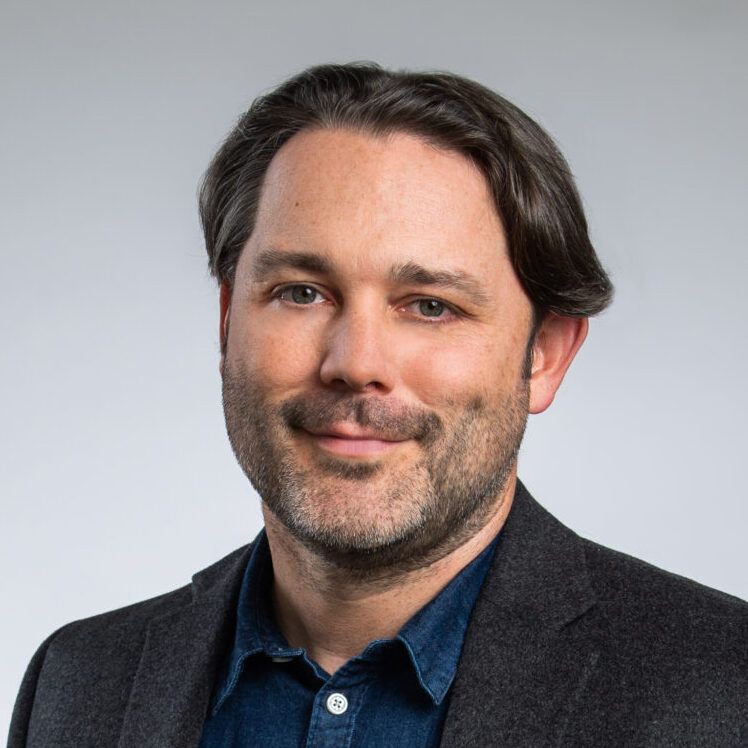
Casey Michel on Breaking the Tech Oligarchy's Grip
Justin Hendrix / Aug 9, 2026Audio of this conversation is available via your favorite podcast service.
The rise of the tech oligarchy threatens democracy in the United States and abroad. In his new book, United States of Oligarchy, Casey Michel—author, journalist, and director of the Combating Kleptocracy Program with the Human Rights Foundation—tells the story of how a small set of extremely wealthy individuals claimed the commanding heights of American government and is making the world safe for authoritarians, and what will be necessary to break their grip.
What follows is a lightly edited transcript of the discussion.
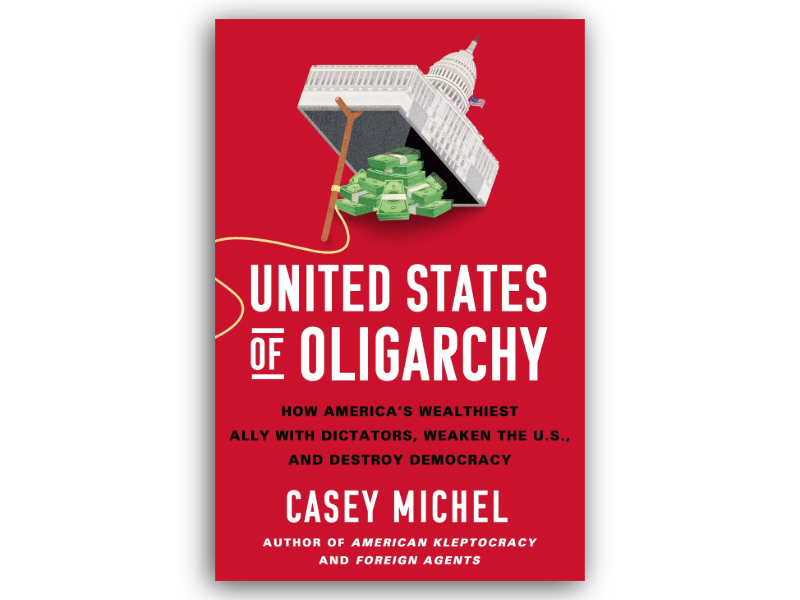
St. Martin’s Press, August 2026.
Casey Michel:
So my name is Casey Michel. My day job is as the director of the Combating Kleptocracy Program at the Human Rights Foundation. I just started a new fellowship on corruption with the Center for International Policy. But most importantly for today's conversation, I'm the author of the new book United States of Oligarchy, which comes out August 4th from St. Martin's Press.
Justin Hendrix:
I am so pleased to be speaking to you just a few days before that date, that auspicious date for you, and this book will emerge. Looks like you put a lot into this. This is a tome. I might just for any listener who's not familiar with your work, just ask about your trajectory, how you came to be working on the project that you're working on now around kleptocracy, how you came to write this book. Where'd you get your start and what's been your trajectory on intellectual curiosities?
Casey Michel:
So it's a very long convoluted story, but the kind of elevator pitch of it all is I was fortunate enough to be a Peace Corps volunteer about a thousand years ago when I was a much younger man. And I lived and worked in the country of Kazakhstan, which is a wonderful time as an English teacher. But while I was there, that was my first time living and working under what we would now recognize as a kleptocratic dictatorship. And even though I wasn't covering politics at the time, I was still able to see the kind of on-the-ground effects of what that looks like when a small number of extremely powerful and wealthy people are able to take over a government. I certainly never thought it would be quite as relevant of an experience as it is now, but that's the way the world works.
I came back to the States, I got a master's degree at Columbia University in Russian and post-Soviet studies. And, again, examining how it is that these regimes, in that case, target and manipulate audiences, craft narrative on social media, and use disinformation campaigns in conjunction with how they simultaneously launder their wealth, often in Western, especially American, jurisdictions.
So it was really that combination of both reputation laundering as well as money laundering that came together from my first couple books looking at both of those topics. And then Justin, I'm sure you remember this perfectly well, Trump's second inauguration in early 2025, that now infamous scene of a small number of extremely wealthy and powerful individuals, Elon Musk, Mark Zuckerberg, Jeff Bezos, a few others, there gathered around Donald Trump, helping usher him back into the White House. And, of course, sitting back and saying, "Hey, I've seen this story before. Certainly know how it ends in a number of post-Soviet states, not least in places like Kazakhstan or Russia." And as I've said a few times, the rest really kind of is history. I never expected some of these topics to be quite as relevant in the United States as they are. But the silver lining of things like the Trump presidency and these oligarchic networks is it keeps giving me material to work on. And I'm so happy to be talking about it with you today.
Justin Hendrix:
You start in the prologue introduction to the book with that scene at the inauguration, and I think every Tech Policy Press listener is well familiar. They can probably picture it in their head. Good news is we used images of those individuals at the White House and the rotunda at the various events that took place at the inauguration that day on so many different pieces that we published on tech's rising influence in Washington on the Trump administration. But maybe I'll just ask you what makes this different from some of those other oligarchies you've looked at, whether it's financial or maybe fossil fuel or other types of rich people who've sought to bend government's will to their own. What's different about these tech oligarchs and why is it now that we're actually talking about oligarchy?
Casey Michel:
I mean, look, I think as the book goes into detail, the term oligarchy or oligarchy, it's a contested term already. We have Aristotle to thank for that thousands of years ago who first popularized the term. And generally, it's been taken to mean quite literally the rule of the few. That's what if you break it down to its roots structure actually means. But as Aristotle defined it as well, it's also the rule not just of the few, not just you or me and a few others if we end up running a country someday, which who knows? We'll see where our careers take us. But it's also about the wealth attached to those individuals. They have to be as well the wealthiest cohort, the wealthiest number of individuals in a state or a nation or an empire that are also controlling a state's direction. And they don't have to specifically be in that position. They don't have to be president or prime minister. They can be the kind of power or at least financing behind the throne.
So anyways, that's a lot of throat clearing about what oligarchy is, how it's generally been defined, and certainly how we've begun re-understanding it in the 2020s in the United States of America. Because, as you just mentioned, we've had wealthy individuals, we've had wealthy families, certainly throughout American history. You go back to the Gilded Age and the so-called tycoons or robber barons, whatever term you like to use. The Carnegies, the Vanderbilts, the Rockefellers, those were absolutely similar and maybe even comparable figures to what we have right now. But one of the key differentials, a few key differentials, but one of them is that for as much as we look back to the Gilded Age as the one thing that resembles most clearly what we're going through right now, for as wealthy as the Rockefellers and the Vanderbilts and the Carnegies were, they had relative pocket change to what we're talking about right now.
John D. Rockefeller died with about $30 billion or so in the modern equivalent, which is probably more money than I'll ever see. But if you compare it to a Bezos or a Zuckerberg or especially a Musk who, of course, was just a few weeks ago declared the world's first trillionaire, we're talking about relative pennies on the dollar. So yes, even though we had wealthy tycoons, or as you could describe them, oligarchs in the late 19th, early 20th century, what we're talking about now is magnitudes more. It's one of scope and of scale.
That's one of the key differentiating factors. Of course, there are other differentiating factors. One, the proliferation, which I've written about elsewhere, proliferation of financial secrecy tools and vehicles, the ease of moving money with the click of a button and to be able to anonymize that wealth in a manner of seconds or microseconds is something that those individuals didn't have during the Gilded Age, as well as the internationalization of these offshore networks as well. They did not have access to the speed, the scope, the scale, and the access of all of these offshore and financial secrecy tools. And again, we could talk about more things, talk about campaign finance collapse. We could talk about the actual status of wealth inequality in this country right now, but those are the two big things, right? We're talking about the actual magnitude of the wealth housed by those individuals and the ease of access they have to anonymize that wealth with the click of a button. Those are two of the key differences that we see now in the 2020s.
Justin Hendrix:
I want to talk a little bit about some of the specific individuals and the kind of mentality, the ideologies that you see coursing through them. We've spent a lot of time on this podcast talking about Elon Musk, and, of course, we just had recently Ben Tarnoff and Quinn Slobodian on their book Muskism. We've talked a lot about Doge. We've talked a lot about his influence generally. But there are other characters that you spend time focusing on. Jared Kushner is one of them. His relationship with Steve Witkoff and various negotiations they've engaged in across the world. Peter Thiel, there are other individuals here. I don't know. When you step back from this cadre of individuals, the oligarchs as you identify them, this idea of we own everything, this idea that we are the folks at the commanding heights moving the chess pieces, what kind of combines their worldview?
Casey Michel:
Well, look, you see this most especially, or at least most explicitly in figures like Thiel, of course, go back to that kind of infamous essay they wrote back in 2009 talking about how freedom and democracy are not compatible. But even beyond that, I did mention Curtis Yarvin as this kind of ideological underpinning of much of this. It's not just Yarvin, it's plenty of these other kind of hangers on who are trying to convince their wealthiest benefactors that those are the select few. Those are the chosen few that have by right, not just of their intellect, but also by right of their wealth. This is something other oligarchy scholars have talked about. By right of that wealth, they should be able to dominate a political landscape and even beyond that dominate a country in and of itself. Even again, if they're not specifically the ones as president or as prime minister, they are the ones because of their genius, because of the size of their pocketbook and because of what they are willing to do.
It's kind of this great man theme of history that we see emerge for so many of these oligarchic casts throughout history. And certainly now that we are seeing in the 2020s among these figures as well, this disdain for the kind of hoi polloi, this disdain for the average person, the average American, and this disdain for democracy as an excuse for plutocracy, as an excuse, of course, for oligarchy, but eventually as an excuse for authoritarianism and tyranny outright. And of course, the kind of knock-on effects of that being everything from imperial expansion. The book goes into talking about how some of these figures are behind the push for Greenland or even Canadian annexation to warfare and everything that flows thereof, right? Everything that follows the kind of grasping at and steering of policy for the benefit of a select few rather than for the democratic majority without any kind of democratic checks and balances whatsoever. I mean, without sounding too much like a Cassandra over here, this is about the death of democracy for the benefit of a small number of select few who want to use their wealth for whatever it is they want.
Justin Hendrix:
I guess the other thing that comes through in the book, this idea of turnkey authoritarianism, this though about the combination of tech and oligarchy, in this particular instance, it's not just power and wealth and political influence, but also the ability to install essentially systems that our systems of control. Doge, of course, all of its machinations around bringing different data sets into one big data pool, all the things that we've seen at the Department of Homeland Security and ICE and CBP around use of surveillance technology. I don't know. I mean, this seems like another feature of this moment that's particularly different. Maybe I'm wrong and you'll correct me on this. I didn't think of the Rockefellers as being quite so bought into a sort of surveillance economy in the same way.
Casey Michel:
And in terms of a surveillance economy, certainly not with the tech that's available now. I mean, there's some overlap in terms of the discrepancy between these oligarchic figures and how they viewed labor writ large. That to say the kind of broader swath of Americans. Of course, we haven't yet seen, thankfully, the kind of labor massacres and true violence that we saw under the Rockefellers or the Carnegies or the Vanderbilts of the late 19th and early 20th century. But that's not to say that that can happen at some point in the future. We are at the step, however, of this significant, I mean truly unprecedented, as you did mention, expansion of surveillance technology. And again, this ties into the ease of access, the click of a button. Of course, we haven't even discussed the kind of frontiers of AI and what that might be able to present to some of these figures.
And I should also mention the unprecedented nature of simply the corruption, the openness to, the familiarity with, and the expansion of corruption surrounding Donald Trump. For as corrupt as figures like Warren G. Harding were at the time, or even the Benjamin Harrison administration of the early 1890s. There's never been anything like Donald Trump. The openness, the access to, and the willingness to aid and abet all of these networks of corruption is also something we've never seen before. So anyways, echoing your point, yes, this is also in some ways the kind of natural evolution of the concerns we saw about tech surveillance if you go back 10, 15, 20 years ago, but now consolidated not just in the hands of the state, but also in the hands of that increasingly small number of increasingly wealthy individuals as well.
Justin Hendrix:
So I mean, it does seem like the conditions are set for this oligarchy to survive for quite some time. The kind of nature of the control, nature of the influence is such that maybe even if parties switch or what have you, there are some basics that remain in place and will remain in place no matter what happens maybe in Washington. I don't know. Is this sort of at this point a trajectory that can be broken from your perspective?
Casey Michel:
My short answer is yes. Of course, the longer answers is it's going to take very much a, for lack of a better phrase, whole of society approach to tackling the networks, the incentives, the policies, and of course the individuals that we're talking about right now. One of the things that, without spoiling too much of the book, one of the things that I tried to do in the book itself is look through a number of periods of American history that yes, there is no comparison that is one-to-one, but at least have kind of echoes or foreshadowing of what we're going through right now. And one of those was the Gilded Age and the other one was the Watergate and the post-Watergate era and looking through the reformist periods that immediately followed those. How the backs of those initial oligarchic casts were broken and how the, what was up to that time, most corrupt administration in American history, that of Richard Nixon was swept out of power and the kind of reforms that were attempted.
Look, there were lessons there and lessons of leadership, figures like Teddy Roosevelt, lessons of reformist momentum and the role of Congress like we saw after Watergate. And, of course, there's all kinds of specific policies that need to be implemented. But I don't know, I've been accused of being kind of congenitally optimistic in the past, which was a mouthful for me to say right there. And I'm happy to carry that optimism forward because yeah, you still see these shoots of momentum, of creativity, of real realization, I think, without getting the cart too far ahead of the horse, of how important, how central the kind of anti-oligarchy, anti-corruption messaging has to be among in the United States of America, the Democratic Party. And we've already seen how that messaging, how those campaign planks can work, not just in the US, but abroad.
Think of the Hungarian elections of a few months ago. Corruption was front and center, concerns about oligarchy, front and center in finally evicting Viktor Orbán. Even in New York City, Zohran Mamdani ran not just on affordability, but on corruption. And I don't know if he used this term most especially, but oligarchy as well. So yeah, there's a path there. If we have enough energy, if we have enough time, remains to be seen, but I look forward to contributing where and how I can and why I'm grateful to be talking with you today.
Justin Hendrix:
Well, let's talk about Hungary because that's one of the things that I suppose has transpired since you would've turned this book in to the publisher and our conversation today. A lot of really fundamental things had to be upended in order to begin to address the legacy of Orbán and some of the democratic backsliding that had occurred there. Do you, I don't know, get the sense that there's a potential pattern where the stars might align? That type of thing could happen in the United States, the sort of new oligarchy, the tech oligarchy could potentially be brought to heel?
Casey Michel:
Again, the short answer is yes. And if it can happen in Hungary, which was further down, even further down the path of authoritarianism and kind of oligarchic consolidation than the US currently is right now, then yes, it can happen in the United States of America. I mean, I think it was telling that the Viktor Orbán regime, which had been in power for 15, 16 years, had ended up placing, again, at the feet of its opponents, the topic of corruption and oligarchic control. Because, again, the end state of all of these networks, of the increasing pooling of all of that wealth in the hands of a select few, and then the usage of public policy for those select few is just the general degradation of day-to-day living. Life gets nastier, gets more brutish, gets shorter for the broad population. And at a certain point, that ends up breaking in favor of those who are opposed to that regime, those who are opposed to those networks.
And I don't know if we'll see a single figurehead like we saw with Peter Magyar, who was the opponent of Orbán. I don't know who that would be in the United States of America. And I don't know if they would come... In the Hungarian case, he came from, generally speaking, the center right. It would be like if Mitt Romney came and ran on this anti-corruption platform as maybe not a Democrat, but maybe an independent. I don't know what quite that would look like in the United States, but absolutely there are lessons. I saw Just Security just had an article go up specifically on the anti-corruption lessons out of Hungary. And this is, again, look back past Hungary a few years. Go back to 2013, 2014 in Ukraine. Go back to the Arab Spring. This pattern emerges and reemerges where these corrupt oligarchic networks are in power for so long that eventually something does shatter and eventually something shifts, and it's a matter of being ready when that window of opportunity is there.
Justin Hendrix:
So what are the tools that we need to reinvest in or double down on? I mean, you talk about anti-corruption, anti-kleptocracy as national security. You point to some of the steps that the Biden administration was taking to try to address some of the anti-corruption questions. You talk about some of the tools that were being brought to bear. But what are the kind of legal policy tools that we can bring to bear at the moment? Which ones need to be strengthened?
Casey Michel:
Well, right now, there's a number of policies that Trump and his kind of malign genius has realized you don't actually have to repeal. You can just announce that you're not going to be enforcing, which is, of course, in opposition to his constitutional oath to uphold all the laws that Congress passes. But there are a number of things that are still on the books that a future administration could absolutely implement. We have these task forces that were created by the Biden administration to specifically target these kind of oligarchic and kleptocratic networks. Those can be reinstated. You have funding gutted for things like the IRS and these new efforts to target ultra-high-net-worth individuals. Those can be reinstated. You have laws on the books, things like the Foreign Corrupt Practices Act, which was one of the main... This is the real bedrock of American anti-corruption policy for the last half century that Trump has simply announced they will not enforce.
That's still there on the books, but you can't stop there. It can't be just what we already have. It has to be creative, it has to be expansive, and it has to be new. And you and I are speaking here on the 30th of July. And just today, Senate minority leader Chuck Schumer, of all people, I wasn't expecting it to come from Schumer, but I'm very happy it did. He announced he's going to be introducing legislation to create a brand-new anti-corruption bureau, which will consolidate a lot of these kind of scattered anti-corruption policies and efforts. And look, there's questions and concerns about how that will be managed, presidential appointments. We've seen how Trump has just gutted other independent agencies. But the fact is that this is at least a shot across the bow and a sign of the kind of creativity and momentum that we're seeing on the Democratic side right now to place anti-corruption front and center for both the midterms, of course, but also looking further to 2028.
So it's wonderful to see. And I will say the additional element of that proposal is it also links to campaign finance because as much as... And I have plenty of conversations about anti-corruption policy, but a lot of that kind of tends to stay in, I don't know, in how we traditionally understand bribery, how we traditionally understand underhanded or even illegal mechanisms and strategies. And it leaves things like campaign finance to the side. You've, I'm sure, heard plenty of times the phrase legalized bribery to describe American politics. And that is absolutely over the last, you could say half century, you could certainly say over the last 15, 16 years since the Citizens United ruling, absolutely what we've seen in the US. You can't have anti-corruption reform without also having campaign finance reform. Those are two sides of the same coin.
Justin Hendrix:
I'm going to also just ask you about crypto, crypto policy. I mean, thinking about the alignment of tech oligarchs around Trump, one of the motivations for folks like a Marc Andreessen was anger over Biden administration crypto policy. And when we look at Trump and we look at the maybe most egregious examples of corruption in the last few months, the billions that have been made by the Trump family, they revolve around crypto on some level in addition to other areas. But crypto seems sort of central to the oligarchy, as you've already said. I don't know, what needs to happen on crypto?
Casey Michel:
Well, look, on the one hand, this is a tale as old as, maybe not time itself, but at least as old as American politics of a certain industry being concerned about regulations that would impact its bottom line and, of course, increase just general bureaucratic oversight of it. This is something we saw in the banking industry decades ago. This is something we have seen, of course, in the private equity and hedge fund sector in recent years. And I'm not at all surprised this is something we're seeing out of the crypto industry in and of itself. And, of course, this is also something you see out of the prediction market industry, which is this other kind of emergent area of Polymarket and Kalshi, so on and so forth.
Of course, the flip side of that is that it is crypto. It's not the landscaping industry. It's not the aerospace industry. This is a tool that is specifically geared toward moving finance not only with the click of a button, but doing so with as much anonymity as you could possibly ask for. And again, it's no surprise to me, not only that you have these domestic figures like Andreessen seeing just how open the administration is for something like this, but also this is where it intersects with foreign interests as well. And you just talked a few moments ago, Justin, about how the Trump family's enriching itself. It's not just from domestic parties, it's also from regimes like the United Arab Emirates, which is poured, I don't remember what the top line number was, hundreds of millions, billions of dollars into Trump family investments via crypto. And of course that impacts directly national security concerns because what do you know? The UAE is now simultaneously receiving all of these high-end chips that national security experts were extraordinarily concerned about.
And this is only one example that we know of, of I'm sure, many others that are ongoing right now. So no, the crypto industry has been having an absolute field day and there has to be moving forward, increased regulation, increased transparency, maybe even especially on that industry above the others that have emerged in recent years.
Justin Hendrix:
Let's say there is a kind of change of government in November after the midterm elections, there's subpoena power in a different party. What kinds of first agenda items would you suggest should be the target of congressional oversight to begin to unravel some of this?
Casey Michel:
Right. So if we're talking about 2026 through 2028, of course the Dems are not going to be in the White House. They will be on Congress theoretically controlling the House and potentially the Senate as well. So they're not going to be passing any legislation. And of course none of these executive level regulations are going to be implemented anytime soon. In my opinion, I think one of the places, both in terms of gaining access to insight to the profiteering of the presidency and the corruption of the White House and how that intersects with these private interests as well as with foreign interests, and in addition to being a great political benefit and boon, is why don't you start by putting the children of some of these figures in focus first and foremost?
You got Don Jr., you got Eric Trump, both of whom have had net worth that have skyrocketed over the past few years. Of course, many of them at the center, not only of things like crypto, but defense procurement and other investments, even with Eric Trump bragging about it openly on television, his connections with the administration. But you also have figures like Jared Kushner, who as I'm sure many of the listeners are perfectly familiar, the book goes into far more detail about Kushner himself, he's one of the main figures in there, but he has built up a billion-dollar war chest of his own by attracting all of that capital from foreign sources. From Saudi Arabia, from UAE, Qatar, profiting from the expansion of things like Israeli settlements in the West Bank while nonetheless being front and center for American policy and American negotiations for Israel-Gaza, for Russia-Ukraine, and for Iran.
And I have said this elsewhere. Justin, I don't know about you. I don't think those policies are going especially well, but again, the kind of national security component. I think that would be a great both structural examination of how these campaigns of corruption have emerged, but also something that would be of political benefit to the Democrats. Because at the end of the day, unlike Trump himself, the children have no constituency. There's no one going to the mat to say, "Hey, Jared Kushner's my guy. How dare you come for him?" I don't even know if Ivanka would do that. That's where I would start.
Justin Hendrix:
I'm going to ask you about your imagination for things don't move in the direction of reform. Where are we on this trajectory? You've observed this in multiple other places as you say. How much worse could it get if for whatever reason, let's say Democrats do get back in power, they don't take these things seriously enough or they're gummed up by all the various headwinds that may hold them in place and/or that doesn't happen? There's another political outcome either this fall or in two years' time. I don't know, how bad could it get? What can you imagine?
Casey Michel:
Well, look, again, I don't want to bring things down too far, but it can certainly get quite bad. And again, we're talking about everything from the imposition of either potentially even a hereditary autocratic government if Trump decides to use all the mechanisms of state to get not only Trump Jr. the nomination in 28, but have him end up certified by a client, well, in that case, Senate. Moving forward, you could have, and then the knock-on effects, of course, for something like that being non-recognition by state governments across the United States. And suddenly you're looking at an impasse like we saw in 1876, which was only, of course, resolved by the kind of grand bargain that re-implemented white supremacist control in the South. Or you could even be looking at something like 1860 where it is state fracture. Maybe not something like a civil war as horrific as we saw in the 1860s, but something that either grinds the gears of state shut and effectively collapses American power writ large, but could have even worse and actual violent knock-on effects at the end of the day.
And I don't know if the oligarchs care one way or the other. I don't know if figures like Musk or Zuckerberg or Kushner necessarily care because on the one hand, they will continue to have access to all the financial secrecy tools that they want. On the other hand, they will see the decline of American state power and state craft, which means they won't have to be concerned about any kind of taxation, not that there's much to begin with in the first place. And then on the other hand, this is something that emerged in the book. There's another fantastic scholar of offshoring and oligarchy, Brooke Harrington, who has this great phrase where it's not taxation without representation, it's representation without taxation or any kind of checks and balances whatsoever. And there was another line she had where it's, what is it? It's not noblesse oblige, it's noblesse without the oblige. There are no obligations for them whatsoever, and they will be more than able to navigate a state fracture like that.
And I don't know. I mean, look, there are comparisons. Kyrgyzstan has undergone multiple anti-oligarchic revolutions, none of which seem to have stuck. You have the kind of just collapse of any state capacity in places like Peru where it's now effectively warlordism writ large. I mean, there's other examples you can look to. But yeah, what can I say? There's a lot at stake here in the 2020s.
Justin Hendrix:
So towards the end of the book, I mean, you already brought up Mamdani. You talk about some of the bright spots. You talk about the fact that it does seem like it's mostly Democrats who want to do anything about this, and that's for obvious political reasons. Republicans are aligned behind an oligarch and being supported very much bankrolled their campaigns by an oligarch. And I'll mention Elon Musk apparently is going to jump back in big time for the midterms we now know, reviving his America pack and getting on as he did in 2024. But is there any sort of possibility in this country for left-right populism to align on these issues? I mean, it seems to me that with the kind of soaring concern about economic issues as the key thing that most people are worried about, that there's at least some chance that putting aside what elites want, that regular people may see eye to eye.
Casey Michel:
Yeah, look, there is the possibility of it, absolutely. There was this bipartisan housing bill that passed just a couple days ago. Trump refused to be there for the signing ceremony, but it was still an indication that there can be progress made when the demand is there. And of course that dovetails from the kind of affordability agenda that figures like Mayor Mamdani are putting front and center. I will say yes, I think having covered the anti-corruption space for as long as I have, and I'm significantly older than I am now when I first started, I've always been surprised by the fact that whether it was the first real burst of anti-money laundering reform in the early 2000s, or even progress that we saw in the early 2020s with the passage most recently of the Shell Company legislation, the Corporate Transparency Act, these all seem to happen... The major ones seem to happen on a bipartisan basis. They almost require bipartisan buy-in.
Much of that has to do with, on the Republican side, concerns about national security and how things like the openness of the American financial sector and the availability of American shell companies are being taken advantage of by malign foreign actors, by the bad guys abroad, the Russias, the Chinas, the Irans, and so forth. But look, if that's what gets them to the finish line, that's what gets them to support the bill, so be it. And I wouldn't be surprised if we see the concerns about, again, the kind of maybe not domestic oligarchic influence, but maybe more of the foreign kind of financing and availability of these financial secrecy tools to impact American elections. That might be what ends up pushing a lot of the kind of campaign finance reform stuff that we so dearly need.
So no, I'm cautiously, I don't know, not optimistic, but maybe not pessimistic either. I don't know. I'm waiting and watching because I do think there's a potential avenue there, and it might be the thing that's actually needed at the end of the day to get us where we need to go.
Justin Hendrix:
Earlier in our conversation, I kind of pushed Elon Musk a little bit to the side, kind of on the premise that we have talked about him so much. But I will note, in the book again, back with Elon Musk, in the afterward, you arrive back at him, his role in the halls of the White House, despite his brief falling out with Trump. I don't know. Anything else you might like to just say about him as a singular figure? I mean, we've just had also this interview with The Economist, which got some notoriety in the last week with Zanny Minton Beddoes, the editor there. He does seem a peculiar one, an oligarch of oligarchs.
Casey Michel:
I think that's a good way to phrase it because, again, relative to the others, of course, at a certain point, you kind of lose grasp of what a hundred billion is versus 300 billion versus whatever he topped out at 1.1, 1.2 trillion dollars. At a certain point, that's just an impossible number to imagine. But yes, he is... The phrase that comes to mind is he's the first among equals. And that is certainly the role that he played in the 2024 elections with his hundreds of millions of dollars donated to Republican causes, especially Donald Trump. And I have no doubt he'll be leading the charge in terms of total financing offloaded in 2026 and presumably in 2028 as well. And again, this is someone who is... He's also unique in the sense that we have never in the entire history of American oligarchy, whether it's current form or any previous form, had anywhere near as much insight into the innermost thoughts, feelings, policy prescriptions, and recommendations like we have with Elon Musk.
And it is a dark place. You have the racial politics, you have the immigration politics, you have the conspiratorial politics behind all of it. I mean, I think he's a singular figure in that he's willing to share those deepest darkest policy prescriptions in the innermost recesses of his mind with the world, which is for all the faults of a Zuckerberg or a Bezos or Sundar Pichai Google, or pick your other tech figure, I don't know what their specific feeling on Haitian immigrants supposedly eating cats is. I don't know what they specifically feel about any other kind of immigration policy, but I know what Elon Musk sees and thinks and reads and feels, and it is devastating. I mean, it is, look, again, without sounding like too much of a doom and gloomer, it's horrific to contemplate what his final vision for an American society actually is.
Justin Hendrix:
Casey, I'm grateful for you taking the time to talk to me about these things today. I'll also just say I've never quite seen a direct message to one's toddler in a book, but you exhort them to go hug their mother, which maybe many times they'll come back to this book and open to that page later in life. Hopefully they'll do that every single time. Maybe that's a good lesson for us all to take from this, if we're able, if Mom is still around to go hug them. Maybe that's one thing we can do to begin to rethink the way we've organized our society.
Casey Michel:
Well, Justin, you and I, first, I'm deeply grateful you read not only the book, but the acknowledgement section. I'm never quite sure who makes it to that part, but it's always a joy to write. And too, you and I were talking off mic about fatherhood and the struggles and the confusion and the obstacles that come with it. But at the end of the day, it puts everything into perspective. It makes all of this not only worth it itself. It's certainly the most difficult thing I'll ever do, but it's still worth it at the end of the day. And it's a good reminder of why you or I or those others in the broader, if you want to use the term, pro-democracy community, what we have to lose, why we push forward in some of these things and at the end of the day, what we can come home to, and I try not to take any of it for granted. Although I have heard that the teenage years are going to be their own special set of challenge, so I look forward to that.
Justin Hendrix:
I can attest to that, the fact that is certainly true. But I will also just take this opportunity to tell my listeners to go out and pick up United States of Oligarchy: How America's Wealthiest Ally with Dictators, Weaken the U.S., and Destroy Democracy by Casey Michel. Should also check out your other books, American Kleptocracy and Foreign Agents. I hope we'll have the opportunity to talk again in future, maybe assess whether any progress has been made. We'll see.
Casey Michel:
We will see. Absolutely. I look forward to having those conversations in the future, Justin.

Authors