Black Friday Comes With a Price as EU Tightens Scrutiny of Online Marketplaces
Joana Soares / Nov 25, 2026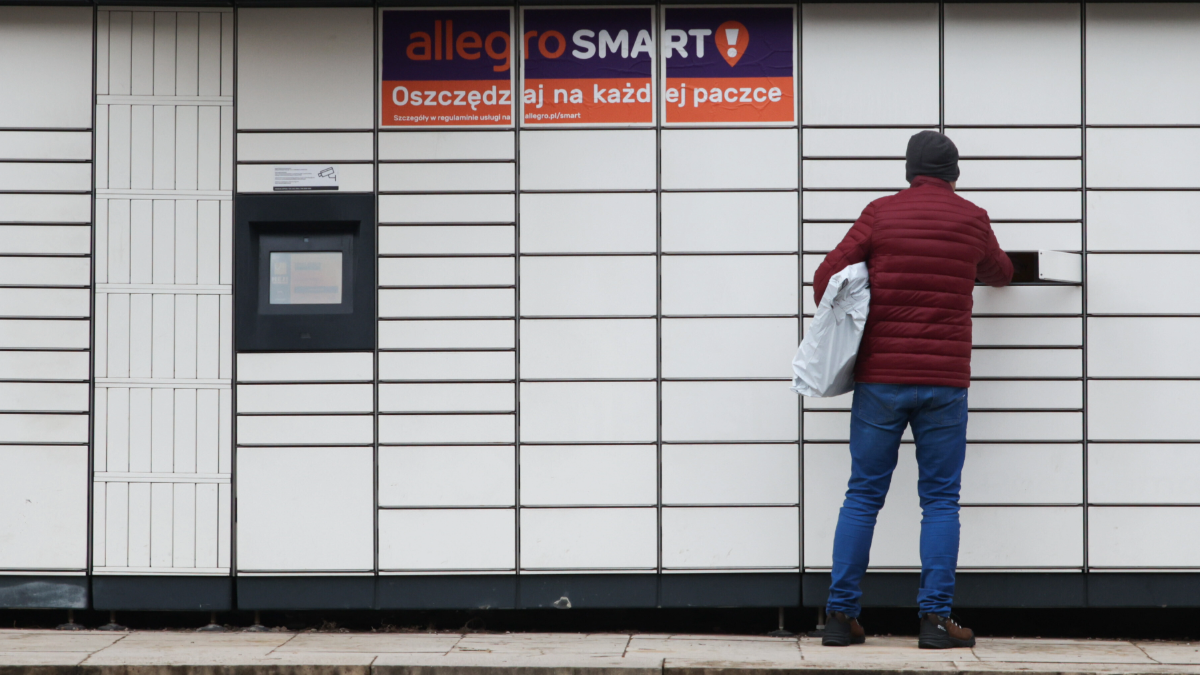
A person picks up a parcel from parcel lockers in Krakow, Poland on February 10th, 2026. (Photo by Beata Zawrzel/NurPhoto via AP)
Black Friday shoppers in Europe could face more than tempting discounts this year. New EU fees on low-value imports are adding to the cost of online purchases, with a survey by the European Consumer Organisation (BEUC) finding that 43% of shoppers reported paying more. BEUC also warned that some consumers only discover the additional charges after completing their purchases, raising concerns about price transparency.
The fees, meant to make non-EU marketplaces contribute to customs checks and ensure fairer competition for European retailers, are being passed on to consumers. The measures come as Brussels steps up scrutiny of platforms such as Temu and AliExpress over the sale of illegal and unsafe products.
Both the online shops account for more than half of the purchases included in the BEUC study. Nearly a third of consumers who reported higher costs said they only saw the additional charges after checkout.
Last week, Brussels found Temu in breach of the Digital Services Act (DSA), arguing that the platform had failed to take sufficient action to prevent illegal products from being sold. The Commission identified shortcomings in three areas: product compliance checks, content moderation, and sanctions against sellers repeatedly offering illegal goods.
The findings come six months after the Commission fined the company €200 million for failing to assess the risks associated with illegal products, and just weeks after regulators accepted a corrective action plan that Temu has four months to implement. However, recent criticism from the European Board for Digital Services suggests that the company only partially addressed the issue. If the new findings are confirmed, the Commission could issue another fine and require additional corrective measures.
For identifying risks to addressing them
While both decisions concern illegal products, they address different obligations under the DSA. The May fine concerned Article 34, which requires very large online platforms to identify and assess systemic risks, while the latest findings concern Article 35, which requires platforms to take effective measures to mitigate them.
Catalina Goanta, an associate professor at Utrecht University, told Tech Policy Press that the Commission first established that Temu had failed to adequately identify these risks and is now questioning whether the company has done enough to address them.
“The latter relates to the corrective measures Temu is taking in response to its non-compliance on how the platform assesses the risks of its platform for users and it is up to the Commission now to closely monitor how Temu implements this action plan,” said BEUC Legal and Policy Officer Tommaso Subioli. He said the new findings “are about Temu's presumed non-compliance with how it addresses the risks.”
However, enforcing these rules is not straightforward. Goanta said one of the biggest challenges is the enormous number of traders selling on Temu. The online marketplace allows third-party sellers to offer products directly to consumers and in July, the company said its UK marketplace alone had more than 100.000 independent sellers. For Goanta, this creates "a very high compliance burden" under Article 30 of the DSA, which requires marketplaces to collect and verify information about sellers, including their identities, contact details and business registrations. Some traders may also fully understand the safety requirements. Goanta cited young people in the Netherlands setting up drop shipping businesses with little knowledge of their legal obligations, potentially allowing unsafe products to reach consumers.
The European Commission's latest findings also raise questions about how Temu holds traders accountable. The Commission found that the platform's sanctions often target individual stores rather than the sellers themselves, allowing them to continue doing business through other storefronts.
A Temu spokesperson told Tech Policy Press that the company "respectfully disagrees" with the Commission's preliminary findings, arguing that it has invested significantly in compliance infrastructure and human expertise. "We will review and respond to the preliminary findings carefully and will continue to engage constructively with the Commission," the spokesperson added, expressing confidence that the two sides could reach "an amicable resolution" addressing the Commission's remaining concerns.
“I expect Temu to comply with the rules in effect here if it wishes to continue doing business in the European single market,” Member of the European Parliament Anna Cavazzini, chair of the Internal Market and Consumer Protection Committee, told Tech Policy Press.
She described Temu's business model as systematically flouting EU rules and “endangering consumers,” pointing to examples of toxic toys, overheating electronic devices, or exploding batteries. Cavazzini said “the European Commission must be given more clout in enforcing our rules, up to and including banning business models from the single market that ignore our rules”
More control with the upcoming EU Product Act
Cavazzini pointed to the European Product Act (EPA), originally expected in October but now delayed, as an opportunity to close enforcement loopholes and impose clearer responsibilities on online marketplaces.
Evidence from consumer organizations suggests that the problem remains widespread despite existing EU rules. In a November analysis of risk assessment reports by major online marketplaces, BEUC found a significant gap between the risks platforms identify and the effectiveness of the measures they claim to take to address them. Its research also found that marketplaces tend to underestimate the risks associated with illegal and unsafe products. Previous tests conducted in 2025 by its members in France, Denmark and Germany found that 59 of 81 products purchased from Temu and SHEIN failed to meet European safety standards.
Goanta describes the DSA as "one of the puzzle pieces that marketplaces need to abide by for compliance,” a "bridge that brings maybe all the other rules together,” alongside other EU legislation, such as the General Product Safety Regulation.
This is where the proposed EPA could play a role. Subioli from the BEUC said the EPA could “close enforcement loopholes and impose clear responsibilities on online marketplaces by addressing the marketplace systems and incentives that allow unsafe products to continuously enter our market.”
New to the picture is the Digital Fairness Act, which also intends to strengthen consumer protection by regulating deceptive promotions and gamified shopping experiences. Goanta believes the legislation could have "a lot of impact" on shops like Temu. The platform's "roulette" offering gift cards is an example of the dark patterns it could address.
Can Europe make online marketplaces safer?
Efforts to hold online marketplaces accountable are also gaining momentum at the national level. The French government activated a coordination unit, VigE Commerce, following reports that products suspected of being stolen during Gen Z protests had appeared on second-hand platforms such as Vinted. The French authorities summoned representatives of Vinted, eBay, Leboncoin, and other platforms, demanding the removal of suspicious items and greater cooperation with law enforcement.
However, until the moment, it’s not public the details of the agreement made between the French government and the marketplaces. Digital rights organization, Quadrature du Net, sent a request for information asking for more details about the meetings held between both parties. "We know that it was about limiting the possibility of selling stolen goods, but we do not know how that has been enforced,” Bastien Le Querrec, a jurist at Quadrature du Net, told Tech Policy Press.
“It's a democratic requirement to be able to scrutinize what is in those agreements", he said, expressing concern that the agreements could give the government a means of pressuring platforms to remove content. One of the questions the organization wants answered is whether a special coordination force was established to oversee marketplaces, similar to the one set up to reinforce the monitoring of social media platforms.
The French government failed to meet the deadline of Nov. 20 to provide an answer; therefore, the organization now intends to appeal to France's Commission for Access to Administrative Documents. The government also did not provide any comments to Tech Policy Press by the time of this publication.
Earlier this year, the Danish Business Minister called Brussels for stricter enforcement against non-EU online marketplaces, including Temu and SHEIN.
At the EU level, Temu is not the only marketplace facing regulatory scrutiny. The European Commission has also fined AliExpress €550 million for failing to adequately assess and mitigate risks related to illegal, unsafe, and counterfeit products. Brussels is separately investigating SHEIN regarding illegal products, addictive design, and the transparency of its recommendation systems.
Together, these cases illustrate the growing pressure on online marketplaces to take responsibility for the products and sellers they allow onto their platforms. But as regulators step up enforcement, the challenge will be ensuring that new rules translate into safer products and greater protection for consumers.
Authors