Big Tech's Proxy War Against Brazil's New Platform Accountability Rules
Tatiana Dias / Jun 16, 2026Tatiana Dias is a fellow at Tech Policy Press.
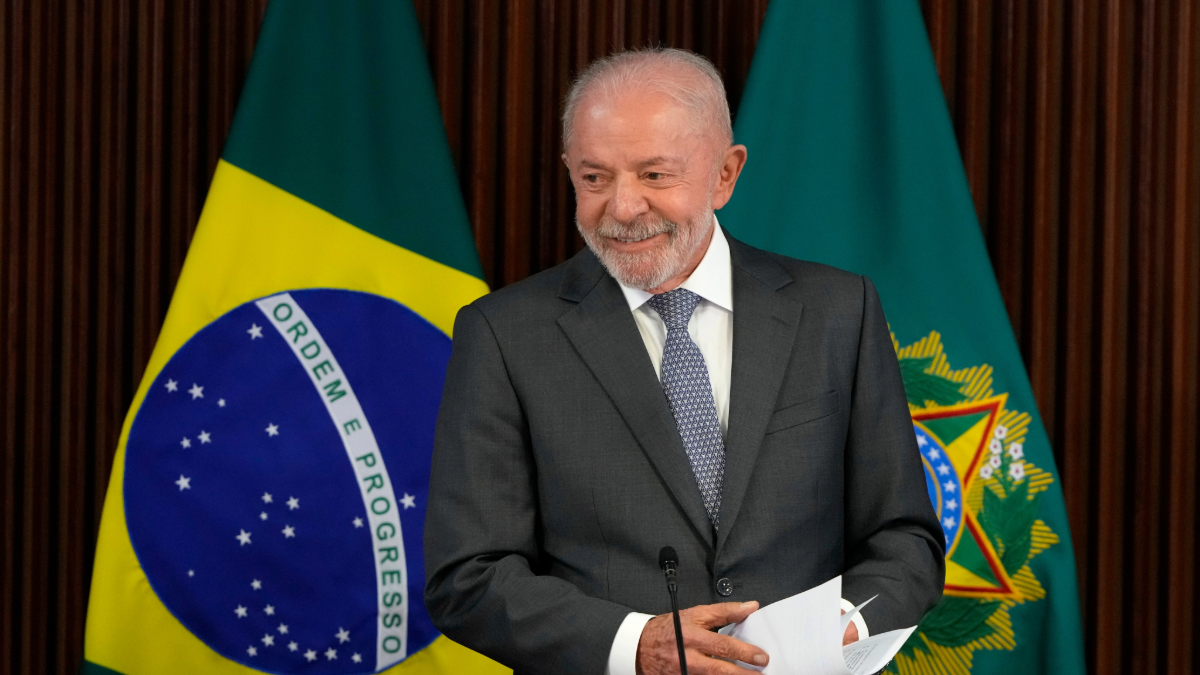
Brazilian President Luiz Inacio Lula da Silva holds a cabinet meeting at Planalto presidential palace in Brasilia, Brazil, Wednesday, June 3, 2026. (AP Photo/Eraldo Peres)
Just hours after the Brazilian government published decrees expanding the liability of internet providers in Brazil last month, a congressional offensive to strike down the new rules began. Within 24 hours, 26 legislative decree proposals had been filed to suspend or amend them.
The move was visibly coordinated. The proposals were submitted by lawmakers from right-wing and far-right parties — most from PL, the party of former president Jair Bolsonaro — and share nearly identical arguments. Some are word-for-word the same.
As João Brant and Nina Santos, Secretary and Deputy Secretary for Digital Policies at the Brazilian Presidency, wrote for Tech Policy Press, the government's decrees aim to regulate last year's Supreme Court ruling — known as the STF — which changed Article 19 of Brazil's Internet Civil Rights Framework, the Marco Civil da Internet.
For ten years, Brazilian law held that platforms were not liable for user-generated content. Last year, the STF ruled that article partially unconstitutional.
In practice, the decision shifted the liability regime for platforms in Brazil, but it still needed to be operationalized. The STF is currently reviewing appeals filed by Big Tech companies against last year's ruling. The reporting justice, Minister Dias Toffoli, included a 60-day grace period for compliance. The final ruling is expected to be published on Wednesday, June 17.
But it fell to Congress — according to the STF decision itself — to establish the rules for the new liability regime to take effect. That hasn't happened so far. So the executive branch stepped in with its own regulatory proposal.
One of the Lula government's decrees is directly tied to the Marco Civil: it would require companies to exercise a duty of care over criminal content, prevent online fraud, and give the National Data Protection Authority, the ANPD, oversight power over platforms. The second focuses on protecting women online, requiring platforms to remove non-consensual intimate images within two hours and to put in place mechanisms to protect women — especially public figures and journalists.
As soon as the government released the proposals, an intense congressional push to block them began. Unlike previous episodes — such as the so-called "fake news bill," which was defeated after intense Big Tech lobbying — this time the companies did not act directly.
Instead, lawmakers moved in with requests to suspend the executive decrees. The proposals share the same argument: first, they invoke the Constitution to claim the decrees exceed executive authority. Then they assert that the decrees create "unprecedented obligations"; they challenge terms like "systemic failure" and "duty of care"; they warn of private censorship and free speech violations; and they conclude that regulating the matter falls outside the ANPD's mandate. Some call for the decrees to be struck down entirely; others target specific provisions.
None of the proposals have been voted on yet, but tensions are running high.
In an open letter, the Brazilian Chamber of the Digital Economy — which includes companies such as Meta, OpenAI, Google, Kwai, and TikTok — alongside the Latin American Internet Association and the Conselho Digital, a Big Tech lobbying group, criticize the executive decrees as an "unusual" regulatory path and warns of legal uncertainty and excessive content takedowns.
Public figures mirrored these arguments. Lawyer Ronaldo Lemos, a member of the Oversight Board (Meta's content moderation council), an advisor to Spotify, and director of the think tank ITS-Rio, published opinion pieces sharply criticizing the government's decrees, calling the executive's move an "attack on the Constitution" and claiming that, by designating the ANPD as the regulatory body, Brazil is "copying the Russian model of concentration."
Carlos Affonso Souza, law professor and also director of ITS-Rio, said that Brazil uses the the digital sovereignty narrative as a 'shield’ and compared the decrees to a Pandora’s box: “once opened, jars or boxes, certain evils don't easily go back inside: diffuse surveillance, lawless competition, the space to silence legitimate dissent”.
In response, other commentators — including law professor Conrado Hubner — have defended the Brazilian government's authority to regulate the STF's decision, particularly given Congress's inaction on the issue. "The weak regulation of Big Tech offers a clear example of how legislative silence is not always an authentic expression of popular sovereignty. In this case, there is documented evidence of congressional capture by the most insidious corporate power ever seen in the history of capitalism," he wrote.
"Regulating the administrative operation of these rights, within the boundaries set by the STF and while awaiting congressional action, is not mimicking authoritarian countries. It is exercising the digital sovereignty of a democratic state under the rule of law," wrote seven other researchers in law, journalism, and sociology, in a separate piece defending the government's decrees.
Amid the dispute, Big Tech still holds the 'Trump card'
There is yet another external element adding pressure to the debate. On June 1, the USTR proposed new 25% tariffs on Brazilian goods. The US investigation, which began last year, accuses Brazil of adopting anti-competitive practices that harm American companies — particularly in digital markets, payment systems, ethanol, corruption, and deforestation.
The USTR singles out Brazil's PIX payment system as an unfair practice and also references "secret court orders" suspending accounts and platforms — a reference to decisions issued by Justice Alexandre de Moraes.
The STF ruling that declared Article 19 of the Marco Civil partially unconstitutional is also directly cited in the Federal Register notice. According to the USTR, the decision "compounds this situation of uncertainty and risk, and effectively requires companies to choose between potentially incurring substantial liability for user-generated content and preemptively taking down potentially lawful content."
The tariff announcement came on the same day Trump posted a photo with Jair Bolsonaro's son, Flávio, the far-right presidential candidate in this year's elections. Although Flávio denies any connection between the new tariffs and the visit, last year his brother Eduardo has actively lobbied for U.S. retaliation against Brazil and publicly celebrated Trump's support after the announcing of the tariffs.
That moment, when Trump first floated the possibility of tariffs of up to 50% on Brazilian goods, Brazilian Vice President Geraldo Alckmin took the lead in negotiations, meeting not only with US officials but directly with the tech companies themselves. In a series of meetings with Meta, Google, Amazon, Apple, Visa and others in July, following the tariff announcement, Alckmin signaled openness to data center investments and argued that Brazil "should not rush" to regulate Big Tech. Trump backed down, and the mood softened. For now.
With the decrees, the picture that emerges is one of coordinated pressure on multiple fronts: in Congress, through legislative decrees; in the public debate; and now on the geopolitical stage, with Washington using tariffs as leverage to defend American corporate interests in Brazil's digital market.
For the Lula government, the question is beyond regulatory. It is whether Brazil has the autonomy to set the rules of its own digital environment, or whether that decision will be negotiated, as it was in 2025, in closed meetings with the tech giants themselves.
Authors