Americans Have the Right to Be Anonymous Online
Kate Ruane / Jan 27, 2026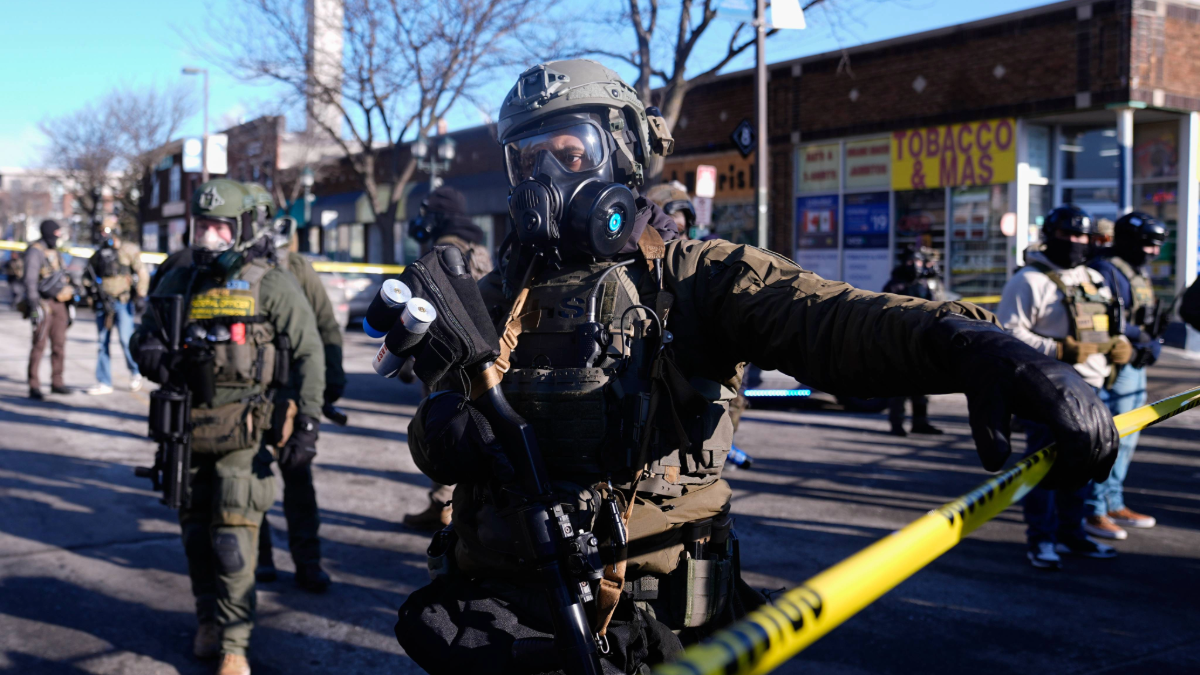
Masked federal agents near the site where 37-year-old nurse Alex Pretti was shot and killed by border patrol officers Saturday, Jan. 24, 2026, in Minneapolis. (AP Photo/Abbie Parr)
United States Department of Homeland Security Secretary Kristi Noem wants to know who is making ICE agents feel bad online. Since an ICE agent shot Renee Nicole Good in the face three times, Noem and the Trump administration have been clear that, to them, the problem isn’t with ICE agents running amok in American cities; it’s all the people documenting ICE activities and sharing them on social media. Noem has said that documenting ICE activity is “violence” and argued that it amounts to harassment.
In an effort to intimidate activists armed with cameras and cell phones, DHS sought to unmask the users behind anonymous accounts posting videos it disapproves of. That effort, particularly its attack on anonymous speech, flies in the face of the First Amendment and American history extending back before the founding of this country. The success of efforts to intimidate and muzzle documentation of ICE activities would encourage misconduct and endanger countless individuals’ rights and safety.
Throughout the revolutionary and founding period of the country, debate was routinely conducted under pen names designed to anonymize (or semi-anonymize) the writers’ identities. Most famously, Alexander Hamilton, James Madison, and John Jay published the Federalist Papers under the pseudonym “Publius,” but literally dozens of other important authors, from Patrick Henry to Noah Webster, did the same. Since then, the Supreme Court has defended the right to anonymity for pamphleteers, door-to-door missionaries, and members of political organizations subject to racist violence.
Despite that long history, DHS recently tried to get Meta to turn over data about the holders of Montco Community Watch, an account that documents ICE activity and posts sightings of ICE agents. If a court had permitted that, the many other accounts and people who have shared similar information could be subject to similar unmasking. It’s impossible not to view this demand as part of a broader and growing effort to silence activists highlighting ICE conduct through intimidation and threats of investigation.
That’s exactly the kind of anti-free speech action the First Amendment was designed to protect us against. When people seek to criticize the government’s activities — and especially when they seek to document and publicize the unlawful conduct of the government and its agents — anonymity can be the only way to ensure that information can reach the public without endangering the life and livelihood of the speaker. And in the US, courts have routinely ruled that the government cannot use threats to anonymity to intimidate speakers.
Documenting the activities of law enforcement, especially activity being conducted out in public, is protected by the First Amendment and cannot be restricted by the government. Nor can the sharing of that information with others whether on social media or via any other means of communication. These activities are not only an act of free speech protected in and of itself by the First Amendment, they are a critical tool to provide oversight and public awareness of law enforcement conduct. Nine federal appellate courts agree. None has found to the contrary.
But protecting the anonymity of the government’s critics is not just a job for the courts. The platforms that are hosting this speech have a significant role to play too. In the case of Montco Community Watch, the accounts’ owners were able to file a lawsuit seeking to prevent the disclosure of their information as a violation of their First Amendment rights precisely because Meta informed them of the subpoena asking for their information, as is Meta’s policy. That was a good — and speech-protective — thing for Meta to do. Meta also said that it is their policy to push back against unlawful requests for user data.
Unfortunately, those kinds of user-protective actions are becoming more rare. While in its previous iteration as a public company Twitter fought and won on numerous occasions against government demands to deanonymize critics, recent reports show that since Elon Musk took over ownership and rebranded the company as X, it has become much more likely to comply with government demands for user data. Regardless of any company’s political leanings, protecting users from unfair and unlawful attempts to intimidate them into silence should be a no-brainer.
ICE and border patrol agents are public servants, and the people have a right to document their activities and share information without fear that the DHS will attempt to intimidate them into silence, including by keeping their identities secret. The US government has an obligation to support and protect that right — and tech platforms do too.
Authors